

Table of Contents
- Understanding Air Quality Concerns for Vulnerable Populations
- Why Standard Duct Cleaning Isn't Always Enough
- How We Select Safe Sanitizing Methods
- Our Antimicrobial Treatment Process and Safety Standards
- Protection Measures for Children and Pets During Service
- Asthma-Friendly Sanitizing Solutions We Recommend
- Comparing Sanitizing Approaches: Safety and Effectiveness
- What Families Should Know About Chemical Sensitivity
- Post-Treatment Indoor Air Quality Expectations
- Why Dr. Air Duct's Safe Sanitizing Is Your Best Choice
- Getting Started with Your Family-Safe Duct Sanitizing
- Frequently Asked Questions (FAQ)
Understanding Air Quality Concerns for Vulnerable Populations
Indoor air quality matters most when your home includes children, pets, or family members with respiratory sensitivities. These groups face heightened risks from airborne pollutants, allergens, and microbial growth that accumulate in ductwork over time.
Kids and pets spend considerable time indoors, breathing recirculated air that passes through your HVAC system multiple times daily. Asthma sufferers can experience flare-ups triggered by dust mites, mold spores, and bacteria lurking in neglected ducts. Even minor contamination that wouldn’t affect a healthy adult can cause coughing, congestion, or breathing difficulty for vulnerable household members.
The challenge isn’t just removing visible dust. It’s addressing what’s grown in that dust: mold, bacteria, and allergens that standard vacuuming leaves behind. This is where duct sanitizing becomes essential rather than optional for families prioritizing respiratory health.
Why Standard Duct Cleaning Isn’t Always Enough
Regular duct cleaning removes loose debris and dust buildup, which is valuable maintenance. However, cleaning alone doesn’t eliminate the microscopic organisms that colonize duct surfaces after cleaning is complete.
Consider this scenario: your ducts get cleaned thoroughly, but within weeks, new bacterial and mold spores settle on the interior surfaces. For households with asthma, allergies, or newborns, this recontamination cycle creates a moving target.
Sanitizing treatments bridge this gap by creating an antimicrobial barrier that inhibits new growth after cleaning. Think of it like the difference between washing your hands and then applying hand sanitizer. Both matter, but they serve different purposes.
How We Select Safe Sanitizing Methods
We approach sanitizing product selection the same way pediatricians choose medications for children: safety margins matter more than raw power. A treatment that kills 99.9% of pathogens isn’t worth it if the method poses respiratory irritation or chemical sensitivity risks to your family.
Our evaluation process considers:
- EPA approval and toxicity classifications
- Off-gassing potential and indoor air impact
- Compatibility with asthma and allergic conditions
- Pet safety records and veterinary feedback
- Residue behavior and surface durability
- Real-world effectiveness in residential settings
We intentionally skip harsh chemical treatments like some commercial operations use. Instead, we prioritize gentler antimicrobial solutions that deliver reliable results without compromising indoor air quality during or after application.
Our Antimicrobial Treatment Process and Safety Standards
Our sanitizing process follows a methodical protocol designed to protect everyone in your home.
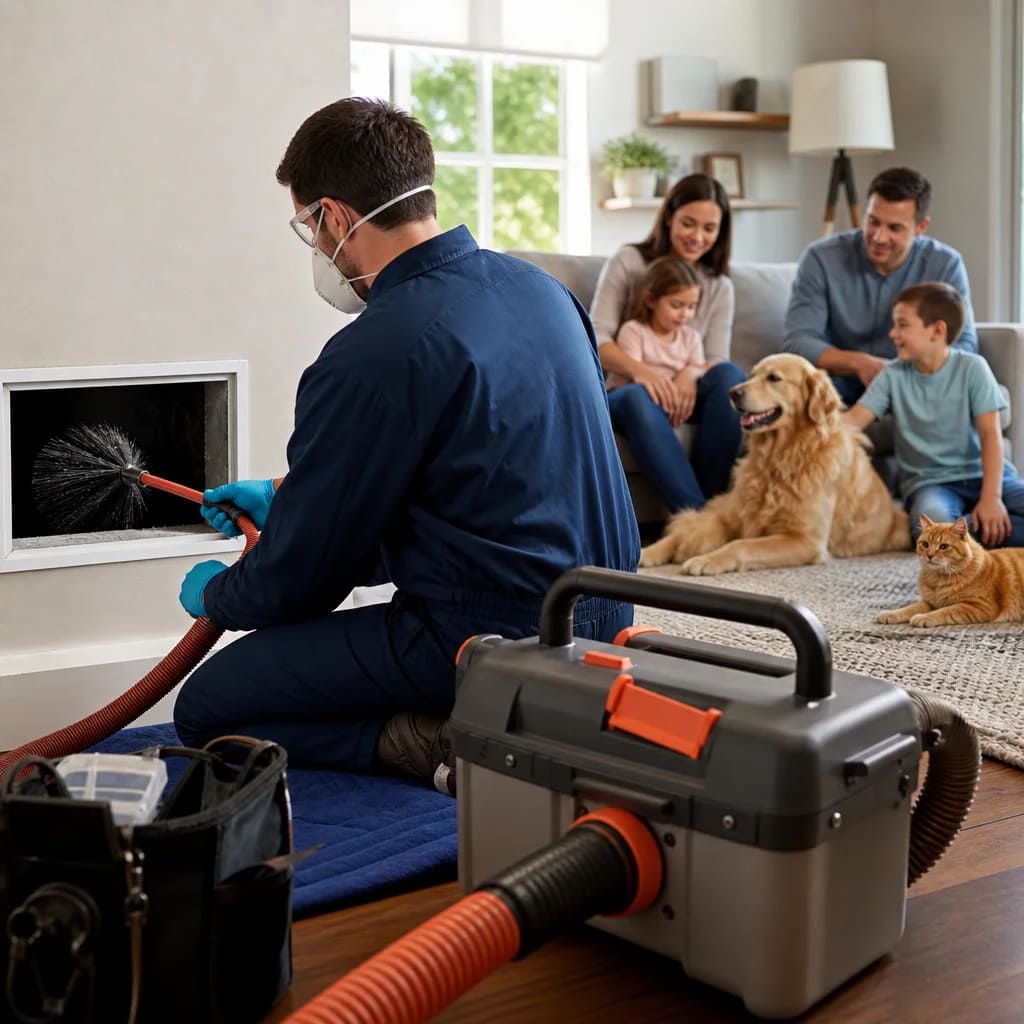
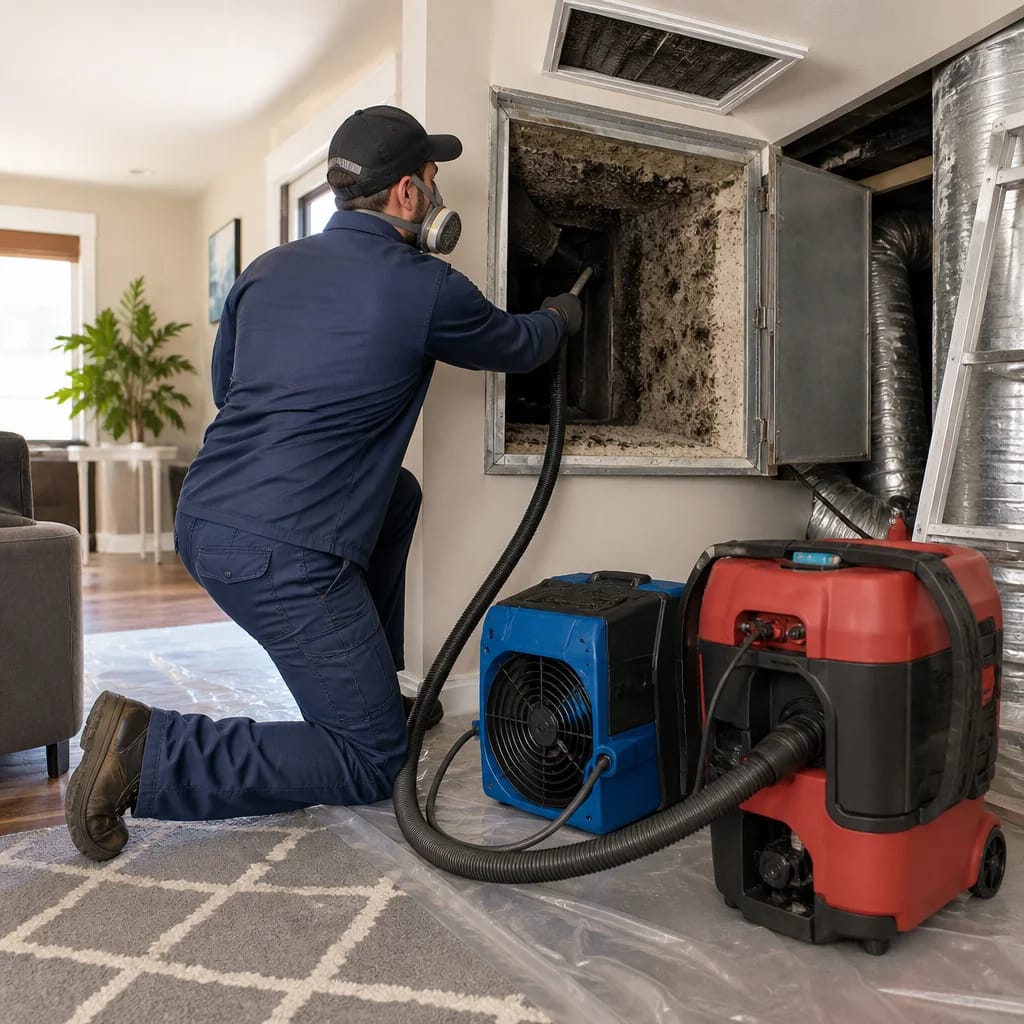
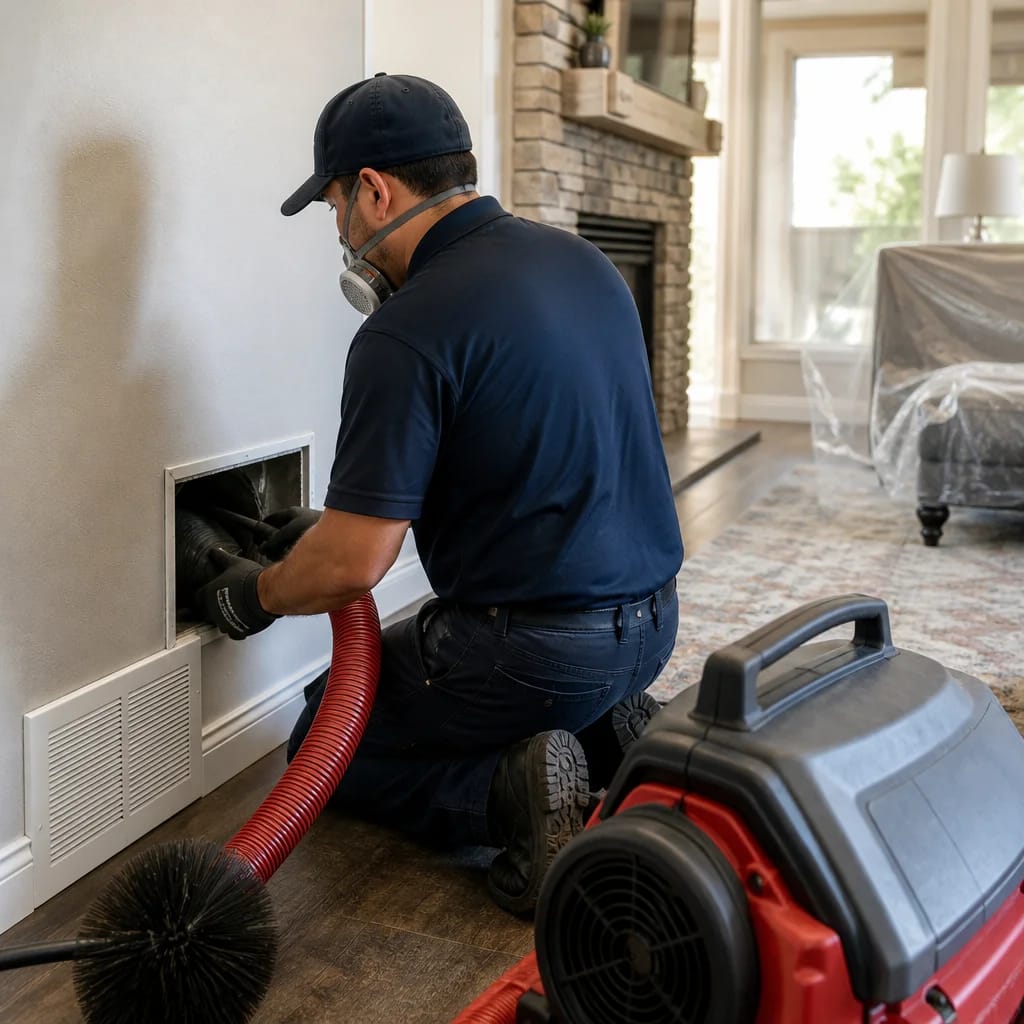
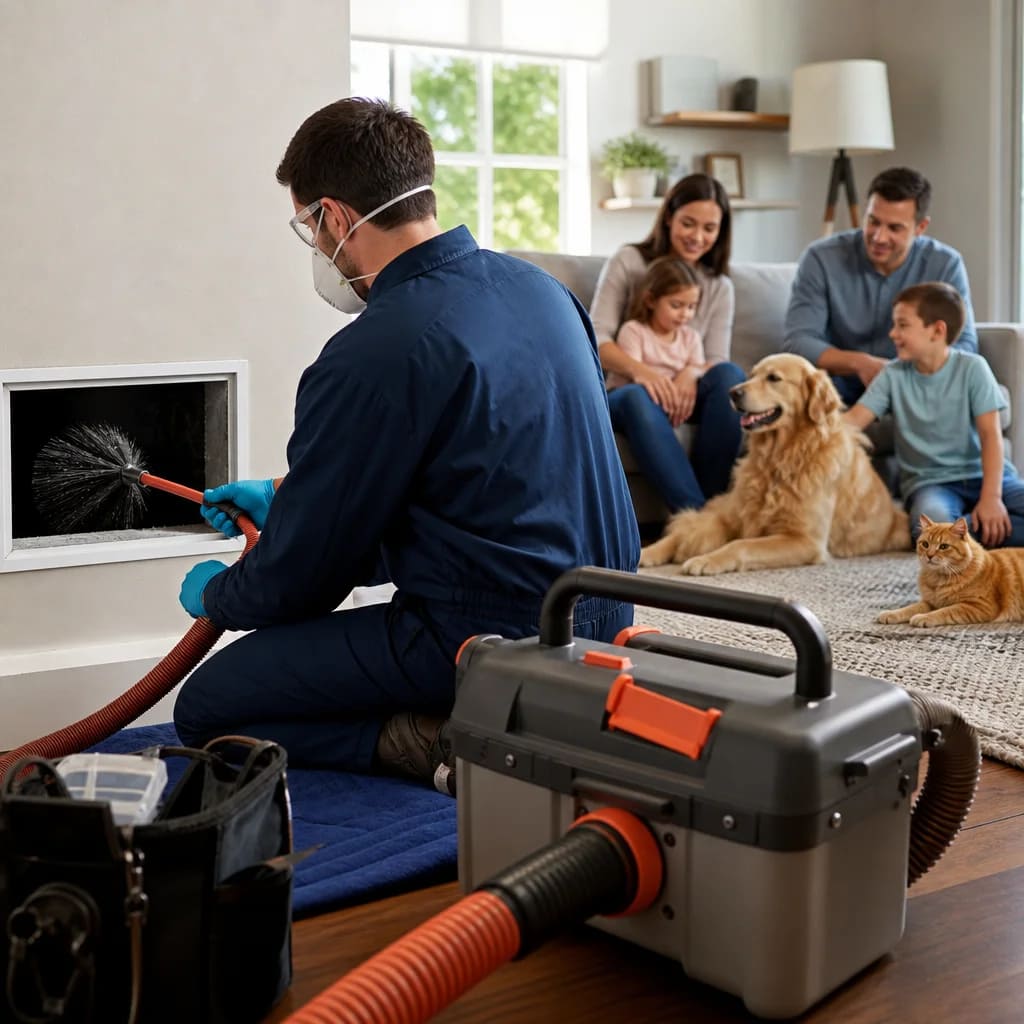
First, we complete full duct cleaning using professional equipment to remove all loose debris and buildup. This creates a clean substrate for sanitizing agents to work effectively. We then apply EPA-approved antimicrobial treatments specifically formulated for HVAC systems.
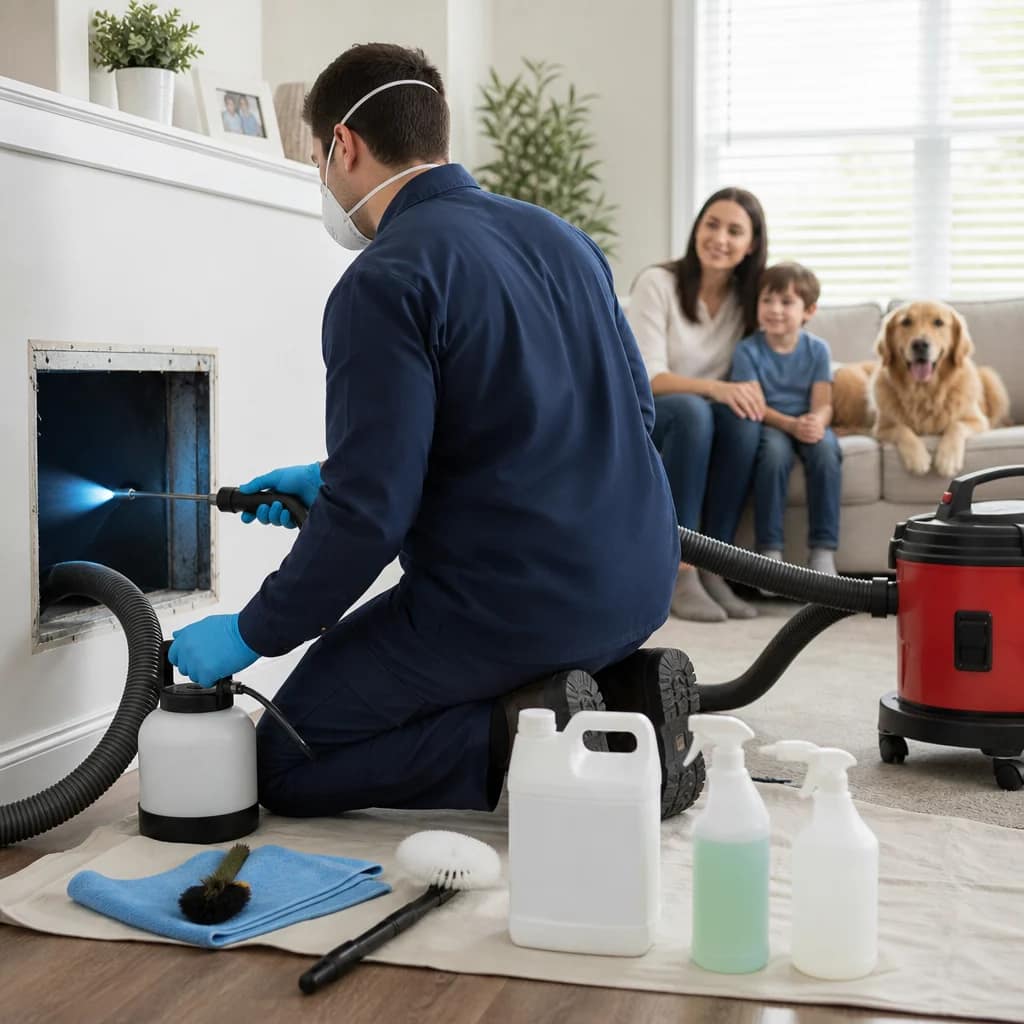
During application, we manage ventilation carefully to prevent aerosol exposure. Our technicians use personal protective equipment and follow manufacturer guidelines precisely. The treatment dries and bonds to duct surfaces, creating a protective layer that resists microbial colonization for months.
We document the specific product used, application date, and expected effectiveness window. This transparency helps you understand exactly what was applied to your home’s ventilation system.
Protection Measures for Children and Pets During Service
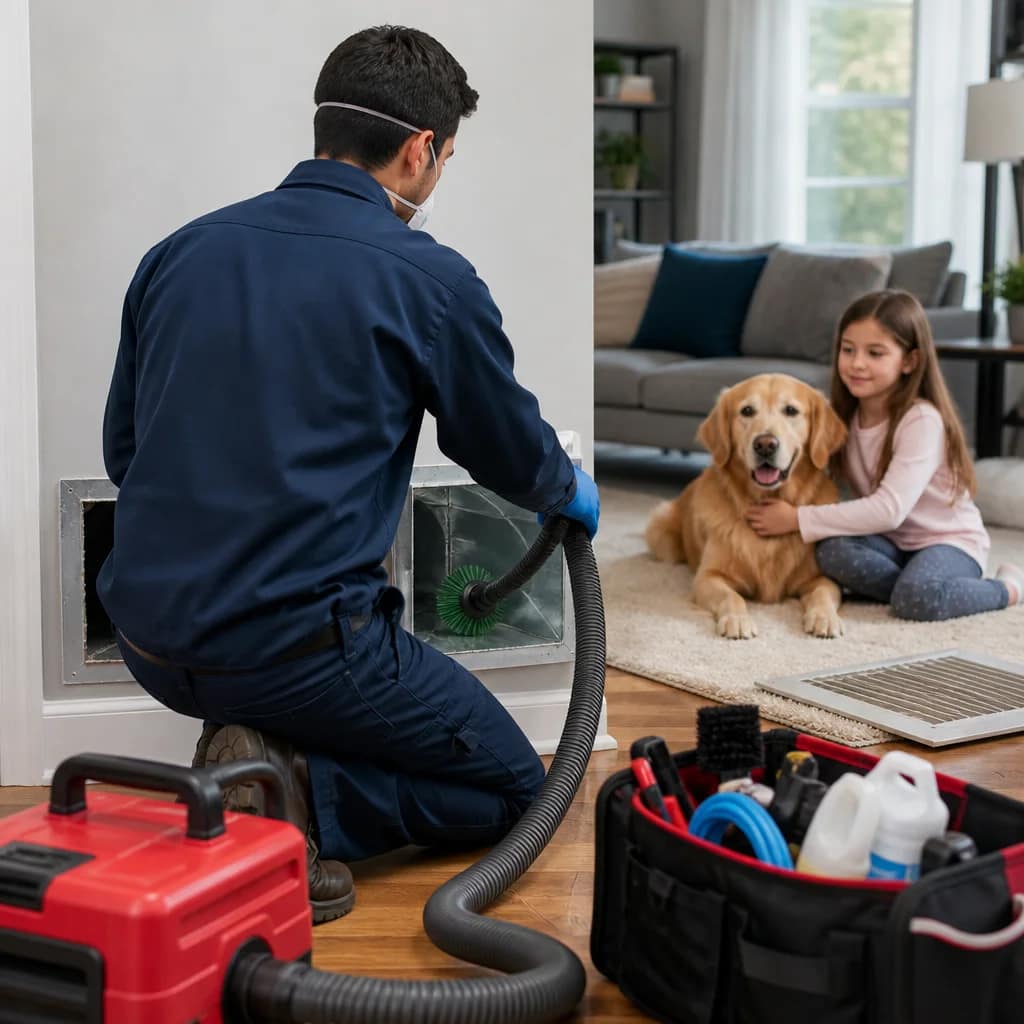
We don’t ask families to leave home during air duct sanitizing, but we do take specific precautions to minimize exposure.
Our team:
- Shuts off HVAC circulation during treatment application to prevent aerosol spread
- Works systematically through the duct system, treating and allowing drying in sections
- Maintains open windows when weather permits to support natural ventilation
- Uses equipment that contains overspray and prevents accidental contact
- Avoids application during peak family activity times when possible
After treatment completion, we recommend running your HVAC system for 30 minutes with a few windows cracked open. This final circulation flushes any remaining treatment residue and reestablishes clean airflow. For families with severe sensitivities, we can schedule sanitizing during times when children and pets can stay in well-ventilated areas.
Asthma-Friendly Sanitizing Solutions We Recommend
Our preferred sanitizing approach for asthma-prone households uses hospital-grade antimicrobial products that carry minimal respiratory irritation risk.
These solutions work by disrupting cell membranes in bacteria and mold without releasing volatile organic compounds (VOCs) that trigger asthma symptoms. Unlike phenol-based treatments or reactive chlorine systems, they don’t create strong odors or require extended ventilation periods.
For severe asthma cases, we can discuss gentler alternatives like enzymatic treatments that break down allergen proteins without chemical residue. We’ve also had success with UV-activated sanitizing systems that eliminate pathogens through light exposure rather than chemical contact, though these work best in specific duct configurations.
The right choice depends on your family’s specific sensitivities. We conduct a brief consultation to understand asthma triggers, medication sensitivity, and household composition before recommending a sanitizing method.
Comparing Sanitizing Approaches: Safety and Effectiveness
Different sanitizing methods work through different mechanisms, and each carries distinct safety profiles.
Antimicrobial coatings (our standard recommendation): Apply protective layers to duct surfaces. Pros include residual effectiveness over months and minimal odor. Cons include longer application time and variable effectiveness depending on surface conditions.
Enzymatic treatments: Break down allergen proteins and microbial cell structures. Pros include high safety margins and excellent allergen reduction. Cons include shorter effectiveness windows and higher sensitivity to humidity and temperature.
UV or photocatalytic systems: Use light exposure to eliminate pathogens. Pros include zero chemical residue. Cons include installation complexity, limited coverage in typical residential ducts, and higher upfront costs.
Ionic or electrostatic methods: Generate charged particles that suppress microbial activity. Pros include broad coverage and low chemical use. Cons include inconsistent research on effectiveness and potential ozone generation concerns.
We steer families toward antimicrobial coatings or enzymatic treatments for residential use because they balance safety, effectiveness, and practical application in standard ductwork. These approaches offer documented track records in homes with children and pets.
What Families Should Know About Chemical Sensitivity
Chemical sensitivity varies dramatically between individuals. A product that’s perfectly safe for one family might trigger symptoms in another household member with heightened reactivity.
Before scheduling sanitizing, tell us about any family members with:
- Multiple chemical sensitivity (MCS)
- Fragrance sensitivities
- History of respiratory reactions to cleaning products
- Severe allergies or asthma requiring frequent medication
- Newly diagnosed health conditions affecting immune function
This information helps us select the gentlest effective option and adjust application timing. We can also arrange test treatments in a small section of ductwork first, allowing you to observe how your family responds before treating the entire system.
Some people experience temporary, mild symptoms like slight chemical smell during the first 24 hours after treatment. This typically resolves as the treated surfaces dry completely. If symptoms persist or worsen, contact us immediately so we can discuss adjustment options.
Post-Treatment Indoor Air Quality Expectations
After sanitizing completes, expect improvements rather than overnight transformation.
Within the first week, many families report reduced dust accumulation on surfaces, fewer allergy symptoms, and improved airflow consistency. These changes reflect both the cleaning phase and initial antimicrobial effectiveness.
Over the following weeks, the protective layer develops full strength as it bonds to duct surfaces. Asthma flare-ups may decrease, dust buildup slows, and musty or stale odors often diminish.
The treatment’s effectiveness gradually tapers as months pass. Most antimicrobial coatings remain effective for 6 to 12 months depending on humidity, temperature fluctuations, and air circulation patterns. We recommend annual sanitizing for families with severe asthma or allergies, and maintenance sanitizing every 18 to 24 months for general air quality support.
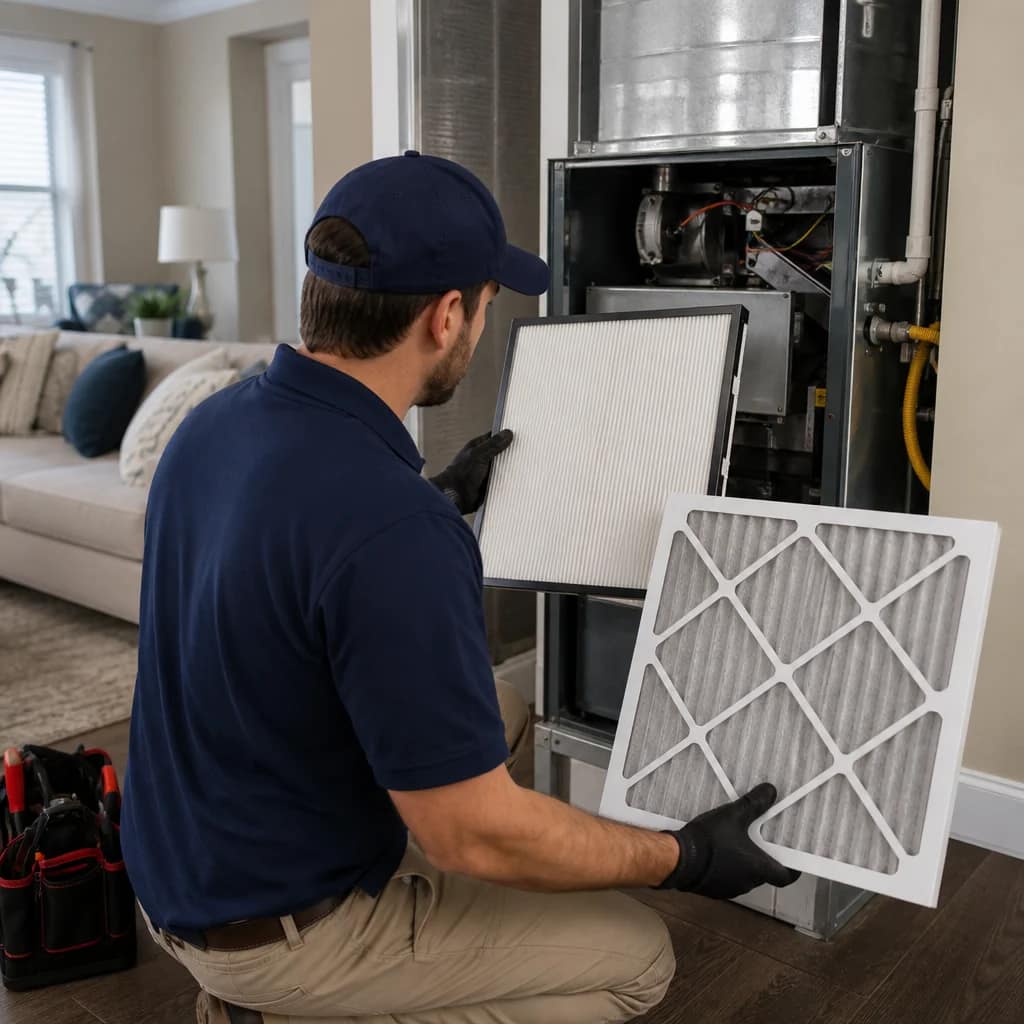
We’ll provide guidance on maintenance steps between treatments, including HVAC filter replacement schedules and strategies for minimizing airborne allergen introduction into your ducts.
Why Dr. Air Duct’s Safe Sanitizing Is Your Best Choice
We combine professional-grade sanitizing with genuine commitment to family safety in ways that matter.
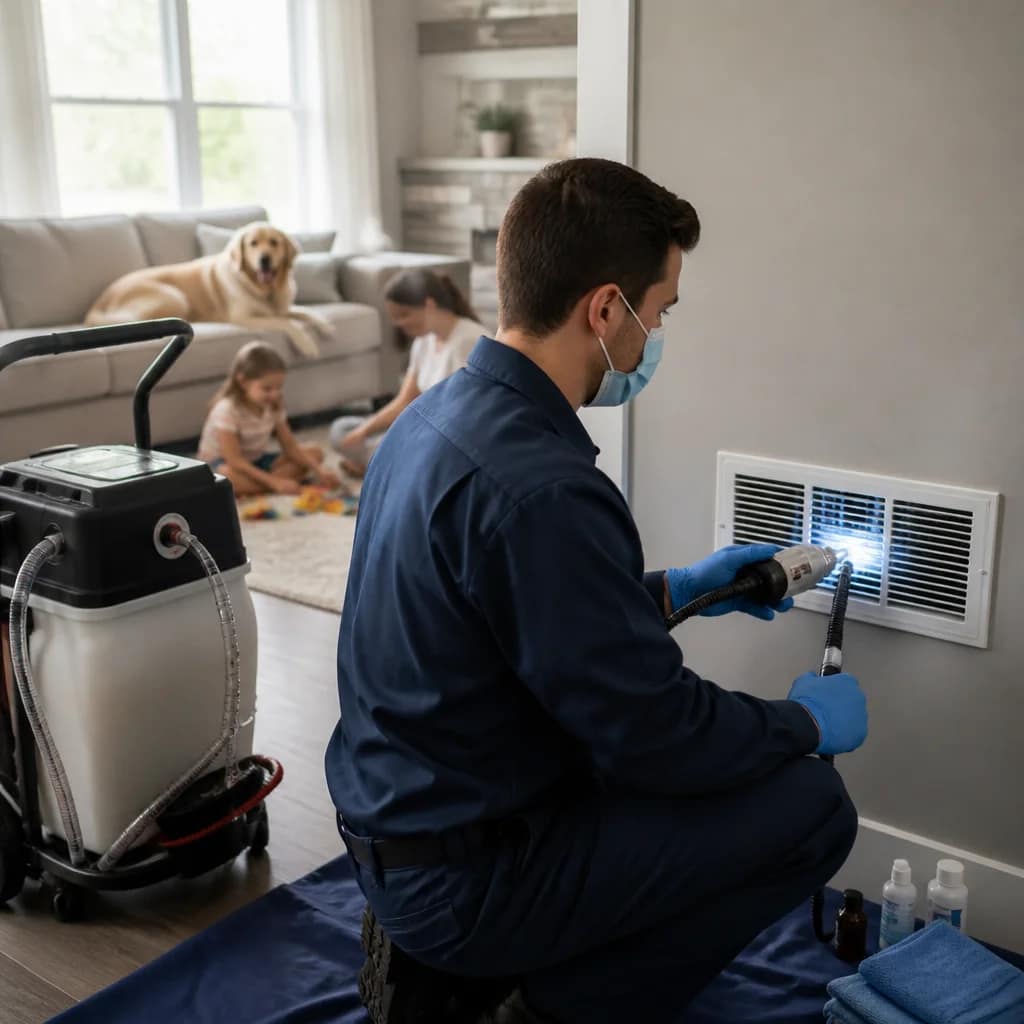
Unlike national chains that apply one-size-fits-all treatments, we customize recommendations based on your household composition, health concerns, and asthma or allergy severity. Our technicians receive ongoing training in safe sanitizing methods and understand the difference between treatments suitable for general maintenance and those appropriate for vulnerable populations.
We source EPA-approved products from established manufacturers with documented safety records, not experimental systems or aggressive chemical solutions. Our pricing remains competitive because we focus on what works safely rather than upselling unnecessary services.
Most importantly, we stand behind our work. If your family experiences unexpected sensitivity or your asthma doesn’t improve as discussed, we work with you to adjust the approach. We’ve served Dallas families for years, and your trust is worth more than a quick service call.
Getting Started with Your Family-Safe Duct Sanitizing
The first step is a conversation about your family’s specific needs and concerns.
Call us at your earliest convenience to schedule a consultation. We’ll discuss your children’s and pets’ health profiles, any asthma or allergy diagnoses, previous reactions to cleaning products, and your indoor air quality goals.
During an initial inspection, our team assesses your ductwork condition and recommends whether standard cleaning alone or combined cleaning and sanitizing makes sense for your situation. We’ll explain exactly which treatment we recommend, why it’s appropriate for your family, and what to expect during and after service.
Our technicians are available 24/7 for emergencies, though routine sanitizing typically schedules within a few days. We’re transparent about pricing, and there are no surprise costs or follow-up pressure.
Your family’s health is too important to leave to guesswork. We’re ready to deliver professional, safe air duct sanitizing that protects everyone in your Dallas-area home.
For further reading: Air duct cleaning process.
Frequently Asked Questions (FAQ)
Are your sanitizing treatments safe for children and pets?
Yes, we use only non-toxic, EPA-approved antimicrobial treatments that are safe for families and animals. Our sanitizing process is specifically designed to eliminate mold, bacteria, and allergens without introducing harmful chemicals into your home. We take extra precautions during application and always inform you of what we’re using so you can make informed decisions about your family’s health.
Why do we recommend sanitizing beyond standard air duct cleaning?
Standard cleaning removes dust and debris, but it doesn’t eliminate the mold spores, bacteria, and allergens that accumulate inside your ducts over time. These microscopic contaminants are the main culprits behind respiratory issues, asthma flare-ups, and poor indoor air quality. Our sanitizing treatments target what brushes alone cannot remove, giving you cleaner air where it matters most.
How long after treatment can my family return to normal activities?
We ensure our sanitizing methods have minimal impact on your daily routine. Most treatments are dry and odorless once applied, allowing you to use your home immediately after we finish. If we use any liquid-based applications, we’ll let you know beforehand and give you a clear timeline for when it’s safe to resume normal activities, especially important for families with asthma or chemical sensitivities.