

Table of Contents
- Why Dryer Vent Cleaning Matters for Your Home
- Common Warning Signs Your Dryer Vent Needs Cleaning
- How Lint Buildup Affects Dryer Performance and Safety
- The Fire Hazard Risk of Neglected Dryer Vents
- Energy Efficiency Loss From Restricted Airflow
- DIY vs. Professional Dryer Vent Cleaning: What You Need to Know
- How Our Technicians Clean and Inspect Your Dryer Vent System
- The Ongoing Maintenance Schedule That Works Best
- Why Dallas Homeowners Trust Dr. Air Duct for Vent Services
- Schedule Your Professional Dryer Vent Cleaning Today
- Frequently Asked Questions (FAQ)
Why Dryer Vent Cleaning Matters for Your Home
Your dryer works hard every time you run a load. But like any appliance, it needs proper maintenance to operate safely and efficiently. One of the most overlooked maintenance tasks is dryer vent cleaning, yet it’s one of the most important for protecting your home and family.
We work with Dallas homeowners year-round who don’t realize their dryer vents have become restricted until something goes wrong. By recognizing the warning signs early, you can avoid costly repairs, energy waste, and serious safety risks.
Your dryer relies on a clear vent system to expel hot, moist air outside. When that vent becomes clogged with lint and debris, your entire system has to work harder. The dryer compensates by running longer cycles, generating more heat, and straining internal components.
Over time, a neglected vent system creates three major problems: reduced efficiency, increased wear on the dryer itself, and elevated fire risk. These aren’t theoretical concerns. The U.S. Fire Administration reports thousands of home dryer fires annually, with lint accumulation being the leading cause.
Regular vent cleaning is preventative maintenance that keeps your dryer running at peak performance while protecting your home. For most households, professional cleaning every 12 to 24 months is a smart investment.
Common Warning Signs Your Dryer Vent Needs Cleaning
Notice any of these red flags? They’re telling you it’s time to schedule a cleaning.
Extended drying times: Clothes take longer than usual to dry, even on high heat. You might run back-to-back cycles just to get one load completely dry.
Excess lint on clothes: Lint accumulates on your garments during the cycle, indicating the vent isn’t properly expelling lint outside.
Hot dryer exterior: The outside of the dryer feels unusually warm to the touch, suggesting heat is backing up inside the unit rather than venting outside.
Musty or burning smell: A damp, moldy odor or faint burning scent coming from the dryer points to moisture and heat trapped in the vent line.
Visible lint around the vent opening: When you check outside, lint collects around your vent hood or damper instead of being pulled through and expelled.
Reduced air flow at the exterior vent: Hold your hand near the outdoor vent opening while the dryer runs. If airflow is weak or nearly absent, blockage is present.
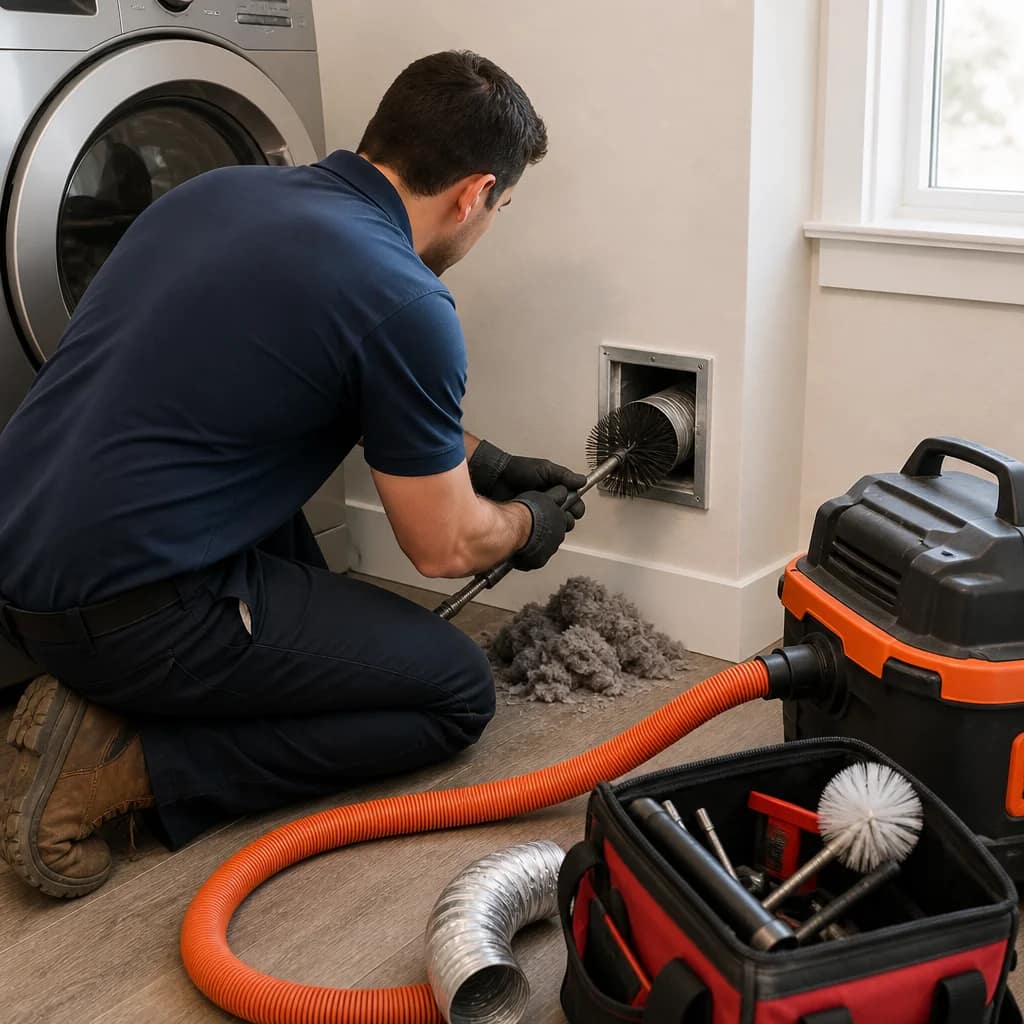
Any single sign warrants an inspection. Multiple signs mean professional cleaning should be your next step. Don’t wait for your dryer to stop working or for a fire risk to become critical.
How Lint Buildup Affects Dryer Performance and Safety
Lint is the primary enemy of a healthy dryer vent system. Every time your dryer runs, it sheds thousands of lint fibers. Most should exit through the vent, but many stick to interior walls, dampers, and ductwork.
A small amount of lint is normal. But after six to twelve months of regular drying, lint accumulates into thick, matted deposits that restrict airflow. This restriction forces your dryer to recirculate air and heat, overworking the heating element and motor.
The performance impact is immediate: clothes stay damp longer, the dryer runs hotter, and you’ll notice higher energy consumption. Beyond convenience, this puts stress on components that eventually wear out faster than designed. Repair costs escalate when a $150 cleaning could have prevented the damage.
Lint also traps moisture inside the vent line, creating conditions where mold and mildew can grow. That trapped moisture and warmth create odors and potential indoor air quality concerns in and around your laundry area. Our sanitizing services can address mold growth if cleaning alone isn’t sufficient.
The Fire Hazard Risk of Neglected Dryer Vents
This is the most serious consequence of a clogged vent: fire risk. Lint is extremely flammable. When lint buildup combines with the heat your dryer generates, you’re creating an environment where ignition becomes possible.
A dryer vent fire can start inside the ductwork where you can’t see it. By the time you smell smoke, the fire may have already begun traveling through walls or the attic. These fires spread quickly and can cause structural damage before firefighters arrive.
We take this concern seriously, which is why we emphasize top reasons for vent cleaning with every client we meet. Professional cleaning removes the primary fuel source for this type of fire.
Insurance companies are increasingly aware of dryer vent fire risks. Some policies now require proof of annual dryer vent maintenance. Check your homeowner’s policy to see if professional cleaning is required or recommended. Either way, the small cost of annual cleaning is far less than the potential cost of fire damage.
Energy Efficiency Loss From Restricted Airflow
A clogged dryer vent directly increases your energy consumption. When airflow is restricted, your dryer’s heating element must work harder and run longer to dry the same load.
Here’s what happens: restricted airflow means air and moisture can’t escape efficiently, so the dryer senses clothes are still damp and continues running. Each extra cycle uses electricity. Over a year, this adds up noticeably on your utility bill.
We’ve seen homeowners reduce their drying energy costs by 20 to 30 percent after professional vent cleaning restored full airflow. While results vary by usage patterns and vent condition, the efficiency gain is real.
A clean vent also means your dryer reaches the correct temperatures and cycles properly. Older dryers with moisture sensors depend on good airflow to function accurately. Restricted vents fool these sensors, leading to longer run times and wasted energy.
Scheduling annual Dallas dryer vent cleaning isn’t just about safety and performance. It’s a practical way to control utility costs and get reliable, predictable drying times.
DIY vs. Professional Dryer Vent Cleaning: What You Need to Know
Many homeowners attempt DIY vent cleaning with a brush kit from the hardware store. While cleaning the lint trap is absolutely necessary after every load, deeper vent cleaning is different.
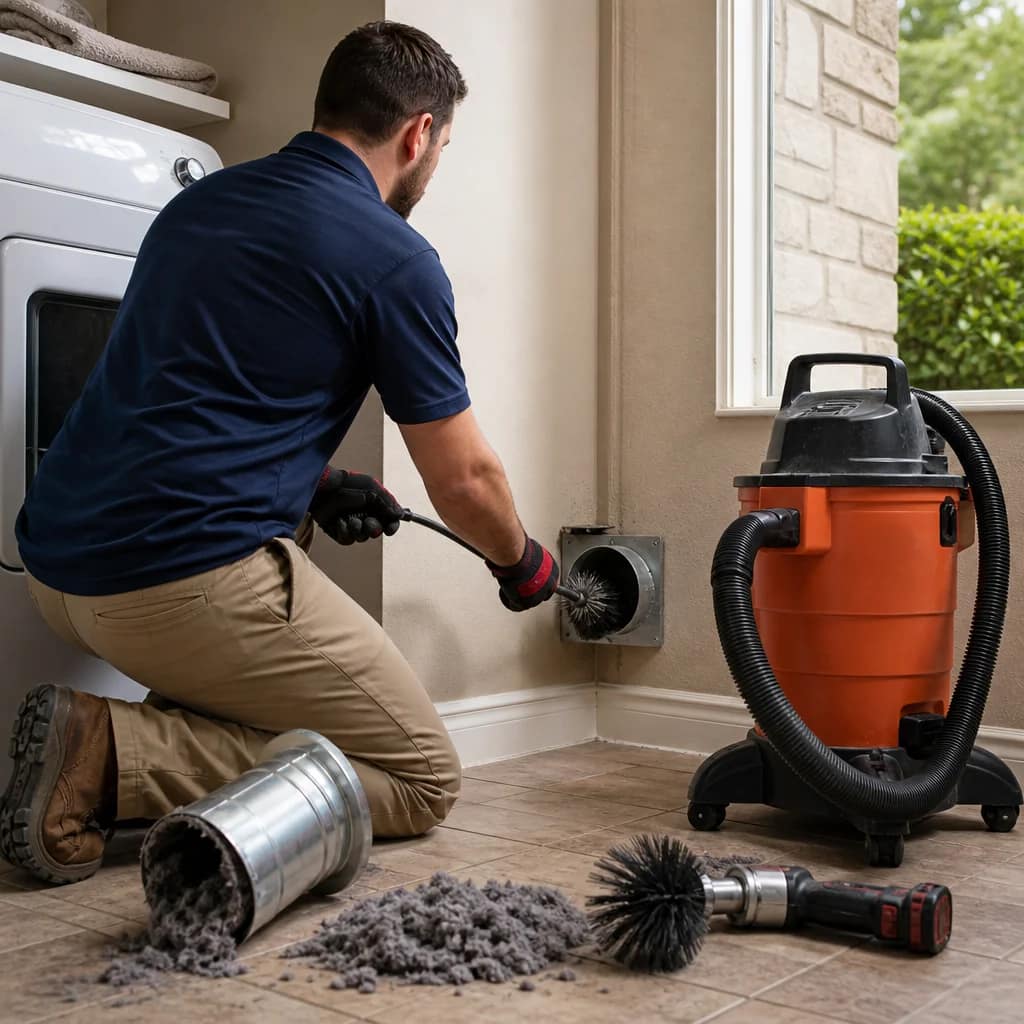
DIY brushes can reach partway into the vent line, but they often can’t access the full length of ductwork, especially if your vent is long or makes several turns. Trapped lint deeper in the system remains undisturbed. Additionally, aggressive DIY scrubbing can damage flexible ducting, creating new problems.
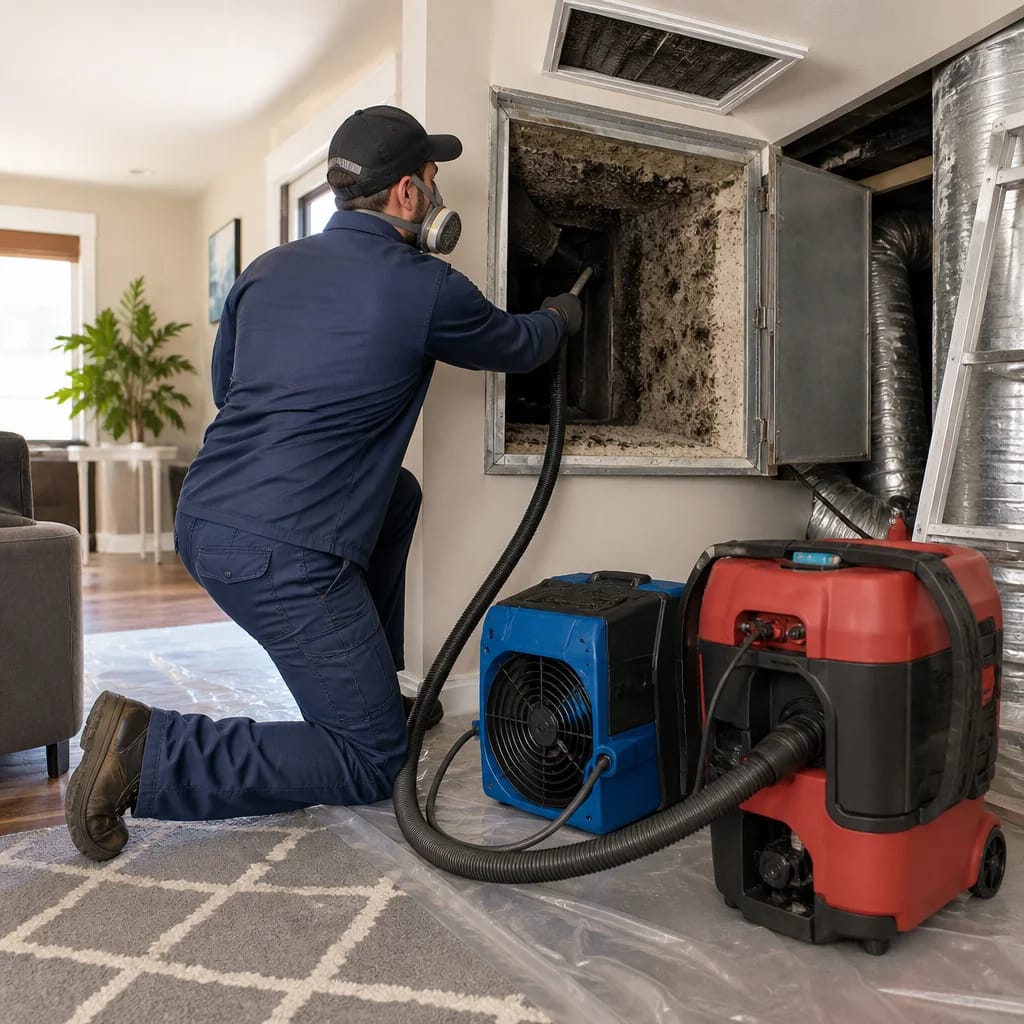
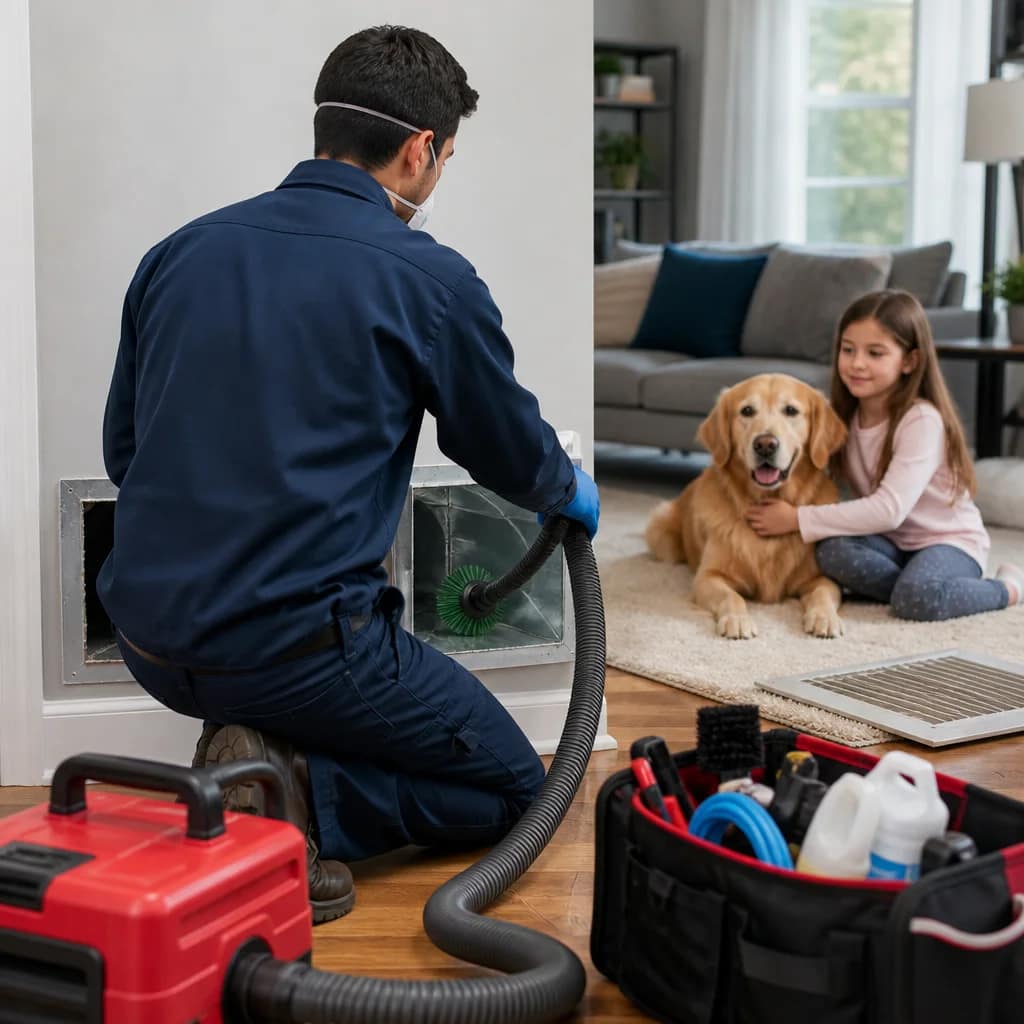
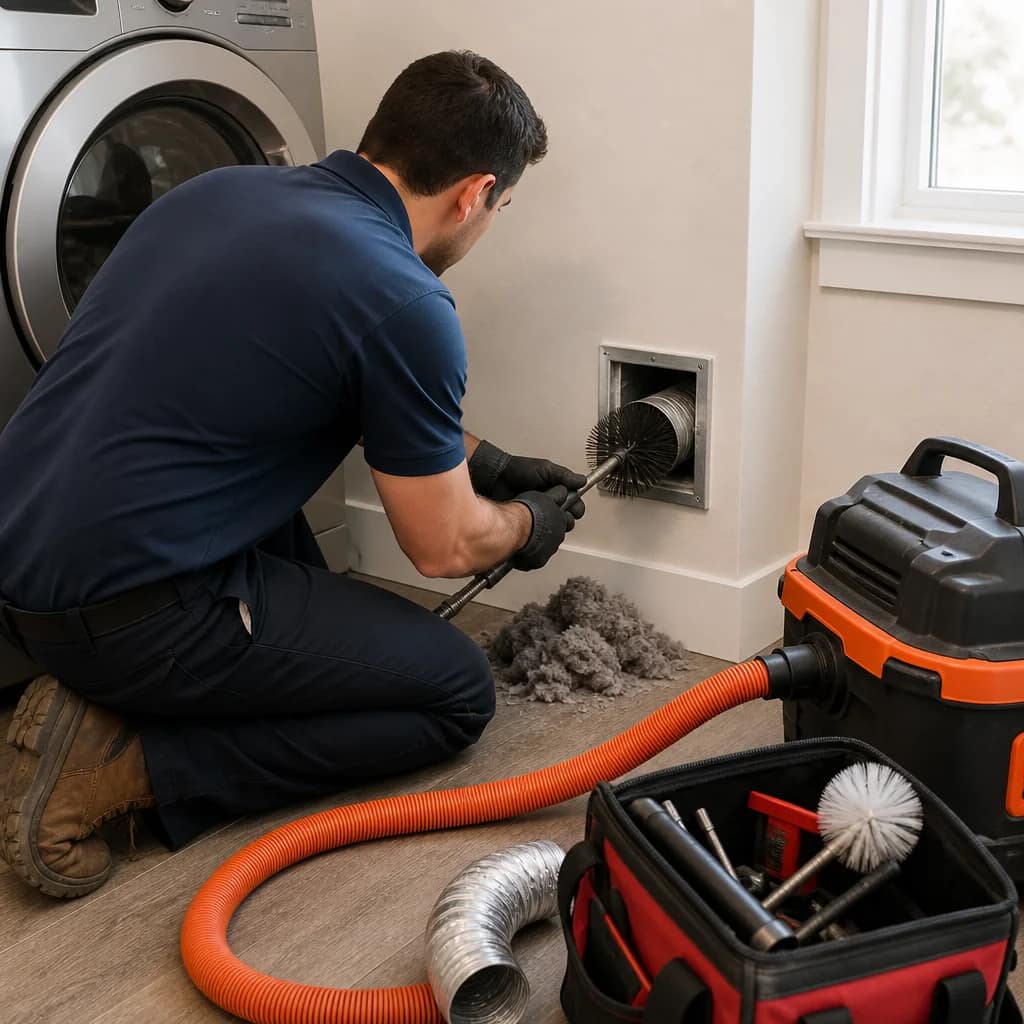
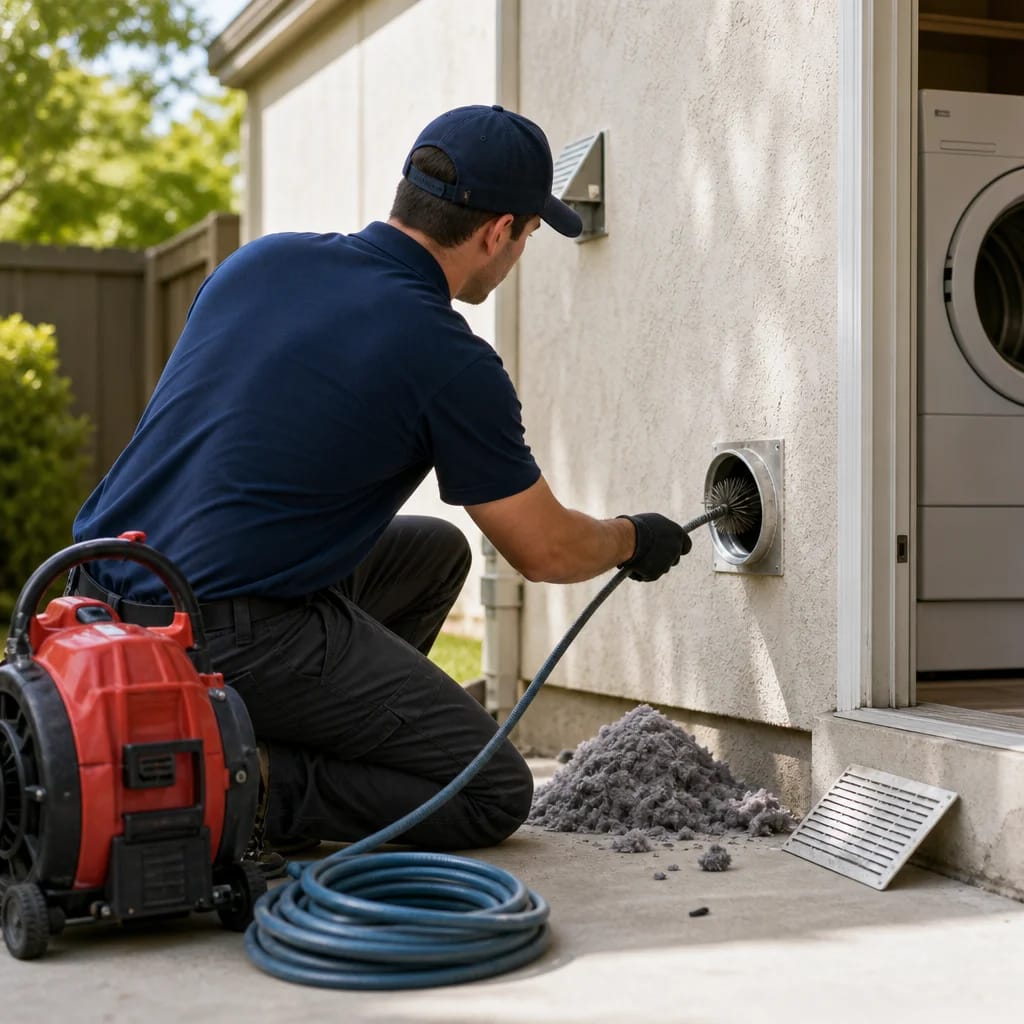
Our technicians use professional-grade equipment, including high-powered vacuums, specialized brushes, and cameras to inspect the entire vent line from entry to exit. We can identify damage, measure airflow, and ensure complete cleaning in one visit.
Professional service is faster, more thorough, and safer for your equipment. We can spot issues like disconnected ducts, crushed ductwork, or improperly installed vents that DIY methods would miss. Catching these problems early prevents bigger failures.
For the lint trap, clean it before or after every load. For the deeper vent system, trust the professionals once a year.
How Our Technicians Clean and Inspect Your Dryer Vent System
Our process is straightforward and transparent. We start with a visual inspection of the exterior vent hood and damper, checking for lint buildup or damage.
Next, we disconnect the dryer safely and inspect the connection point where the flexible duct attaches to the back of the unit. This is a common spot where lint accumulates and where disconnected vents cause problems.
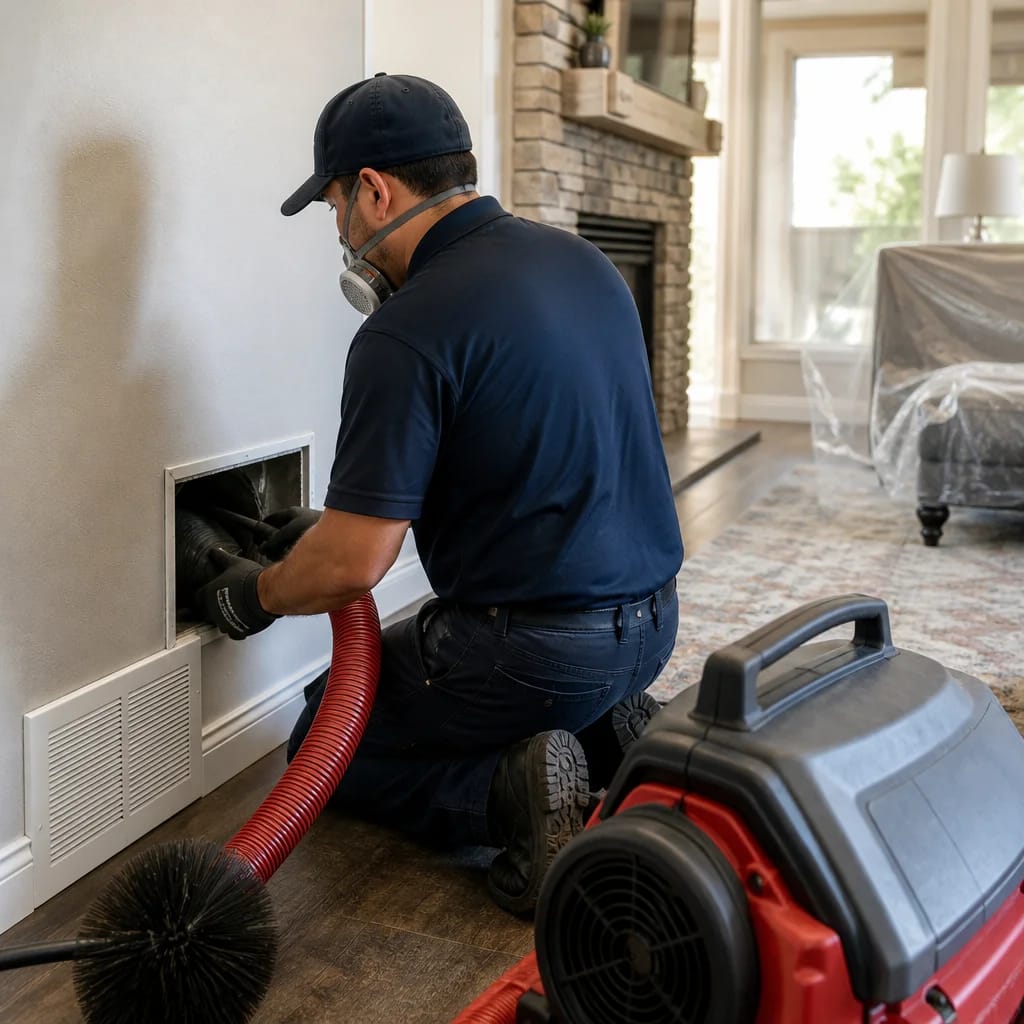
We then feed our specialized cleaning equipment through the entire vent line, removing trapped lint, debris, and blockages. High-powered suction captures material as it’s dislodged. For longer runs or complex ductwork, we may access the vent from both ends to ensure complete cleaning.
After cleaning, we use a camera inspection system to verify the vent is clear and document the results. We’ll show you what we removed and confirm the vent is functioning properly. If we identify damaged ducts, improperly routed vents, or other issues, we’ll recommend repairs.
Finally, we reconnect your dryer and test the system to confirm strong airflow and proper operation.
The Ongoing Maintenance Schedule That Works Best
Once we’ve cleaned your dryer vent, the question becomes: when should you schedule the next service?
For most single-family homes using the dryer one to five times weekly, annual cleaning is the standard recommendation. High-volume households with multiple loads daily may benefit from cleaning every six to eight months. Commercial laundry facilities need more frequent attention.
We recommend scheduling your annual cleaning at the same time each year, ideally as part of a broader home maintenance routine. Many clients choose late summer before the heavy laundry season of fall and winter.
Mark it on your calendar, set a reminder on your phone, or let us know when you’d like to schedule regularly. We can help you establish a maintenance plan that fits your home’s specific usage.
Between professional cleanings, always empty the lint trap after every load. Rinse it with warm water occasionally to remove residual lint particles. These simple habits extend the time between professional services and keep your dryer performing well.
Why Dallas Homeowners Trust Dr. Air Duct for Vent Services
We’ve been serving Dallas and the surrounding Texas area for years, building a reputation for honest, thorough work. Our technicians are trained, experienced, and equipped to handle dryer vent cleaning for residential homes of all sizes.
We’re available 24/7 because we understand that HVAC and dryer concerns don’t always happen during business hours. We also provide prompt response times and transparent pricing, so you know what to expect before we begin.
Beyond dryer vents, our full range of services includes air duct cleaning, air duct repair, duct sanitizing, and chimney cleaning and maintenance. If you’re concerned about indoor air quality, energy efficiency, or home safety, we can help with a comprehensive assessment.
Every customer receives respectful, professional service. We listen to your concerns, explain what we find, and recommend solutions based on your home’s actual needs, not sales tactics.
Schedule Your Professional Dryer Vent Cleaning Today
Recognizing the warning signs of a clogged dryer vent is the first step. Taking action is the next.
If you’ve noticed any of the signs we discussed, or if it’s been more than a year since your last professional cleaning, contact us to schedule service. We’ll send a trained technician to inspect your vent system, perform thorough cleaning, and restore safe, efficient operation.
Call us today or visit our website to book an appointment. We serve Dallas and surrounding areas with the same commitment to quality and customer satisfaction. Your home’s safety and comfort are our priority.
Frequently Asked Questions (FAQ)
How often should we clean our dryer vent?
We recommend professional dryer vent cleaning at least once a year for most Dallas homes, though households with frequent dryer use may benefit from cleaning every 6 months. Our technicians can inspect your vent during service and let you know if buildup is occurring faster than normal, which helps us create a maintenance schedule tailored to your specific situation. Regular cleaning prevents fire hazards, improves drying efficiency, and reduces your energy costs.
What makes professional dryer vent cleaning different from what we can do ourselves?
We use specialized equipment and cameras to access the entire vent system, including areas inside walls that DIY tools simply can’t reach effectively. Our technicians identify blockages, damage, and safety issues that homeowners typically miss, and we verify proper airflow after cleaning to ensure your system operates safely. Attempting to clean vents without professional equipment often leaves lint deeper in the line, which can actually increase fire risk.
What are the main warning signs that our dryer vent needs attention right now?
If your dryer takes significantly longer to dry clothes, feels unusually hot to the touch, or you notice a burning smell during operation, we’d recommend calling us immediately. You might also notice lint accumulating around the vent opening outside your home or see visible debris in the lint trap despite regular cleaning. Any of these signs tells us your vent needs professional inspection and cleaning before the situation becomes a safety concern.