

Table of Contents
- Why Soot Buildup in Your Chimney Is a Serious Problem
- Signs Your Chimney Needs Professional Soot Removal
- Health and Fire Risks of Chimney Soot and Creosote
- How Our Professional Chimney Soot Removal Process Works
- Tools and Techniques Our Technicians Use for Thorough Cleaning
- Chimney Inspection and Safety Checks We Include
- Chimney Repairs When Soot Damage Is Found
- Pricing and Value of Professional Chimney Cleaning in Dallas
- How Often Dallas Homeowners Should Schedule Chimney Cleaning
- Why Choose Dr Air Duct for Chimney Services in North Texas
- Frequently Asked Questions About Chimney Soot Removal
- Frequently Asked Questions (FAQ)
Why Soot Buildup in Your Chimney Is a Serious Problem
Every time you light a fire, your chimney collects byproducts of combustion. Some of that material drops out as black, flaky soot, and some of it bonds to the inner walls as a sticky, tar-like residue called creosote. Over a season or two, that buildup narrows the flue and changes how smoke and gases move through the system.
For Dallas homeowners, the problem is easy to underestimate. Fireplaces here often get used in short bursts during cold snaps, so people assume the chimney stays clean between uses. In reality, even occasional fires leave deposits, and North Texas humidity and wind can make draft issues worse over time.
What to do next: If you use your fireplace or wood stove at all, plan on a professional look at your chimney at least once a year, even if it looks clean from the bottom.
Signs Your Chimney Needs Professional Soot Removal
Some warning signs are easy to spot from the firebox. Others only show up when you know what to look for. Consider scheduling a cleaning if you notice:
- Thick black soot on the damper, firebox walls, or hearth
- A smoky smell, even when the fire is well built
- Smoke drifting back into the room when you open the damper
- Fires that burn slowly, smolder, or produce more smoke than usual
- Dark, shiny, or flaky deposits when you look up the flue with a flashlight
- Visible animal nests, leaves, or debris near the cap
A useful test is the “flashlight check.” Shine a light up the flue from the firebox. If you see a glossy coating or a crust that catches the light, the chimney has creosote that a professional should remove.
What to do next: Note the signs you see and bring them up when you call for service. Technicians can tell you quickly how serious the buildup is.
Health and Fire Risks of Chimney Soot and Creosote
Creosote is the bigger concern. It is highly flammable, and when it builds up in thick layers it can ignite at high temperatures, sending fire into the chimney and sometimes into the home structure. Chimney fires can burn hot enough to crack flue tiles, damage mortar, and spread to nearby framing.
Soot and creosote also affect air quality. When a chimney is partially blocked or drafting poorly, smoke, carbon monoxide, and fine particles can leak back into living spaces. People with asthma, allergies, or heart and lung conditions may be more sensitive to these pollutants. If anyone in your home has symptoms like headaches, dizziness, or nausea while a fire is burning, turn off the fireplace and get fresh air right away.
Installing a carbon monoxide detector near sleeping areas is a simple layer of protection for any home with a fireplace.

What to do next: Keep a working CO detector in the home, and treat any smoke backing into the room as a signal to stop using the fireplace until it has been inspected.
How Our Professional Chimney Soot Removal Process Works
When we visit your home, we start with an assessment rather than jumping straight into cleaning. Our technicians check the firebox, damper, smoke chamber, and flue to understand how much buildup there is and where it sits. This helps us choose the right method and avoid surprises.
From there, the cleaning typically follows these steps:
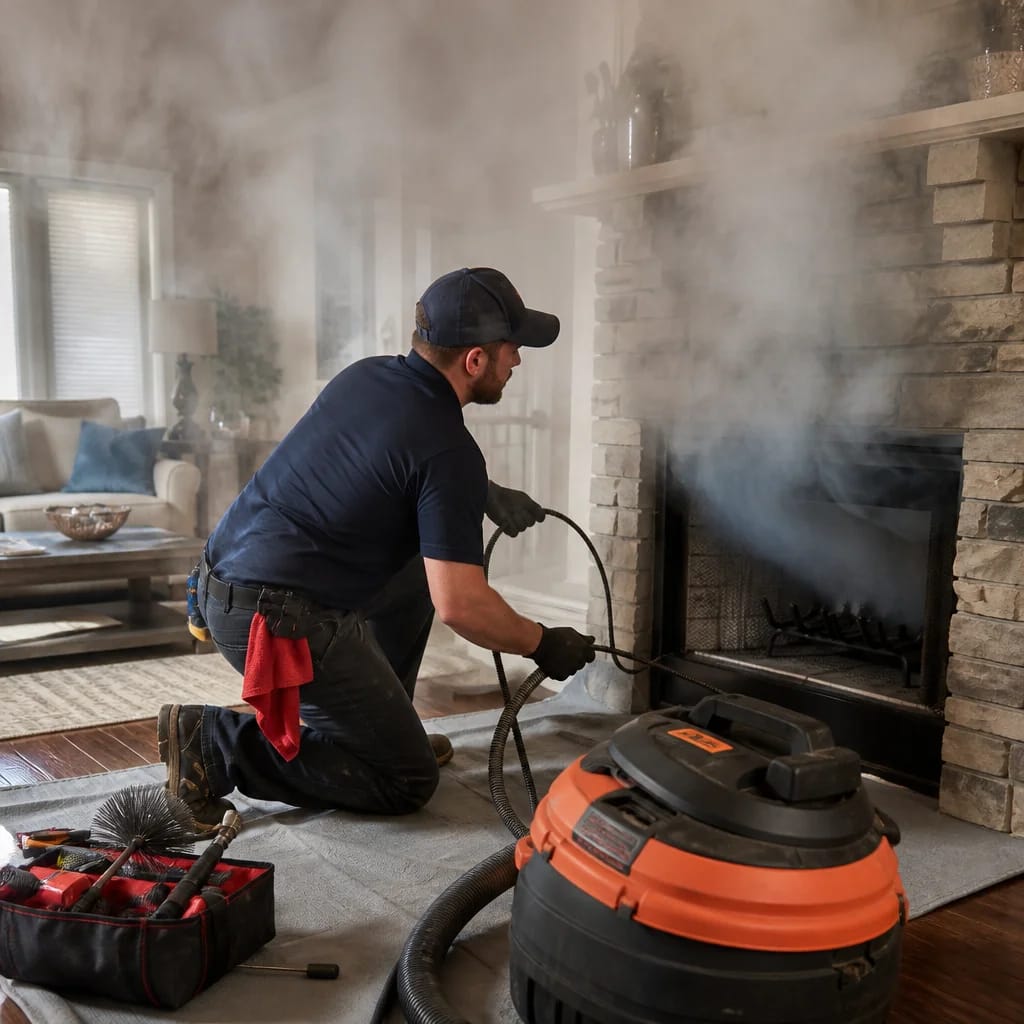
- Protect the home. We lay down drop cloths and seal the fireplace opening so soot stays in the work area.
- Clear the firebox and smoke chamber. Loose ash, soot, and debris are removed first.
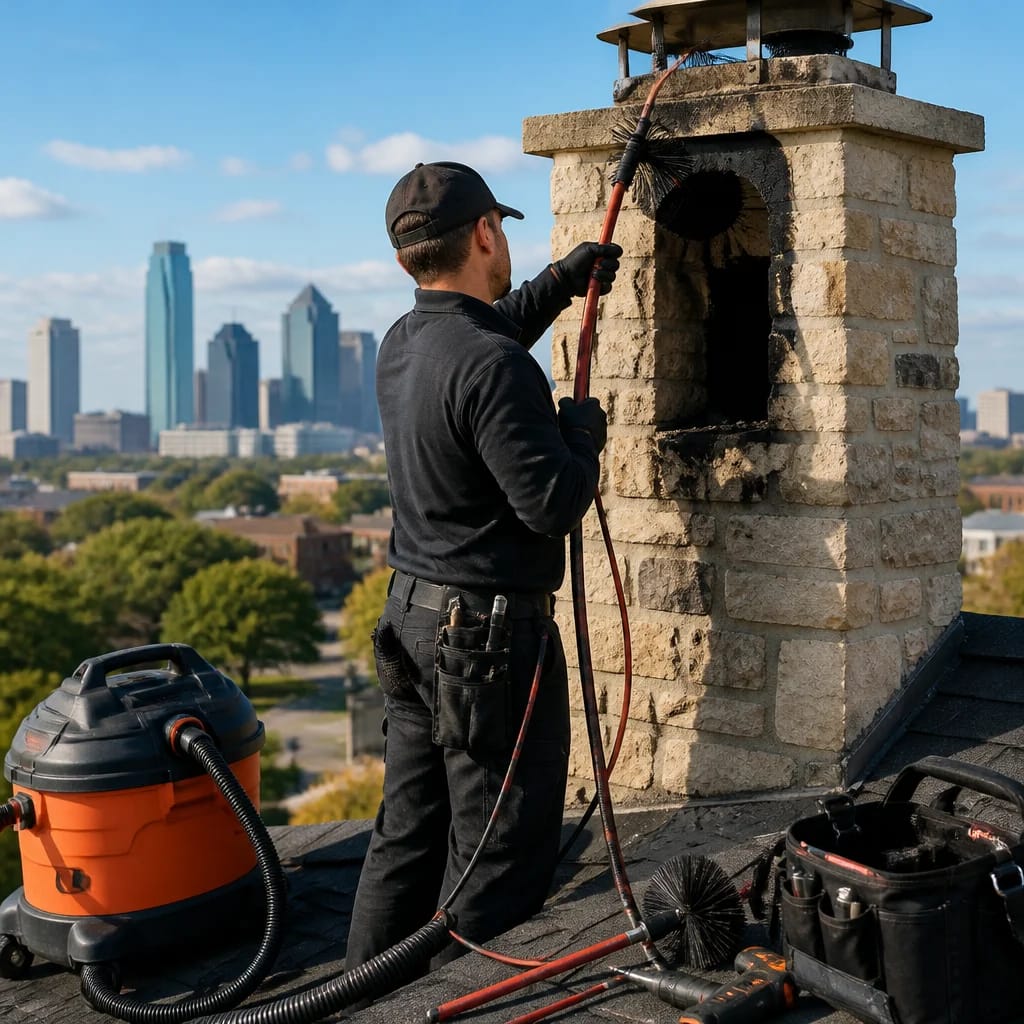
- Remove creosote from the flue. We work from the top or bottom of the chimney, depending on access and buildup, using specialized brushes and rods.
- Vacuum as we go. Industrial vacuums capture dust and particles during cleaning.
- Final inspection and walkthrough. We check the cleaned flue, confirm airflow, and explain what we found.
Each job is tailored to the chimney, so timing varies. Most standard residential cleanings are completed in a single visit.
What to do next: Clear the area around your fireplace of furniture, rugs, and decor before the appointment so the team can work efficiently.
Tools and Techniques Our Technicians Use for Thorough Cleaning
Effective chimney cleaning depends on using the right tool for the type of buildup. Our technicians rely on several methods:
- Rotary and flexible rod brushes designed to match the flue size and shape, which scrub away soft soot and loose creosote
- Chemical creosote removers for hardened deposits that brushing alone cannot break up, applied carefully and according to manufacturer guidance
- Video inspection cameras that let us see inside the flue, check for cracks, and confirm the cleaning is complete
- High-powered HEPA-filtered vacuums that keep soot out of your living space
- Smoke testing in some cases, to identify leaks or drafting problems
Choosing the right method matters because a generic brush can miss sections of the flue or push debris into areas it can block. Camera checks give homeowners clear evidence of results rather than relying on guesswork.
What to do next: Ask your technician to show you the inside of the flue with the camera. Seeing the before and after is a helpful way to understand what was removed.
Chimney Inspection and Safety Checks We Include
Cleaning and inspection go hand in hand. During a visit, we typically check:
- Flue liner condition for cracks, gaps, or deteriorated tiles
- Crown and chimney cap for cracks or missing components that let water in
- Damper operation to confirm it opens and closes fully
- Firebox and hearth for damaged brick, mortar, or heat-related wear
- Clearance to combustibles around the chimney and fireplace
- Animal guards and debris screens to prevent nests and blockages
These checks help catch problems early, when repairs are usually simpler and less expensive. A basic inspection also gives you a clear picture of whether the system is ready for the season ahead.

What to do next: Request a written summary after the inspection. It should note what was cleaned, what was checked, and any recommended repairs in priority order.
Chimney Repairs When Soot Damage Is Found
Sometimes soot is a symptom of a larger issue. Common repairs we recommend include:
- Flue liner repair or replacement when cracks or missing sections allow heat and gases to escape
- Crown repair to seal cracks that allow water to seep into masonry
- Chimney cap installation to block rain, debris, and animals
- Damper repair or replacement when it no longer seals or opens properly
- Mortar and masonry repair where joints have deteriorated
Not every repair is urgent, but ignoring structural damage can lead to larger failures. If a technician recommends a repair, ask what happens if you wait and how it affects safety, draft, and water intrusion.
What to do next: Get repair recommendations in writing and compare them against your priorities, especially if your fireplace is used regularly.
Pricing and Value of Professional Chimney Cleaning in Dallas
Chimney cleaning prices depend on several factors: chimney height and accessibility, the amount of buildup, the type of flue, whether the job includes a camera inspection, and whether additional repairs are needed. Because every chimney is different, we provide a clear estimate after assessing your system rather than quoting a one-size-fits-all number.
When comparing providers, look at what is included. A low price that skips the inspection or leaves soot in the home may cost more in the long run. We believe in transparent communication, so you should know what you are paying for before work begins. Our goal is to give you fair value and an honest explanation of the work performed.
What to do next: Ask every provider what the quote includes, whether an inspection is part of the price, and how they handle cleanup.
How Often Dallas Homeowners Should Schedule Chimney Cleaning
The general guideline is an annual inspection and cleaning, but the right schedule depends on how you use your fireplace. Homes that burn wood several times a week may need service more often than those that use the fireplace only occasionally. Burning seasoned hardwood and using dry, well-stored fuel reduces buildup compared to burning damp wood or trash.
Plan your appointment before peak season, typically late summer or early fall. That way, the chimney is ready when cold weather arrives, and you avoid waiting for openings during busy months.
What to do next: Set a yearly reminder on your calendar and schedule service before the first fire of the season.
Why Choose Dr Air Duct for Chimney Services in North Texas
Dr. Air Duct provides chimney sweeping, soot removal, inspection, and repair for homes across Dallas and surrounding North Texas communities. Our technicians are trained to handle the specific conditions of local homes, from older brick chimneys to newer prefabricated systems. We bring professional equipment, clear communication, and a focus on doing the job right the first time.

We also offer related services that work together with chimney care, including chimney sweeping and creosote removal and chimney inspection and repair. If your home also needs dryer vent cleaning or air duct service, our team can help you address those systems as well, which can simplify scheduling and keep your home’s ventilation in good shape.
What to do next: Contact us to schedule an inspection, and we will explain the condition of your chimney and recommend the next steps.
Frequently Asked Questions About Chimney Soot Removal
How do I know if my chimney needs cleaning? If you see heavy soot, notice smoke in the room, or find a glossy buildup when you look up the flue, schedule an inspection. Yearly checks are the safest default.
Can I clean my chimney myself? Basic ash removal is manageable, but removing creosote from the flue requires specialized tools and training. A professional can also spot cracks or blockages you might miss.
Does chimney cleaning remove all fire risk? Cleaning significantly reduces creosote buildup and can help lower fire risk, but it does not eliminate it entirely. Regular inspections and safe burning habits remain important.
How long does a chimney cleaning take? Many standard residential cleanings are completed in a single visit. Heavily built-up or hard-to-access chimneys may take longer.
Should I burn certain types of wood? Seasoned hardwood burns cleaner and produces less creosote than green or damp wood. Avoid burning trash, painted wood, or treated lumber.
What should I do if I smell smoke after cleaning? Contact us. Some odor can linger briefly, but persistent smoke smells or drafting issues should be checked to confirm the system is working properly.
Frequently Asked Questions (FAQ)
How often should we clean a chimney in Dallas?
For most homes that use a wood-burning fireplace regularly, we recommend an annual inspection and cleaning before the heating season begins. Homes that burn several cords of wood each winter, or that run fires almost daily, may need cleaning twice a year. Our technicians can check the amount of creosote in your flue and give you a specific schedule based on what they find.
What does our chimney soot removal visit include?
We begin with a full inspection of the firebox, flue, and chimney cap, then protect your home with drop cloths and sealed barriers before we start cleaning. Our technicians remove soot and creosote from the entire flue using specialized brushes and vacuum systems that keep dust out of your living space. We finish with a safety check and a clear report on the condition of your chimney.
How can we tell if our chimney needs soot removal right away?
Our team recommends scheduling service promptly if you notice a strong smoke odor in the house, smoke entering the room when the fireplace is lit, or flaky black residue on the damper or firebox walls. Glazed, shiny creosote deposits or a visible buildup inside the flue are also signs that a cleaning is overdue. If you are unsure, call us and we will schedule an inspection to confirm the condition of your system.