

Table of Contents
- Why That Musty Smell Won't Go Away
- Common Sources of Household Musty Odors
- How to Tell If Your Air Ducts Are the Problem
- Identifying Musty Odors From Your Chimney System
- What Insulation and Other Hidden Sources Tell You
- Why Professional Inspection Matters for Odor Detection
- How We Diagnose and Eliminate Musty Odors at Dr. Air Duct
- The Health Impact of Ignoring Musty Odors
- Our Air Duct Cleaning and Sanitization Solution
- Our Chimney Inspection and Cleaning Services
- Prevention Tips to Keep Your Home Smelling Fresh
- Schedule Your Professional Odor Diagnostic Today
- Frequently Asked Questions (FAQ)
Why That Musty Smell Won’t Go Away
A musty smell in your home is more than just unpleasant. It signals that something in your building envelope or HVAC system needs attention. The challenge is figuring out where that odor originates, because the source isn’t always obvious. In this guide, we help you narrow down the cause and explain when professional diagnosis becomes necessary.
Musty odors persist because they’re rooted in moisture, mold, bacteria, or stagnant air trapped in hidden spaces. Your nose detects the problem, but the source might be circulating through your air ducts, hiding in chimney creosote, or lurking behind wall insulation. Simply opening windows or lighting a candle masks the issue temporarily without addressing what’s actually wrong.
Many Dallas property owners assume a musty smell will fade on its own. It rarely does. The longer moisture and organic growth remain undisturbed, the stronger the odor becomes and the more it spreads throughout your home or business. Understanding the likely culprit helps you take targeted action rather than trying random solutions.
Actionable takeaway: Start by noting when the smell is strongest, whether it’s constant or worse in humid weather, and which rooms are most affected. This information streamlines diagnosis significantly.
Common Sources of Household Musty Odors
Musty odors in Dallas homes and businesses typically stem from one of several familiar sources:
- Air ducts clogged with dust, debris, mold, or microbial growth
- Chimneys with creosote buildup, soot, or moisture retention
- Attic or wall insulation that has absorbed moisture or harbors mold
- Crawl spaces or basements with standing water or high humidity
- HVAC condensation lines that are blocked or improperly sloped
- Bathroom or kitchen exhaust vents that aren’t properly vented outdoors
- Plumbing issues causing water damage behind walls
The common thread is moisture combined with poor airflow. Texas humidity, especially during spring and early summer, accelerates mold and bacterial growth in these spaces. Identifying which category your odor falls into narrows your next steps considerably.
How to Tell If Your Air Ducts Are the Problem
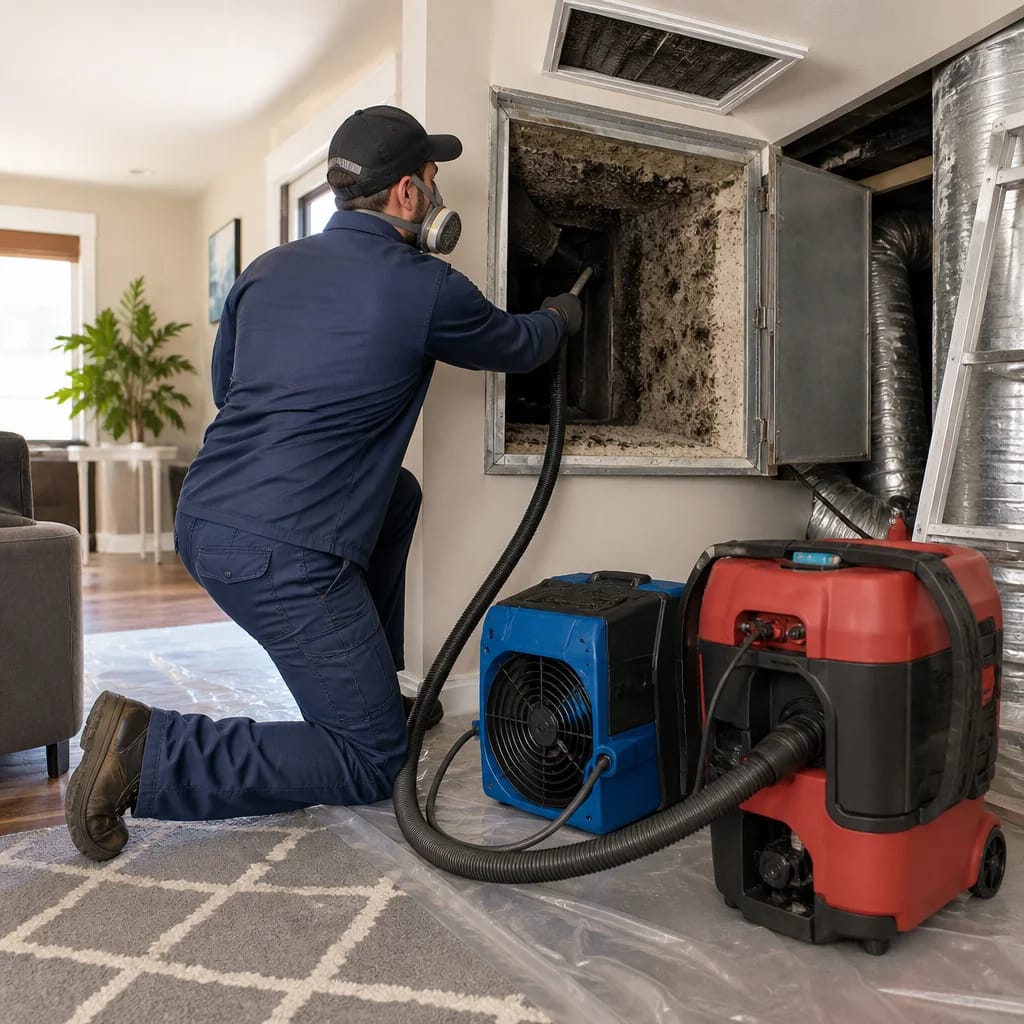
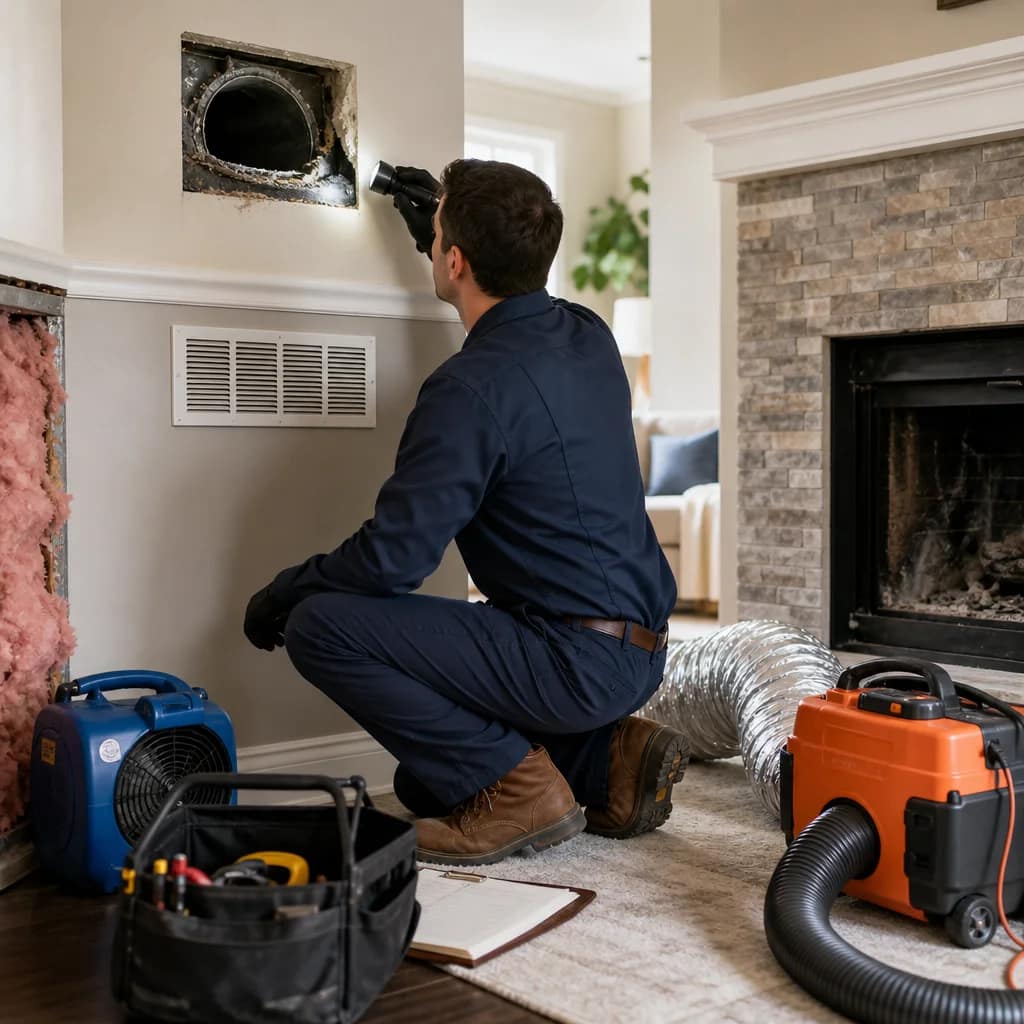
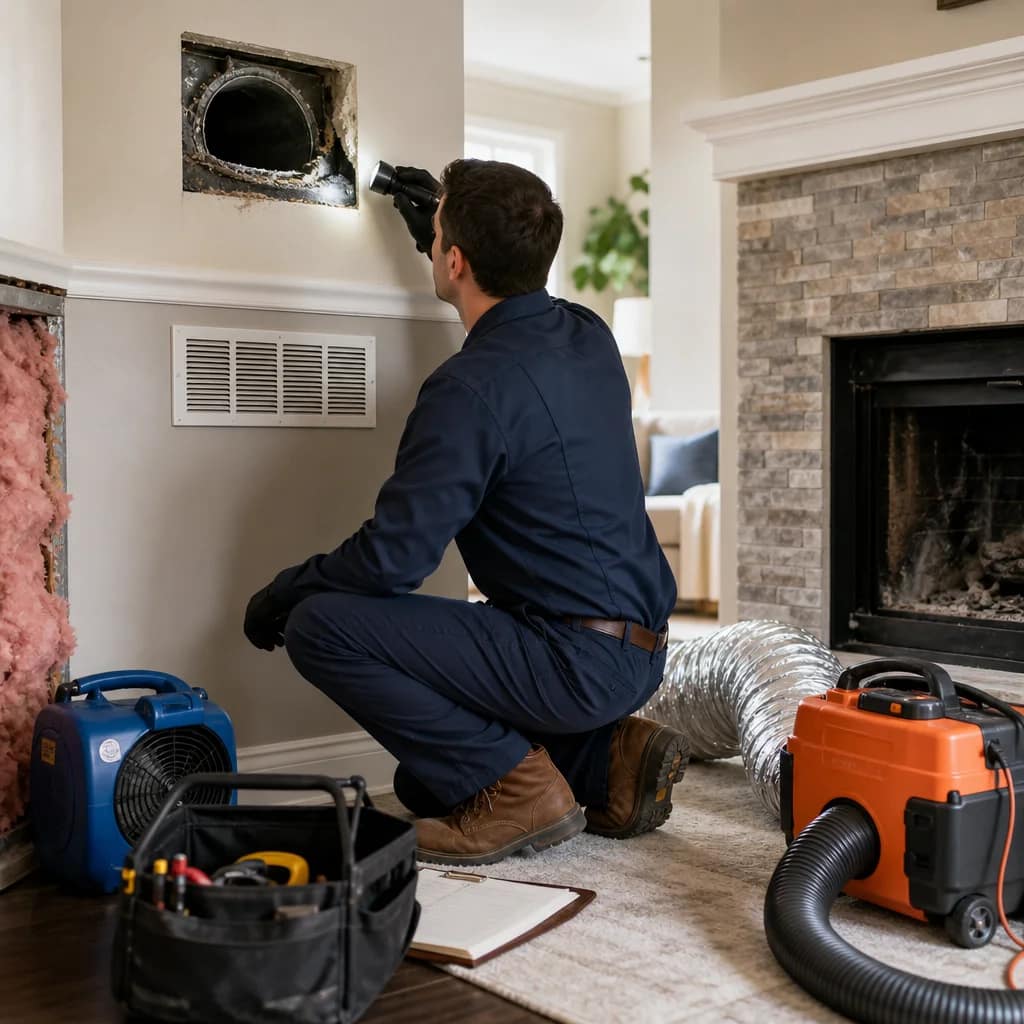
Air duct odors typically have specific characteristics that set them apart. When you turn on your heating or cooling system, do you notice the smell intensifies or briefly gets stronger? That’s a strong indicator the odor is traveling through your ductwork. Similarly, if certain rooms smell worse than others and those rooms share a return air path, your ducts are likely involved.
Dust and debris accumulate in ducts over time, especially if your system hasn’t been cleaned in several years. Combined with moisture from air conditioning condensation, this creates an ideal environment for mold and bacteria to colonize. You might also notice the smell is strongest near air vents or return registers.
To test this theory, run your HVAC system while standing near a supply vent and take a deep breath. Does the odor seem to come from the vent itself, or is it just part of the overall room smell? Duct-specific odors often feel localized to the airflow. If you also notice reduced airflow, higher energy bills, or dust on furniture, blocked and dirty ducts are very likely the culprit.
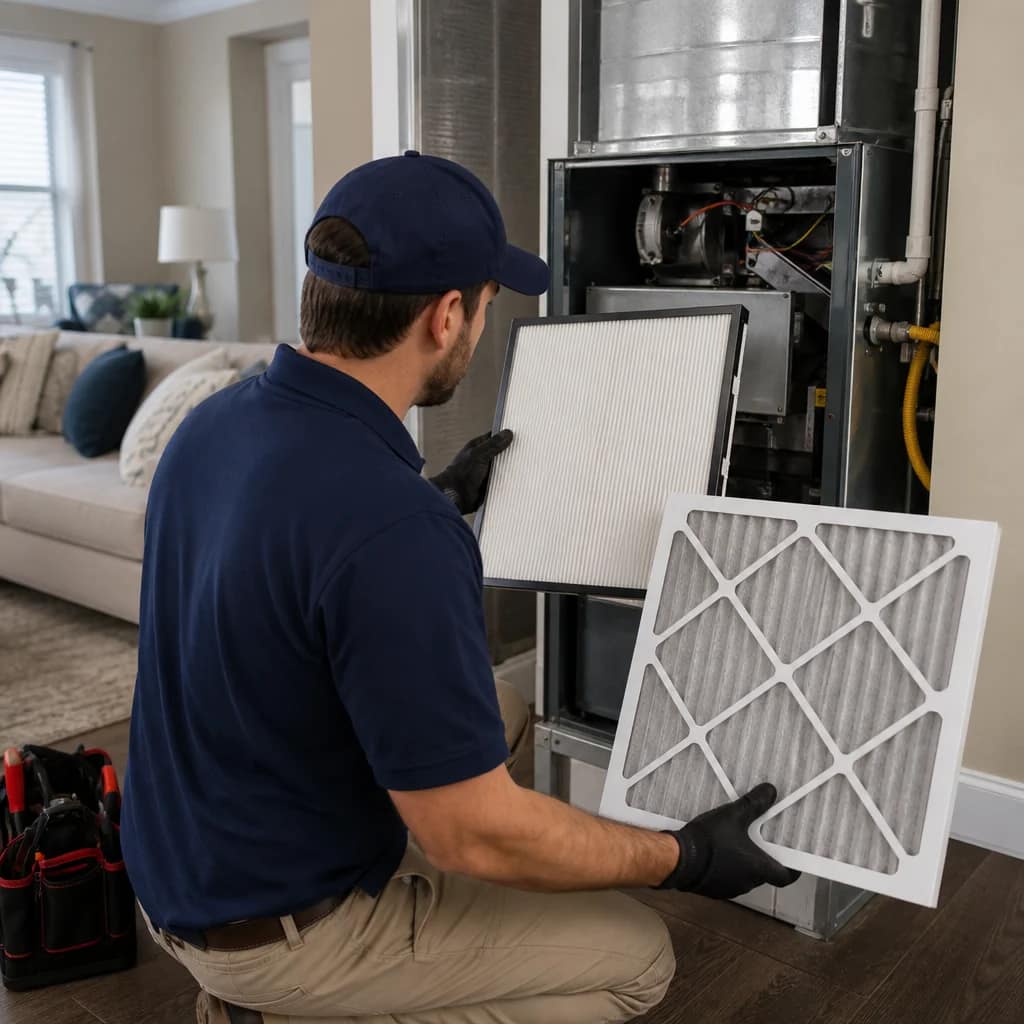
What to do next: Check your furnace filter and note when it was last replaced. A severely clogged filter limits airflow and allows moisture to linger in ducts, promoting odor-causing growth.
Identifying Musty Odors From Your Chimney System
Chimneys develop musty smells for different reasons than air ducts. If you have a fireplace or wood stove, the odor might be creosote and soot buildup that’s trapped moisture over time. Chimneys that haven’t been inspected or cleaned recently often produce a distinctly acrid, smoky-musty combination that’s especially noticeable when it’s humid outside or during temperature swings.
A chimney with restricted airflow or blockage can trap stale, damp air that creates odor. Water intrusion around the chimney crown or flashing also causes this problem. If the musty smell is localized near your fireplace or concentrated on the wall where your chimney runs, your chimney is almost certainly involved.
Chimney odors sometimes seem to travel into adjacent rooms through shared wall spaces or when doors open near the fireplace. In older homes, chimneys weren’t always sealed off from living spaces effectively. If the smell intensifies when you’re near the fireplace or when wind is strong, professional chimney inspection should be your priority.
Actionable step: Look at your chimney exterior from outside. Do you see creosote staining, a deteriorated cap, or missing flashing? These signs confirm your chimney needs professional attention.
What Insulation and Other Hidden Sources Tell You
Insulation problems are trickier to diagnose because they’re literally hidden. If the smell seems to come from walls, the attic, or crawl spaces rather than from vents or your fireplace, compromised insulation could be the issue. Water damage from roof leaks, plumbing failures, or foundation cracks can saturate insulation and create persistent musty odors that seem to permeate your entire home.
Basement and crawl space issues are particularly common in Dallas, where foundation settlement and moisture intrusion happen regularly. If your musty smell is strongest on the lowest floors or seems to come from below, humidity in these spaces is likely responsible. Sump pump failures, improper grading, or inadequate drainage all contribute.
Older homes with settling foundations sometimes develop cracks that allow moisture and outdoor air to enter walls and insulation cavities. The smell develops slowly as microbial growth colonizes the insulation, and it becomes noticeable only once the problem is well established.
Distinguishing between duct, chimney, and structural moisture issues requires systematic elimination. If your HVAC system and chimney both seem fine, the odor likely originates in insulation, foundation, or plumbing systems that need structural evaluation.
Why Professional Inspection Matters for Odor Detection
DIY odor diagnosis has real limits. Many sources exist in spaces you can’t see, and odors can travel through your home in unexpected ways, making the origin seem further than it actually is. A professional technician brings specific tools and expertise to systematically rule out possibilities and pinpoint the true source.
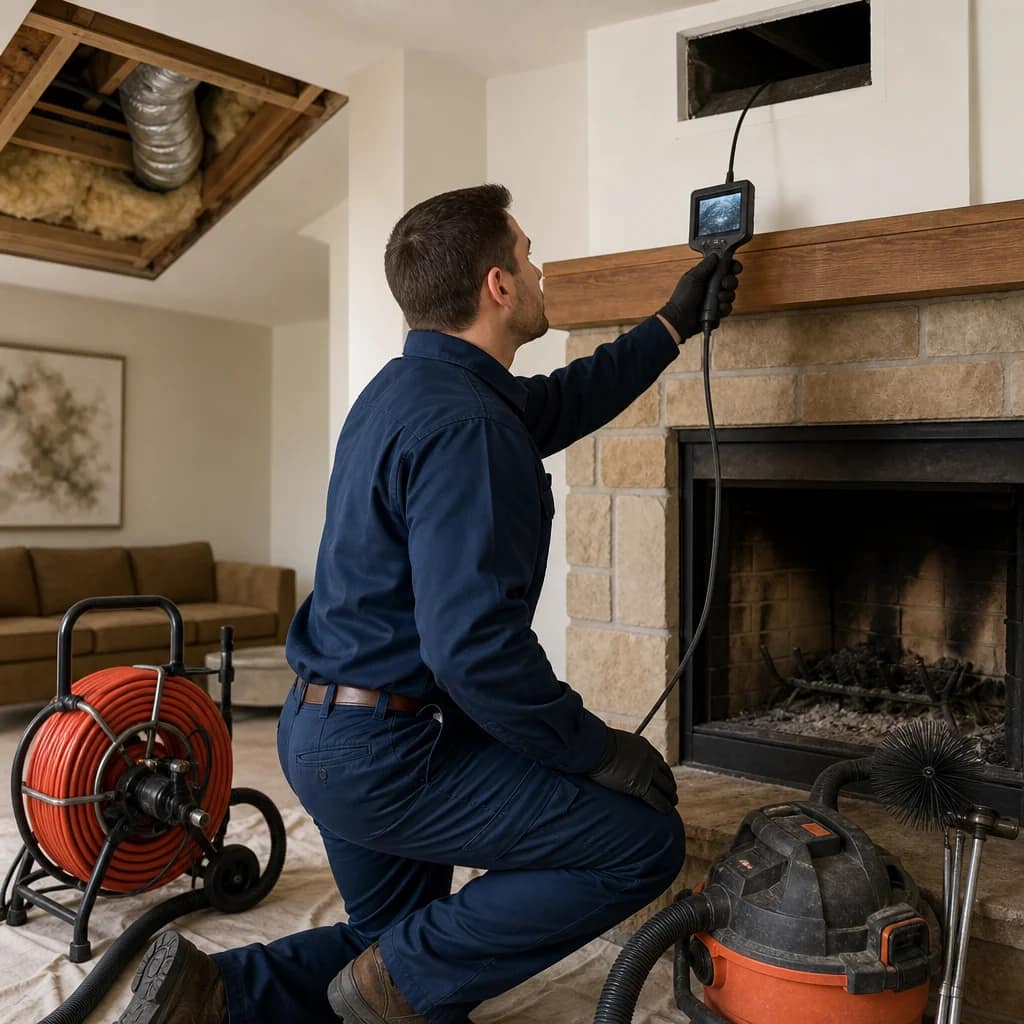
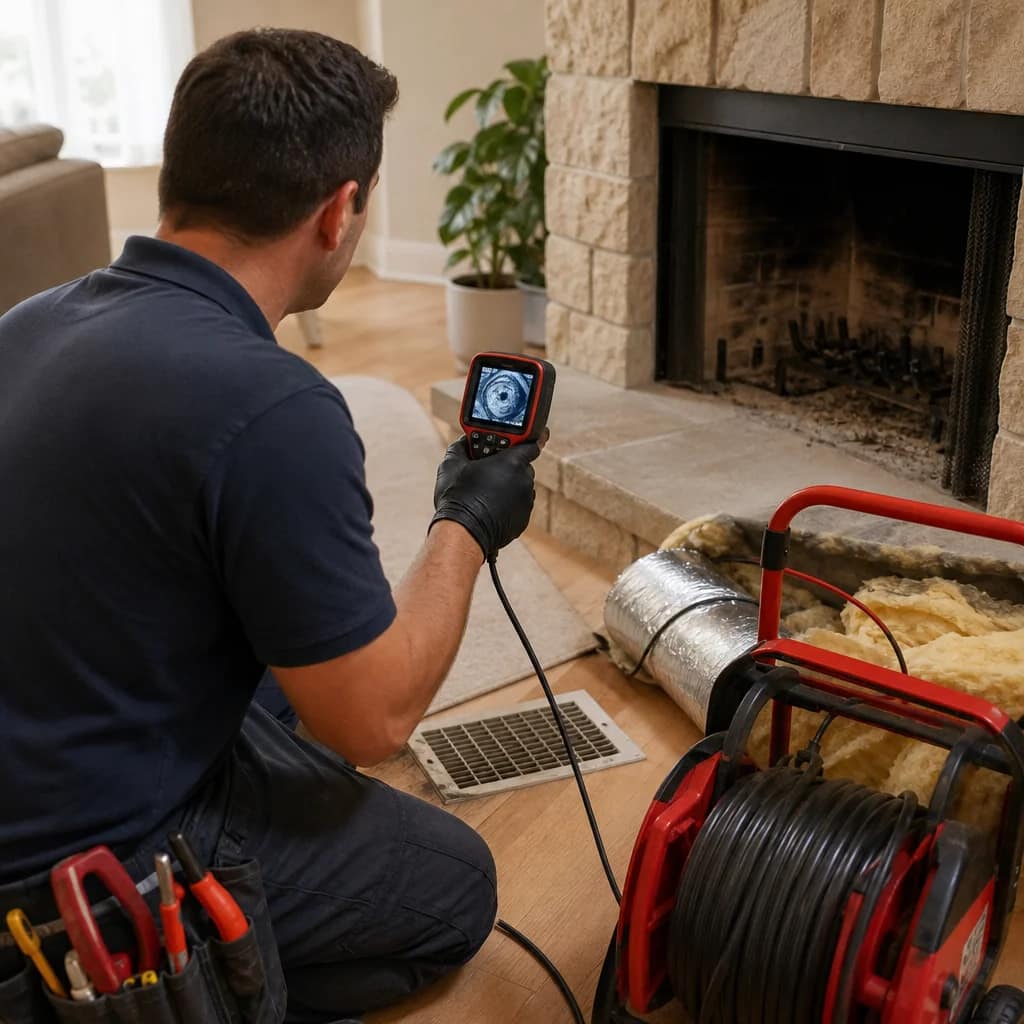
We use video inspection cameras to look inside air ducts without dismantling them. We can identify mold, debris, moisture, and damage in seconds. For chimneys, we access the flue safely and visually inspect creosote, blockages, and structural integrity. These methods reveal problems that visual inspection from your end alone cannot confirm.
Professional diagnosis also prevents costly mistakes. Cleaning your air ducts won’t help if your chimney is the source, and vice versa. Wasting money on unnecessary services frustrates owners and leaves the real problem unresolved. A qualified inspection gives you confidence in what needs to happen next and eliminates guesswork.
Next step: Request an inspection that includes both your air duct system and chimney if you have one. This comprehensive approach prevents the frustration of solving one problem only to discover a second source remains.
How We Diagnose and Eliminate Musty Odors at Dr. Air Duct
Our diagnostic process combines visual inspection, video technology, and professional experience. We arrive at your Dallas-area property and systematically evaluate your air ducts, chimney (if present), HVAC system, and visible insulation or foundation concerns. This thorough approach identifies the actual source rather than treating symptoms.
Once we identify the problem, we explain exactly what we found and what needs to happen. Whether your issue is dirty ducts, chimney creosote, or a combination, we outline the specific services that will resolve it. Our team never recommends work you don’t actually need, and we’re transparent about pricing and timeline from the start.
For air duct odors, we provide professional air duct cleaning using truck-mounted equipment that removes buildup thoroughly. Our sanitization service eliminates mold and bacteria that create lingering smells. For chimneys, we perform complete cleaning and inspection to remove creosote and check for damage that might harbor odor-causing moisture.
The Health Impact of Ignoring Musty Odors
Musty odors aren’t just annoying. They indicate the presence of mold spores, dust mites, bacteria, or volatile organic compounds that affect indoor air quality. Breathing these particles over time can trigger or worsen respiratory issues, especially for children, elderly family members, or anyone with asthma or allergies.
Prolonged exposure to mold-contaminated air also causes fatigue, headaches, and sinus congestion in sensitive individuals. People often don’t connect these symptoms to their home’s air quality until the odor becomes undeniable. Addressing musty smells protects your family’s health and prevents these compounds from accumulating further in your living spaces.
Commercial properties face additional concerns. Employees and customers exposed to poor indoor air quality report reduced productivity and satisfaction. Addressing musty odors in your business demonstrates commitment to occupant health and creates a more professional environment.
Our Air Duct Cleaning and Sanitization Solution
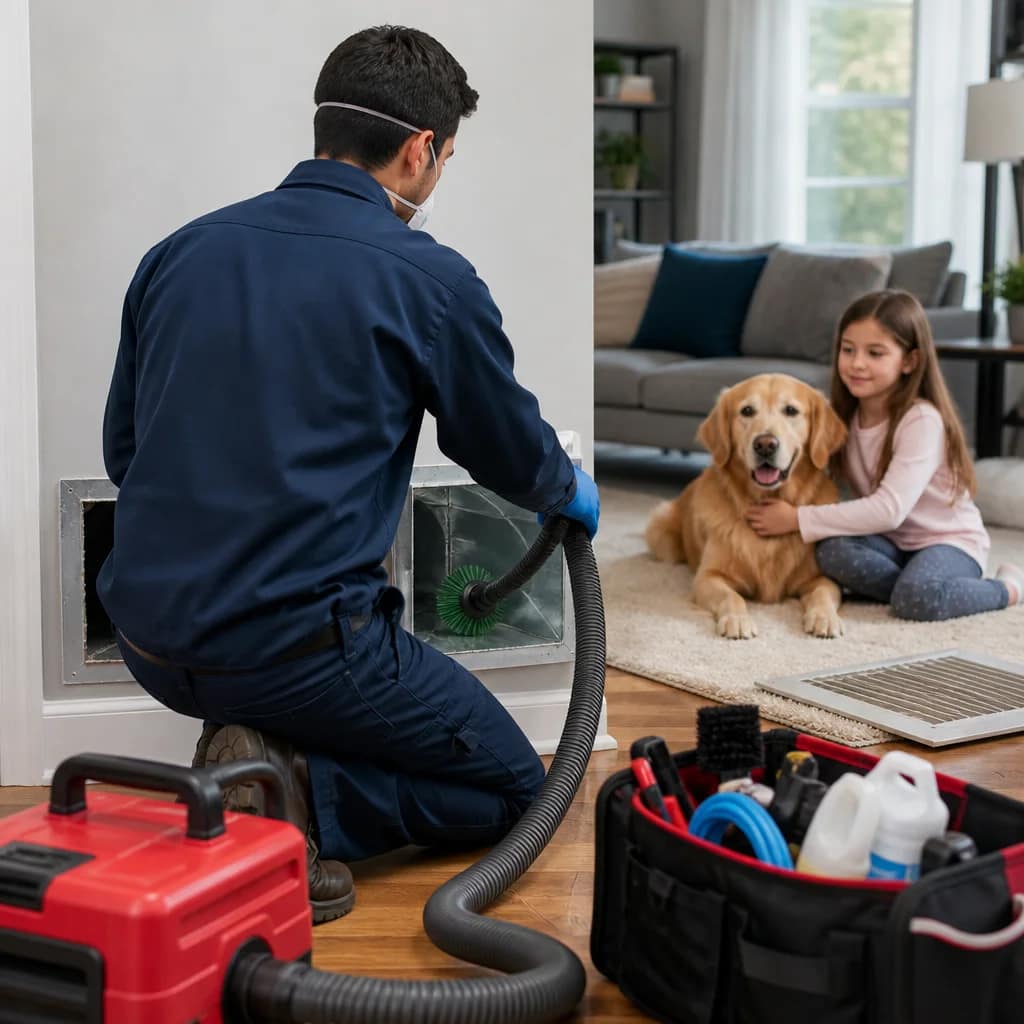
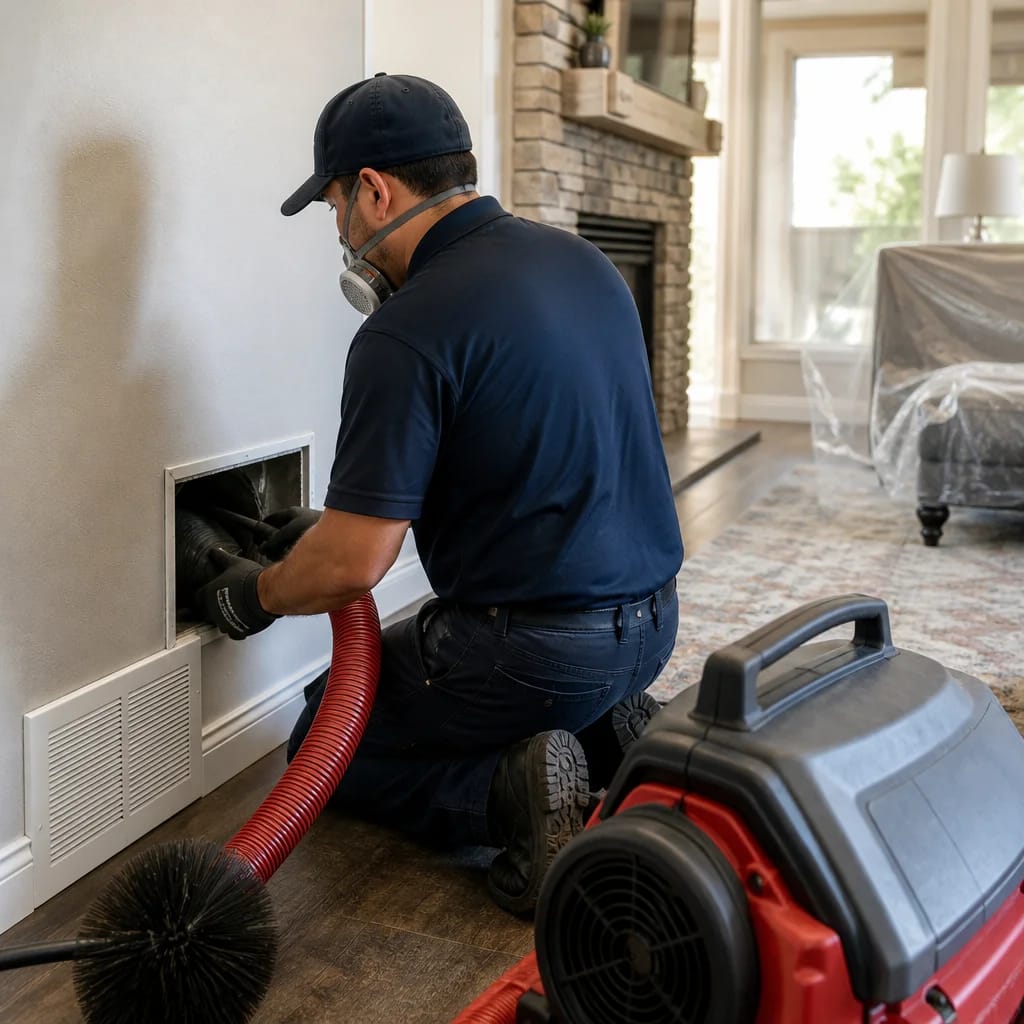
Air duct cleaning removes the dust, debris, and microbial growth that cause odors and compromise air quality. We use powerful truck-mounted vacuums and professional-grade equipment that fully evacuates your system from the inside. This isn’t a surface-level solution; we clean every section of your ductwork to eliminate buildup completely.
Our sanitization service goes further, applying approved antimicrobial treatments that eliminate mold, bacteria, and odor-causing microorganisms. This combination of cleaning and sanitization leaves your air fresh and your system functioning efficiently. We also inspect your system for damage or areas where moisture might collect, allowing us to recommend repairs that prevent future problems.
Many Dallas homeowners notice improved airflow, fresher air, and often lower energy costs after this service. Your HVAC system doesn’t have to work as hard to move air through clean ducts, reducing strain on your equipment. If you haven’t had your ducts cleaned in three or more years, this service typically pays for itself in improved comfort and efficiency.
Our Chimney Inspection and Cleaning Services
Chimney cleaning removes creosote and soot that traps moisture and creates musty odors. We access your chimney safely and perform a thorough cleaning that restores proper airflow and eliminates the fuel for odor-causing growth. Our chimney inspections identify structural damage, moisture issues, or blockages that might require repair or warrant recommendations for preventive maintenance.
A well-maintained chimney not only smells better but also functions safely and efficiently. Creosote buildup increases fire risk, and blockages prevent proper ventilation of combustion byproducts. Our comprehensive approach addresses both the odor problem and the underlying safety concerns that attracted you to professional service in the first place.
Annual chimney inspection and cleaning are standard maintenance for homes with fireplaces or wood stoves. For Dallas properties, this service becomes especially important during spring and fall when moisture levels fluctuate and heating or cooling systems operate actively.
Prevention Tips to Keep Your Home Smelling Fresh
After we eliminate your musty odor source, maintaining your systems prevents the problem from recurring. Replace your furnace filter every three months or as needed, and ensure your HVAC system has adequate airflow. Check bathroom and kitchen exhaust vents are properly vented outdoors and not recirculating air into your attic.
Control humidity throughout your home, especially in basements and crawl spaces. Use a dehumidifier if moisture levels exceed 60 percent during humid seasons. Ensure your gutters are clean and properly pitched, and check that your foundation grading slopes away from your home to prevent water intrusion.
For properties with chimneys, schedule annual cleaning and inspection before heating season begins. This routine maintenance catches problems early and prevents odor from developing. If you notice musty smells returning, contact us promptly rather than waiting for the problem to intensify.
Practical action: Create a simple maintenance schedule for your HVAC system, chimney, and moisture control. Mark calendar reminders for filter changes, gutter cleaning, and annual inspections. Consistent upkeep prevents most musty odor issues from developing.
Schedule Your Professional Odor Diagnostic Today
Musty odors deserve professional attention because their source often isn’t obvious. We provide comprehensive diagnostics that pinpoint the actual problem, eliminate guesswork, and connect you with the right solution. Our Dallas-area technicians bring equipment, expertise, and a commitment to transparent communication that sets us apart.
Don’t let a musty smell linger while you guess at the cause. Contact us to schedule your inspection and take the first step toward fresh, clean air throughout your home or business. We’re available 24/7 and respond quickly because we understand how uncomfortable poor air quality feels.
Call Dr. Air Duct today or visit our website to request your diagnostic appointment. We’ll identify what’s causing your musty odor and explain exactly what it takes to resolve it.
Frequently Asked Questions (FAQ)
What are the most common causes of musty odors in Dallas homes?
We find that musty smells typically stem from three main sources: contaminated air ducts, inactive chimneys, and moisture-damaged insulation. In our Dallas area experience, dust, mold, and bacterial growth in ductwork are the leading culprits because our region’s humidity creates ideal conditions for these organisms to thrive. We also frequently identify stagnant water or decomposing debris in chimney systems as major odor contributors, especially in older properties.
How can we tell if our air ducts are actually causing the musty smell?
We recommend paying attention to when and where you notice the odor most. If the musty scent intensifies when your HVAC system runs, gets stronger near supply vents, or affects multiple rooms simultaneously, your ductwork is likely the source. We can confirm this during our professional inspection using specialized equipment that reveals mold growth, bacterial colonies, and accumulated debris that cause these odors.
Why should we hire professionals instead of trying to fix musty odors ourselves?
We understand the temptation to DIY, but pinpointing the exact source requires expertise and equipment most homeowners don’t have access to. We use diagnostic tools to identify hidden contamination in your ducts, chimney, and insulation that visual inspection alone will miss, and we eliminate odors at their source rather than just masking them with fragrances.