

Table of Contents
- Why Smoke Is Backing Up Into Your Living Room
- Common Causes of Fireplace Smoke Backups
- The Hidden Dangers of Creosote and Soot Buildup
- How Our Chimney Cleaning Restores Proper Airflow
- Our Inspection Process for Finding the Root Cause
- Chimney Repairs We Handle When Damage Is Found
- Preventing Future Smoke Backups With Annual Maintenance
- Why Dallas Homeowners Choose Dr Air Duct for Chimney Care
- Scheduling Your Chimney Service With Our Team
- Frequently Asked Questions (FAQ)
Why Smoke Is Backing Up Into Your Living Room
A fireplace is designed to pull smoke up and out through the chimney. When that process breaks down and smoke spills into the room instead, homeowners usually notice it first as a haze near the ceiling, a sharp smell, or a burning sensation in the eyes. This is called a smoke backup, and it is one of the most common problems we hear about from Dallas homeowners during the colder months.
The reason it happens comes down to draft. Draft is the upward pull of air that carries smoke out of the home. Warm air rises, so a properly working chimney creates a steady column of rising air that draws smoke along with it. If something interrupts that column, whether it is a blockage, a cold chimney, or pressure pushing air the wrong way, smoke has nowhere to go but back into the room.
If you notice smoke in the room while a fire is burning, do this right away:
- Open a window nearby for fresh air.
- Shut the damper only after the fire is fully out and the firebox has cooled.
- Avoid adding more fuel until the cause has been checked.
Repeated backups are a sign that the system needs a closer look, not something to ignore.
Common Causes of Fireplace Smoke Backups
Smoke backups rarely have just one cause. In our experience, they usually come from a combination of a few common issues:
- Blockages. Bird nests, leaves, animal debris, or a collapsed liner can physically block the flue. Even a partial blockage can restrict airflow enough to push smoke back down.
- Creosote and soot buildup. A thick layer of residue narrows the flue opening and makes the passage rougher, which slows the upward flow of air.
- A cold or short chimney. A chimney that does not reach the proper height above the roofline, or that is poorly insulated, may not warm up quickly enough to create strong draft.
- Pressure imbalances in the home. Exhaust fans, clothes dryers, and tightly sealed rooms can pull air down the chimney. Running a kitchen exhaust fan while a fire is burning is a frequent trigger.
- Damper problems. A damper that is partly closed, warped, or stuck open at the wrong time can disrupt the airflow pattern.
- Wind and weather. Strong winds hitting the top of the chimney can create downdrafts, especially if the chimney cap is missing or damaged.
A quick way to narrow things down is to ask yourself when the problem happens. If it only occurs during a cold start, the chimney may be too cool to draw. If it happens during windy days, the top of the chimney may be the issue. If it happens while another appliance is running, pressure in the home is the likely culprit.
The Hidden Dangers of Creosote and Soot Buildup

Creosote is a dark, tar-like byproduct of burning wood. It forms when smoke cools inside the flue and condenses on the walls. Soot is the fine black powder that settles alongside it. Both build up gradually, often without any obvious sign until the flue starts to restrict airflow.
Creosote comes in three stages. The first is a flaky, powdery layer that is relatively easy to remove. The second is a harder, crusty buildup that requires more effort. The third is a glazed, shiny coating that is extremely hard to remove and can ignite at high temperatures. Stage three is the one that should concern homeowners most, because it significantly raises the risk of a chimney fire.
Buildup matters for a few reasons:
- It narrows the flue, which reduces draft and contributes to smoke backups.
- It can ignite during a hot fire, creating a chimney fire that can spread to the home.
- It holds moisture and odors, which can make the fireplace smell unpleasant.
If you use your fireplace regularly, check the flue and firebox for black, flaky residue or a shiny glaze. Any noticeable buildup is a reason to schedule a professional cleaning.
How Our Chimney Cleaning Restores Proper Airflow
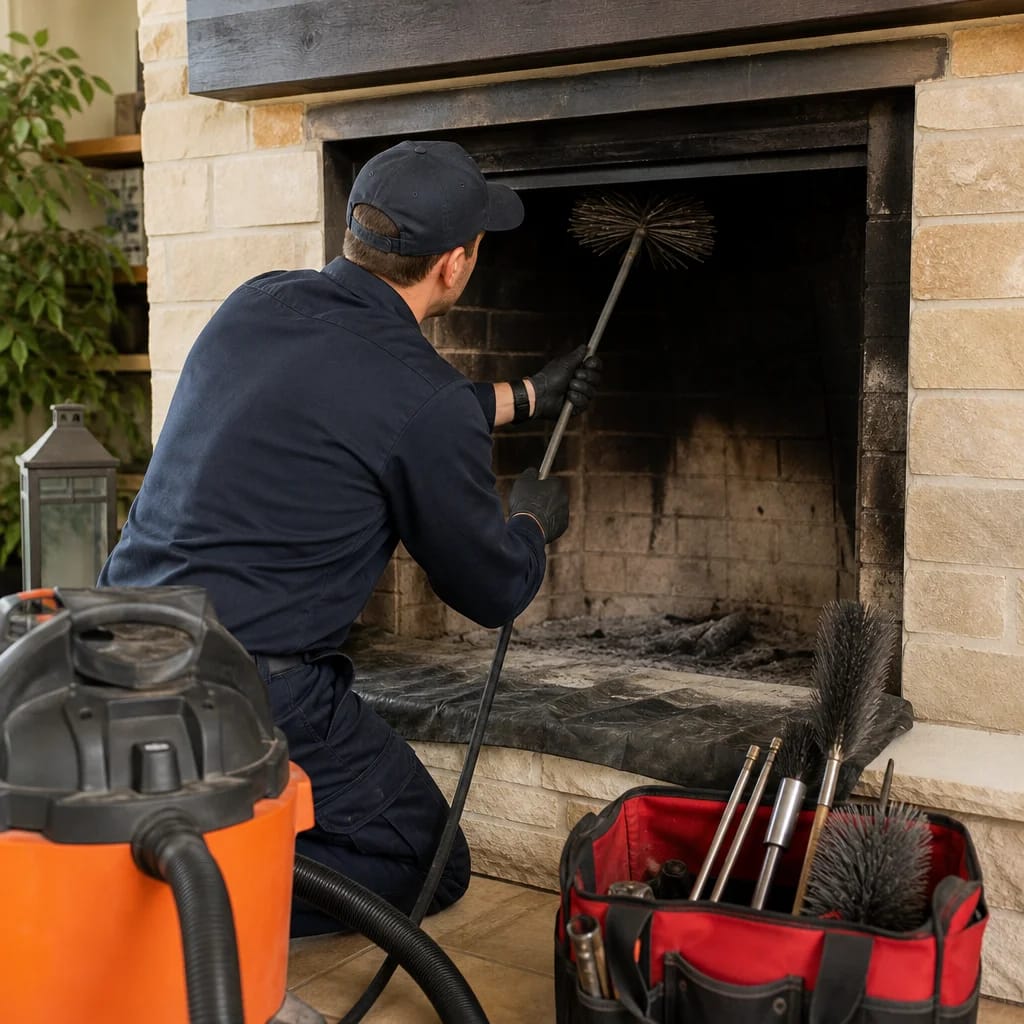
Our chimney cleaning is designed to remove the buildup that restricts airflow and to clear any debris that blocks the flue. The goal is to restore a clear, smooth path so smoke can rise and exit the home as intended.
The process typically includes:
- Protecting the home. We lay drop cloths and seal the fireplace opening to keep soot out of living spaces.
- Sweeping the flue. Our technicians use professional-grade brushes and rods sized for your chimney to remove creosote, soot, and debris from the walls.
- Clearing the firebox and smoke shelf. Residue collects in these areas too, and removing it helps restore normal draft.
- Removing blockages. Nests, leaves, and other material are cleared from the flue and the chimney crown.
- Final check. We verify that airflow is moving freely and that the flue is clear from top to bottom.
Cleaning alone does not fix every cause of a smoke backup. If the issue stems from damage, a poor design, or a pressure imbalance, further steps may be needed. That is why we begin with a thorough inspection before we start cleaning.
Our Inspection Process for Finding the Root Cause
Treating symptoms without finding the source leads to repeat problems. Our inspection is built to identify exactly why smoke is spilling into the room.
We typically check:

- The flue interior. Using a video camera, we look for cracks, gaps, missing liner sections, and buildup that may not be visible from the firebox.
- The chimney crown and cap. We inspect for cracked masonry, deteriorated mortar, and missing or damaged caps.
- The damper. We confirm that it opens and closes fully and seals properly.
- The firebox and smoke chamber. Any gaps, deterioration, or incorrect dimensions can affect draft.
- Clearances and surroundings. We look at nearby structures, trees, and roofline features that could affect airflow.
- Pressure conditions. When relevant, we consider how exhaust appliances in the home may be influencing draft.
At the end of the inspection, we walk you through what we found in plain language, show you photos or video where helpful, and explain your options. You will know what is wrong, why it matters, and what the next steps are before you approve any work.
Chimney Repairs We Handle When Damage Is Found
When the inspection reveals damage, we handle the repairs that restore your chimney to safe and reliable operation. Our chimney repair work includes:
- Crown repair and replacement. Cracks in the crown let water in, which accelerates deterioration. Resealing or rebuilding the crown protects the masonry below.
- Chimney cap installation. A properly fitted cap keeps out animals, debris, and rain while helping reduce downdrafts caused by wind.
- Mortar and brick repair. Deteriorated joints and cracked bricks can allow water and smoke to escape into the structure.
- Flue liner repair or replacement. A damaged or missing liner can allow heat and smoke to reach combustible materials and can disrupt draft.
- Damper repair or replacement. A damper that does not seal well lets conditioned air escape, and a stuck damper can cause smoke to spill into the room.
Repairs are priced based on the scope of work, the materials needed, and the access required. We provide a written estimate before starting so you can make an informed decision. For homeowners who need a deeper assessment, our chimney inspection and repair service covers the full range of diagnostic and repair options.
Preventing Future Smoke Backups With Annual Maintenance
The most effective way to prevent smoke backups is consistent annual maintenance. A yearly inspection catches small problems before they grow into draft issues, and a cleaning before the heating season keeps the flue clear when you need it most.
A simple maintenance routine looks like this:
- Schedule an annual inspection before the first fire of the season.
- Clean the chimney as needed. Many households need cleaning once a year, while heavy users may need it more often.
- Burn seasoned wood. Wood with lower moisture content produces less smoke and less creosote.
- Keep the firebox clean and remove ash regularly, but leave a thin layer to help insulate the fire.
- Watch for warning signs like smoke in the room, a strong odor, rattling noises, or water stains near the chimney.
- Keep the cap and crown in good condition. Check after storms for loose or damaged components.
Some homeowners also use a glass fireplace door to reduce the amount of room air drawn up the chimney. Adjustments like this can help manage draft, though they should be installed and used according to manufacturer guidance.
Regular maintenance will not eliminate every possibility of a backup, but it greatly reduces the odds of one and helps your system run as designed.
Why Dallas Homeowners Choose Dr Air Duct for Chimney Care

Dallas homes come with their own set of conditions. Hot, humid summers, sudden cold snaps in winter, and frequent storms all place stress on chimneys. Our team is familiar with these local patterns and plans our service around them.
Here is what sets our approach apart:
- Trained technicians. Our team is trained to inspect, clean, and repair chimneys with the proper tools and safety practices.
- Proper equipment. We use professional brushes, video inspection cameras, and protective materials to keep work clean and accurate.
- Clear communication. You receive plain-language explanations of what we find, along with written estimates before work begins.
- Responsive scheduling. We offer 24/7 availability and fast response times, which matters when a smoke problem appears during a cold night.
- Broad service range. Beyond chimneys, we also provide air duct cleaning, repair, and sanitizing, as well as dryer vent cleaning, so you can manage several home air systems with one provider.
Our goal is to earn your trust by doing the work carefully, explaining it clearly, and treating your home as if it were our own.
Scheduling Your Chimney Service With Our Team
If you are dealing with smoke backing into your home, or if it has been a while since your last inspection, the next step is simple. Contact our team to request an inspection, and we will schedule a visit at a time that works for you.
To make the most of your appointment, have these details ready:
- The type of fireplace or stove you use (wood, gas, or insert)
- When the smoke problem typically occurs
- How often you use the fireplace each season
- The date of your last cleaning or inspection, if you know it
- Any recent changes to the home, such as new exhaust fans, sealed windows, or roof work
Before you call, avoid running the fireplace if you are experiencing active smoke spillage. Keep the room ventilated, and do not use the fireplace again until it has been checked.
Ready to get your chimney working the way it should? Visit Dr Air Duct to learn more about our services and request an appointment. We are proud to serve Dallas homeowners with dependable chimney care, and we look forward to helping you breathe easier by the fire.
Frequently Asked Questions (FAQ)
What causes smoke to back up into my living room?
Smoke usually backs up when the chimney cannot create enough draft to pull combustion gases upward and out. Common culprits include creosote buildup, a blocked flue, a cracked liner, or a damper that is closed or partially open. At Dr Air Duct, we inspect the full flue system to identify which of these is restricting airflow before recommending any work.
How often should we have our chimney cleaned to prevent smoke problems?
We recommend an annual cleaning and inspection for any fireplace or wood stove that is used regularly. Homes that burn wood frequently or burn damp wood may need service more often. Our team can review your usage and give you a schedule that fits how you heat your home.
What should we do if smoke is already filling the room?
Open a window for fresh air, turn off the fireplace or stove, and keep children and pets away from the smoke. Once the room is safe, contact us so we can examine the chimney for blockages, damage, or creosote. We offer prompt scheduling in Dallas, and our team is available around the clock for urgent smoke concerns.