

Table of Contents
- 1. Your Dryer Takes Twice as Long to Dry Clothes
- 2. Lint Buildup Visible Around Your Dryer and Vent Opening
- 3. Burning Smell or Excessive Heat During the Drying Cycle
- 4. Water or Moisture Accumulating in Your Laundry Area
- 5. Why Professional Emergency Service Beats DIY and Delays
- 6. How We Deliver Same-Day Emergency Dryer Vent Cleaning
- 7. Fire Prevention and Safety Through Immediate Professional Attention
- Frequently Asked Questions (FAQ)
1. Your Dryer Takes Twice as Long to Dry Clothes
A clogged dryer vent creeps up on you quietly. One week your clothes dry normally, the next you’re running the cycle three times just to get your jeans ready for tomorrow. By then, your dryer is working harder, running hotter, and putting your home at real risk.
At Dr. Air Duct, we’ve responded to countless emergency dryer vent cleaning calls across Dallas from homeowners who didn’t realize how dangerous a blocked vent can become. The good news: most situations are preventable. Knowing the warning signs lets you catch the problem before it becomes a fire hazard or forces an expensive repair.
Here are the seven clearest signs that your dryer vent needs professional attention right now.
When lint buildup restricts airflow inside your dryer vent, moisture and heat get trapped instead of venting outside. Your dryer compensates by running longer cycles, using more energy, and generating excessive heat in the process.
If you notice your dryer running 45 minutes to an hour just to dry a single load of towels, that’s not normal wear and tear. A dryer operating at peak efficiency typically completes a full load in 30 to 45 minutes. Anything beyond that signals a serious blockage.
This extended drying time compounds the problem. The longer your dryer runs, the hotter the lint inside the vent gets. High temperatures + trapped lint = fire risk. Additionally, your energy bills will spike noticeably over time as your dryer works overtime.
What to do next: Run a small test load tomorrow morning and time it. If drying takes significantly longer than it did six months ago, schedule a professional vent inspection right away.
2. Lint Buildup Visible Around Your Dryer and Vent Opening
Walk outside your home and look at your dryer vent opening, typically located on the exterior wall or roof. You should see only a clean, unobstructed exit. If lint is accumulating around the vent hood or you notice a lint ring building up on the exterior, your vent is severely blocked.
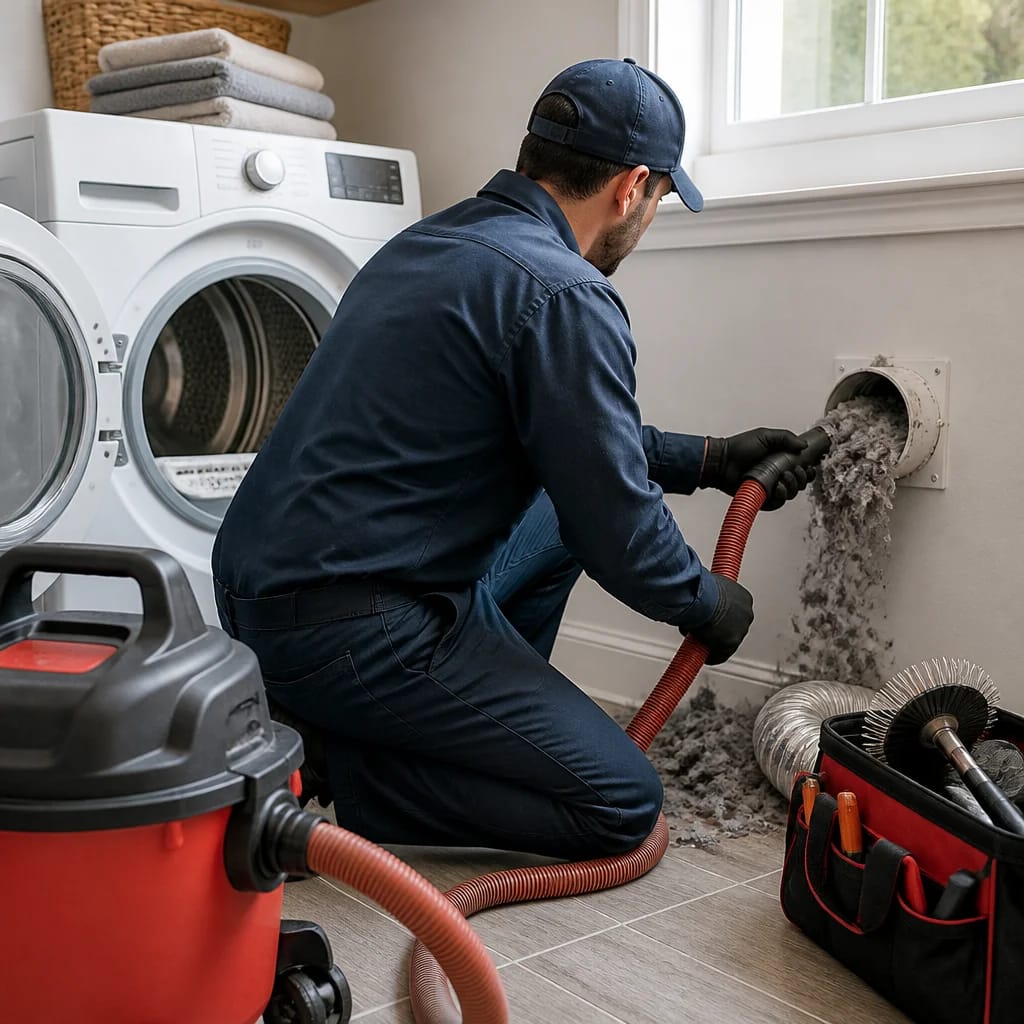
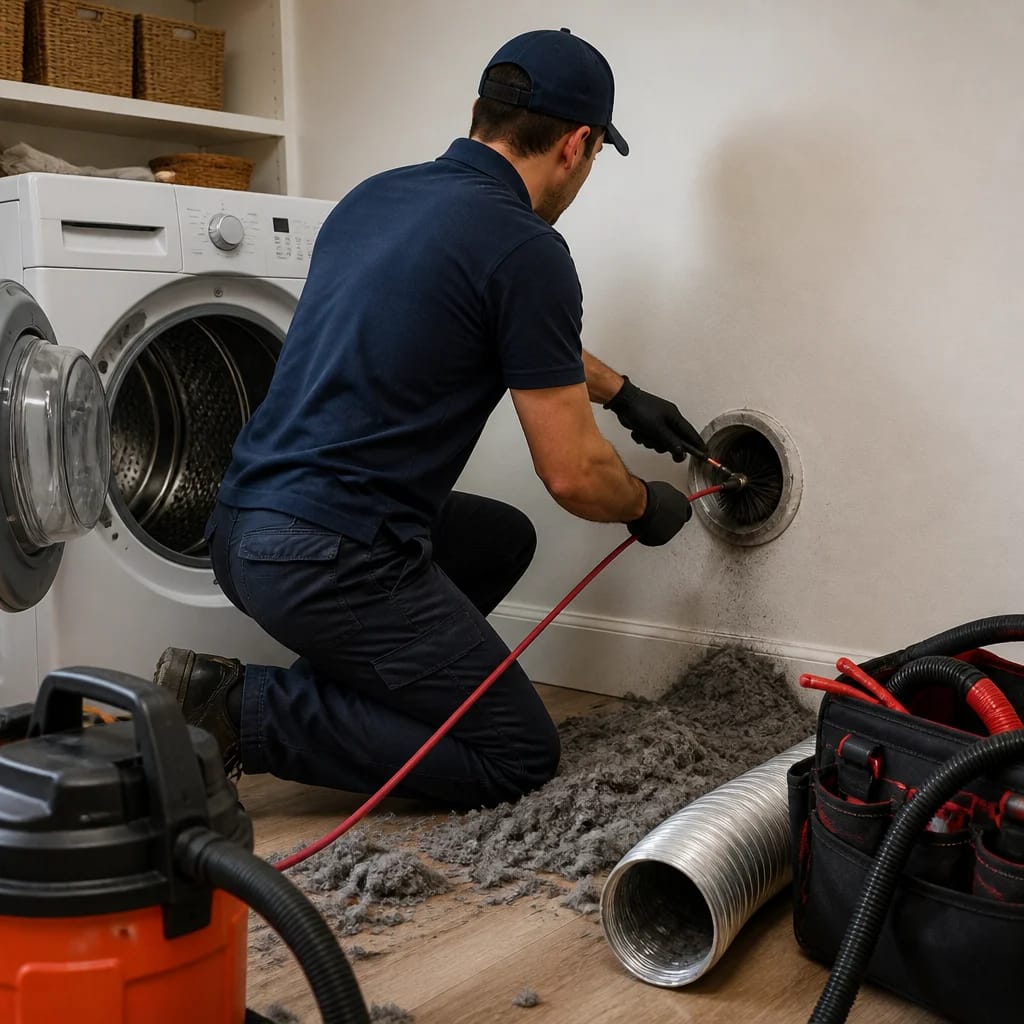
Similarly, check behind and around your dryer inside the laundry area. Excessive lint scattered across the floor, on the dryer body itself, or along the vent connection hose indicates that lint is escaping from the system instead of exiting properly outdoors. This happens when the vent can no longer handle the volume of lint your dryer is producing.
Even small amounts of lint visible at these points mean your entire vent line is likely packed with lint deeper inside the duct work. What you see on the surface is just the overflow.
What to do next: Visually inspect your exterior vent opening and the area behind your dryer this week. If you spot lint accumulation, do not ignore it or attempt a DIY fix with just a plunger or shop vac. Call us for a professional inspection.
3. Burning Smell or Excessive Heat During the Drying Cycle
A burning or hot plastic smell coming from your laundry room during the drying cycle is a red flag that demands immediate action. This odor typically means lint is overheating inside your vent or dryer chamber. When lint reaches high temperatures, it becomes a fire hazard.
You might also notice that the exterior wall or vent area feels unusually hot to the touch, or that your laundry room becomes uncomfortably warm even when your dryer is running normally. These signs indicate that heat is not venting out efficiently and is accumulating inside your home.
Never assume a burning smell is temporary or harmless. It’s your early warning system. Lint is highly flammable, and once it reaches ignition temperature in a restricted, hot environment, a fire can start without warning.
What to do next: Stop using your dryer immediately if you detect a burning smell. Turn off the unit, open windows for ventilation, and contact us for same-day emergency service.
4. Water or Moisture Accumulating in Your Laundry Area
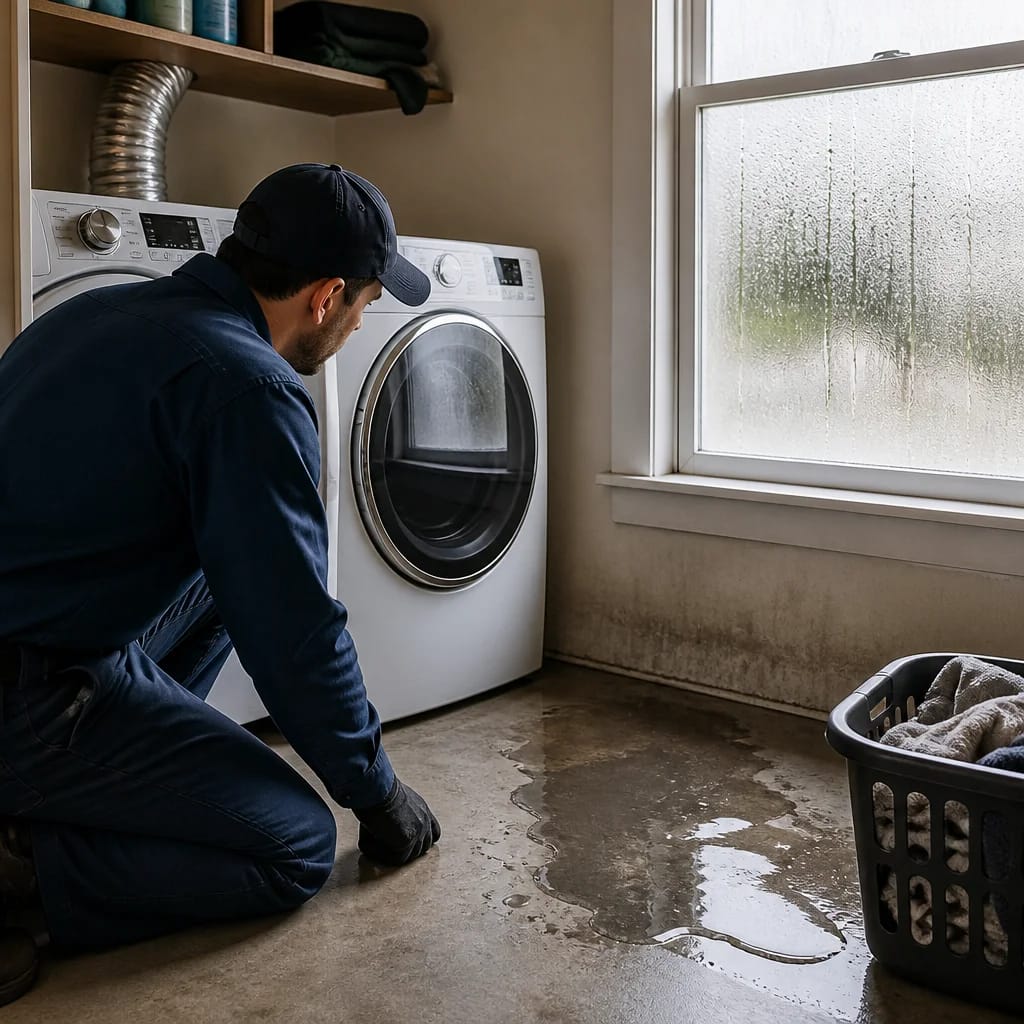
If you notice condensation on windows near your dryer, puddles forming under or around the dryer, or a musty smell developing in your laundry room, your dryer vent is not expelling moisture properly.
Dryers are designed to pull moisture out of wet clothes and push that warm, humid air outside through the vent. When the vent is blocked, that moisture has nowhere to go. It backs up into your home, creates humidity in the laundry area, and can lead to mold growth over time.
Water pooling on the floor is especially concerning because it suggests moisture is being forced back through the vent line with nowhere else to escape. This is a sign of severe blockage.
What to do next: Check the floor and corners of your laundry room for standing water or mold spots. If present, turn off your dryer and call us. We’ll clear the blockage and help restore proper airflow.
5. Why Professional Emergency Service Beats DIY and Delays
Many homeowners try to handle clogged dryer vents themselves using a shop vacuum, a flexible rod, or YouTube tutorials. The problem: you can’t see or access the entire vent system from inside your home, and DIY attempts often push lint deeper into the ductwork instead of removing it.
Worse, waiting for a “regular” appointment when you’ve noticed warning signs can cost you. The longer a vent remains blocked, the higher the fire risk. A burned-out heating element or damaged vent housing can also develop, turning a cleaning job into a repair or replacement project.
Professional emergency service exists precisely for this reason. We have specialized equipment, trained technicians, and the expertise to safely clear your entire vent line from beginning to end. We also inspect the vent for damage and verify that everything is working safely before we leave.
When you call us for emergency dryer vent cleaning, we prioritize your request and often can arrive same-day. That’s not a luxury; that’s fire prevention.
What to do next: If you’ve been putting off a dryer vent cleaning or thinking about handling it yourself, change your approach. Call Dr. Air Duct instead and describe the symptoms you’ve noticed. We’ll assess the situation and recommend the fastest, safest solution.
6. How We Deliver Same-Day Emergency Dryer Vent Cleaning
Our emergency dryer vent cleaning process is straightforward and thorough. We first disconnect your dryer safely and inspect the vent connection and exterior vent opening. Then we use professional-grade equipment to flush out lint, debris, and blockages throughout the entire vent line.
Unlike consumer-level vacuums or tools, our equipment reaches deep into the ductwork and removes accumulation that’s been building for months or years. We verify proper airflow after cleaning and check for any damage to the vent housing, damper, or ductwork that might need repair.
If we spot issues like disconnected sections, damaged flexible ducting, or a blocked exterior hood, we address those during the same visit. This comprehensive approach ensures your dryer vent is fully functional and safe when we finish.
We’re available 24/7 across the Dallas area because emergencies don’t follow a 9-to-5 schedule. Whether it’s early morning, evening, or weekend, contact us and we’ll get you on our priority list.
What to do next: Save our contact information and bookmark our dryer vent cleaning Dallas page. When you need us, we’re ready.
7. Fire Prevention and Safety Through Immediate Professional Attention
Dryer fires are preventable. The U.S. Fire Administration estimates that clothes dryers are involved in thousands of home fires every year, and lint accumulation is a leading cause. A single vent cleaning appointment can eliminate the most dangerous risk factor.
When you notice any of the first six warning signs, professional attention isn’t optional or something to delay. It’s a direct investment in your home’s safety and your family’s security. A few hundred dollars for emergency cleaning is far less costly than fire damage, injuries, or having to replace your entire dryer.
Beyond emergency response, regular maintenance cleaning every 12 to 24 months keeps your dryer operating safely and efficiently year-round. Many Dallas homeowners benefit from annual cleaning, especially if they run their dryer frequently or have a household of multiple people generating large laundry volumes.
When you choose professional service from Dr. Air Duct, you’re choosing a local company that understands Dallas properties, has the equipment to do the job right, and stands behind our work with trained, licensed technicians.
What to do next: If any of the seven warning signs apply to your dryer right now, call us today. If your dryer is running fine but you can’t remember when it was last professionally cleaned, schedule a maintenance cleaning appointment. Either way, we’re here to keep your laundry room safe and your dryer running efficiently.
Frequently Asked Questions (FAQ)
How quickly can we respond to emergency dryer vent cleaning requests?
We understand that a clogged dryer vent is a fire hazard, so we prioritize emergency calls and typically arrive within hours of your request. Our 24/7 availability means we can dispatch a technician any day or time, including nights and weekends. We work fast because we know delays put your home at risk.
Why shouldn’t we try to clean our dryer vent ourselves?
While removing lint from your dryer trap is safe, the ductwork behind your wall requires professional equipment and expertise that most homeowners don’t have. We use specialized tools to reach deep clogs and inspect for damage that could worsen if tackled incorrectly. Our team also ensures we follow local Dallas building codes and safety standards during the process.
What happens if we ignore a clogged dryer vent?
A blocked vent causes your dryer to work harder, tripling drying times and dramatically increasing your energy bills. More importantly, lint buildup is highly flammable and creates a serious fire risk in your home. We recommend annual inspections and immediate cleaning if you notice warning signs like burning smells or excessive heat.