

Table of Contents
- Why Chimney Damage Goes Unnoticed Until It's Costly
- Visual Warning Signs of Chimney Deterioration
- Interior Chimney Problems You Can Spot From Your Fireplace
- How Creosote Buildup Signals Deeper Issues
- Functional Problems That Indicate Structural Damage
- Why Professional Inspection Catches What You'll Miss
- Our Comprehensive Chimney Inspection Process
- The Cost of Ignoring Early Warning Signs
- How We Address Damage Before It Becomes Dangerous
- Getting Your Chimney Inspected and Repaired Today
- Frequently Asked Questions (FAQ)
Why Chimney Damage Goes Unnoticed Until It’s Costly
Your chimney works hard, especially during Dallas winters when fireplaces provide both warmth and ambiance. But because it sits outside most of the year, exposed to weather and the byproducts of combustion, damage can sneak up quietly. We’ve helped countless Dallas homeowners discover serious chimney problems that had gone unnoticed for months or even years. Knowing what to look for can save you thousands in repair costs and keep your home safer.
Most homeowners don’t think about their chimneys unless something feels obviously wrong. A crack in the mortar, a loose brick, or missing cap pieces develop gradually, and from ground level, they’re easy to miss. The real danger is that small problems compound. Water seeps into minor cracks, freezes during cold snaps, and expands the damage. Deteriorated mortar crumbles further. Before long, structural issues develop that are exponentially more expensive to fix.
We find that people often ignore early warning signs because they assume chimneys are indestructible. In reality, chimneys face constant stress from temperature swings, moisture, and acidic combustion gases. The longer you delay inspection and repair, the deeper the damage spreads and the more structural components become compromised. A $200 cap repair today might have been preventable for free had you caught the underlying issue sooner.
Visual Warning Signs of Chimney Deterioration
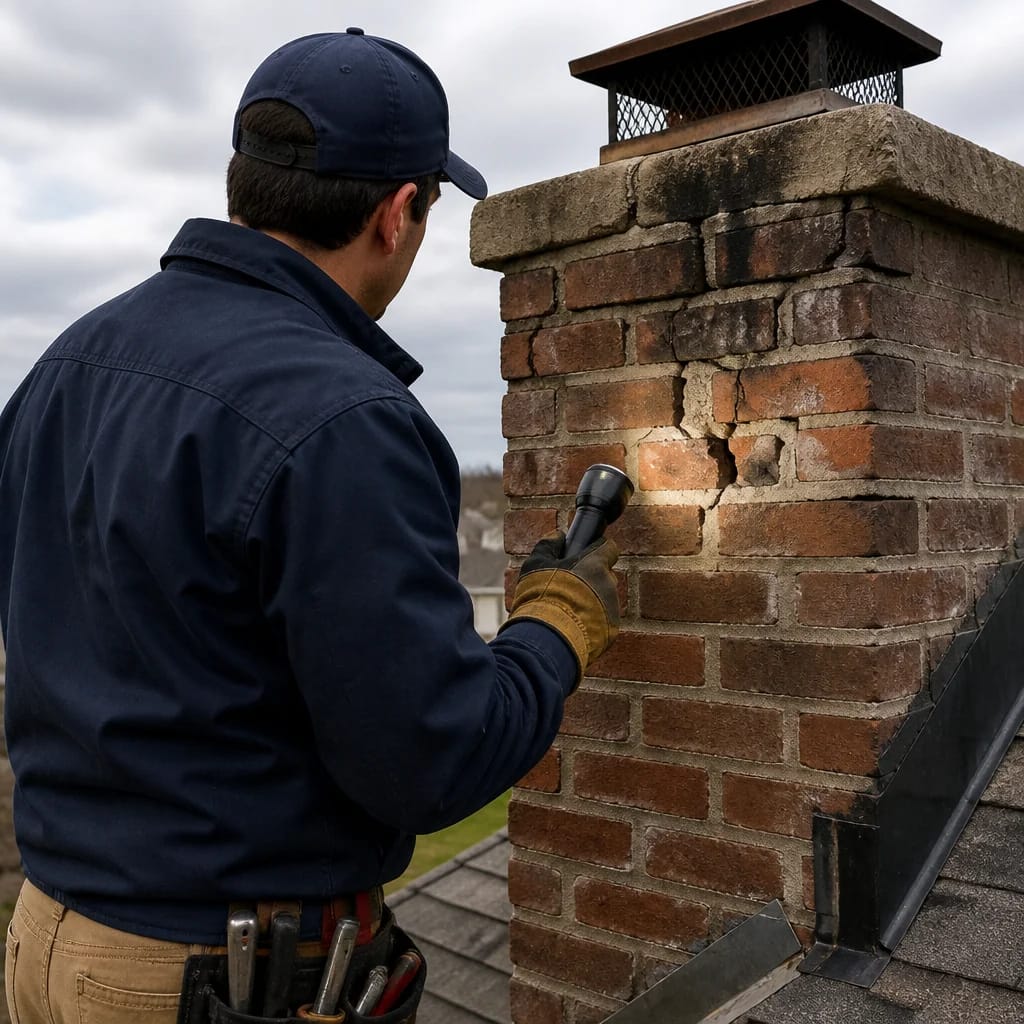
Walk around your home and look up at your chimney from the outside. You’re looking for specific visual cues that signal trouble.
Crumbling or discolored mortar between bricks is one of the clearest signs. Healthy mortar should be intact and uniform in color. If you see gaps, white staining (efflorescence), or crumbling material, the mortar is failing. Deteriorated mortar allows water infiltration and weakens the structural bond between bricks.
Check the chimney crown, which is the concrete cap on top. Cracks, chips, or missing pieces let water pour directly into the chimney structure. A missing or damaged crown is one of the fastest ways water damage spreads through your entire chimney.
Look for:
- Leaning or tilting chimneys (indicates foundation settling or structural failure)
- Missing or damaged bricks with holes or spalling (surface breaking away in layers)
- Rusted metal flashing where the chimney meets the roof
- Loose or missing chimney cap
From the ground, you might not spot every issue clearly, but obvious visual damage is always a reason to call for a professional inspection. Many problems develop inside where you can’t see them, which is why exterior checks alone aren’t enough.
Interior Chimney Problems You Can Spot From Your Fireplace
Step inside and examine your fireplace and the chimney opening. Several red flags appear from the interior.
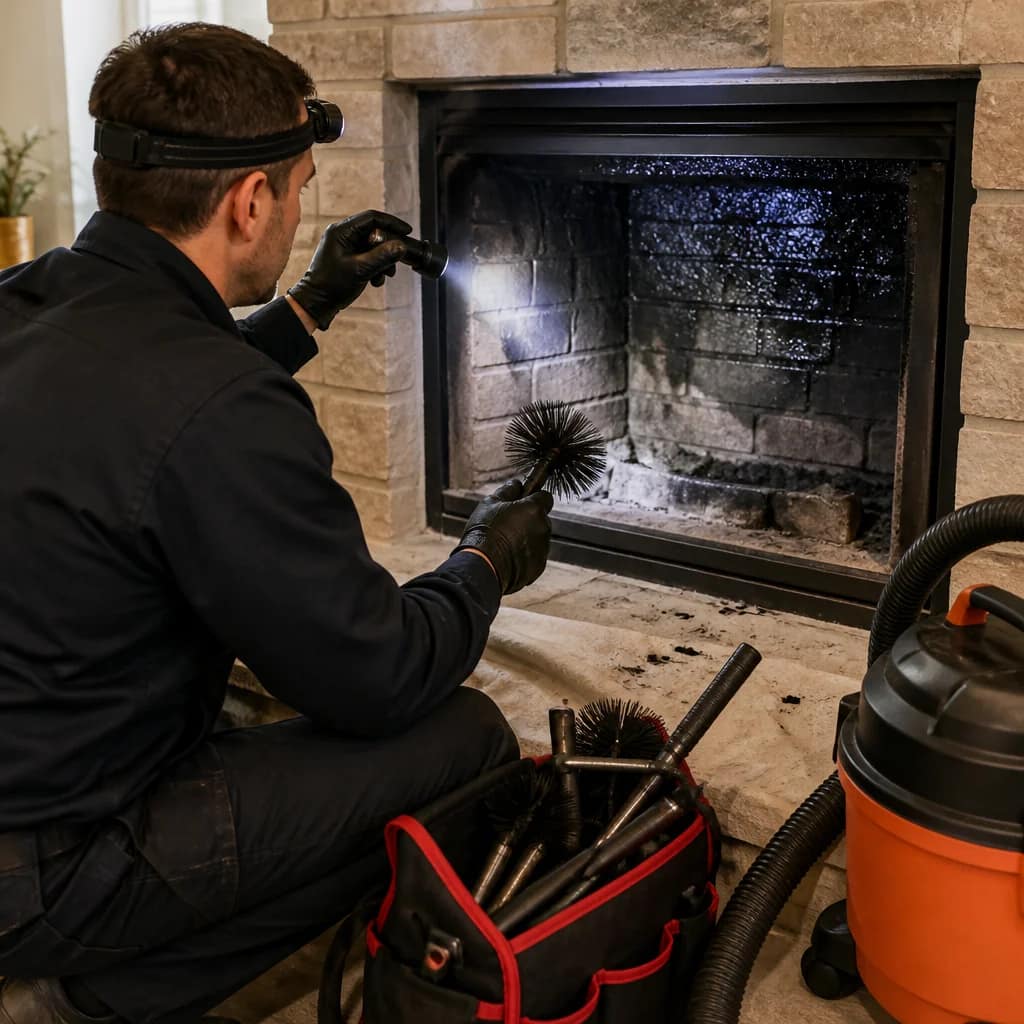
Excessive soot buildup on the walls and hearth suggests incomplete draft or combustion problems. A small amount of soot is normal, but thick, heavy accumulation indicates the chimney isn’t pulling properly. Dampers that stick or won’t close properly can trap cold air and reduce heating efficiency while signaling damaged flue liners.
Cracks in the firebox itself are serious. The firebox is the interior chamber where fire burns, and cracks allow heat and hot gases to escape into your home’s walls. This creates a fire hazard and compromises the entire system.
Check inside the fireplace opening (looking up into the flue) with a flashlight. You’re looking for:
- Damage to the flue liner (the interior pipe)
- Debris or obstructions
- Discolored or pitted interior surfaces
- Missing or deteriorated tiles or clay
If you see anything unusual or can’t get a clear view, that’s a sign professional inspection is needed. The flue liner is critical to safe operation, and damage there requires immediate attention.
How Creosote Buildup Signals Deeper Issues
Creosote is the dark, sticky residue that builds up on chimney interior walls. It forms when wood smoke cools inside the flue. Some creosote is inevitable, but heavy, thick buildup indicates a problem.
Excessive creosote forms for specific reasons: the flue temperature is too low, the chimney isn’t drafting efficiently, or you’re burning unseasoned or treated wood. Each of these scenarios points to underlying issues that need repair. A chimney that drafts poorly won’t vent smoke safely, which means smoke and gases back up into your home.
Thick creosote is also highly flammable. Chimney fires happen when creosote ignites inside the flue. During a chimney fire, temperatures spike dangerously high, often damaging the flue liner and spreading heat to nearby combustible materials in your home’s structure. We strongly recommend regular cleaning to manage creosote, but the presence of excessive buildup should prompt an inspection to identify why it’s accumulating so heavily.
If you notice:
- Creosote dripping into the fireplace
- Strong, acrid odors
- Visible thick coating inside the flue opening
These are all signals to have the chimney professionally evaluated before using the fireplace again.
Functional Problems That Indicate Structural Damage
How your chimney performs tells you a lot about its condition. Operational problems almost always point to damage that needs repair.
Smoke backing up into the room is the clearest sign of a draft problem. Your chimney should pull smoke, gases, and heat straight up and out. If smoke lingers or re-enters the room, the flue is obstructed, the draft is insufficient, or the chimney is damaged. Sometimes it’s as simple as a closed damper, but other times it’s a collapsed flue liner or a blockage from fallen debris.
Whistling or roaring sounds during operation suggest air leaks in the flue or cracks allowing air to rush through. Cold air drafts near the fireplace when it’s not in use indicate the damper isn’t sealing properly or the chimney cap is missing or damaged.
Fireplace efficiency issues also matter. If your fireplace doesn’t heat the room adequately, draw feels weak, or you’re noticing cold air coming down the chimney in winter, these functional problems warrant professional diagnosis. Many of these issues stem from flue damage, improper sizing, or deteriorated components that a technician can identify and fix.
Why Professional Inspection Catches What You’ll Miss
Visual checks and basic observations are helpful starting points, but they miss the majority of chimney problems. A professional inspection uses specialized equipment and training to identify damage that’s hidden or subtle.
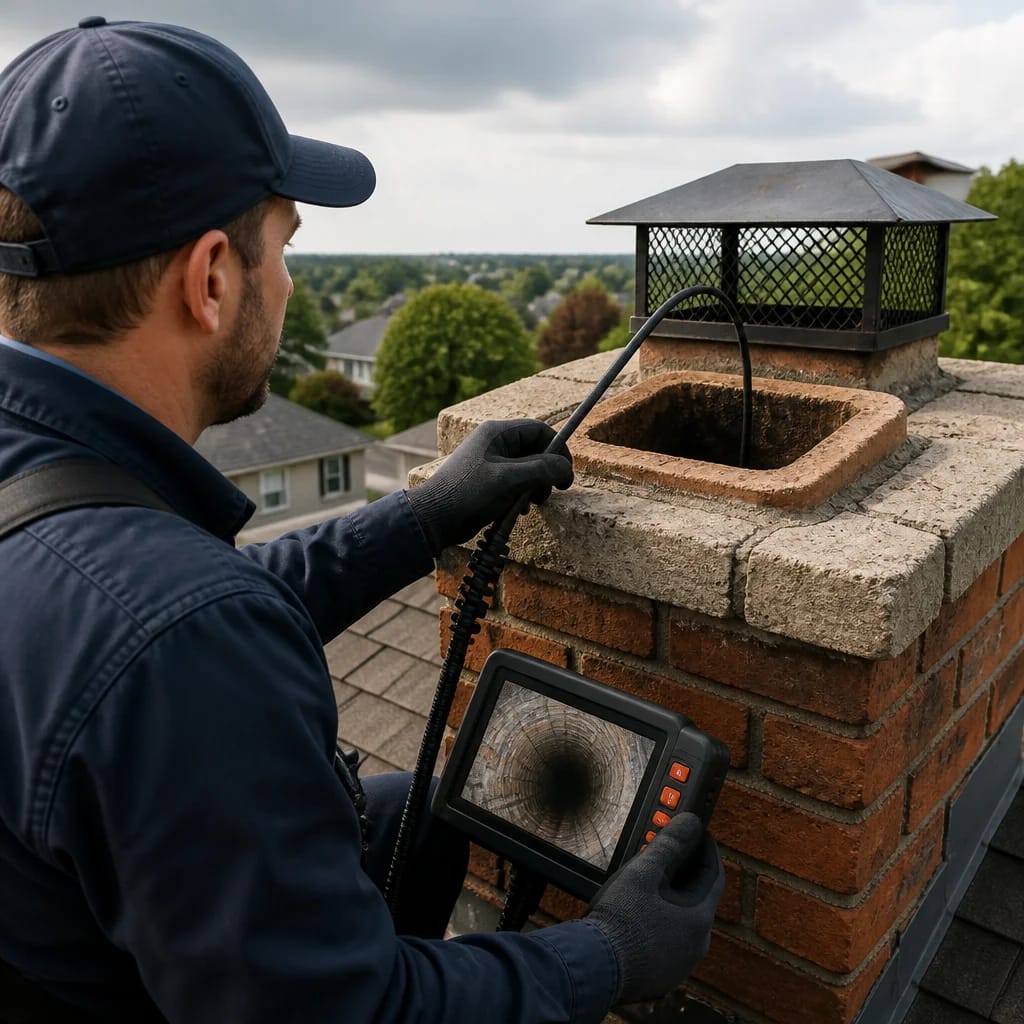
We use camera systems to look inside flues, which reveals cracks, liner damage, creosote buildup, and obstructions you simply cannot see from inside the fireplace. We assess mortar joint quality, check for water infiltration, evaluate structural integrity, and identify draft issues with precision instruments. We also understand how various damage patterns indicate specific underlying causes, which guides proper repair strategy.
A trained eye spots warning signs that look minor but signal serious trouble ahead. For example, small cracks in mortar joints might be early-stage foundation settling, which requires different repair than simple repointing. A slightly rusty flashing isn’t just cosmetic; it’s directing water into the structure. These distinctions matter enormously for cost and safety.
Professional inspection gives you a complete picture and clear guidance on what needs attention now versus what can be monitored. You’ll know exactly what repairs are necessary and why, rather than guessing or deferring decisions.
Our Comprehensive Chimney Inspection Process
When you schedule a chimney cleaning and repair inspection with us, here’s what happens.
We start with a thorough exterior examination, checking the crown, cap, flashing, mortar joints, brick condition, and overall structure. Next, we inspect the interior using camera equipment to examine the flue liner in detail. We check the damper operation, assess the firebox, and look for any damage or obstruction. We also evaluate draft performance and discuss your fireplace use and any concerns you’ve noticed.
We’ll provide a detailed report with photos and video footage of any issues found. We explain what we found in plain language, describe what repairs are recommended and why, and give you transparent pricing for any work needed. If damage is significant or poses safety risks, we’ll discuss that clearly and recommend a timeline for repairs.
Our goal is to give you complete confidence in your chimney’s condition and a clear action plan moving forward.
The Cost of Ignoring Early Warning Signs
Delaying chimney inspection and repair compounds both danger and expense. A small crack that costs $300 to repair today might become structural damage requiring a $2,000+ rebuild in two years.
Water damage is the primary accelerant. Rain entering through cracks in the crown, failed flashing, or deteriorated mortar seeps into the structure. It freezes and expands during winter, widening cracks and crumbling mortar. Over time, water saturates the interior structure, leading to rust in metal components, deterioration of clay flue liners, and structural weakness that spreads beyond the chimney itself.
Unsafe conditions also develop. A damaged flue liner that goes unrepaired can collapse completely, blocking the chimney and forcing dangerous combustion byproducts back into your home. Structural damage near the roof connection can allow fire to spread if a chimney fire occurs. Weak mortar joints can lead to brick separation or even collapse in extreme cases.
The risk isn’t just financial. A compromised chimney is a safety issue for your family and property.
How We Address Damage Before It Becomes Dangerous
We prioritize rapid assessment and clear communication about what needs to happen next. When we identify damage, we explain whether it’s urgent or can be scheduled flexibly, and we help you understand the consequences of waiting.
For immediate safety issues like severely damaged flue liners, loose bricks, or structural cracks, we recommend prompt repair to eliminate fire and smoke-backup risks. For moderate issues like failing mortar or minor crown damage, we suggest scheduling repair before the next heavy rain or temperature drop.
We handle everything from pointing and remortar work to chimney cap replacement, flashing repair, and complete rebuild when necessary. We use quality materials, follow proper techniques, and stand behind our work. Our technicians are trained in chimney-specific repairs and understand how to address underlying causes, not just surface symptoms.
Getting Your Chimney Inspected and Repaired Today
If you’re noticing any of the warning signs covered here, or if it’s simply been years since your chimney was professionally inspected, now is the time to call. We offer prompt scheduling and typically can inspect your chimney within days.
Contact Dr. Air Duct to arrange a Dallas chimney repair and inspection. We’ll give you honest answers about your chimney’s condition and practical guidance on what needs attention. Whether you need routine cleaning, structural repairs, or a complete assessment, we’re here to help keep your fireplace safe and functional for years to come.
Frequently Asked Questions (FAQ)
How often should I have my chimney inspected for damage?
We recommend having your chimney professionally inspected at least once per year, ideally before the heating season begins. If you use your fireplace regularly or notice any warning signs like damaged mortar, missing bricks, or excessive creosote buildup, we suggest scheduling an inspection right away. Our inspections catch structural issues early so you can avoid expensive repairs down the line.
What’s the difference between a chimney inspection and a full cleaning?
Our inspection focuses on identifying damage, deterioration, and safety hazards within your chimney system, while cleaning removes creosote, debris, and buildup that can restrict airflow and create fire risks. We often recommend both services together because creosote buildup can actually mask underlying damage, and removing it allows us to assess the chimney’s true condition. Many of our clients find that addressing both needs prevents larger problems from developing.
Can I spot chimney damage myself, or do I need a professional?
While you can notice obvious signs like crumbling exterior bricks, missing mortar, or rust stains around your fireplace, we’ve found that most serious damage happens inside where you can’t see it. Our professional equipment and trained team identify structural cracks, flue liner problems, and deterioration that affect safety long before they become visible to homeowners. We strongly encourage professional inspection so you know exactly what needs attention and can plan repairs with confidence.