

Table of Contents
- Why Indoor Air Quality Matters for Dallas Families and Businesses
- Understanding HEPA Filters: How They Capture Dust, Allergens, and Contaminants
- UV Light Air Purification Systems: Breaking Down Mold, Bacteria, and Viruses
- Electronic Air Cleaners: Ionization and Active Purification Technology Explained
- Comparing HEPA, UV, and Electronic Systems: Which Works Best for Your Home
- When to Combine Multiple IAQ Systems for Maximum Protection
- How Our Air Duct Cleaning Complements Whole-Home Filtration Systems
- Sizing and Installing IAQ Systems in Dallas Homes and Commercial Properties
- Maintenance and Filter Replacement: Keeping Your System Running Efficiently
- Real Improvements You'll Notice: Breathing Easier and Energy Savings
- Frequently Asked Questions (FAQ)
Why Indoor Air Quality Matters for Dallas Families and Businesses
Dallas summers bring heat, but they also bring indoor air challenges that many property owners overlook. When windows stay closed and air conditioning runs constantly, the quality of what you’re breathing becomes critical. Dust, pollen, pet dander, mold spores, and bacteria can accumulate in your home or office, particularly in air ducts where they concentrate and recirculate.
Indoor air can be two to five times more polluted than outdoor air, according to EPA data. For families with children, elderly members, or anyone with respiratory sensitivities, this matters significantly. Businesses face the same issue, and poor indoor air quality affects employee productivity, sick days, and tenant satisfaction.
Beyond health, there’s an efficiency angle. When your HVAC system carries dirt and debris through your ducts, it works harder to push air where you need it. That translates to higher energy use and climbing utility bills. Whole-home air quality systems address these issues directly, and we’ve found they work best when paired with professional air duct maintenance.
Action step: Schedule a walkthrough of your space and notice any signs of dust accumulation around vents or registers, or any musty odors that suggest air quality concerns.
Understanding HEPA Filters: How They Capture Dust, Allergens, and Contaminants
HEPA stands for High-Efficiency Particulate Air, and these filters are engineered to capture 99.97% of particles 0.3 microns or larger. To put that in perspective, human hair is roughly 100 microns wide. HEPA filters catch pollen (10-40 microns), dust mites (100-300 microns), and most airborne bacteria.
The key to HEPA performance is the dense mat of fibers arranged in a complex, folded pattern. Air passes through, particles get trapped, and clean air exits. Unlike basic furnace filters that let smaller particles slip through, HEPA systems actually make a measurable difference in what circulates through your rooms.
Where HEPA systems fit best:
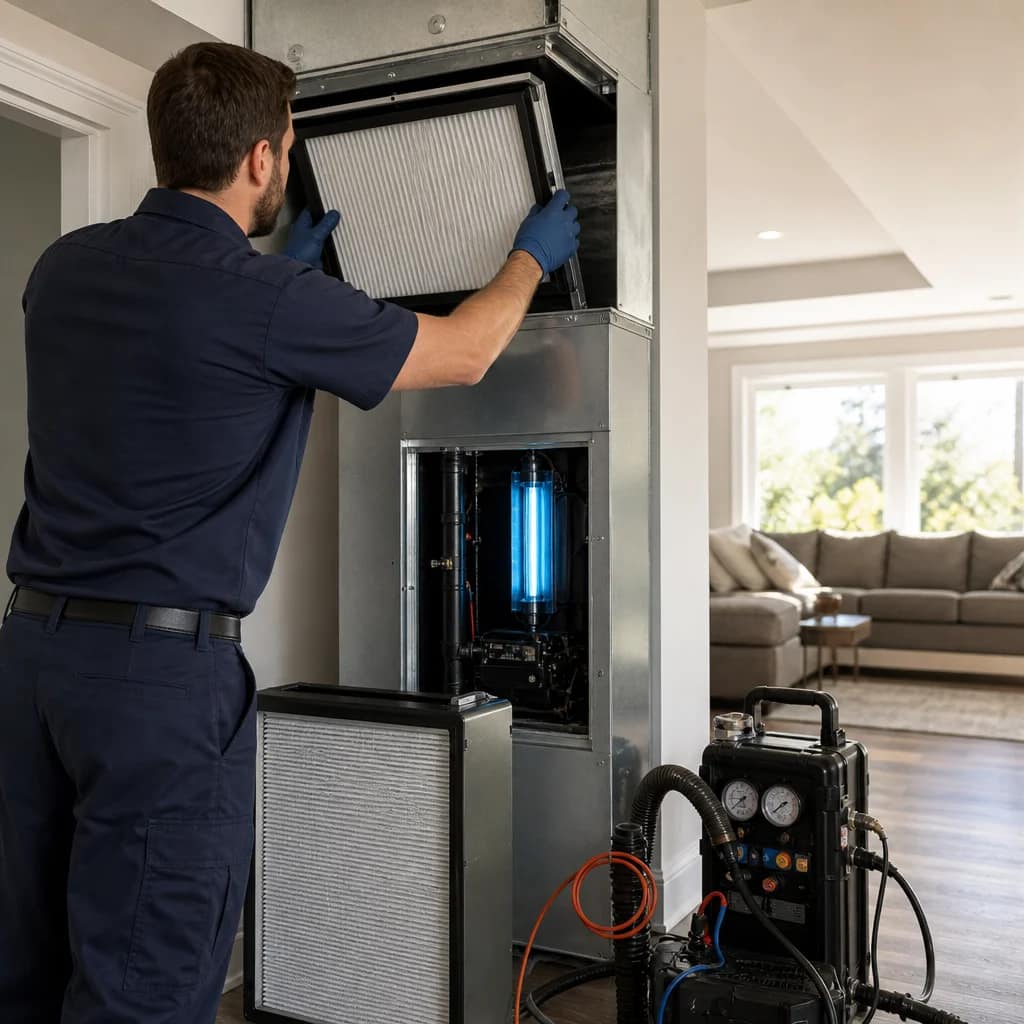
- Whole-home units installed in your HVAC return air path (before air enters the furnace or air handler)
- Standalone room-level portable purifiers for high-priority areas like bedrooms or offices
- Commercial-grade units for businesses needing consistent air quality across larger spaces
The tradeoff is that HEPA filters restrict airflow more than standard furnace filters, which means your HVAC system may need a slight power boost to maintain normal air circulation. When properly sized, this added resistance is minimal and well worth the improvement in air cleanliness.
Action step: If you’re considering a HEPA system, have your ductwork inspected first to ensure it’s clean and free of major blockages that would compound airflow resistance.
UV Light Air Purification Systems: Breaking Down Mold, Bacteria, and Viruses
UV light air purification works through a different mechanism than HEPA filtration. Instead of trapping particles, UV systems use ultraviolet light to damage the DNA or RNA of microorganisms, neutralizing mold spores, bacteria, and certain viruses as air passes through the light chamber.
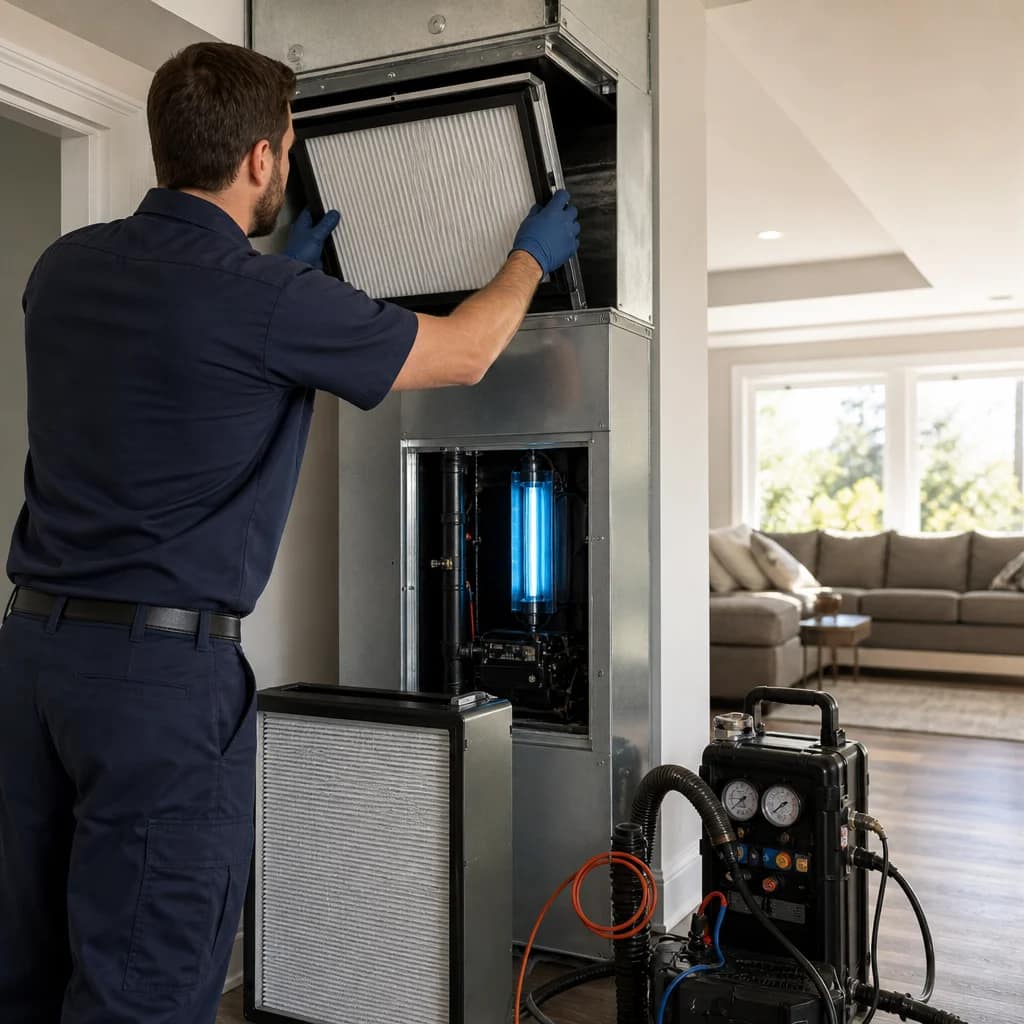
UV units are typically installed in the ductwork near the furnace or air handler, where air naturally passes through. The air doesn’t need to be filtered or slowed down; the UV wavelengths (usually UVC, in the 254-nanometer range) do the work as air moves past the light source.
This approach excels in humid climates like ours in Dallas, where mold growth in ducts and coils is a real concern. UV systems can help reduce microbial buildup and are often recommended alongside standard filtration rather than as a complete replacement.
Important limitations to understand:
- UV systems don’t remove dust, pollen, or particulates; they only neutralize living microorganisms
- The light only affects air that directly passes through the chamber, not settled contaminants in your ductwork
- Effectiveness depends on proper installation and regular bulb replacement (bulbs typically last 9-12 months)
For maximum benefit, UV systems work best when your ductwork is already clean. Accumulated dust and debris inside ducts can shield microorganisms from the light, reducing the system’s effectiveness.
Action step: If mold or musty odors are your primary concern, ask about a professional duct inspection to assess whether cleaning is needed before investing in UV treatment.
Electronic Air Cleaners: Ionization and Active Purification Technology Explained
Electronic air cleaners use a different strategy than either HEPA or UV systems. The most common type uses ionization to charge particles in the air, then traps those charged particles on collection plates (similar to how static makes dust stick to surfaces).
Some systems use a two-stage process: a charging section where particles are energized, followed by a collection stage where they stick to oppositely charged plates. The plates require regular cleaning to remain effective, typically every one to three months depending on air quality and system capacity.
Active purification systems release ions or other compounds into your air. These oxidizing molecules can neutralize certain odors, mold, and bacteria, but they also require careful selection and installation because improper use can produce ozone as a byproduct, which is itself an air quality concern.
Why businesses and homes choose electronic cleaners:
- They handle a range of particle sizes and some gaseous odors
- No filter replacement (though plates need cleaning)
- Lower operating cost once installed
- Can improve air quality without significantly restricting airflow
The tradeoff is maintenance consistency. Neglected collection plates lose effectiveness quickly, and electronic systems require annual professional inspection to ensure they’re operating safely and efficiently.
Action step: Before choosing an electronic system, confirm your comfort level with monthly or quarterly plate cleaning, or budget for professional maintenance visits.
Comparing HEPA, UV, and Electronic Systems: Which Works Best for Your Home
No single system is universally “best” because different properties face different challenges. The choice depends on your specific air quality concerns and budget.
HEPA filtration is ideal if you’re concerned with dust, pollen, and particulates. It’s passive, reliable, and requires no special maintenance beyond filter replacement. Best for homes with allergies or pet dander issues.
UV light systems excel when mold, bacteria, or viral concerns are primary. They’re less effective against dust and require bulb replacements. Best for humid properties or those with previous mold issues.
Electronic air cleaners balance cost and versatility, handling a mix of particle sizes and some odors. They demand consistent maintenance. Best for commercial applications or homes where ongoing professional support is available.
In our experience working with Dallas properties, we often find that combining two systems delivers the best results. For instance, a HEPA-equipped furnace filter plus a UV coil treatment handles both particulates and microbial concerns without the maintenance burden of electronic plates.
Budget considerations shift the equation as well. HEPA systems have lower upfront installation costs but higher filter replacement costs over time. UV and electronic systems cost more to install but have lower ongoing material costs. Run a 10-year comparison for your situation before deciding.
Action step: List your top three air quality concerns (allergies, mold, odors, dust), then match that list to system capabilities to narrow your options.
When to Combine Multiple IAQ Systems for Maximum Protection
The most robust indoor air quality strategy layers different technologies. Here’s a common effective combination for Dallas homes:
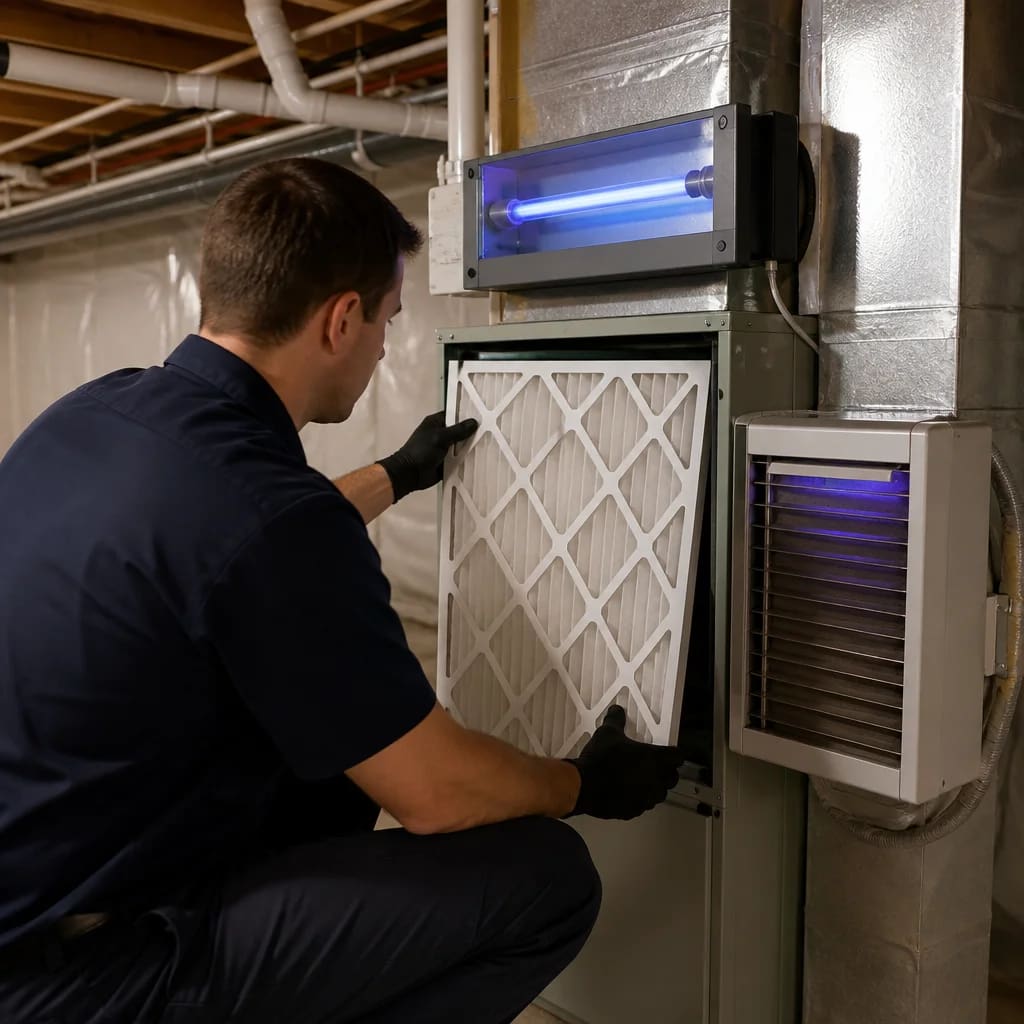
A whole-home HEPA filter or high-MERV furnace filter handles dust and particulates at the system level. A UV coil treatment addresses mold and bacteria growth where your AC coil stays cool and moist. For additional odor control, an activated carbon section can be added to the filter return.
Commercial properties often benefit from this layered approach even more, especially medical offices, restaurants, or spaces where air quality directly affects customer or client experience. We’ve installed systems that combine HEPA, UV, and electronic cleaning in large commercial buildings across Dallas.
The key is sizing each component appropriately so none bottlenecks the others. Oversizing one purification stage won’t help if a smaller stage elsewhere restricts overall airflow. Professional load calculation and system design ensure every component works at optimal capacity.
Layering also provides redundancy. If a HEPA filter gets overlooked during regular maintenance, the UV stage still provides some protection. If a UV bulb burns out unexpectedly, HEPA filtration continues to clean your air while you schedule replacement.
Action step: Ask any IAQ contractor to show you airflow calculations and explain why they’re recommending multiple systems rather than just one. Good contractors explain the reasoning, not just the cost.
How Our Air Duct Cleaning Complements Whole-Home Filtration Systems
Installing a new HEPA filter or UV system is a good step, but it’s incomplete without addressing what’s already in your ducts. Accumulated dust, mold residue, and debris inside your ductwork continue to circulate and reduce system efficiency, even with advanced filtration running.
Think of it this way: new filters catch incoming particles going forward, but they can’t retroactively clean years of settled buildup. Professional air duct cleaning removes that existing contamination, giving your new whole-home system a clean slate to work with.
We recommend this sequence: first, have your ducts professionally inspected and cleaned. This reveals any damage, leaks, or areas prone to mold that need repair or sealing. Second, assess your current filtration level and air quality concerns. Third, install your whole-home IAQ system sized for your cleaned, properly sealed ductwork. Finally, establish a maintenance schedule to keep both your ducts and filters performing.
The combination delivers measurable results. Clean ducts mean your HEPA or UV system doesn’t have to work as hard from day one. Airflow improves, your HVAC runs more efficiently, and the air you’re breathing is cleaner at every level.
For residential properties in Dallas, we typically recommend duct cleaning every 3-5 years as part of ongoing maintenance, especially if you have pets, allergies, or notice dust accumulation around vents. Commercial buildings often benefit from annual cleaning depending on usage and industry.
Action step: Request a duct inspection before investing in a new IAQ system. Many concerns you think require new equipment can be partially resolved with thorough cleaning.
Sizing and Installing IAQ Systems in Dallas Homes and Commercial Properties
Getting the right size is critical and often overlooked. An undersized system won’t adequately clean your air. An oversized system wastes money and energy without added benefit.
Proper sizing depends on:
- Total square footage and number of rooms
- Existing HVAC system capacity (measured in CFM, or cubic feet per minute)
- Air change targets (how many times per hour you want all air cycled through the purification system)
- Local humidity and climate factors (Dallas heat affects mold risk and system load)
Dallas contractors should account for our heat and humidity profile when recommending systems. A whole-home HEPA filter that works fine in a dry climate might struggle during our summer months if the HVAC system isn’t sized to handle both cooling and filtration.
Installation location matters as much as size. Whole-home systems install in your return air ductwork, typically in an attic, basement, or mechanical closet where the main ductwork connects to your furnace or air handler. Commercial installations often require custom ductwork fabrication to integrate UV coil treatments or advanced filtration chambers without compromising airflow.
We recommend having a licensed HVAC contractor handle installation, especially for whole-home systems. Improper installation can reduce system effectiveness and potentially damage your HVAC equipment. Commercial jobs often require engineering calculations and code compliance review before installation begins.
Action step: Get sizing calculations in writing from your contractor before purchase, showing square footage, CFM capacity, and air change targets. This protects you and ensures proper performance.
Maintenance and Filter Replacement: Keeping Your System Running Efficiently
A new IAQ system only stays effective with consistent maintenance. Different systems require different schedules, and staying on top of them prevents performance decline and extends equipment life.
HEPA filters typically need replacement every 6-12 months, depending on air quality and usage. Filters clogged with dust restrict airflow and reduce effectiveness, so don’t skip this step. Mark your calendar and set a reminder.
UV bulbs require annual replacement. They dim over time even if still producing some light, and diminished UV output means reduced effectiveness against mold and bacteria. Most systems include this in their annual maintenance check.
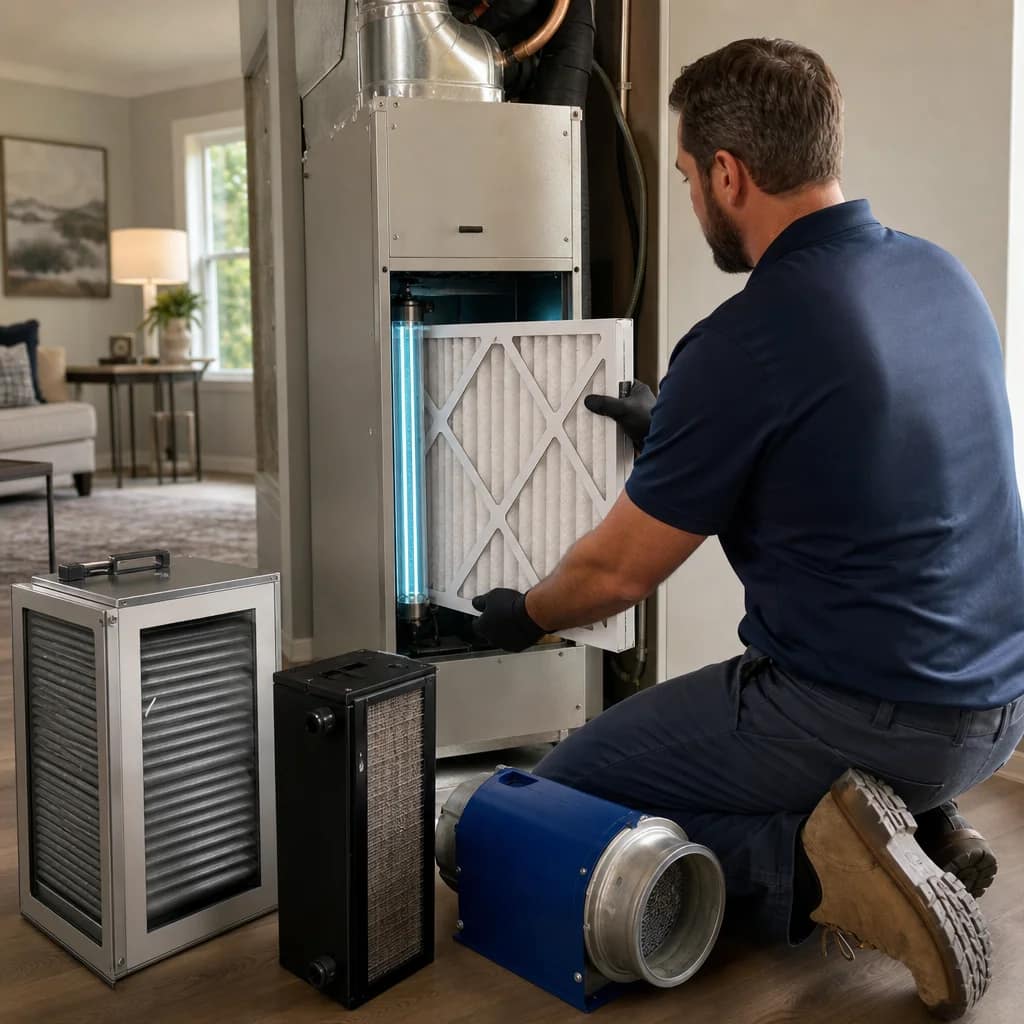
Electronic air cleaner plates need cleaning every one to three months. Build a routine: check the system monthly, schedule professional plate cleaning quarterly, and inspect the entire system annually. Clogged plates lose their charge and stop collecting particles.
For all systems, dirty return air filters on your furnace itself can compromise everything downstream. That basic furnace filter should be checked monthly and replaced every 1-3 months depending on pets and dust levels. It’s the first line of defense and shouldn’t be neglected.
Commercial properties should establish a formal maintenance contract with their IAQ contractor. Many include quarterly inspections, filter replacements, and system checks as part of a service package. This prevents costly emergency repairs and maintains warranty coverage.
Action step: Create a maintenance checklist for your specific system and set phone reminders for each task. Share the checklist with household members so multiple people can help track maintenance.
Real Improvements You’ll Notice: Breathing Easier and Energy Savings
When a whole-home air quality system is properly installed and maintained, the improvements become apparent relatively quickly.
Within the first week, many people notice less dust settling on surfaces like shelves, furniture, and window sills. Household allergies often show improvement within 2-4 weeks as airborne pollen and dust mite allergens decrease. For those with asthma or other respiratory sensitivities, cleaner air typically means fewer symptoms and better sleep quality.
Odor reduction happens gradually. Musty smells from mold or stale air typically diminish over a few weeks as UV treatment and filtration work together. Pet odors become less noticeable as particulates decrease.
Energy efficiency gains depend on your starting point. If your ductwork was heavily clogged before cleaning and system installation, you may notice your HVAC running less frequently, which shows up in lower utility bills. If your ducts were already fairly clean, energy improvements are more modest but still present. Don’t expect dramatic bill drops, but modest reductions of 5-15% are realistic in many cases.
Long-term benefits include fewer dust-related HVAC maintenance issues, better HVAC component longevity, and consistently comfortable indoor temperatures without short-cycling or uneven airflow.
Most importantly, better indoor air quality contributes to overall health and comfort. Families report sleeping better, fewer seasonal allergy flare-ups, and greater peace of mind knowing their air is actively being cleaned and purified.
The investment pays dividends when measured against respiratory health improvements and reduced HVAC strain over several years.
Action step: After your system is installed, check in after one month and again at three months to notice changes in allergy symptoms, dust levels, and overall air freshness. Keep notes on what improves, which helps you appreciate the value of your investment.
—
We’re here to help you build the right air quality solution for your Dallas home or business. Start with a professional duct inspection and air quality assessment, then we can recommend which combination of filtration, UV treatment, and cleaning will work best for your situation. Contact us today for a consultation.
Frequently Asked Questions (FAQ)
What’s the difference between HEPA filters, UV lights, and electronic air cleaners, and which should we install?
Each technology tackles air quality differently, and we often recommend combining them for best results. HEPA filters capture particles like dust and allergens physically, UV lights neutralize mold and bacteria at the molecular level, and electronic air cleaners use ionization to actively purify your air. We help Dallas homeowners choose based on your specific concerns, budget, and existing HVAC setup.
How does our air duct cleaning work together with whole-home air quality systems?
We’ve found that installing premium filtration systems works best when your ducts are already clean. Our professional duct cleaning removes built-up debris and contamination that can bypass or clog your new filters, so your investment in HEPA, UV, or electronic systems performs at maximum efficiency.
How often do we need to maintain and replace filters in these systems?
Maintenance schedules depend on your specific system and Dallas air conditions, but we typically recommend checking filters monthly and replacing them every 3-6 months for standard use. We can set up a maintenance plan that fits your property and monitors your system’s performance so you’re never caught off guard by reduced air quality or efficiency.