

Table of Contents
- Why Musty and Contaminated Air Demands Immediate Action
- Health Risks of Delayed Response to Contaminated Ductwork
- Our 24/7 Emergency Response System for Dallas Properties
- How We Identify Contamination During Emergency Assessments
- Rapid Sanitization and Cleaning for Compromised Air Systems
- Preventing Future Contamination Events in Your Ducts
- Commercial Properties: Scaled Emergency Solutions We Provide
- Why Our Local Dallas Response Time Beats National Services
- The Cost of DIY Attempts Versus Professional Emergency Intervention
- Your Next Steps When Musty Air Strikes Your Property
- Frequently Asked Questions (FAQ)
Why Musty and Contaminated Air Demands Immediate Action
When you notice a persistent musty smell coming from your vents, your property’s air quality is sending a clear distress signal. That odor typically signals moisture, mold, bacteria, or accumulated debris within your ductwork—all of which circulate through every room multiple times daily. Unlike a small plumbing leak you might ignore for a week, contaminated air reaches your lungs, your family’s lungs, and your employees’ lungs with every breath.
The stakes are particularly high in Dallas, where humidity levels and seasonal temperature swings create ideal conditions for microbial growth inside ducts. We’ve responded to countless emergency calls where property owners delayed action, only to discover the contamination had spread significantly. The longer contaminated air circulates, the more it affects building occupants and the harder it becomes to remediate.
What makes this an emergency rather than routine maintenance:
- Visible mold growth visible in vents or near ductwork openings
- Musty or sour smells that intensify when HVAC systems run
- Sudden allergic reactions, respiratory symptoms, or illness clusters among occupants
- Water stains, discoloration, or visible debris in supply vents
- Recently discovered water intrusion or flooding affecting ducts
Taking action within hours rather than days prevents deeper contamination and limits health exposure. That’s why we maintain round-the-clock availability for Dallas properties facing these situations.
Health Risks of Delayed Response to Contaminated Ductwork
Contaminated air doesn’t just smell bad—it creates measurable health consequences, particularly for vulnerable populations. Mold spores, bacterial colonies, and accumulated dust circulating through your HVAC system can trigger respiratory reactions, aggravate asthma, cause allergic flare-ups, and contribute to persistent sinus or lung irritation.
People with compromised immune systems, young children, elderly residents, and anyone with chronic respiratory conditions face elevated risk when breathing contaminated air for extended periods. What might feel like a seasonal cold or allergic reaction often traces back to ductwork that harbors active mold or bacterial growth.
Beyond immediate respiratory effects, prolonged exposure to contaminated indoor air contributes to long-term health issues. Occupants of buildings with untreated ductwork contamination report higher rates of persistent cough, fatigue, and worsening allergy symptoms. In commercial settings, this translates to increased sick days and reduced productivity.
Specific health risks we address through emergency intervention:
- Mold spore inhalation triggering asthma attacks or fungal respiratory infections
- Bacterial endotoxins causing inflammatory responses in airways
- Accumulated dust and debris exacerbating existing allergies or sensitivities
- Legionella and other pathogenic bacteria in water-damaged ducts
- Secondary infections when immune systems are compromised by poor air quality
The window for preventing serious health consequences is measured in days, not weeks. Once contamination becomes established and spreads through your ductwork network, the remediation process becomes more invasive and costly.
Our 24/7 Emergency Response System for Dallas Properties
We’ve structured our emergency response specifically around the unpredictability of contamination events. Whether you discover musty air at 2 a.m., on a holiday weekend, or during a commercial tenant emergency, our dispatch team responds immediately to assess the situation and schedule rapid intervention.
Our 24/7 availability isn’t a marketing slogan—it’s operational reality. We maintain rotating crews, fully stocked emergency equipment, and dedicated dispatch protocols for contamination calls. When you reach us, you’re connecting with someone who can schedule assessment within hours, not days.
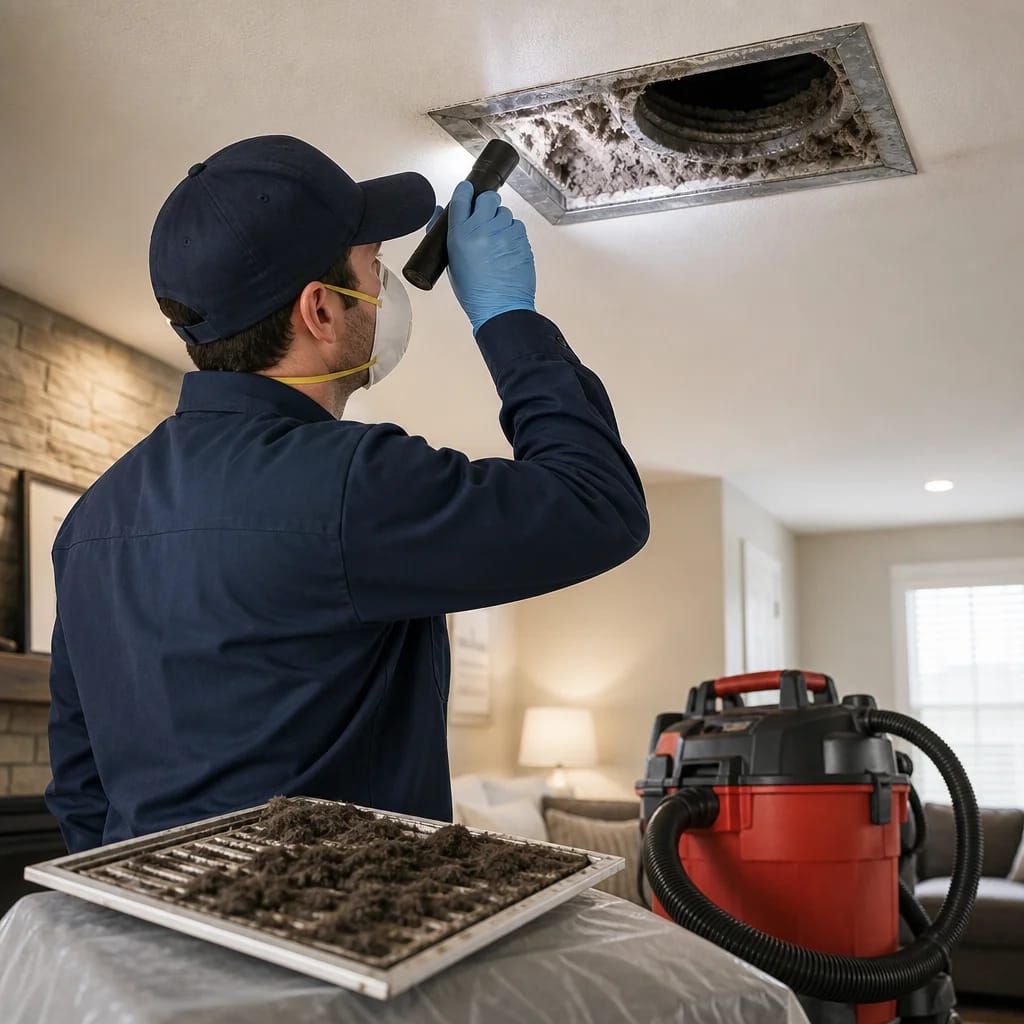
Our emergency response workflow includes:
- Immediate phone assessment – We gather details about symptoms, timing, and visible signs to determine urgency level
- Rapid dispatch – Our crew arrives with diagnostic equipment and cleaning apparatus ready to operate
- On-site evaluation – We conduct thorough contamination assessment with photo documentation
- Emergency cleaning authorization – Once we confirm contamination presence and scope, we begin sanitization immediately
- Post-service verification – We test air quality improvements and provide clear documentation
For residential emergencies, our typical response time across Dallas is under 4 hours. Commercial properties receive priority dispatch with same-day service commitments. We don’t ask you to wait for appointment scheduling windows or call back during business hours—we address urgent contamination now.
How We Identify Contamination During Emergency Assessments
Identifying exactly what’s contaminating your air is critical for selecting the right remediation approach. Surface inspection alone misses problems hidden deep within ductwork, so we deploy systematic diagnostic techniques that reveal contamination severity and type.
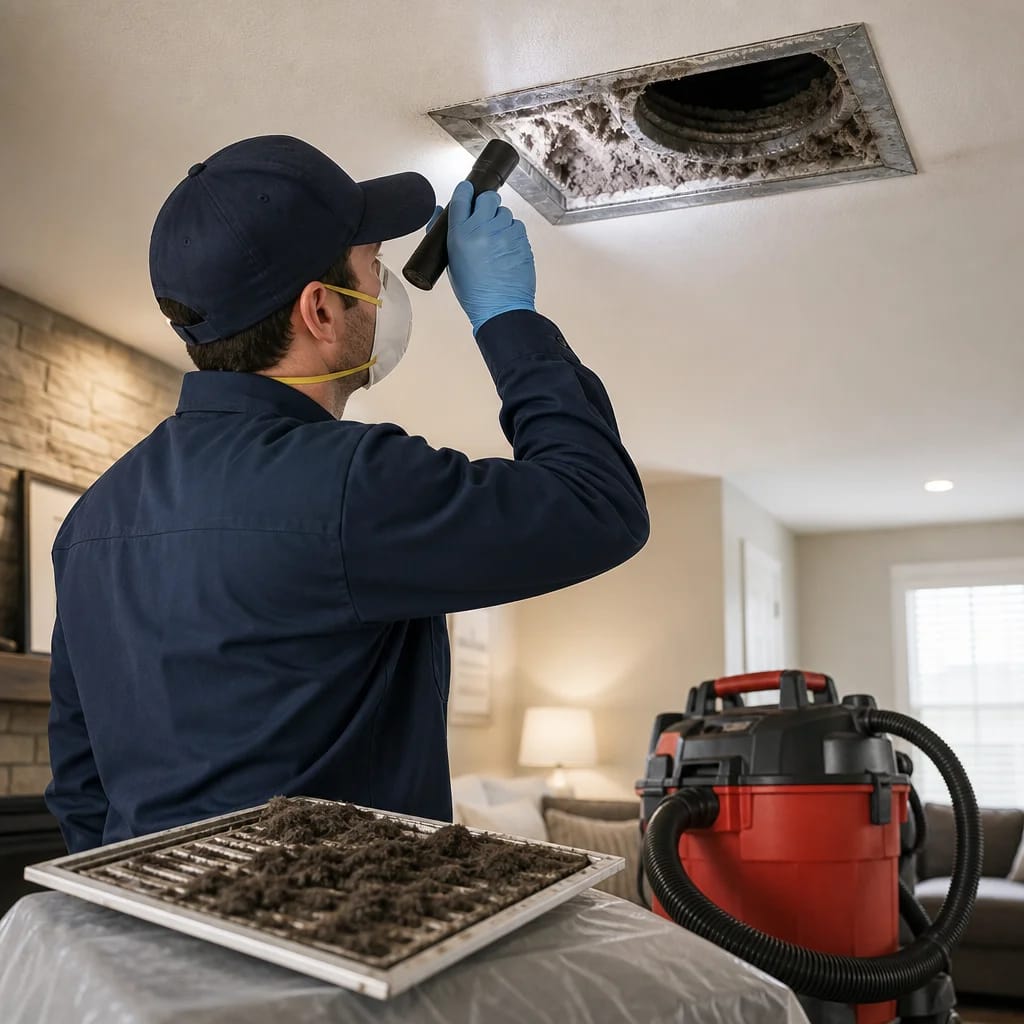
We start with visual inspection using specialized lighting and cameras that navigate through your ductwork to identify mold growth, bacterial colonies, water damage, or debris accumulation at the source. This tells us whether we’re addressing surface-level dust or deeply embedded microbial growth requiring aggressive sanitization.
Air quality testing provides objective evidence of contamination presence and severity. We collect samples that measure mold spore levels, bacterial counts, and particulate matter concentration. This testing serves two purposes: it confirms contamination that requires emergency intervention, and it establishes baseline measurements to verify that our cleaning and sanitization actually improved conditions.
Our contamination identification techniques include:
- Fiber-optic camera inspection revealing hidden mold, debris, and damage zones
- Moisture readings pinpointing water intrusion locations still feeding contamination
- ATP testing detecting active bacterial and organic growth
- Air quality sampling measuring spore counts and particulate concentration
- Thermal imaging identifying temperature differentials indicating moisture problems
Once we’ve precisely identified what’s contaminating your air and where it’s concentrated, we can recommend the most effective cleaning and sanitization approach. This prevents guesswork and ensures we address root causes rather than just treating symptoms.
Rapid Sanitization and Cleaning for Compromised Air Systems
Emergency contamination doesn’t respond to standard maintenance cleaning—it requires aggressive sanitization protocols designed to eliminate active mold, bacteria, and organic growth throughout your ductwork system.
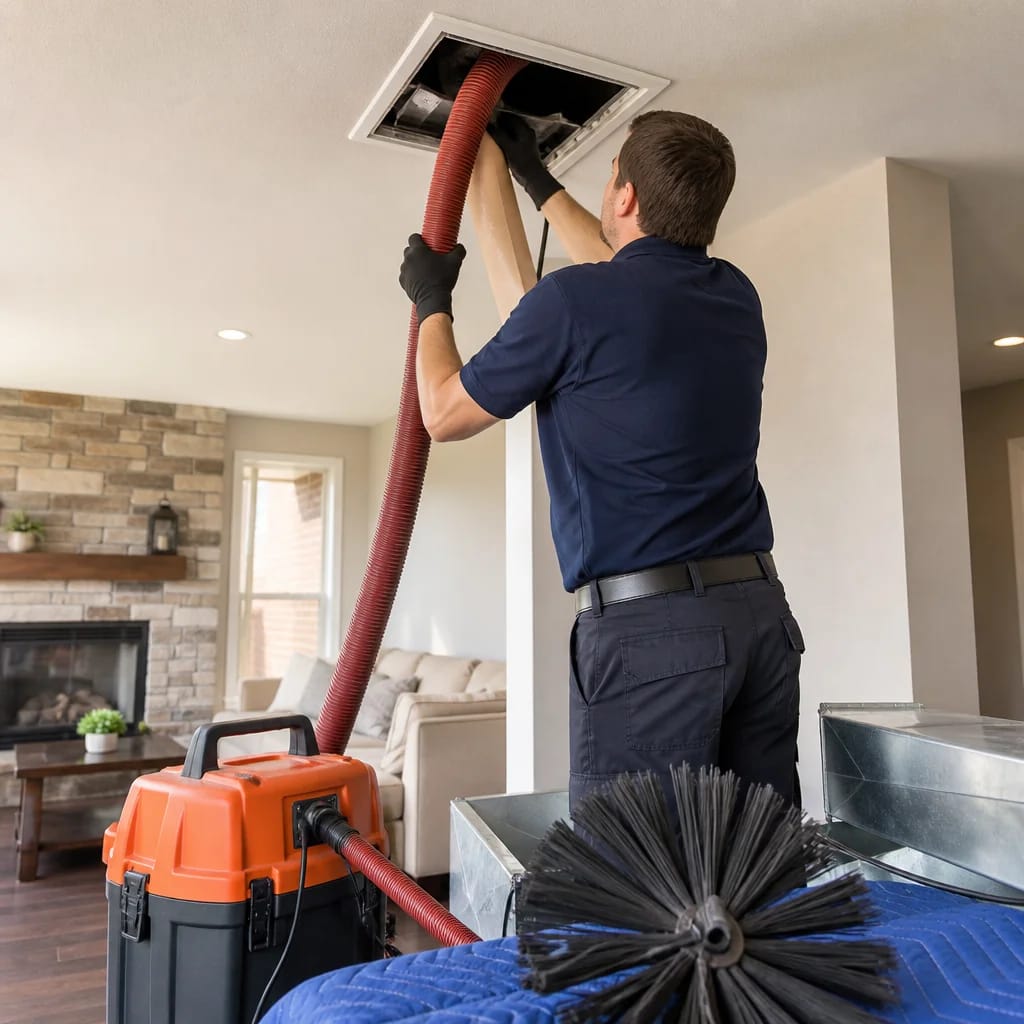
We employ hospital-grade sanitization methods that go beyond mechanical duct cleaning. Our process combines negative-pressure duct cleaning with antimicrobial treatments, EPA-approved sanitizing agents, and specialized equipment designed specifically for contaminated systems.
The air duct cleaning process begins with containment protocols that prevent contaminated particles from spreading to unaffected areas of your property. We seal off sections, create negative pressure in the ductwork system, and capture all debris before it can escape into your living or working spaces.
Our emergency sanitization includes:
- Complete mechanical cleaning removing visible mold, debris, and biofilm
- Antimicrobial fogging penetrating entire ductwork network and eliminating airborne spores
- HEPA-filtered collection capturing all contaminated material safely
- UV light treatment in ductwork sections prone to re-contamination
- Coil cleaning if air handler components show mold or bacterial growth
For water-damaged systems, we address moisture first—that’s the root cause of ongoing contamination. We identify and recommend repairs to ductwork or HVAC components that are allowing water intrusion, and we apply protective treatments to prevent recurrence.
Emergency sanitization typically takes 4-8 hours depending on property size and contamination severity. Once complete, your HVAC system circulates cleaned, sanitized air rather than the contaminated flow that prompted the emergency call.
Preventing Future Contamination Events in Your Ducts
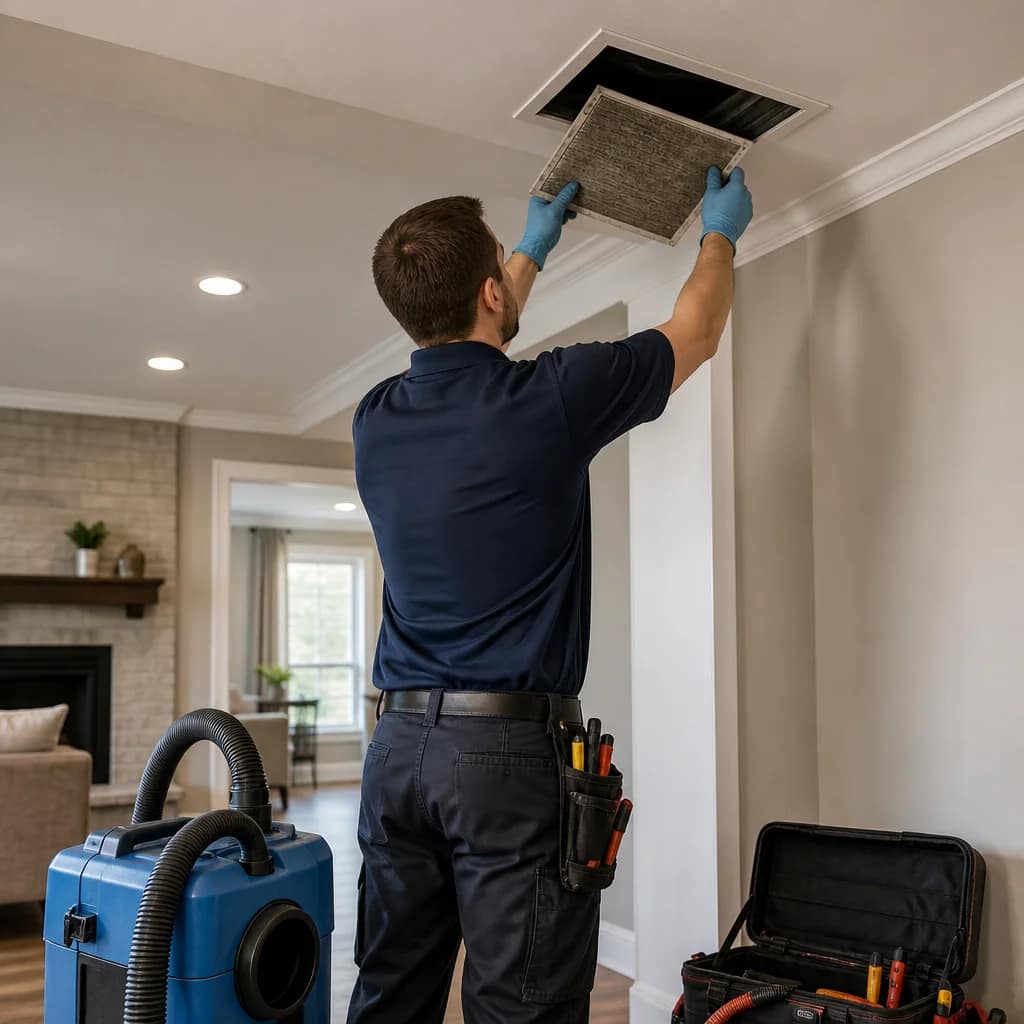
Once we’ve addressed acute contamination, shifting to prevention keeps your air quality from deteriorating again. The same humidity conditions and dust accumulation that created the original problem will persist unless you implement systematic maintenance.
Humidity control is foundational. In Dallas, high seasonal humidity can feed mold growth if your ductwork or air handler lacks adequate insulation or if moisture-laden air enters the system. We recommend proper HVAC maintenance, regular filter changes, and in some cases, dehumidification equipment or ductwork insulation upgrades.
Regular duct inspection on an annual or biannual schedule catches early signs of moisture, debris accumulation, or minor contamination before it escalates into emergency situations. We can establish a maintenance schedule that fits your property type and risk factors.
Prevention strategies we recommend:
- Monthly filter changes during high-use seasons (spring and summer in Dallas)
- Annual professional ductwork inspection catching problems early
- Dryer vent cleaning before every 100 loads to prevent lint accumulation
- Proper insulation on exposed ductwork in attics or crawl spaces
- Sump pump and moisture control in basements where HVAC components are located
- Regular coil cleaning preventing mold growth at the air handler
We can also recommend ductwork repair or sealing if your system has leaks allowing contaminated outside air to enter. Many Dallas properties benefit from modernizing insulation or upgrading air filtration systems to reduce overall contamination risk.
Commercial Properties: Scaled Emergency Solutions We Provide
Commercial contamination emergencies carry additional urgency because they affect dozens or hundreds of occupants simultaneously and can trigger regulatory obligations or business interruption concerns.
We provide emergency response specifically scaled for commercial properties: larger ductwork systems, multiple HVAC units, occupied tenant spaces, and complex regulatory requirements. Our commercial crews include technicians trained in building-wide coordination, phased cleaning approaches that minimize operational disruption, and documentation meeting building code and health department standards.
Our commercial emergency services include:
- Building-wide air quality assessment identifying contamination scope across multiple units
- Phased cleaning schedules coordinating with tenant occupancy and operational needs
- Professional post-service air quality testing and reporting
- Building code compliance documentation for regulatory agencies
- Tenant communication support explaining remediation scope and safety measures
For properties with multiple floors or tenant spaces, we develop cleaning sequences that eliminate cross-contamination between zones while minimizing business interruption. Large commercial systems often require 16-24 hours of dedicated work, which we coordinate during evening or weekend windows when possible.
Why Our Local Dallas Response Time Beats National Services
National duct cleaning franchises promise service, but they typically rely on phone queuing systems, regional dispatch centers, and technicians unfamiliar with Dallas-specific HVAC configurations and contamination patterns. By the time they dispatch someone from across the region, your contamination problem has worsened.
We operate locally from Dallas with crews stationed throughout the metro area. Our dispatchers know your neighborhood, understand local humidity patterns and seasonal contamination risk, and can reach most Dallas locations in under 4 hours for emergency calls. That speed matters enormously when contaminated air is circulating through your property.
Beyond response speed, local expertise means our technicians understand the specific HVAC configurations common to Dallas residential and commercial construction. They know which ductwork designs are prone to moisture problems, which equipment requires specialized approaches, and how Dallas climate affects contamination risk factors.
Why local response outperforms national services:
- Technicians familiar with Dallas-area HVAC equipment and ductwork configurations
- No phone routing delays or regional coordination bottlenecks
- Standing emergency crews ready to deploy immediately
- Local knowledge of contamination risk factors and seasonal patterns
- Direct accountability to Dallas community rather than distant corporate scheduling
Local service also means you can reach us directly, speak with someone familiar with your property type, and verify our expertise with neighbors and other Dallas properties we’ve served.
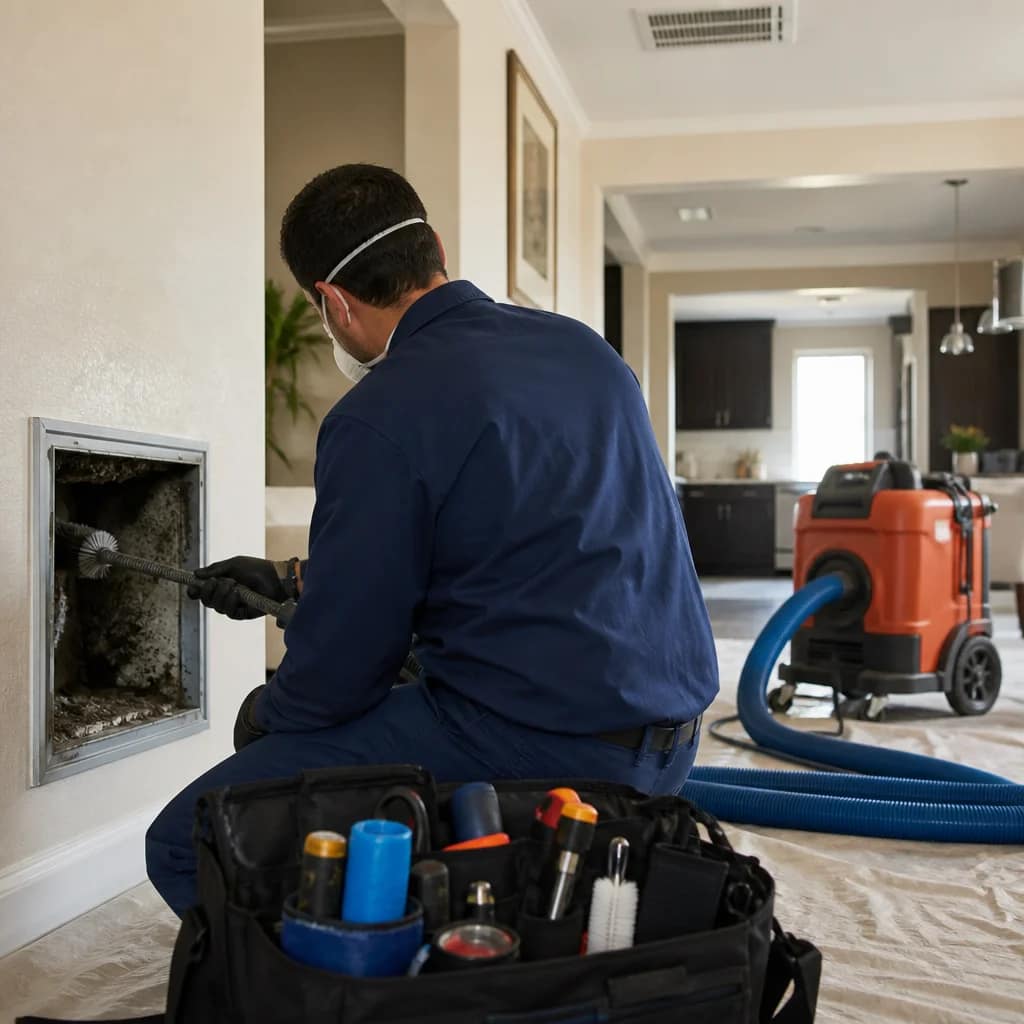
The Cost of DIY Attempts Versus Professional Emergency Intervention
Many property owners attempt DIY approaches when they notice musty air or suspected contamination, hoping to save money. These attempts almost always worsen the situation and cost significantly more to remediate professionally afterward.
Spray-on duct treatments purchased at hardware stores don’t eliminate mold or bacteria—they mask odors temporarily while contamination spreads deeper into your ductwork system. HEPA filters alone can’t address active mold growth or biofilm coating inside ducts. Duct tape and sealant attempts often damage ductwork and trap moisture that fuels additional contamination.
By the time property owners contact us after failed DIY attempts, contamination has typically spread further and required more aggressive (and expensive) professional cleaning. What might have cost $1,200-$1,800 for emergency professional sanitization often escalates to $3,000-$5,000 when we must address advanced contamination, ductwork damage from DIY attempts, and secondary issues like moisture intrusion.
Why professional emergency response saves money:
- Proper diagnosis identifying root causes rather than just symptoms
- Effective sanitization eliminating contamination completely rather than temporarily
- Prevention of spread preventing emergency situations from escalating
- Equipment and expertise addressing problems DIY approaches can’t reach
- Reduced future emergency calls through proper remediation and prevention
Professional emergency intervention also protects your health during the process. We use containment protocols, HEPA filtration, and antimicrobial agents applied safely—not consumer products designed for surface cleaning.
Your Next Steps When Musty Air Strikes Your Property
If you’re noticing persistent musty smells, visible mold in vents, or signs of contaminated air in your Dallas property, contact us for immediate emergency assessment. Don’t wait for the problem to worsen or hope it resolves on its own.
When you call, have ready: your property address, a description of where you notice musty smells, any visible mold or discoloration, and whether you’ve noticed health symptoms among occupants. This information helps us assess urgency and dispatch appropriately.
We’ll schedule assessment within hours, conduct thorough diagnostic evaluation, explain our findings clearly, and begin emergency sanitization immediately if contamination is confirmed. You’ll receive before and after documentation, air quality testing results, and specific recommendations for preventing future contamination.
For immediate emergency response in Dallas, contact Dr. Air Duct at any time. We’re here 24/7 because contaminated air doesn’t follow business hours, and your property’s air quality can’t wait.
Frequently Asked Questions (FAQ)
How quickly can your team arrive if we detect a musty smell in our ducts?
We dispatch our technicians 24/7 across the Dallas area, and our typical response time is within 2 hours of your call. When contamination is involved, we prioritize your property and get someone to you as fast as safely possible. Our local presence means we’re not coordinating with a national call center or waiting for distant teams to mobilize.
What health problems can contaminated ductwork actually cause?
Contaminated ducts circulate mold spores, bacteria, and other pathogens directly into your breathing space, which can trigger respiratory issues, allergies, asthma attacks, and infections, especially in children and immunocompromised individuals. Prolonged exposure to mold and bacterial growth compounds these risks over time. We’ve seen Dallas families experience significant health improvements within weeks after we sanitize their systems.
What’s the difference between calling us versus trying to clean contaminated ducts ourselves?
We use professional-grade equipment, EPA-approved sanitizers, and thermal imaging to identify hidden contamination that standard store-bought products can’t reach or kill. DIY attempts often push spores deeper into your system or leave pockets of mold untreated, making the problem worse. Our team also identifies the source of contamination so we can prevent it from recurring in your specific property.