

Table of Contents
- Why Dryer Vent Clogs Are More Dangerous Than Most Homeowners Realize
- The Science Behind Dryer Vent Fires: Heat, Lint, and Ignition
- National Fire Statistics: How Often Do Dryer Fires Actually Happen
- Local Dallas Data: Dryer Fire Incidents in North Texas
- Warning Signs Your Dryer Vent May Be at Risk
- The Hidden Costs of Ignoring Dryer Vent Maintenance
- How We Help Dallas Homeowners Prevent Dryer-Related Fires
- What Professional Dryer Vent Cleaning Actually Removes
- The Difference Between DIY Cleaning and Professional Inspection
- Why Annual Maintenance Matters Year-Round
- Getting Your Dryer Vent Professionally Inspected Today
- Frequently Asked Questions (FAQ)
Why Dryer Vent Clogs Are More Dangerous Than Most Homeowners Realize
Your dryer vent may seem like a minor detail in your home maintenance checklist, but it deserves serious attention. When lint and debris accumulate inside the vent system, they create conditions that can lead to fire in ways many Dallas homeowners don’t anticipate. The danger isn’t theoretical—it’s a real hazard affecting thousands of homes annually across the country.
Most people clean their dryer’s lint trap after each load, which is good practice. However, that trap only catches about 80% of the lint that leaves your dryer. The remaining fibers travel through the vent ductwork and accumulate over time, especially in longer vent runs or systems with kinks and bends. This buildup restricts airflow, causes heat to concentrate inside the vent, and creates an environment where ignition becomes possible.
What makes this particularly risky is that the problem develops silently. You might notice your dryer taking longer to dry clothes or feel warm air backing up into your laundry room, but these warning signs often go unaddressed until a more serious issue surfaces. By then, lint accumulation may have reached dangerous levels.
The good news is that understanding this risk empowers you to take preventative action. Regular professional inspection and cleaning of your dryer vent can eliminate the conditions that lead to fire hazards.
The Science Behind Dryer Vent Fires: Heat, Lint, and Ignition
To understand why a clogged dryer vent poses a fire risk, it helps to know what happens inside your dryer during operation. A typical dryer heats air to temperatures between 140 and 180 degrees Fahrenheit, then forces this hot air through damp clothing to evaporate moisture. That moisture-laden air, along with loose lint fibers, exits through your vent duct.
Lint is highly flammable. When it accumulates inside a vent duct, it forms a dense material that restricts airflow. Restricted airflow means heat cannot escape efficiently, causing temperatures inside the duct to rise. In some cases, the heating element or other ignition sources within the dryer can reach temperatures exceeding 300 degrees Fahrenheit, especially when the dryer has to work harder against restricted airflow.
The combination of flammable lint material, concentrated heat, and reduced oxygen flow (due to blockage) creates what fire safety experts call the “fire triangle”: fuel, heat, and oxygen. When all three elements are present, ignition can occur. This process happens gradually as lint builds up over weeks or months, making it hard to detect until a fire alarm sounds.
Studies show that lint-related dryer fires often start inside the vent duct itself, not in the dryer cabinet. The fire can spread quickly through the accumulated lint, potentially reaching your home’s exterior wall, attic, or interior spaces depending on your vent configuration.
National Fire Statistics: How Often Do Dryer Fires Actually Happen
The National Fire Protection Association (NFPA) tracks fire incident data carefully. According to their reports, dryer and washer fires account for approximately 15,500 fires annually in the United States. Of these, the vast majority involve dryers specifically, with lint buildup cited as a leading cause.
These fires result in an average of 10 deaths, 310 injuries, and over $200 million in property damage each year. The NFPA emphasizes that failure to clean dryers and dryer vents is a significant contributing factor in many of these incidents. What’s particularly noteworthy is that many of these fires are considered preventable through proper maintenance.
The statistics break down even more clearly when you look at fire departments’ findings. Approximately 34% of reported dryer fires involve failure to clean lint from the system. Another significant percentage involves damaged or improperly installed vent ducting. This means that education and regular maintenance could prevent roughly one-third of these fires.
Consumer Reports and fire safety organizations consistently recommend professional dryer vent inspection and cleaning annually, particularly for homes with longer vent runs, multiple bends in the ductwork, or dryers that are heavily used.
Local Dallas Data: Dryer Fire Incidents in North Texas
The Dallas-Fort Worth metroplex experiences weather patterns and housing characteristics that can increase dryer fire risk. Our humid summers mean clothes carry more moisture when they enter the dryer, requiring longer drying cycles and more heat exposure. Longer heat cycles mean more lint travels through your vent system.
Additionally, many Dallas homes feature long vent runs from the laundry room to the exterior wall or roof. Some properties have vents that travel through attic spaces or multiple wall cavities. These longer, more complex vent routes trap lint more easily and make professional cleaning more necessary.
We’ve responded to numerous emergency calls from Dallas-area homeowners who discovered active dryer fires or detected fire hazards during routine maintenance. In nearly every case, proper cleaning and inspection years earlier would have prevented the situation entirely.
While exact fire incident numbers for North Texas aren’t always publicly reported at a granular level, local fire departments and insurance companies in the Dallas area consistently identify clogged dryer vents as a preventable fire source. Given the size and diversity of our region, it’s safe to assume that dozens of dryer-related incidents occur annually throughout Collin, Dallas, Denton, Tarrant, and surrounding counties.
Warning Signs Your Dryer Vent May Be at Risk
Recognizing early warning signs gives you an opportunity to address clogged dryer vents before they become dangerous. Here are the most common indicators that your system needs professional attention.
Longer drying times are often the first clue. If towels or jeans that used to dry in one cycle now require two or more, lint accumulation is likely restricting airflow. Your dryer is working harder and running hotter to compensate for the reduced airflow.
Excessive lint around the vent hood outside your home or on your exterior wall suggests lint is accumulating faster than it should exit. A properly functioning vent should show minimal lint around the exterior opening.
Warm or hot air backing into your laundry room indicates blocked ductwork preventing normal airflow. This creates heat buildup inside the dryer cabinet and vent system—exactly the condition that precedes fires.
A burning smell while the dryer runs is a serious warning sign requiring immediate attention. This often means lint inside the vent is beginning to overheat. Stop using the dryer and contact a professional immediately.
Visible lint escaping from the exhaust area, moisture accumulation inside the dryer cabinet, or clothes that are still damp after a full cycle all point to vent blockage. Signs Your Dryer Vent is Blocked: Symptoms to Watch For provide more detailed guidance on what to watch for.
The Hidden Costs of Ignoring Dryer Vent Maintenance
The most obvious cost of ignoring dryer vent maintenance is fire risk itself, but the financial and practical consequences extend beyond that immediate danger.
Your dryer consumes more energy when lint buildup forces it to work harder. A partially clogged vent can increase energy consumption by 30% or more, directly raising your monthly utility bills. Over a year, this inefficiency can cost homeowners hundreds of dollars in wasted electricity.
Reduced dryer performance frustrates household routines. Extended drying times mean more time spent on laundry and clothes sitting in the dryer longer, which can cause wrinkles and odor issues. In homes or businesses with high laundry volumes, this inefficiency becomes especially problematic.
Moisture that fails to exit properly can cause condensation inside your dryer cabinet and potentially seep into surrounding drywall or framing. This creates conditions for mold growth and wood rot, requiring expensive repairs that dwarf the cost of routine vent cleaning.
Damage to your dryer occurs more quickly when the system works against restricted airflow. The heating element, motor, and drum assembly all experience increased stress. A dryer that might last 10-12 years with proper vent maintenance may fail after 5-7 years if the vent remains chronically clogged.
Most significantly, insurance claims related to dryer fires often involve coverage disputes if the property owner failed to maintain the dryer vent system. Carriers may deny claims or impose substantial deductibles if they can demonstrate negligent maintenance, leaving you responsible for repair or rebuilding costs potentially exceeding $100,000.
How We Help Dallas Homeowners Prevent Dryer-Related Fires
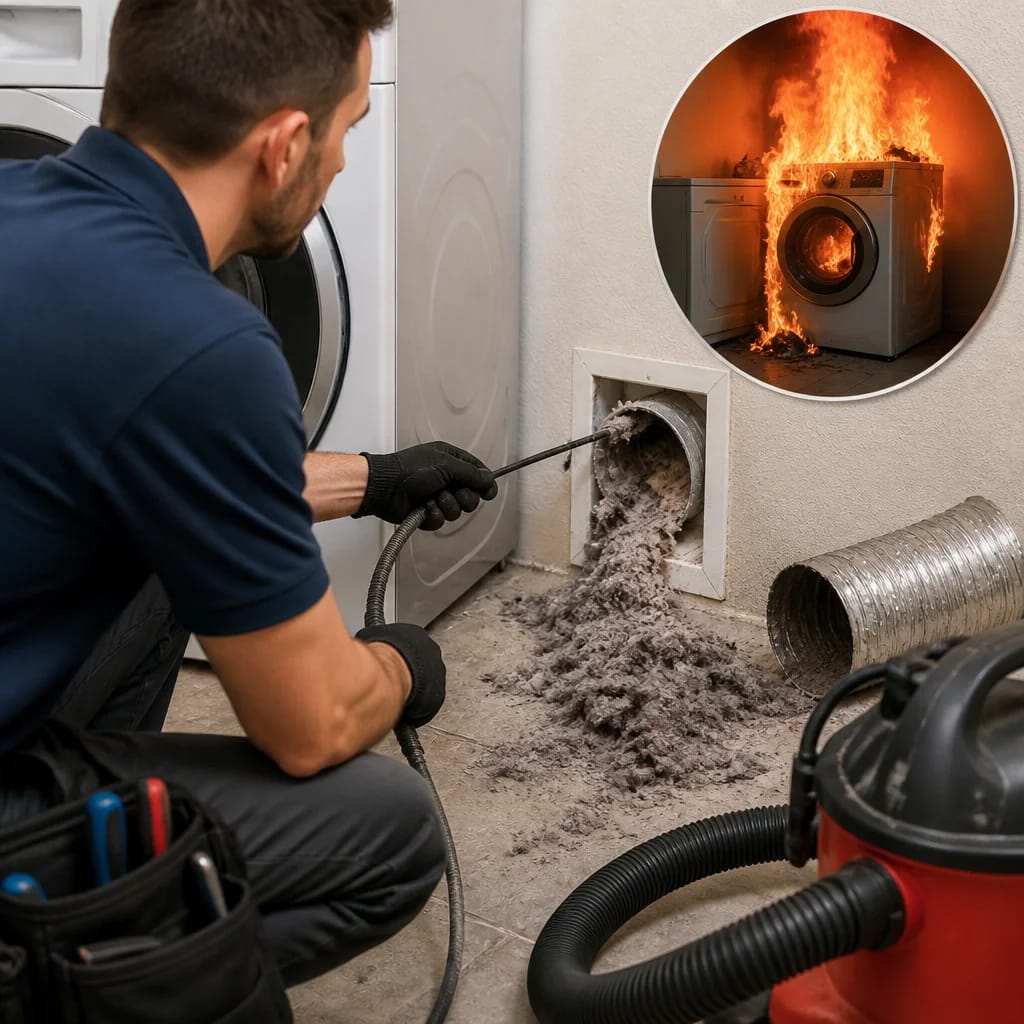
We’ve built our dryer vent cleaning service around preventing fires while restoring your dryer’s efficiency. Our approach combines thorough cleaning, proper inspection, and education about ongoing maintenance.
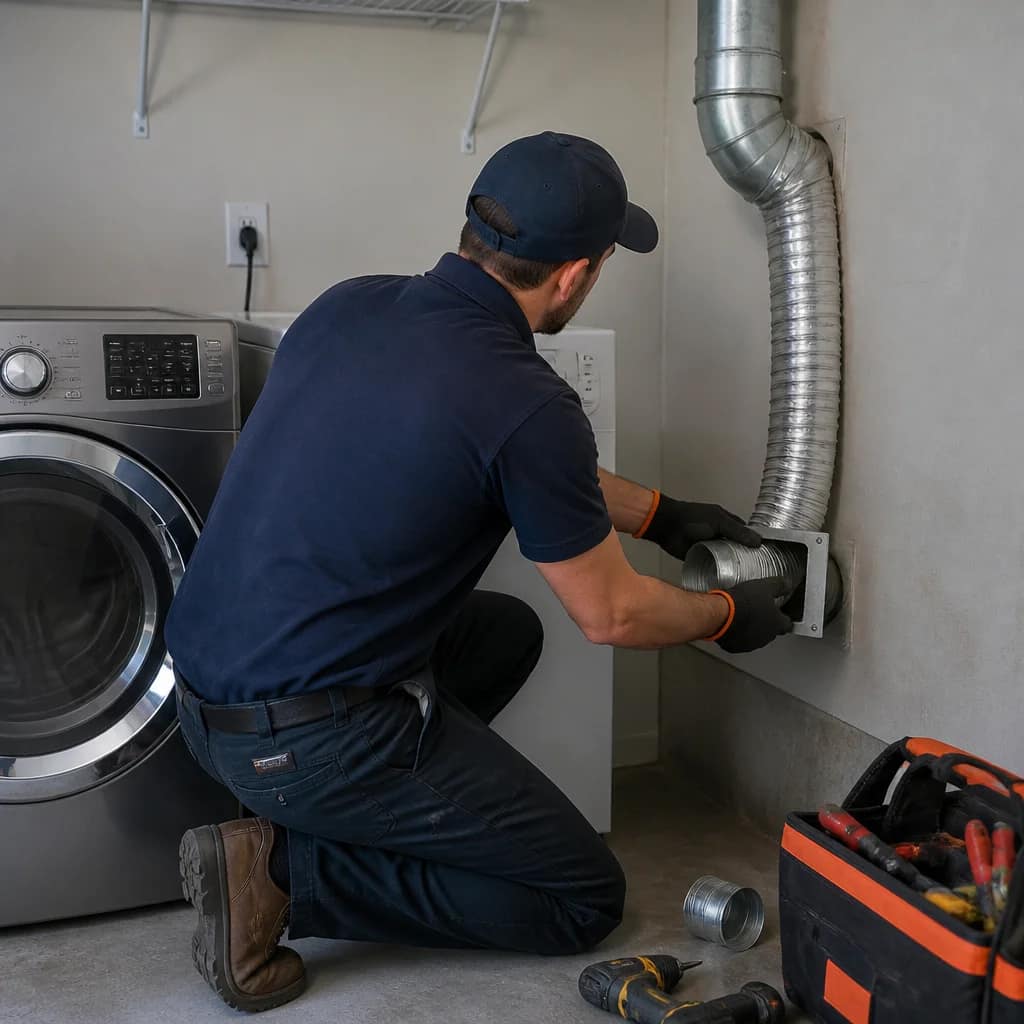
Our technicians use specialized equipment designed to remove lint from the entire vent run, including areas that consumer-grade tools cannot reach. We don’t simply clean the vent hood or the area immediately behind your dryer. We access the complete ductwork using powerful, controlled equipment that agitates lint loose and vacuums it safely away.
We inspect your entire vent system during cleaning, identifying any damage, improper bends, or configuration issues that contribute to lint accumulation. If we discover duct damage or inadequate venting configuration, we recommend repairs or reconfiguration to improve performance and safety.
Our inspection reports include photographs and details about your specific vent system, giving you documentation of the work completed and recommendations for future maintenance. This record can also be valuable for insurance purposes or if you ever need to demonstrate that proper maintenance was performed.
We understand Dallas’s humid climate and the specific vent challenges that North Texas homes face. Whether your vent travels through an attic, multiple walls, or features several bends, we assess your particular situation and provide maintenance recommendations tailored to your home’s configuration.
What Professional Dryer Vent Cleaning Actually Removes
Most homeowners have only seen the lint trap after removing it from their dryer. That trap catches a visible quantity of lint, which might lead you to believe your entire vent is clear. The reality is quite different.
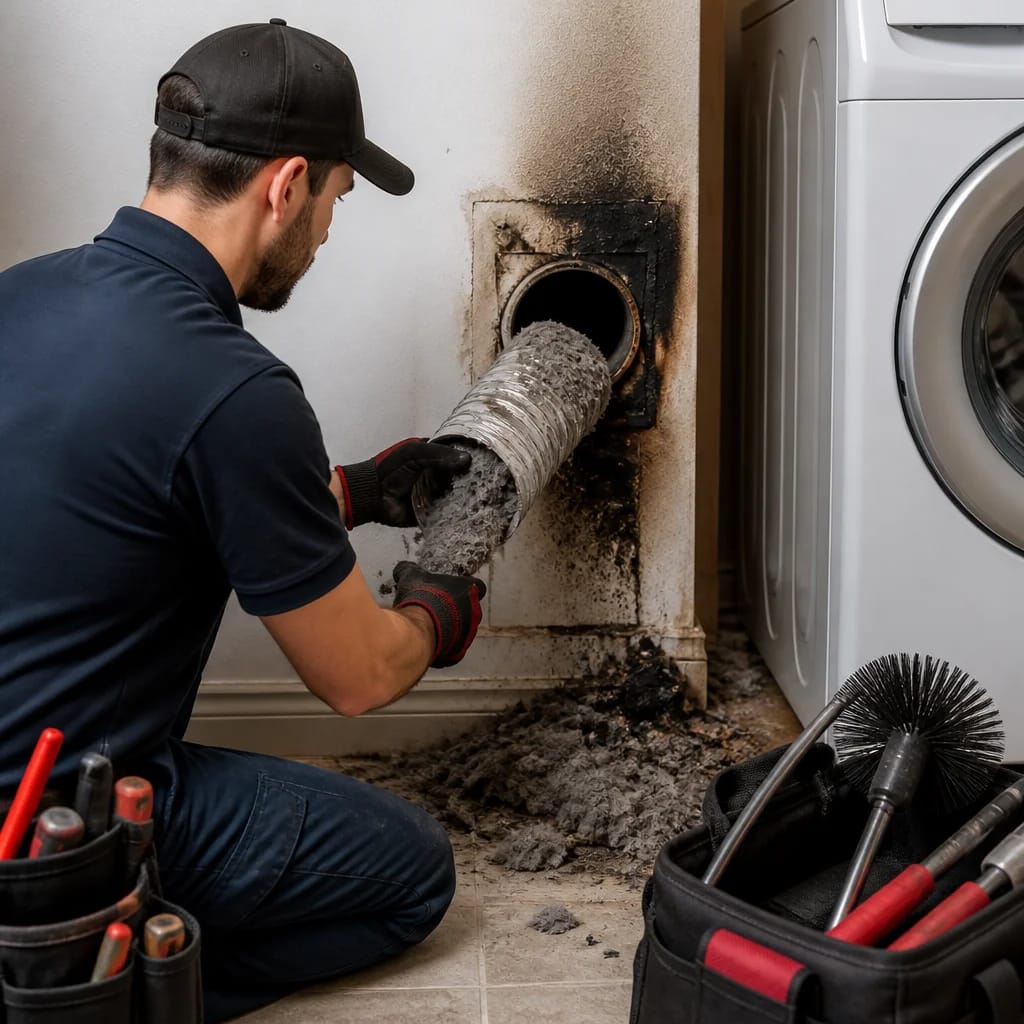
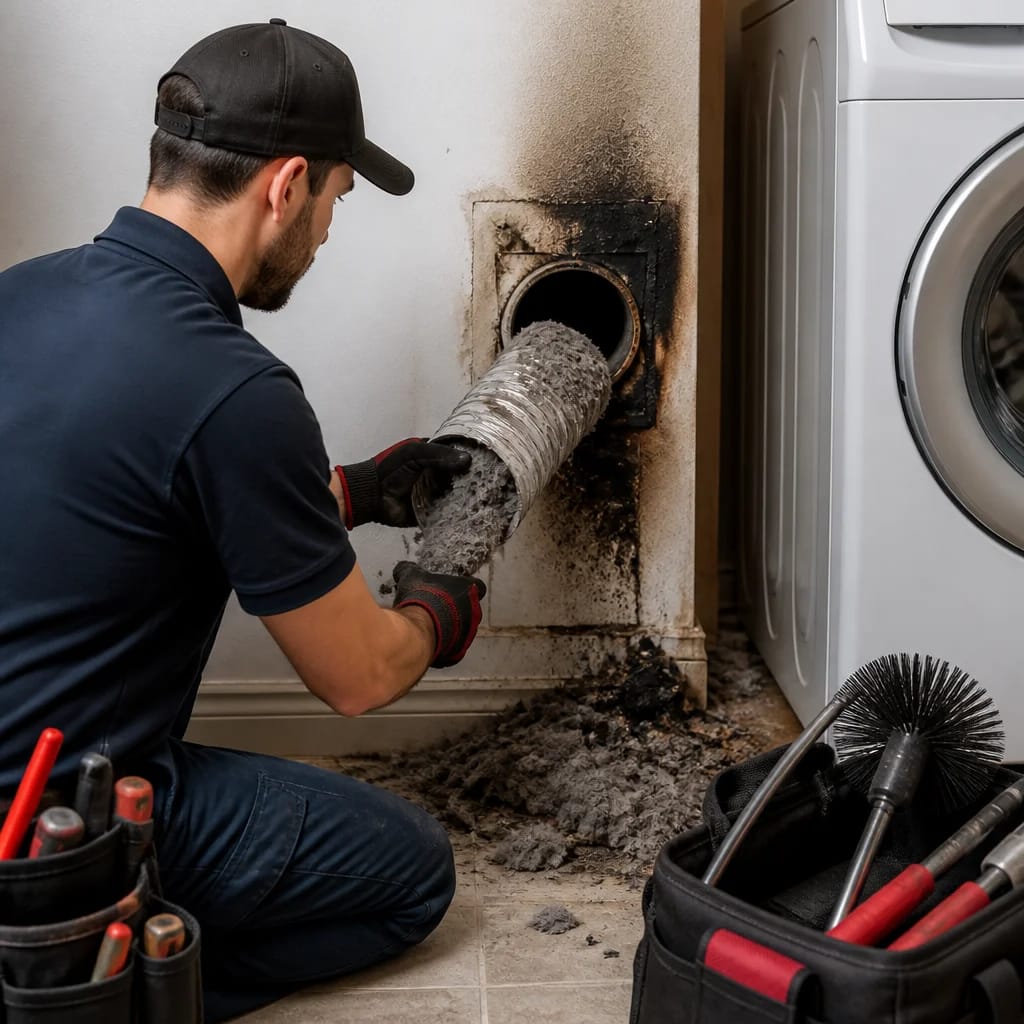
When we access your vent ductwork, we find lint packed densely inside the duct in forms that don’t resemble the wispy lint from your trap. This lint has been moistened by dryer exhaust, then dried by heat and airflow, creating a compressed, almost felt-like material that adheres to duct walls. Some of this material never reaches the trap because it settles in bends, at the vent hood, or in areas where airflow patterns slow.
We also find debris beyond just lint. Dust, pet hair, debris from torn lint trap screens, and occasionally even insulation particles can accumulate in vent systems. If ductwork has been damaged or installed improperly, we may find debris from outer sources that has worked its way in.
Top five dryer vent cleaning reasons including fire risk reduction provide additional context on what professional cleaning accomplishes.
In homes with older ductwork, we sometimes discover previous debris from previous dryer malfunctions or construction work that was never cleaned out. Professional cleaning removes all of this material, restoring proper airflow and eliminating the fuel source for potential fires.
The Difference Between DIY Cleaning and Professional Inspection
Many homeowners attempt dryer vent cleaning using handheld lint brushes or handheld vacuum attachments. This approach provides some benefit—it’s better than doing nothing—but it has significant limitations.
Consumer-grade lint removal tools typically reach only 3-6 feet into your ductwork, which means they access the section immediately behind your dryer but miss the rest of the vent run. If your vent travels 15, 20, or 30 feet to your exterior wall or roof, the majority of the duct remains uncleaned.
These tools also cannot dislodge compressed lint that has been there for months. Handheld brushes can disturb the surface but cannot remove deeply packed material. Vacuum attachments lack the suction power to pull lint from a full duct system, and they often push lint further down the duct rather than removing it.
Professional inspection involves visually assessing the duct system to identify damage, improper bends, disconnected sections, and other issues that contribute to fire risk. We can determine whether your vent ductwork meets current safety standards and whether your vent hood functions properly. Many DIY attempts miss these structural issues entirely.
Additionally, professional equipment captures all removed lint safely in a collection container, preventing it from escaping back into your home or accumulating elsewhere. DIY cleaning often disperses lint throughout your laundry area and home.
For homes with longer vent runs, more than one bend, or a history of slow drying, professional cleaning is genuinely necessary to eliminate fire risk. DIY maintenance between professional cleanings can help, but it should not replace annual professional service.
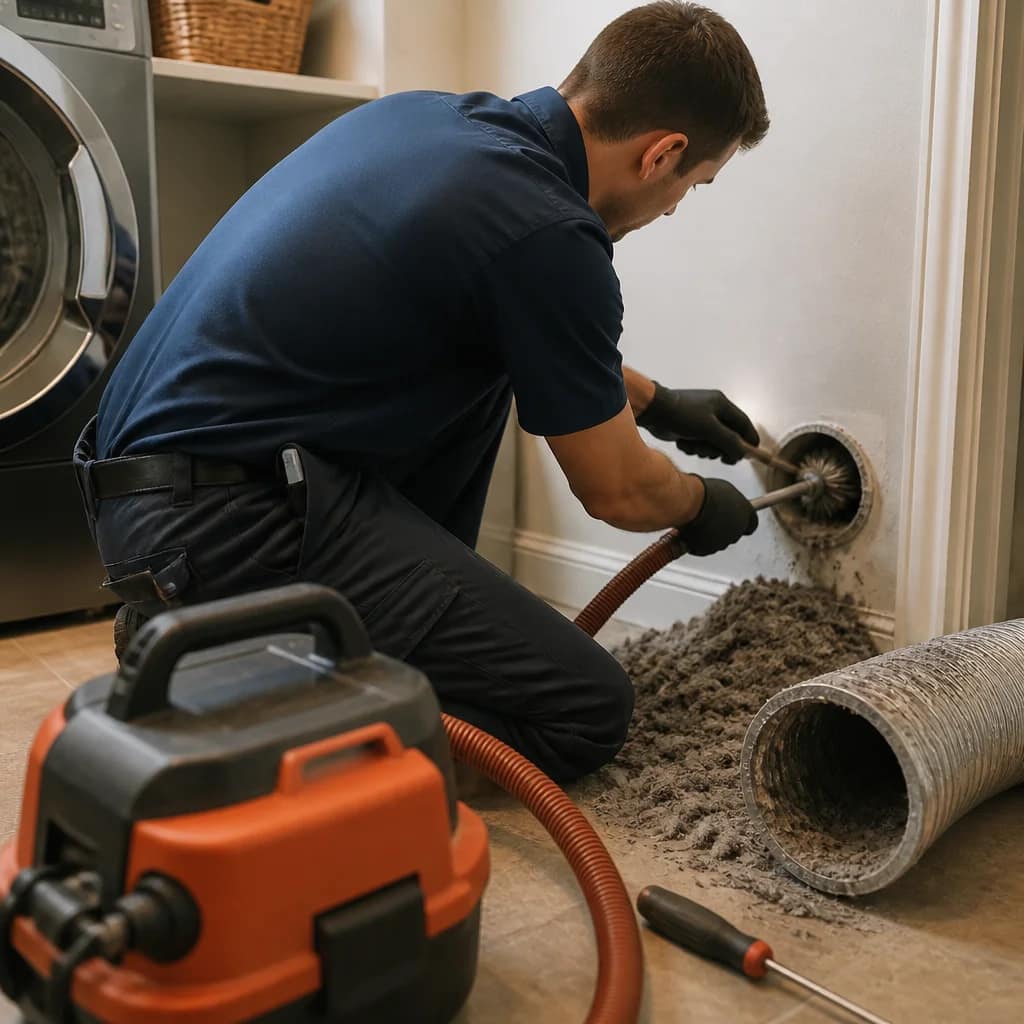
Why Annual Maintenance Matters Year-Round
A dryer vent cleaned once annually and then ignored for 12 months allows lint to rebuild. The longer your vent runs and the more frequently you use your dryer, the faster this accumulation occurs.
Families with multiple children, frequent laundry needs, or high household volumes benefit from more frequent professional cleaning. We recommend inspecting the vent hood regularly (every few months) and having professional cleaning performed annually at minimum. For heavily used systems, semi-annual cleaning may be appropriate.
Dallas’s humidity means moisture content in dryer exhaust is consistently high. This moisture contributes to lint adhering to duct walls more readily than it would in drier climates. Our recommendation for annual professional cleaning reflects this local climate factor.
Seasonal changes also matter. Fall and winter may increase laundry volume in some households, while spring and summer often bring heavy use in others. Instead of picking a specific season, schedule your annual professional cleaning during a predictable time that works for your household—perhaps when you change your HVAC filters or during a home maintenance routine.
Treating vent maintenance as annual preventative care, similar to chimney cleaning or HVAC inspection, integrates it into responsible home ownership and significantly reduces fire risk over time.
Getting Your Dryer Vent Professionally Inspected Today
If you’re concerned about your dryer vent or cannot remember the last time it was professionally cleaned, now is the right time to contact us. We serve Dallas and the surrounding Texas areas with professional dryer vent cleaning, inspection, and repair services available 24/7.
Our process is straightforward. Contact us by phone or through our website to schedule an appointment. Our technicians will assess your dryer vent system, identify any concerns, perform thorough cleaning if needed, and provide recommendations for ongoing maintenance.
We provide transparent pricing and detailed reports so you understand exactly what we found and what we’ve done. We’ll discuss your specific vent configuration, answer questions about maintenance frequency, and explain how to monitor for warning signs between professional visits.
Professional dryer vent cleaning typically takes 1-2 hours and can be completed quickly, minimizing disruption to your household. The cost of this preventative service is modest compared to the potential consequences of dryer fires, energy waste, or emergency repairs.
Don’t wait for warning signs to appear. Reach out to us today to schedule your professional dryer vent inspection and cleaning. We’re here to help Dallas homeowners stay safe and keep their dryers running efficiently.
Frequently Asked Questions (FAQ)
Can a clogged dryer vent really start a fire?
Yes, absolutely. When lint builds up in your vent, it restricts airflow and traps heat inside the dryer. That combination creates a perfect environment for ignition, especially if the lint catches a spark from the heating element. We’ve seen the damage firsthand in Dallas homes, and it’s one of the most preventable house fires out there.
How often should we have our dryer vent professionally cleaned?
We recommend annual cleaning for most households, though if you notice reduced drying performance or lint accumulation around your vent opening, don’t wait. Families with multiple people doing laundry regularly or homes with longer vent runs may need cleaning twice a year. Our inspections help us identify your specific situation so you’re not guessing about safety.
What’s the difference between cleaning our dryer vent ourselves and hiring professionals?
When you clean from the lint trap or outside opening, you only remove surface lint. We use specialized equipment that reaches deep into the ductwork to pull out the hidden buildup where fires actually start. We also inspect your entire vent system for damage, improper installation, or blockages you can’t see, which gives you real peace of mind about your home’s safety.