

Table of Contents
- Why Regular Chimney Inspections Matter for Your Home
- Signs Your Chimney Needs Professional Inspection and Repair
- How Chimney Damage Affects Your Home's Safety and Efficiency
- Our Comprehensive Chimney Inspection Process
- Common Chimney Repairs We Handle
- Protecting Your Investment: Annual Maintenance and Prevention
- How to Schedule Your Chimney Inspection Today
- Frequently Asked Questions (FAQ)
Why Regular Chimney Inspections Matter for Your Home
Your fireplace is a cozy focal point on cold Texas evenings, but the chimney that vents smoke and gases needs regular attention to work safely and efficiently. A chimney that hasn’t been inspected in years can develop cracks, blockages, or creosote buildup that compromise both safety and performance. We understand that chimney maintenance isn’t always top of mind, especially when everything seems to be working fine. That’s why we’ve built our inspection and repair services around catching small issues before they become expensive problems.
A professional chimney inspection is one of the most practical investments you can make for your fireplace. During inspection, we evaluate the flue condition, check for creosote accumulation, look for structural damage, and verify proper ventilation. These details matter because a poorly functioning chimney can allow dangerous gases like carbon monoxide to enter your home instead of venting safely outside.
Regular inspections also extend your chimney’s lifespan and help your fireplace operate at peak efficiency. When your chimney is clean and in good repair, heat travels up the flue more effectively, and your fireplace draws air properly without creating drafts or back-puffing smoke into your living space. If you heat your Dallas home with your fireplace during winter, or simply enjoy using it for ambiance, keeping it in top condition ensures comfort and peace of mind.
Most industry standards recommend having your chimney inspected at least once per year, ideally before the heating season begins. If you use your fireplace frequently or have noticed any signs of trouble, more frequent inspections make sense.
Action step: Schedule your first inspection this fall if you haven’t had one within the past 12 months.
Signs Your Chimney Needs Professional Inspection and Repair
Several warning signs indicate your chimney requires professional attention sooner rather than later. If you notice smoke backing up into your home, a strong smell coming from the fireplace, or difficulty getting a good draft, these are red flags that something is blocking or restricting airflow.
Look for these additional indicators:

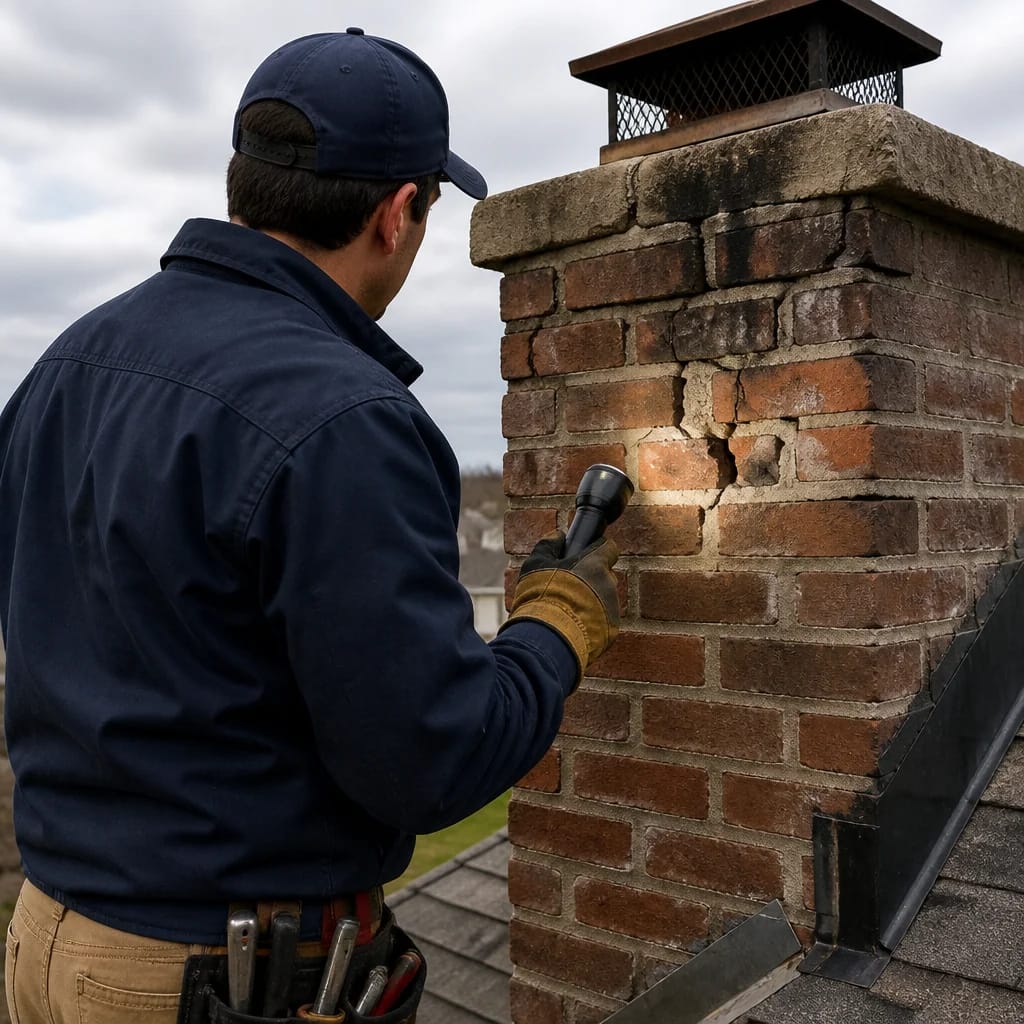
- Visible cracks or deterioration on the exterior chimney structure
- Missing or damaged chimney cap or flashing
- Creosote buildup visible inside the fireplace opening (appears as dark, crusty deposits)
- Loose or missing mortar between bricks
- Staining or discoloration on the exterior of the chimney
- Debris, bird nests, or animal droppings near the chimney opening
- Dampness or water damage inside or around the fireplace
Even if you don’t notice obvious problems, a professional inspection with specialized equipment can reveal issues that aren’t visible to the naked eye. We use video inspection technology to see inside your flue, allowing us to spot creosote buildup, structural cracks, or blockages that might otherwise go undetected.
Action step: If you’ve observed any of these signs, contact us for an inspection rather than continuing to use your fireplace.
How Chimney Damage Affects Your Home’s Safety and Efficiency
Chimney problems don’t stay small. Cracks in the flue liner allow heat to transfer to nearby wood framing, which poses a fire risk over time. Blockages and creosote accumulation reduce draft and can trap dangerous gases inside your home. A damaged chimney cap leaves your flue exposed to rain, debris, and wildlife, leading to water damage, mold growth, and costly interior repairs.
From an efficiency standpoint, a compromised chimney forces your fireplace to work harder to draw air, which reduces heat output and makes the fire less enjoyable. In some cases, a struggling chimney can cause your home’s heating system to become less efficient because conditioned air escapes through the flue instead of staying inside.
The financial impact compounds quickly. Ignoring a small crack can lead to a flue liner replacement. Overlooking water damage can result in drywall repair, mold remediation, and structural work. These repairs are far more expensive than routine inspections and maintenance.
Our Comprehensive Chimney Inspection Process
We approach every inspection methodically to give you a complete picture of your chimney’s condition. Our team starts with an exterior visual assessment, checking the roof penetration, chimney structure, cap, and flashing for any obvious damage or wear.
Next, we perform an interior video inspection using a camera that travels up the entire flue. This allows us to see creosote levels, identify cracks or gaps in the flue liner, spot obstructions, and confirm proper ventilation. We also check the damper, smoke shelf, and hearth for functionality and safety concerns.
Once the inspection is complete, we provide you with a detailed report that explains what we found, shows photos or video footage when relevant, and outlines any repairs we recommend. We prioritize safety issues first, then address items that affect efficiency and performance. If your Dallas chimney cleaning is needed, we’ll recommend that as part of our findings.

Our inspections take about an hour, and we’re transparent about costs upfront so there are no surprises.
Action step: When you call to schedule, let us know if you have specific concerns so we can allocate the right amount of time.
Common Chimney Repairs We Handle
The repairs your chimney may need depend on what we find during inspection. Creosote buildup and debris are addressed through professional chimney cleaning, which removes flammable deposits and restores proper airflow. Damaged chimney caps are replaced to keep rain and animals out. Flashing repairs seal the area where your chimney meets the roof, preventing water infiltration.
Cracked or deteriorated mortar between bricks is repointed to restore structural integrity. Damaged flue liners are replaced or relined depending on the extent of the damage. We also handle damper repairs, smoke shelf cleaning, and hearth maintenance.
For each repair, we use quality materials and methods that meet or exceed industry standards. Our technicians are trained to handle both residential and commercial chimneys, and we can address emergency situations with our 24/7 availability.
Protecting Your Investment: Annual Maintenance and Prevention
The best strategy for chimney longevity is preventive maintenance. A yearly inspection and cleaning keep your system in good working order and catch small problems before they escalate. Cleaning removes creosote that naturally builds up with each fire, reducing fire risk and improving draft.
Beyond professional service, you can protect your chimney by:
- Installing a quality chimney cap or chimney crown to shield against weather and debris
- Using seasoned hardwood that burns cleanly and produces less creosote
- Having your fireplace and chimney professionally swept before heavy use seasons
- Monitoring your chimney exterior for visible signs of damage and addressing them promptly
- Ensuring your home’s gutters direct water away from the chimney base
These preventive steps work alongside our inspection and repair services to keep your fireplace safe and efficient for years to come.
Action step: Add “annual chimney inspection” to your fall maintenance checklist.
How to Schedule Your Chimney Inspection Today
Getting started is simple. Contact us by phone, email, or through our website to book your inspection. We serve the Dallas area and surrounding Texas communities with fast response times and flexible scheduling. Let us know your preferred appointment window, and we’ll confirm a time that works with your schedule.
When you call, mention if you have any specific concerns or if you’re a first-time caller so we can prepare properly. We’re here to answer questions, provide estimates, and help you understand your chimney’s condition without pressure or jargon.
Your safety and comfort are our priority. Whether your chimney needs a routine cleaning, structural repairs, or a complete assessment, we have the expertise and equipment to deliver reliable, professional service. Reach out today to schedule your inspection and take the first step toward a safer, more efficient fireplace.
Frequently Asked Questions (FAQ)
How often should I have my chimney inspected?
We recommend scheduling a professional chimney inspection at least once per year, ideally before the heating season begins. If you use your fireplace frequently or notice any signs of damage like water stains or loose mortar, we suggest inspecting it more often. Regular inspections help us catch small issues before they become costly repairs that compromise your home’s safety.
What does your chimney inspection process include?
Our comprehensive inspection involves a detailed visual examination of your chimney’s interior and exterior, including the flue, damper, cap, and structural integrity. We check for creosote buildup, cracks, deteriorating mortar, and any blockages that could affect performance or safety. Once we complete the inspection, we provide you with a detailed report and recommend any necessary repairs or maintenance.
How quickly can you respond to chimney emergencies in Dallas?
We offer 24/7 availability because we understand that chimney issues can’t always wait for business hours. When you contact us about an urgent repair or safety concern, our team works to get to your property fast so we can assess the problem and discuss your options with you right away.