

Table of Contents
- Why Filter Choice Matters for Your Dallas Home's Health and Efficiency
- Understanding MERV Ratings: How They Protect Your HVAC System
- HEPA Filtration Explained: Maximum Particle Capture for Sensitive Households
- Health Benefits Comparison: Which Filter Best Improves Indoor Air Quality
- HVAC Compatibility Considerations: Airflow and System Performance
- Energy Impact Analysis: Operating Costs and Efficiency Ratings
- Our Recommendation: Why HEPA Filtration Works Best with Professional Air Duct Cleaning
- Complementary Services: Maximizing Your Air Quality Strategy with Dr Air Duct
- Selection Guide: Choosing the Right Filter for Your Dallas Property
- Taking Action: Installation and Maintenance Best Practices
- Frequently Asked Questions (FAQ)
Why Filter Choice Matters for Your Dallas Home’s Health and Efficiency
The air filter inside your HVAC system does more than keep dust out of your equipment. It directly shapes how clean your indoor air feels, how hard your system works, and what you pay each month in utility costs. Dallas homeowners often overlook this small component, yet it’s one of the easiest ways to influence both comfort and air quality.
When you choose between HEPA and high-MERV filters, you’re making a decision that affects respiratory health, energy consumption, and system longevity. The wrong choice can reduce airflow, strain your equipment, or leave harmful particles circulating through your home. The right choice captures contaminants efficiently while keeping your system running smoothly.
We help Dallas residents improve their indoor air quality year-round, and we consistently find that filter selection is step one. Before investing in major upgrades, understanding what these filters actually do puts you in control of your home’s air quality.
Understanding MERV Ratings: How They Protect Your HVAC System
MERV stands for Minimum Efficiency Reporting Value. This rating scale ranges from 1 to 16, measuring how effectively a filter captures particles between 0.3 and 10 microns.
Lower MERV ratings (1-4) capture large debris like dust and lint but allow smaller particles through. Standard fiberglass filters typically fall here. Mid-range MERV filters (5-8) trap more dust, pollen, and mold spores. High-MERV filters (9-16) capture finer particles including pet dander, bacteria, and some viruses.
The tradeoff is airflow. Higher MERV ratings mean denser filter material, which restricts air movement slightly. Your system has to work harder to push conditioned air through your home. This increased resistance can raise energy costs and stress older HVAC equipment, especially if your system wasn’t designed for high-MERV filtration.
Most Dallas homes built before 2010 run systems designed for MERV 8 or lower. Installing a MERV 13 filter in an older unit may seem like better protection, but it can actually reduce comfort and efficiency. Check your system’s documentation or ask a technician about your equipment’s MERV capacity before upgrading.
HEPA Filtration Explained: Maximum Particle Capture for Sensitive Households
HEPA filters represent the gold standard for particle capture. The term “HEPA” (High-Efficiency Particulate Air) refers to filters meeting strict EPA standards: they must capture 99.97% of particles 0.3 microns or larger.
HEPA filters go far beyond standard residential MERV ratings. They trap ultra-fine particles that slip through high-MERV filters, including some allergens, bacteria, and fine dust that accumulates in lung tissue over time. Many households with asthma, severe allergies, or immunocompromised members benefit from HEPA-level filtration.
The catch: true HEPA filters are dense and restrictive. Most residential HVAC systems cannot operate a whole-house HEPA filter without significant strain. Instead, many Dallas homeowners use standalone HEPA air purifiers in bedrooms or living areas, paired with a solid mid-range filter in the main system.
Portable HEPA units run continuously in high-traffic rooms, capturing allergens and fine particulates that your central filter misses. They’re affordable, flexible, and don’t stress your HVAC equipment. If you’re considering HEPA protection, weigh whether a whole-house retrofit makes sense for your system, or whether targeted HEPA units serve your needs better.
Health Benefits Comparison: Which Filter Best Improves Indoor Air Quality
High-MERV filters (11-13) excel at capturing common household allergens: dust mites, pet dander, pollen, and mold spores. For families with mild to moderate allergies or dust sensitivity, a MERV 11 filter provides noticeable relief without straining most modern systems. Seasonal pollen counts drop, and visible dust accumulation on surfaces often decreases within two weeks.
HEPA filters push further. They capture microscopic particles that MERV filters miss, including some airborne bacteria and viral particles. This matters most in homes with residents experiencing respiratory illness, severe asthma, or compromised immune function. The difference is measurable and meaningful for these households.
Neither filter type removes odors, gases, or volatile organic compounds. That requires activated carbon, a separate upgrade. Both depend on clean ductwork to work effectively. If your air ducts contain years of dust, mold, or debris, a new filter alone won’t solve indoor air quality problems. The contamination upstream in your ductwork continues circulating into your home.
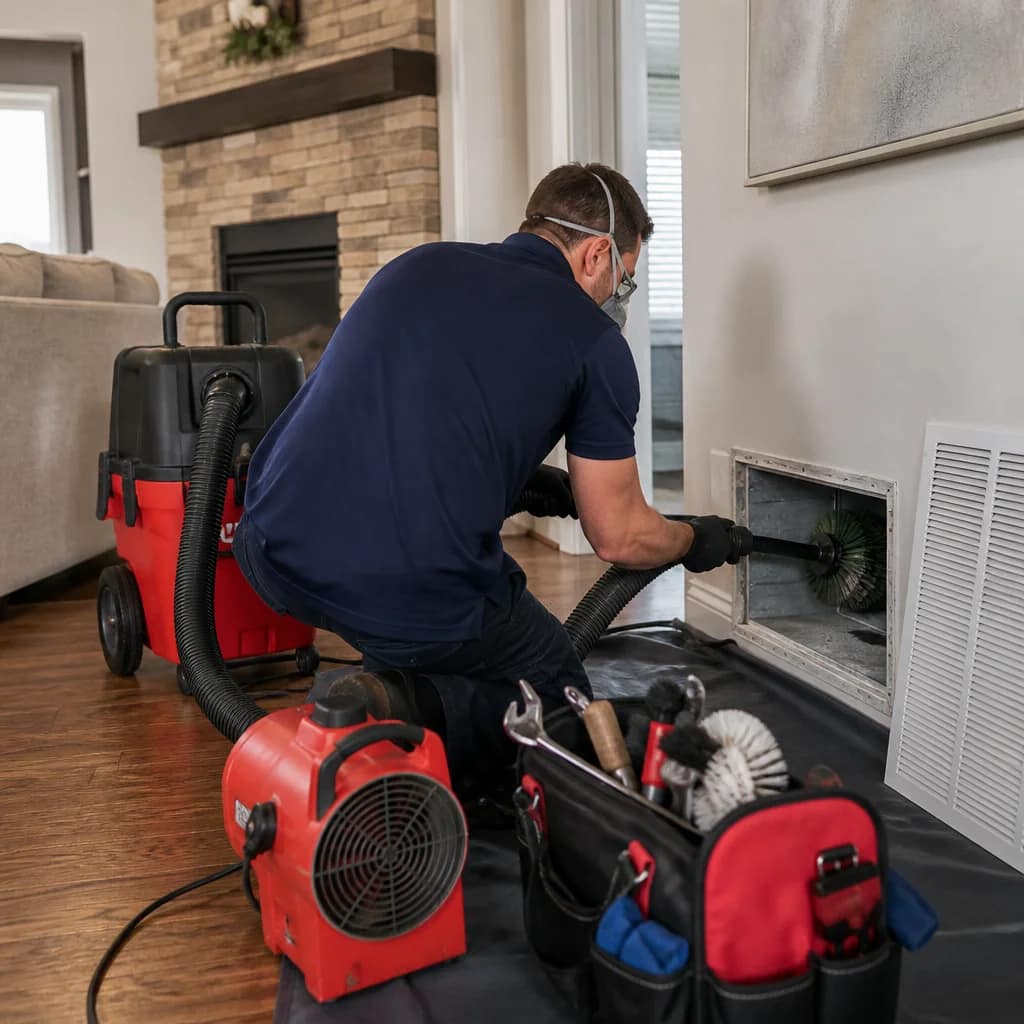
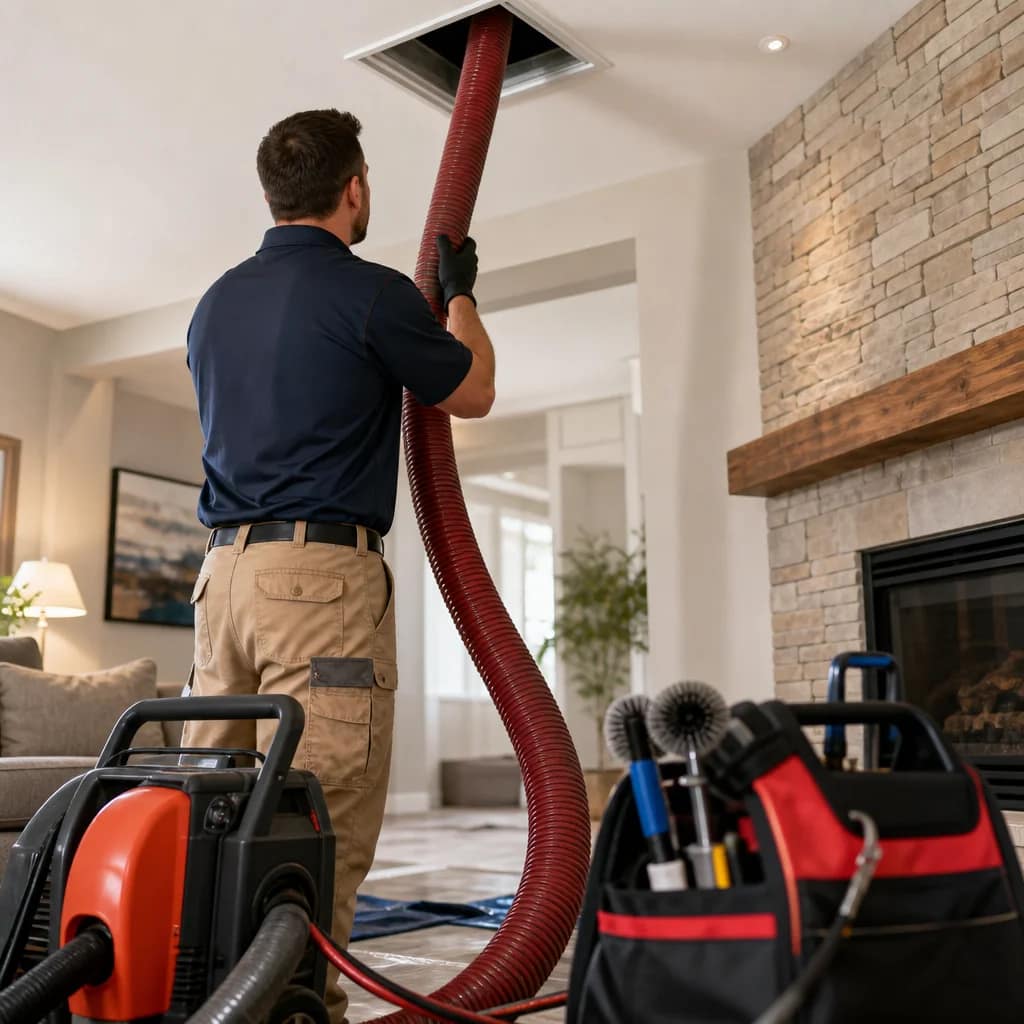
This is where professional air duct cleaning becomes essential. We remove the accumulated dust and debris from your entire system, allowing your filter to work as designed. When you combine duct cleaning with an appropriate filter upgrade, indoor air quality improvements become dramatic and lasting.
HVAC Compatibility Considerations: Airflow and System Performance
Your HVAC system has specific airflow requirements. Push too much resistance through a filter, and your equipment compensates by running longer, generating more heat, and consuming more energy. In worst cases, excessive filter restriction can reduce cooling effectiveness or cause furnace cycling problems.
Modern systems (post-2015) typically handle MERV 11-13 filters without issue. Older units perform best with MERV 8 or lower. Check your system’s specifications, or contact a technician to confirm. When in doubt, stick with MERV 8 to avoid complications.
Another consideration: filter fit. A filter that doesn’t seal properly in its frame allows unfiltered air to bypass the medium entirely, defeating the purpose. Ensure you’re buying filters that match your frame size exactly (common sizes: 16x25x1, 20x25x1, 16x25x4). Improper fit is common and easily overlooked.
Sealed ductwork also matters. If your ducts have leaks or gaps, unfiltered air enters your system downstream of the filter. We inspect ductwork during cleaning and can identify leaks that compromise filter effectiveness. Sealing those leaks ensures every cubic foot of air passes through your filter before reaching your home.
Energy Impact Analysis: Operating Costs and Efficiency Ratings
MERV 8 filters allow maximum airflow with minimal system strain, keeping energy costs low. MERV 11-13 filters increase resistance by roughly 10-25%, raising energy consumption slightly. For a typical Dallas home running AC during our long, hot summers, upgrading from MERV 8 to MERV 13 might add $5-15 monthly to cooling costs.
Whole-house HEPA filters increase resistance even further, potentially raising energy use by 20-40% if installed in a system not designed for them. That translates to $15-40 additional monthly cost in peak cooling season. For many homeowners, standalone HEPA units prove more cost-effective than retrofitting the entire system.
Clean ductwork reduces energy consumption regardless of filter type. Dust buildup in ducts restricts airflow and forces your system to run longer to maintain temperature. Professional duct cleaning can improve system efficiency by 10-15%, offsetting filter upgrade costs and reducing overall energy bills. This efficiency gain compounds year after year.
Consider the full picture: filter upgrade cost plus installation, plus ongoing energy increase, versus the efficiency gains from duct cleaning. Many Dallas homes see better return on investment from duct cleaning than from filter upgrades alone.
Our Recommendation: Why HEPA Filtration Works Best with Professional Air Duct Cleaning
For most Dallas households, we recommend pairing a quality MERV 11 or MERV 12 filter with professional air duct cleaning. This combination captures household allergens effectively while maintaining system efficiency and avoiding compatibility issues.
If anyone in your home has diagnosed asthma, severe allergies, or respiratory sensitivity, add a standalone HEPA air purifier in their bedroom or office. Run it continuously during sleep or work hours. This targeted approach delivers HEPA protection where it matters most without stressing your central system or inflating energy bills.
The critical step is cleaning. Dirty ductwork undermines every filter upgrade. We see this repeatedly: homeowners install premium filters in systems with years of dust and debris clogging the ducts. The new filter captures incoming particles, but the contamination already inside your ducts keeps circulating.
Professional air duct cleaning removes this accumulated buildup, giving your filter a clean system to protect. You’ll notice improved airflow within days and measurably better indoor air quality within weeks. When combined with a quality filter, the results are substantial.
We recommend scheduling duct cleaning before upgrading your filter. This ensures your new filter works in an already-clean system, maximizing both air quality improvement and system efficiency gains.
Complementary Services: Maximizing Your Air Quality Strategy with Dr Air Duct
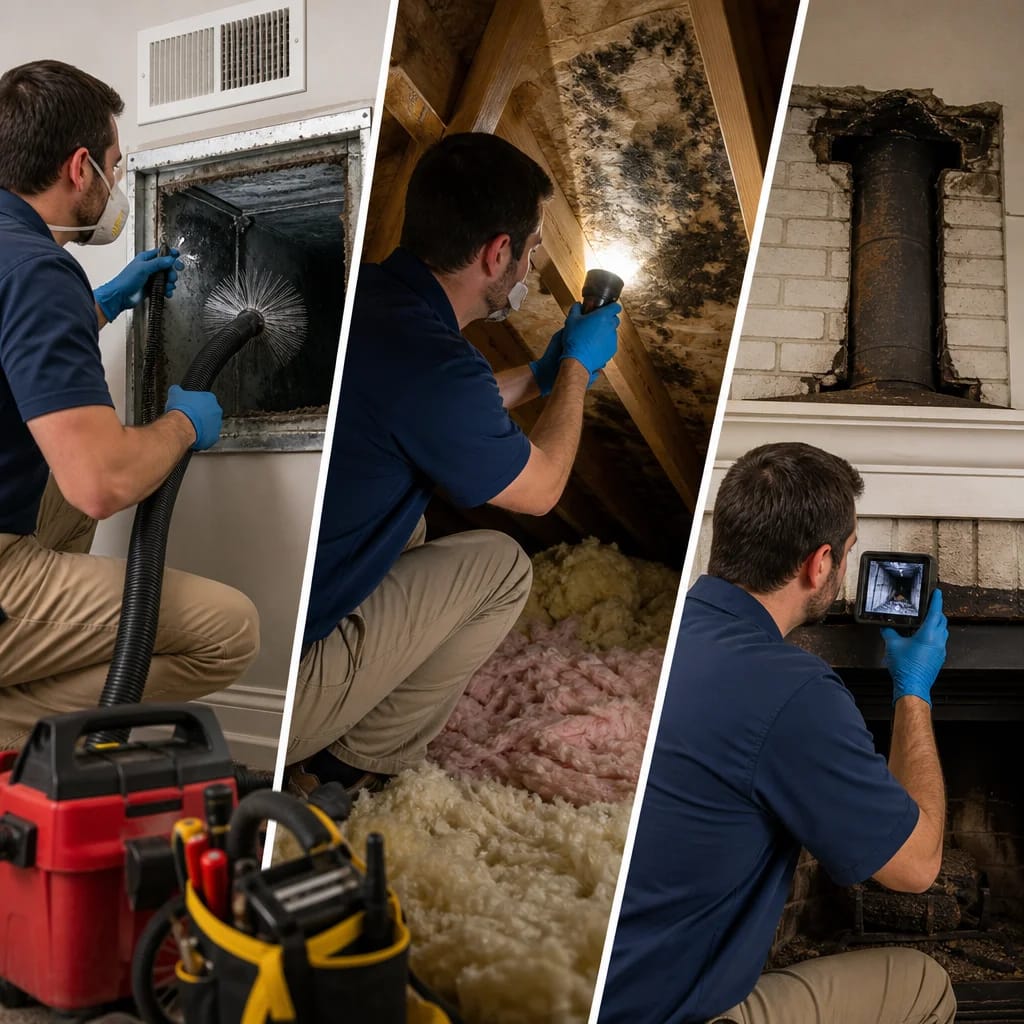
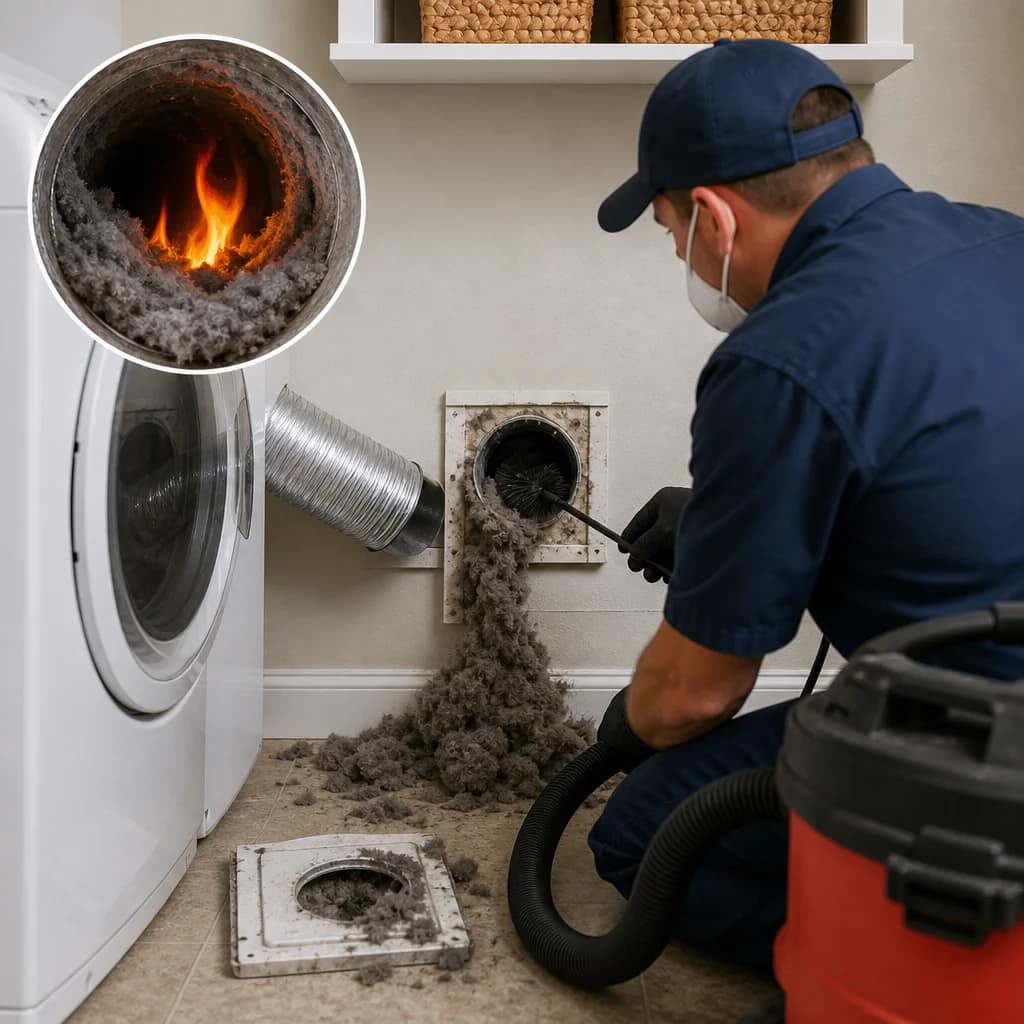
Air duct cleaning addresses the source of most indoor air quality problems, but it’s part of a broader strategy. Dryer vent cleaning, for example, prevents lint accumulation that can harbor bacteria and mold. Chimney sweeping removes creosote and soot that affect indoor air circulation.
We offer all three services locally in Dallas and surrounding communities. Our technicians can inspect your entire ventilation system, identify weak points, and recommend a comprehensive plan. Many customers discover that addressing dryer vents and chimney draft problems improves overall home air quality alongside duct cleaning.
Think of it this way: your home is a system. A premium air filter catches particles your ducts send to it, but duct cleaning, dryer vent maintenance, and chimney inspection create the foundation for lasting air quality. Together, these services optimize how air moves through your home.
Our comprehensive approach means you’re not juggling multiple contractors. We handle air ducts, dryer vents, and chimneys with the same professional standard and local expertise.
Selection Guide: Choosing the Right Filter for Your Dallas Property
Start by identifying your system’s MERV capacity. Check your furnace manual, existing filter frame, or call a technician. Most Dallas homes can safely use MERV 8-11 filters.
Next, assess your household’s health needs. Standard allergies or dust sensitivity? MERV 11 covers it. Severe asthma, pet allergies, or respiratory illness? Combine MERV 11 with a standalone HEPA unit in the primary bedroom or living area.
For commercial properties, consult your building maintenance plan. Larger HVAC systems often handle higher MERV ratings without issue. High-traffic commercial spaces benefit from MERV 13 filters, which capture more contaminants and are cost-effective at scale.
Replace filters every 60-90 days during heavy use (summer and winter), or monthly if you have pets or live in dusty areas. Clogged filters restrict airflow and reduce efficiency. Mark your calendar and check monthly by holding the filter up to light. If you can’t see light through the pleats, it’s time to replace.
Budget for professional duct cleaning every 3-5 years as routine maintenance, or immediately if you notice dust buildup, musty odors, or uneven airflow. This keeps your filter investment working effectively.
Taking Action: Installation and Maintenance Best Practices
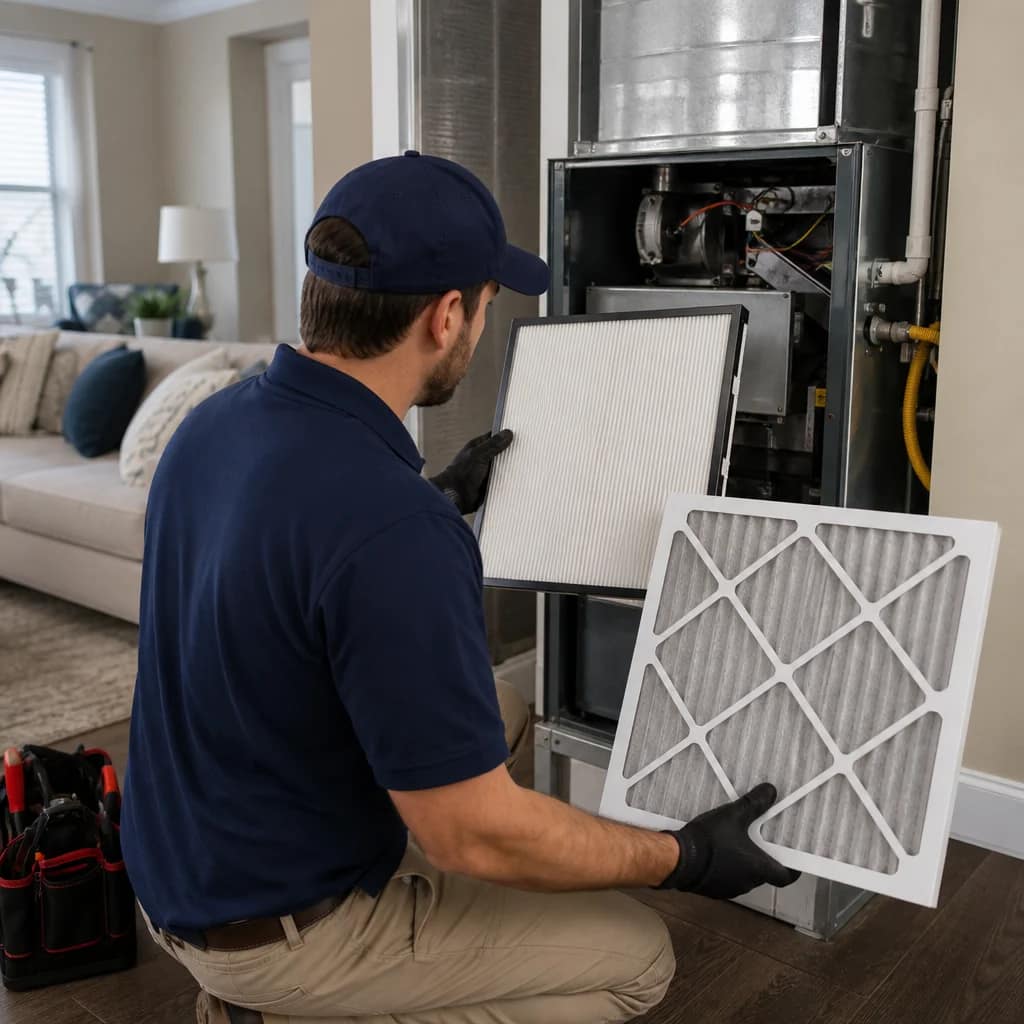
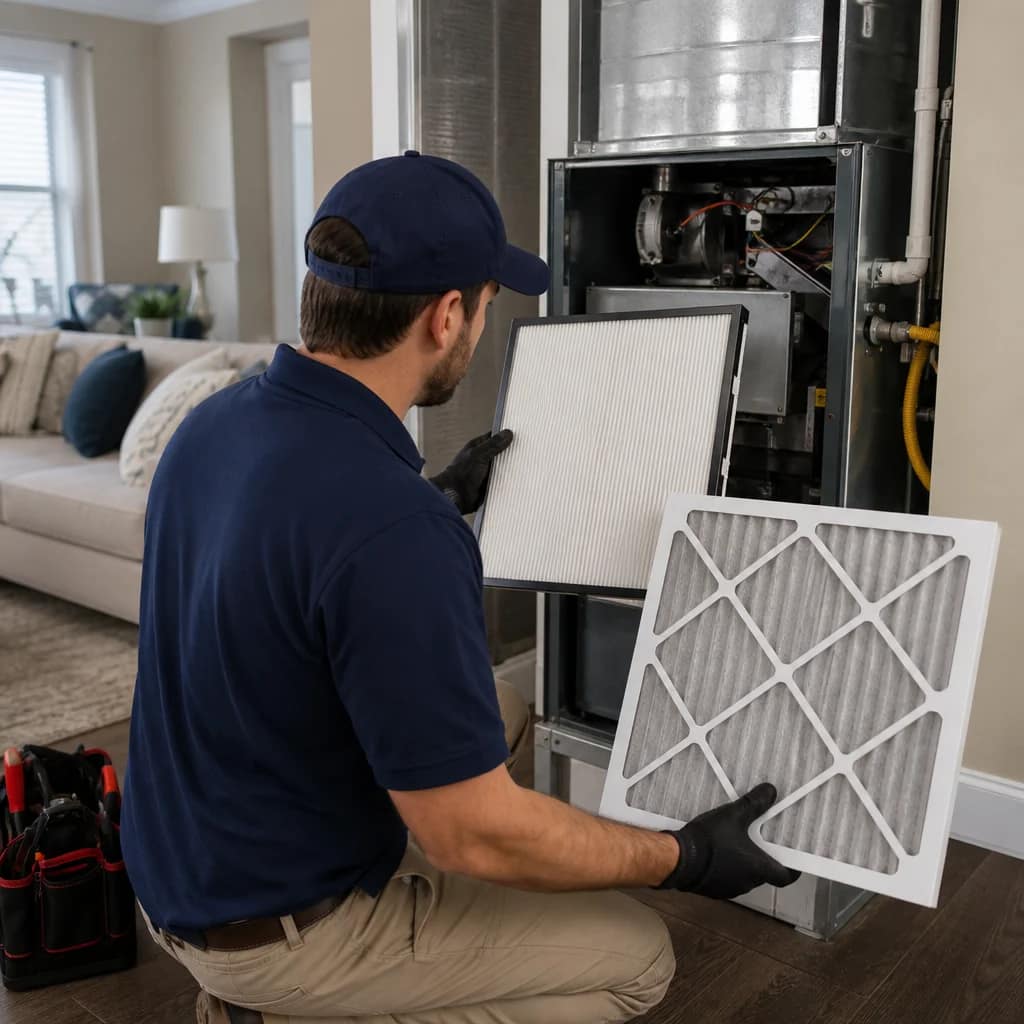
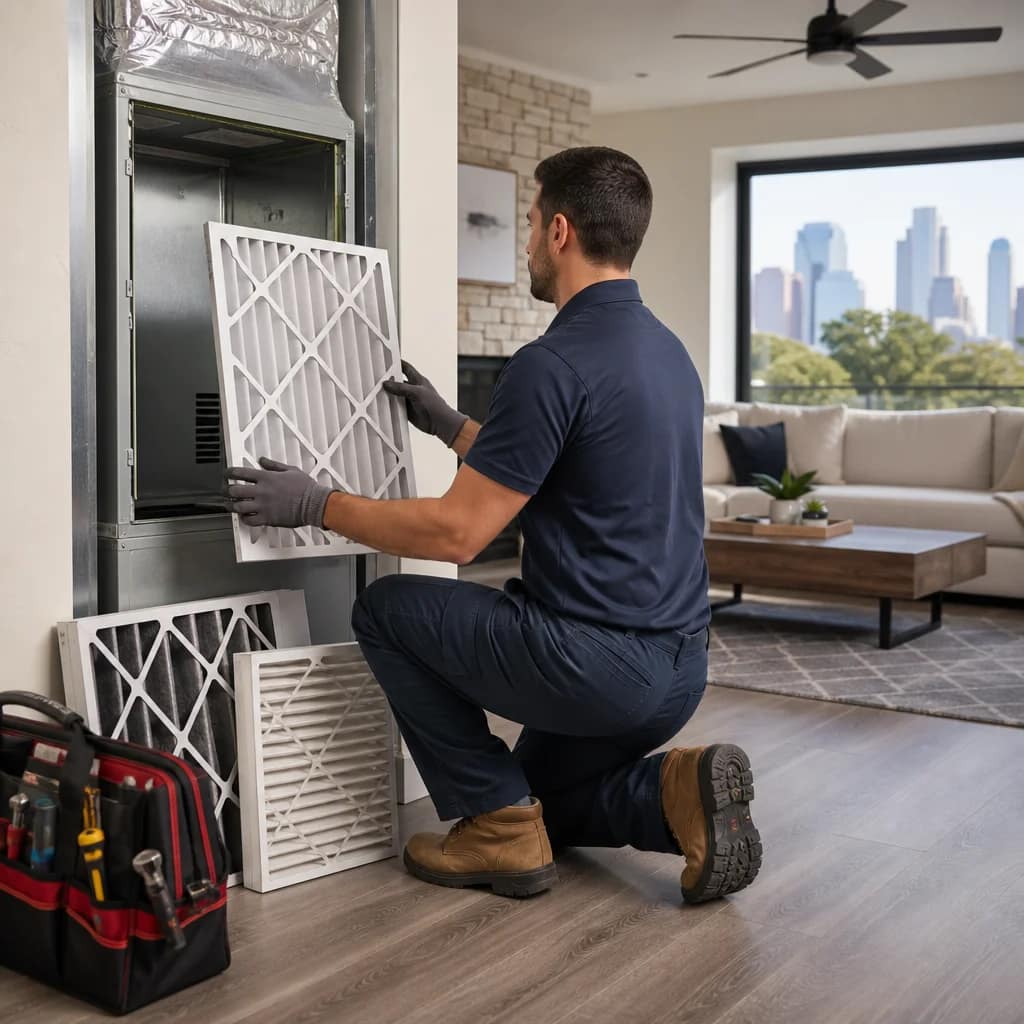
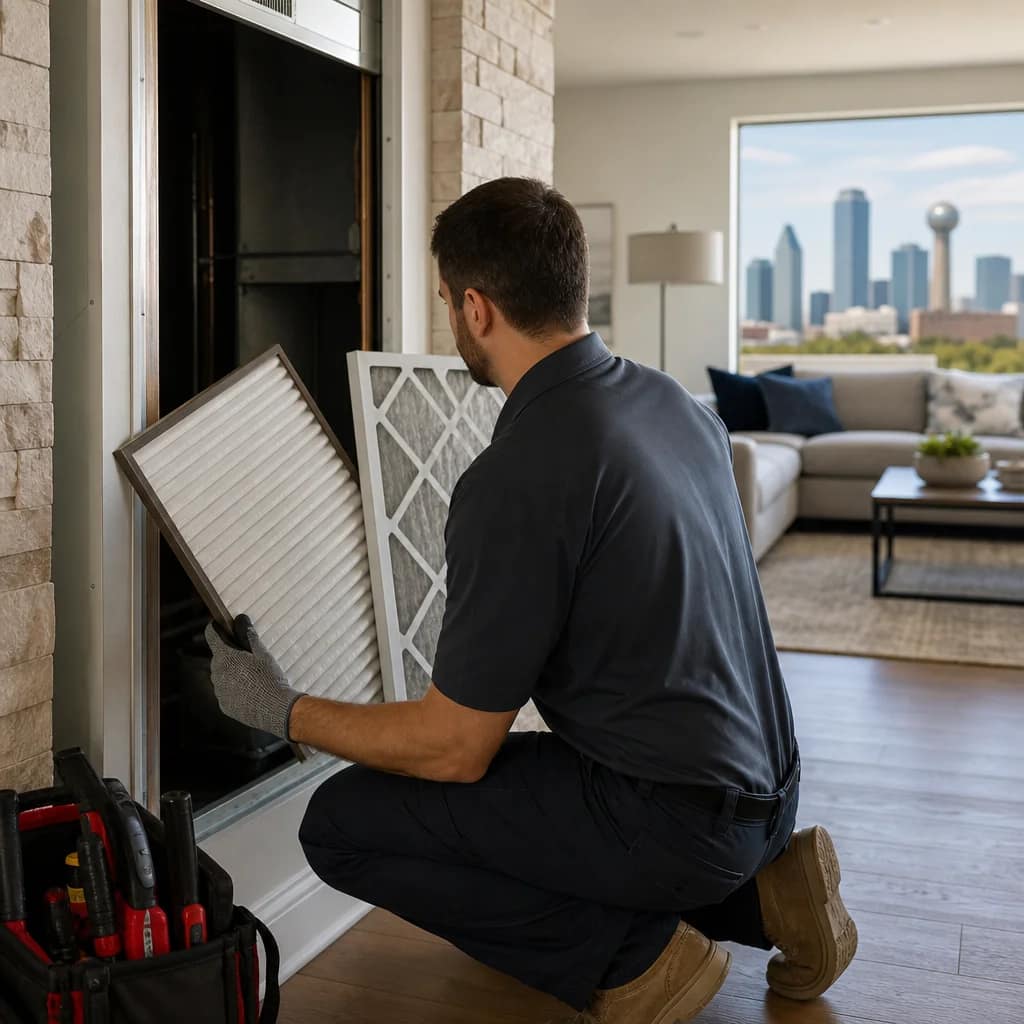
Installing a new filter is simple: locate your system’s filter frame (usually near the return air duct), note the size, and purchase an exact-fit replacement. Slide out the old filter, dispose of it properly, and slide the new one in with arrows pointing toward the furnace.
After installation, monitor airflow. You shouldn’t notice a drop in air pressure or weakened AC cooling within the first few days. If airflow feels restricted after changing filters, your new filter may exceed your system’s capacity, or it may not be seated properly. Contact a technician to verify compatibility.
Schedule professional air duct cleaning before or shortly after upgrading your filter. This establishes a clean baseline and ensures your new filter operates in a system designed for effective filtration.
Set a calendar reminder to check your filter monthly. Clean filters work better and keep energy costs lower. This simple habit is the most cost-effective air quality maintenance you can do.
When you’re ready to improve your Dallas home’s air quality, start with a professional duct cleaning assessment. We’ll inspect your system, recommend appropriate filter upgrades, and identify any other ventilation issues worth addressing. Our technicians arrive on time, explain findings clearly, and provide transparent pricing. Contact us today for a consultation, and let’s build your home’s air quality strategy from the foundation up.
Frequently Asked Questions (FAQ)
What’s the difference between HEPA and MERV filters, and which should we choose for our Dallas home?
HEPA filters capture 99.97% of particles down to 0.3 microns, making them ideal if anyone in your household has allergies or respiratory sensitivities. MERV-rated filters (typically 8-13) are more affordable and work well for general dust and pollen filtration while maintaining better airflow. We recommend assessing your family’s health needs and your HVAC system’s compatibility, since high-MERV or HEPA filters can reduce airflow if your system wasn’t designed for them.
Why do our air filters get so dirty so quickly in Dallas?
Our local climate combines high humidity, dust storms, and construction activity that all contribute to faster filter clogging. When filters accumulate debris, your HVAC system has to work harder, driving up energy costs and straining the equipment. We typically advise checking your filter monthly and replacing it every 30-90 days depending on pets, allergies, and outdoor air quality in your neighborhood.
Can we improve our indoor air quality beyond just changing filters?
Absolutely, and we recommend a combined approach. Professional air duct cleaning removes buildup that filters never catch, sanitizing eliminates mold and bacteria in your ductwork, and dryer vent cleaning prevents fire hazards while improving airflow. Pairing quality filters with our cleaning services gives you the most effective strategy for healthier air throughout your Dallas property.