

Table of Contents
- Why Dryer Lint Buildup Is a Problem for Dallas Homes
- Signs Your Dryer Vent Needs Professional Cleaning
- How Professional Dryer Vent Cleaning Improves Airflow
- Faster Drying Times and Lower Energy Costs
- Reducing Overheating and Dryer Fire Hazards
- What Our Technicians Inspect and Clean During a Service
- Why Certified Local Technicians Make the Difference
- Dryer Vent Cleaning Pricing and Scheduling With Dr Air Duct
- Frequently Asked Questions (FAQ)
Why Dryer Lint Buildup Is a Problem for Dallas Homes
Every time your dryer runs, it pulls lint, fibers, and small bits of fabric into the exhaust system. In a typical Dallas home, that lint travels through a metal duct, out a wall or roof vent, and into the open air. Over months and years, some of it gets trapped along the duct walls, especially at bends, joints, and the transition between the dryer and the vent pipe.
Dallas homes face a few conditions that can make this worse. Long, humid summers mean dryers often run more frequently, and many local homes have longer vent runs because of how they were built. Dust and pollen also work their way into exhaust openings during spring and fall.
What to do next: Check the lint screen after every load and vacuum the lint trap housing once a month. Then schedule a professional look at the full vent run at least once a year, particularly if your home has a longer or multi-bend duct path.
Signs Your Dryer Vent Needs Professional Cleaning
Most homeowners notice a problem with clothes taking longer to dry before they think about the vent itself. Here are the signs we see most often:
- Clothes need two or three cycles to dry, even on high heat
- The laundry room or exterior of the house feels unusually warm or smells of burning lint
- The dryer shuts off mid-cycle or the outside vent flap barely opens
- Lint is building up around the dryer drum, the back panel, or the floor
- The exterior vent cover is dusty, clogged, or not moving when the dryer runs
A quick test you can do yourself: run the dryer on air-fluff for five minutes and go outside. If the vent flap is not pushing open with a steady airflow, something is restricting the duct.
What to do next: If you see two or more of these signs, book an inspection before the problem worsens. Waiting often means the lint has packed more tightly and cleaning takes longer.

How Professional Dryer Vent Cleaning Improves Airflow
Dryers depend on a steady flow of hot air to move moisture out of your clothes. When lint blocks the duct, that moisture stays in the drum, and the machine has to work harder to finish each load. Professional cleaning removes the buildup from the entire exhaust path, not just the part you can reach from the laundry room.
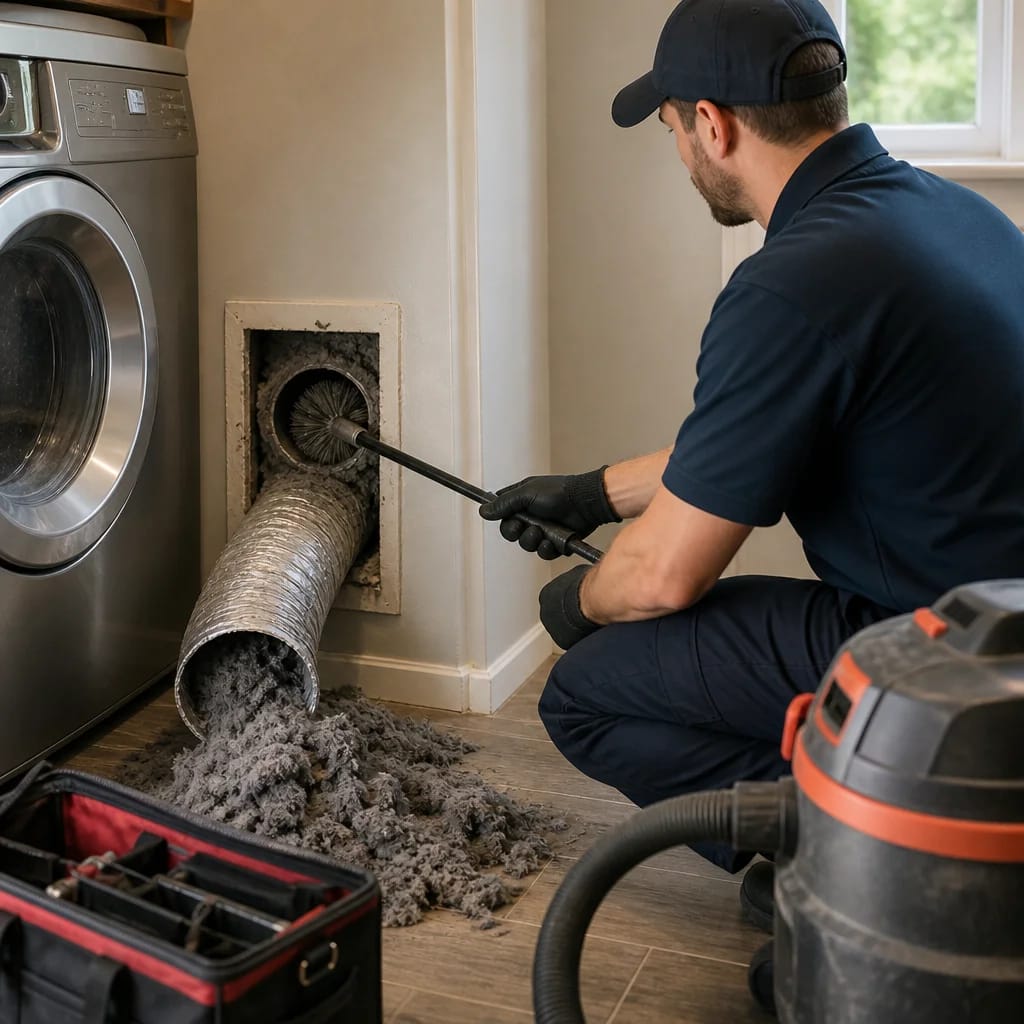
Our technicians use rotary brushes, high-powered vacuum equipment, and in many cases a specialized duct cleaning tool that reaches the full length of the vent. This approach clears lint that a standard lint brush or household vacuum usually misses, especially in longer runs or where the duct turns sharply.
Improved airflow may help your dryer perform closer to its intended design. The exact result depends on the age of the machine, the length of the vent, and how much buildup was present.
What to do next: After cleaning, run a test load and check the exterior vent. Strong, consistent outflow is a good sign that the path is clear.
Faster Drying Times and Lower Energy Costs
Many customers first call us because loads take noticeably longer to dry. When airflow improves, the dryer can clear moisture more efficiently, which often shortens cycle times. That means less time running the heating element and motor on each load.
Here is a simple example. A family running five loads a week with a clogged vent might find that each cycle takes 90 minutes instead of 60. Over a year, that extra time adds up in electricity or gas use. Cleaning the vent may help bring those cycles back toward their normal length, though we cannot promise a specific dollar amount on your bill, since usage habits and utility rates vary.
What to do next: Note how long a typical cycle takes before and after cleaning. Tracking this for a few weeks gives you a clear, personal measure of the change.
Reducing Overheating and Dryer Fire Hazards
Lint is highly combustible, and a dryer that cannot exhaust heat properly can overheat. Overheating can damage the heating element, thermal fuse, and internal wiring, and in the worst cases it creates a fire risk inside the walls or attic where the duct runs. The U.S. Fire Administration consistently lists dryers as a leading cause of home laundry fires, and restricted venting is a common contributing factor.

Routine cleaning can help reduce that risk by removing the fuel source before it builds up. We also check for loose connections, crushed flexible duct, and improper materials, such as plastic or foil-type ducts that are not recommended for dryer use.
What to do next: Never run a dryer when the vent is blocked or disconnected. If you notice a burning smell, unusually hot surfaces, or the dryer shutting off unexpectedly, stop using it and call a technician before running it again.
What Our Technicians Inspect and Clean During a Service
Every service begins with a visual inspection and a check of airflow at the exterior vent. From there, our team follows a consistent process:
- Inspect the lint trap, drum, and back of the dryer for buildup and damage
- Disconnect the dryer and check the transition duct for crushing, kinks, or separation
- Clean the full length of the vent using rotary brushes and high-powered vacuum equipment
- Clear the exterior vent hood and confirm the flap opens and closes freely
- Test airflow and run a short cycle to confirm the system is exhausting properly
- Review any findings with you, including recommended repairs or replacements
If we find a damaged duct, a missing hood, or a unit that needs a different vent material, we explain the options clearly before doing any additional work.
What to do next: Ask for a written summary after your service so you have a record of what was cleaned, what was inspected, and any follow-up items.
Why Certified Local Technicians Make the Difference
Dryer vent work looks simple from the outside, but a poorly done job can leave lint behind, loosen connections, or create new leak points. Trained technicians know how to route duct runs safely, select compatible materials, and spot problems that are not obvious to untrained eyes. Local experience matters too, since Dallas homes face particular conditions such as dust, humidity swings, and a wide range of home ages and construction styles.
When you choose a provider, look for licensing and insurance, clear written estimates, and a willingness to explain what they found. Our technicians are trained on current safety practices, and we focus on transparent communication so you understand the work before it begins. We are proud of our local presence and our commitment to responsive service.
What to do next: Before hiring anyone, ask about their licensing, insurance, and whether they provide a written inspection report. A reputable provider will answer these questions directly.

Dryer Vent Cleaning Pricing and Scheduling With Dr Air Duct
Dryer vent cleaning cost depends on several factors: the length and number of bends in the vent, how accessible the duct is, the level of buildup, and whether any repairs or replacement materials are needed. Simple residential cleanings are typically the most affordable option, while longer runs, rooftop vents, or heavily blocked ducts require more time and equipment. We provide upfront estimates so you know the expected cost before any work begins.
Scheduling is straightforward. You can book a dryer vent cleaning in Dallas through our Dallas dryer vent cleaning page, or call our team to discuss timing and any questions about your system. We offer 24/7 availability and fast response times, which is helpful if you notice a sudden problem or a safety concern. If you want to learn more about the advantages of regular maintenance, our guide on dryer vent cleaning benefits covers additional details.
What to do next: Schedule an inspection now, especially if you have noticed slower drying or a warm exterior vent. Ask for a written estimate and confirm what is included before you approve the work.
Frequently Asked Questions (FAQ)
How often should we clean our dryer vent?
For most households, we recommend a professional dryer vent cleaning about once a year. Homes with large families, pets that shed heavily, or frequent heavy loads may benefit from more frequent service. Our technicians can assess your vent length and layout during an inspection and suggest a schedule that fits your home.
Can a clogged dryer vent really cause a fire?
Yes. Lint is highly flammable, and when it builds up inside the vent or ductwork, it can ignite from the heat the dryer produces. We regularly see vents that are packed with lint, which is why we treat blockage as a safety issue and not just a efficiency problem. Clearing that buildup from the full length of the vent is one of the most effective ways to lower that risk.
Do you service commercial dryer vents as well as residential ones?
Yes, we clean dryer vents for both homes and businesses across Dallas. Commercial properties such as laundromats, apartment complexes, and hotels often have longer runs and higher usage, so we adjust our equipment and process to match. Just let us know the size and layout of your system when you contact us, and we will confirm the scope and pricing before we begin.