

Table of Contents
- Why Dryer Lint Is a Serious Fire Hazard in Dallas Homes
- Warning Signs Your Dryer Vent Needs Immediate Attention
- How Lint Buildup Restricts Airflow and Causes Overheating
- What a Professional Dryer Vent Cleaning Includes
- How Our Certified Technicians Keep Your Home Safe
- Dryer Vent Fire Prevention Tips for Homeowners and Landlords
- Why Routine Maintenance Saves Energy and Protects Your Family
- Schedule Your Dryer Vent Safety Inspection With Dr Air Duct
- Frequently Asked Questions (FAQ)
Why Dryer Lint Is a Serious Fire Hazard in Dallas Homes
Every time you run your dryer, lint breaks loose from wet clothing and travels through the exhaust duct toward the outside of your home. Some of it stays behind. Over months and years, that lint builds up inside the vent, and it is highly flammable. Dryer fires are a real and preventable risk, and the fire department routinely responds to them across North Texas.
Dallas homes add a few extra considerations. Long exhaust runs, roof vents exposed to wind-blown debris, and the heavy use dryers get during our hot, humid summers all contribute to faster buildup. Many homeowners never see the inside of their vent, so the problem can grow unnoticed for a long time.
What to do next: Check whether your dryer vent exits the home through a clear, unobstructed opening. If you can see lint around the vent cover or the flap does not open freely, schedule a cleaning soon.
Warning Signs Your Dryer Vent Needs Immediate Attention
Lint buildup rarely announces itself, but a few signs suggest your vent needs professional attention right away:
- Clothes take more than one cycle to dry, or loads that used to finish in an hour now take two or more.
- The laundry room or the dryer itself feels unusually hot to the touch.
- You notice a burning smell or a scorched, musty odor while the dryer runs.
- The outdoor vent flap barely moves or stays closed while the dryer is running.
- Lint collects heavily around the dryer drum, or the lint screen comes out damp or unusually thick.
- The dryer shuts off mid-cycle or the heating element cycles on and off unexpectedly.
Any burning smell or scorching deserves immediate action. Turn the dryer off, stop using it, and call a qualified technician before running it again.

How Lint Buildup Restricts Airflow and Causes Overheating
A dryer works by pulling hot air through your clothes and pushing moist, lint-filled air out through the vent. When lint narrows or blocks that path, air has nowhere to go. The dryer keeps heating, but the moisture and heat stay trapped inside the appliance.
This creates a chain reaction. Restricted airflow means longer drying cycles, which means the heating element runs longer. The temperature inside the drum and the vent climbs, and lint that has collected on hot surfaces can ignite. Even if the dryer has a thermal cutoff, a heavily clogged system pushes it to its limits.
Here is a simple way to picture it: a clogged vent is like a blocked chimney for your laundry. The appliance works harder, runs hotter, and the risk grows with every load.
What to do next: If your dryer takes noticeably longer to finish loads than it did a year ago, treat that as a sign of restricted airflow and have the vent inspected.
What a Professional Dryer Vent Cleaning Includes
A thorough dryer vent cleaning goes well beyond wiping out the lint trap. At Dr Air Duct, a standard service typically includes:
- Disconnecting the dryer and inspecting the connection at the back of the appliance.
- Clearing lint from the dryer cabinet, drum area, and transition duct where accessible.
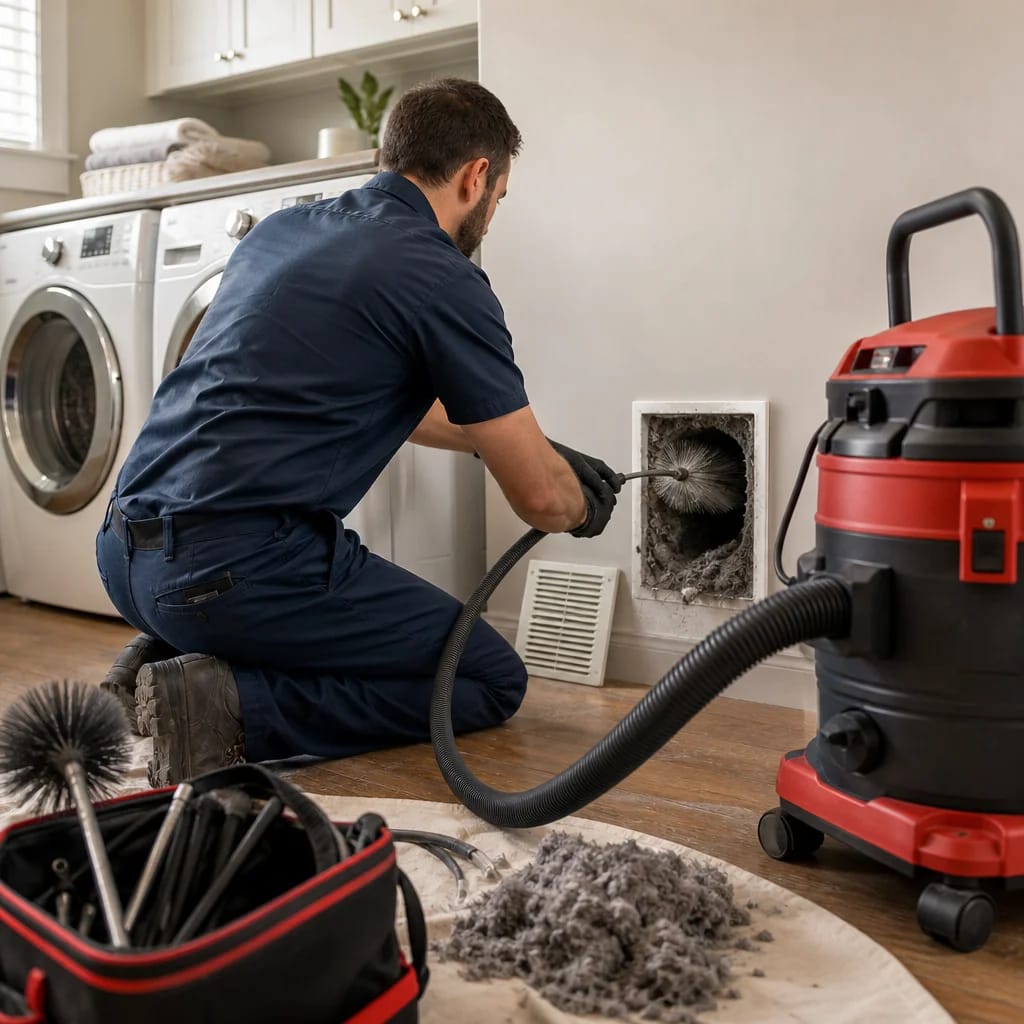
- Cleaning the full length of the exhaust duct using specialized rotary brushes and high-powered vacuum equipment.
- Checking the exterior vent cover, flap, and screen to confirm they open and close freely.
- Verifying that the duct is properly secured and that there are no crushed, disconnected, or improperly sized sections.
- Testing airflow at the outdoor exit so you know the system is moving air correctly.
Not every home needs the same scope of work. Duct length, the number of bends, and how long it has been since the last cleaning all influence the time and equipment required.
What to do next: Ask any provider what their cleaning covers from the dryer to the outdoor exit. A lint trap cleaning alone does not address buildup deeper in the duct.
How Our Certified Technicians Keep Your Home Safe

Our technicians are trained to find problems that homeowners often miss. We look at the whole path of the vent, not only the parts you can reach. When we finish, we explain what we found, what we cleaned, and whether any repairs or replacements are recommended.
We use professional-grade equipment designed for dryer ductwork, including flexible rotary brushes sized for different duct diameters and vacuum systems that capture debris rather than scattering it through the house. Every job ends with a check of airflow, connections, and the exterior vent so you know the system is working as it should.
Our team is available around the clock for urgent calls, so if you smell burning or notice a sudden change in how your dryer runs, we can respond quickly.
What to do next: Ask your technician to show you the before and after condition of the duct if your service allows it. Seeing the difference firsthand helps you judge future maintenance needs.
Dryer Vent Fire Prevention Tips for Homeowners and Landlords
Fire prevention comes down to consistent habits. These steps can help reduce risk:
- Clean the lint screen before or after every load, and check it for tears or buildup.
- Avoid running the dryer when you leave the house or go to sleep.
- Keep the area around the dryer clear of boxes, clothing, and cleaning supplies.
- Do not dry items that have been contaminated with flammable substances such as gasoline, cooking oil, or certain cleaning products without first washing them thoroughly.
- Use rigid or semi-rigid metal ductwork instead of thin plastic or foil, which can sag and trap lint.
- Keep the outdoor vent cover clear of nests, leaves, and snow in the colder months.
Landlords carry added responsibility. Schedule inspections between tenants, include dryer vent maintenance in your property care routine, and let tenants know how to report airflow or heat problems. Clear written instructions reduce the chance of a preventable incident.
What to do next: Set a calendar reminder for an annual professional check, and a monthly reminder to clear the lint screen and look at the exterior vent flap.
Why Routine Maintenance Saves Energy and Protects Your Family
A clean dryer vent helps your appliance do its job efficiently. When air moves freely, clothes typically dry faster, which can reduce the time and energy each load requires. While results vary by home and appliance, many households notice shorter drying times after a cleaning.

Routine maintenance also protects the people in your home. Reducing lint buildup lowers the chance of a fire starting in the vent or the laundry area, and it removes damp, trapped air that can contribute to moisture problems around the dryer.
Consider a family that runs four to five loads a week. If each load takes an extra thirty minutes because of restricted airflow, that adds up over a year. Regular cleaning can help keep those cycles shorter and reduce strain on the heating element.
What to do next: Note how long your typical load takes to dry now. Compare it after your next professional cleaning to see the difference for your own home.
Schedule Your Dryer Vent Safety Inspection With Dr Air Duct
If you have not had your dryer vent cleaned in the last year, or you have noticed any of the warning signs above, now is a good time to book a safety inspection. Dr Air Duct provides dryer vent cleaning, inspection, and repair for homes and businesses across Dallas and the surrounding Texas communities.
Our team can also help with related concerns. If you want to learn more about the symptoms to watch for, read our guide on dryer vent warning signs. For a closer look at what professional removal involves, see our page on professional lint removal.
Contact Dr Air Duct through our website at https://drairducttx.com/ to request a dryer vent safety inspection. We will explain what we find, give you a clear recommendation, and help you decide on the right next step for your home.
Frequently Asked Questions (FAQ)
How often should we clean a dryer vent to reduce fire risk?
For most households, we recommend having the dryer vent professionally cleaned at least once a year. Homes with large families, pets, or heavy laundry loads may need cleaning more often. If you notice clothes taking longer to dry, a burning smell, or excessive lint around the dryer, schedule a cleaning sooner rather than later.
What should a homeowner do if they suspect a dryer vent fire?
If you see flames, smell burning, or notice smoke coming from the dryer or vent, turn off the dryer and the gas or power supply immediately and leave the home. Call 911 once you are outside. Once the area is safe, we can inspect the vent, ductwork, and exhaust path to identify the cause and make the necessary repairs.
Do you clean dryer vents in both residential and commercial properties?
Yes, we serve both homes and commercial properties across Dallas. Our technicians handle single-family dryer vents as well as larger commercial laundry systems, and we tailor each service to the length, layout, and usage level of the vent. We are also available around the clock if an urgent issue arises.