

Table of Contents
- Why Pet Owners Face Unique HVAC Challenges
- How Pet Hair and Dander Damage Your Ductwork
- Signs Your Air Ducts Need Professional Cleaning
- The Connection Between Clean Ducts and Pet Health
- Our Comprehensive Air Duct Cleaning Process for Pet Homes
- Dryer Vent Cleaning: A Pet Owner Priority
- Preventative Maintenance Strategies for Pet Households
- Seasonal HVAC Care Tips for Dallas Pet Owners
- Sanitization Services: Beyond Standard Duct Cleaning
- How We Help You Breathe Easier at Home
- Frequently Asked Questions (FAQ)
Why Pet Owners Face Unique HVAC Challenges
Living with pets brings joy to your Dallas home, but it also creates challenges for your HVAC system that many homeowners don’t anticipate. Pet hair, dander, and odors find their way into air ducts faster than most people realize, affecting everything from system efficiency to indoor air quality. We’ve worked with countless pet owners who didn’t connect their respiratory issues, high utility bills, or musty smells to what was happening inside their ductwork. The good news is that understanding these challenges helps you protect both your system and your family’s comfort.
Your HVAC system works continuously to circulate air throughout your home, and when you have pets, that circulation includes pet-related particles. Dogs, cats, and other animals shed hair and dander constantly, and unlike loose fur on furniture, these microscopic particles get pulled directly into your air returns and travel through your ductwork.
Pet owners also deal with specific odor challenges. Even well-trained pets can leave odors that get trapped in ductwork, and your HVAC system recirculates those smells throughout your home. Additionally, pets can introduce bacteria and allergens that settle in your ducts over time, creating an environment that’s harder to maintain than non-pet households.
The combination means your system works harder to push air through partially blocked ducts, your filters clog more frequently, and your energy costs climb. For those with allergies or respiratory concerns, pet-related HVAC issues become a health consideration, not just a comfort one.
What to do next: Check your current air filter’s condition. If you have pets, you’re likely replacing filters more often than the standard three-month recommendation.
How Pet Hair and Dander Damage Your Ductwork
Pet hair doesn’t just float around your home randomly. It gets pulled into return air vents, travels down the intake side of your ductwork, and accumulates along the interior walls of your ducts. Over time, this buildup restricts airflow and forces your HVAC system to work harder to maintain temperature.
Dander is even more problematic than visible hair. These microscopic skin flakes stick to duct surfaces and combine with dust, moisture, and other particles. Once dander settles, it becomes part of a layer that reduces your system’s efficiency and can harbor bacteria or dust mites.
In Dallas’s warm, humid climate, moisture can encourage mold growth in areas where pet hair and dander accumulate. A combination of pet debris and humidity creates ideal conditions for microbial growth inside your ducts, which you can’t see but may smell or feel through poor air quality.
The damage compounds over months and years. Your blower motor works overtime, capacitors wear out faster, and your energy consumption increases noticeably. Regular homeowner maintenance like filter changes helps, but it doesn’t address what’s already accumulated deep inside your ducts.
Actionable step: Set a reminder to check your air filter monthly if you have multiple pets, rather than waiting three months.
Signs Your Air Ducts Need Professional Cleaning
Several warning signs indicate your ducts need professional attention beyond routine filter changes. If your home smells musty or stale even after you’ve cleaned thoroughly, that odor likely originates in your ductwork. Pet owners especially notice this because household smells tend to concentrate in ducts.
Increased allergy symptoms or respiratory irritation that worsens indoors suggests your ducts are circulating contaminants. If family members sneeze more during HVAC season or seem congested after the system runs, your ductwork probably needs cleaning.
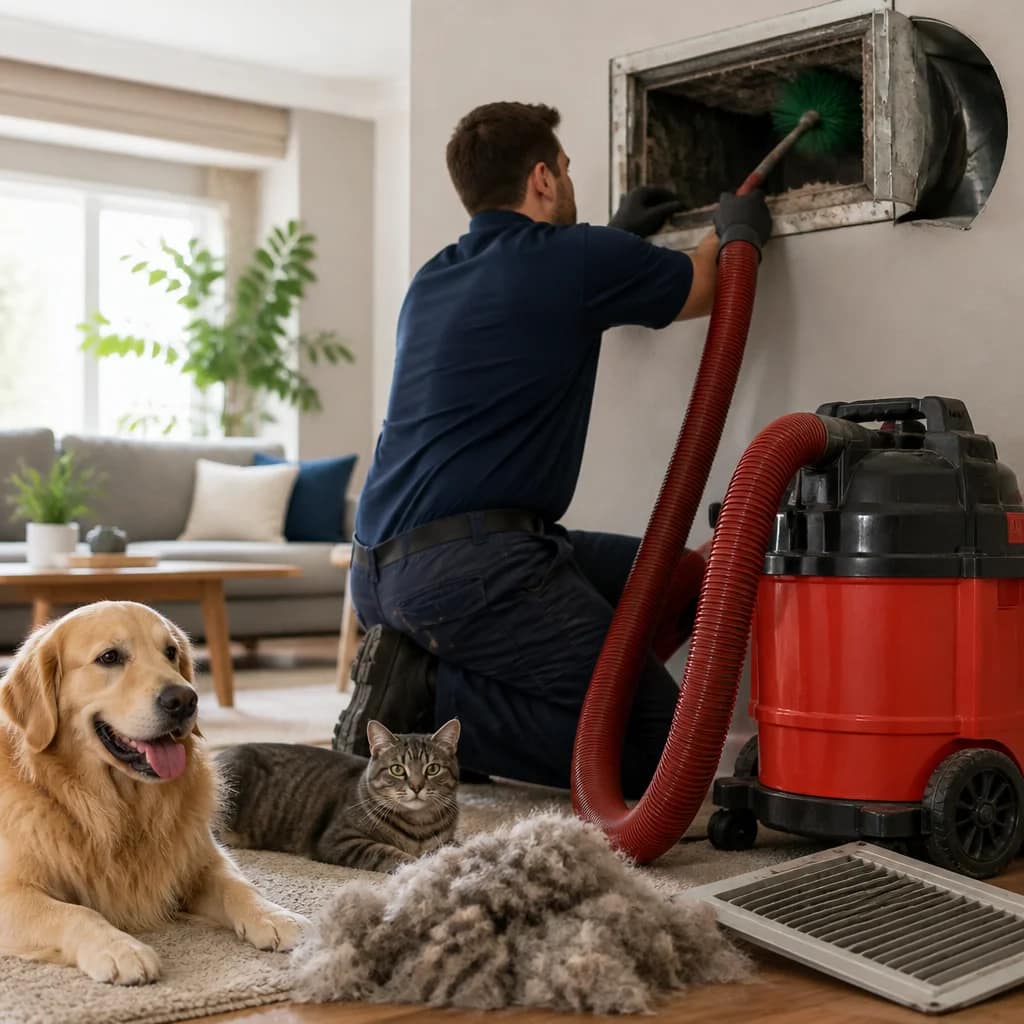
Visual indicators matter too. Look at your air returns and supply vents. If you see visible dust, pet hair, or debris around the openings, significant buildup exists inside the ducts. Some homeowners notice uneven airflow, where certain rooms feel warmer or cooler than others, which can indicate partial blockages from debris.
Higher-than-normal energy bills without obvious causes often point to restricted airflow. When your system can’t distribute air efficiently, it runs longer to reach your set temperature, and energy consumption climbs.
Next step: Walk around your home checking all visible vent openings. Visible debris means your ducts likely need professional cleaning.
The Connection Between Clean Ducts and Pet Health
Your pets spend most of their time inside your home breathing the same air circulating through your ducts. When those ducts contain pet hair, dander, bacteria, and mold spores, you’re recirculating contaminants directly to your pets and family.
Clean ducts mean cleaner air for everyone in your household. Pets with allergies or respiratory sensitivities show noticeable improvement when their environment includes well-maintained ductwork and good air circulation. Some pet owners report their animals seem more active and comfortable after professional duct cleaning.
Beyond the animals themselves, clean ducts protect your family’s health. Pet owners often deal with shared allergies triggered by the accumulation of pet allergens in their HVAC system. Professional cleaning removes the source of these allergens, which can’t be addressed by filter changes alone.
The relationship works both ways, too. Healthier indoor air quality reduces stress on your pet’s respiratory system, which can contribute to their overall wellbeing and longevity.
Actionable takeaway: If anyone in your home has pet allergies or asthma, professional duct cleaning becomes a preventative health investment, not just system maintenance.
Our Comprehensive Air Duct Cleaning Process for Pet Homes
When we arrive to clean your ducts, we start with a thorough assessment of your system. We examine your returns, check your ducts visually where possible, and discuss any specific concerns you’ve noticed. This helps us tailor our cleaning approach to your pet situation.
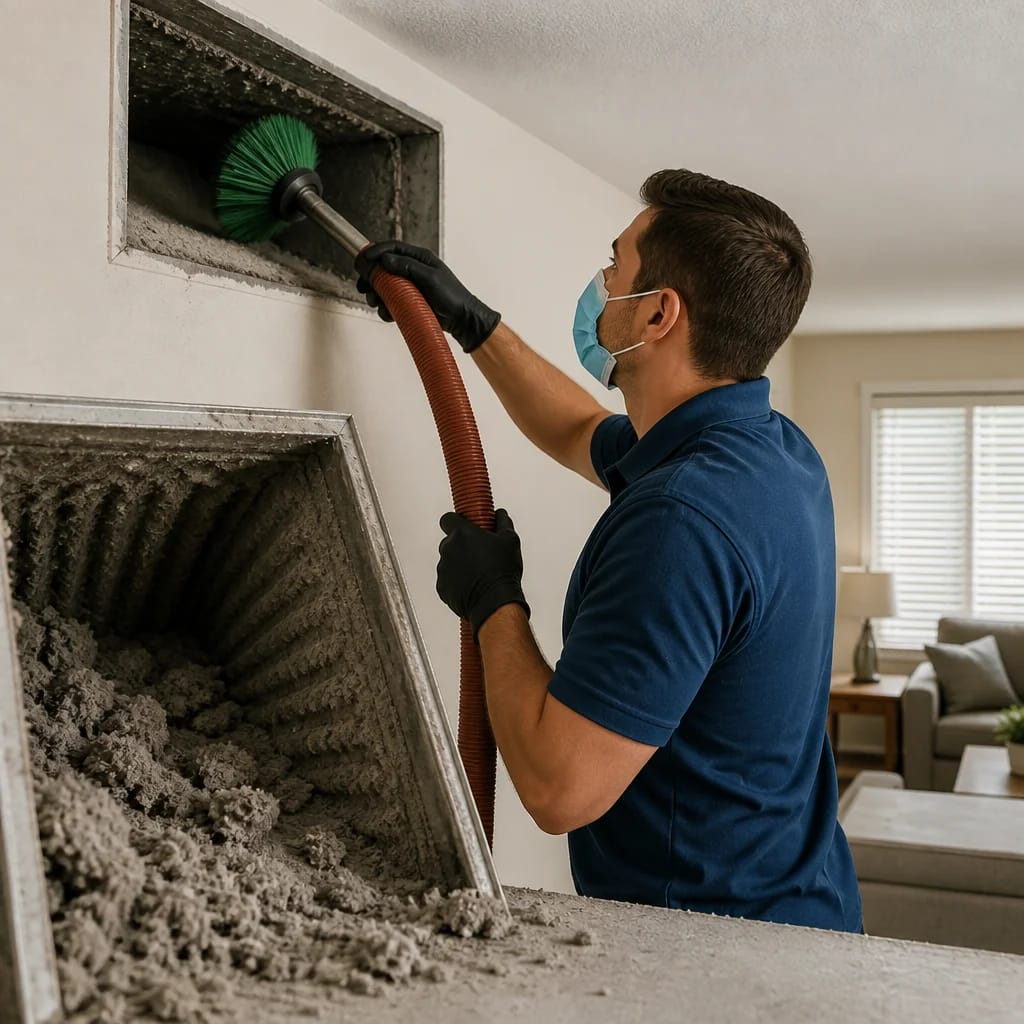
Our air duct cleaning process uses professional equipment designed to dislodge pet hair, dander, and accumulated dust from duct interiors. We connect to your main trunk lines and use high-powered vacuums with containment systems to capture debris without dispersing it throughout your home. The suction pulls particles from branch ducts, registers, and returns all the way to the collection point.
For pet homes specifically, we pay extra attention to return air ducts, where pet debris concentrates most heavily. We also check and replace your air filter as part of the service, ensuring your system starts fresh after cleaning.
We clean supply vents, return vents, and the main trunk system thoroughly. Depending on your ductwork layout, this typically takes two to four hours for residential properties. The investment pays back through improved efficiency and better air quality almost immediately.
What you should know: Professional cleaning removes accumulated debris, but ongoing filter maintenance remains essential, especially in pet homes.
Dryer Vent Cleaning: A Pet Owner Priority
Pet owners often overlook their dryer vents, but pet hair creates significant blockage risks in these confined spaces. If you have a pet that sheds heavily, lint mixed with pet hair accumulates faster in your dryer vent than in non-pet households.
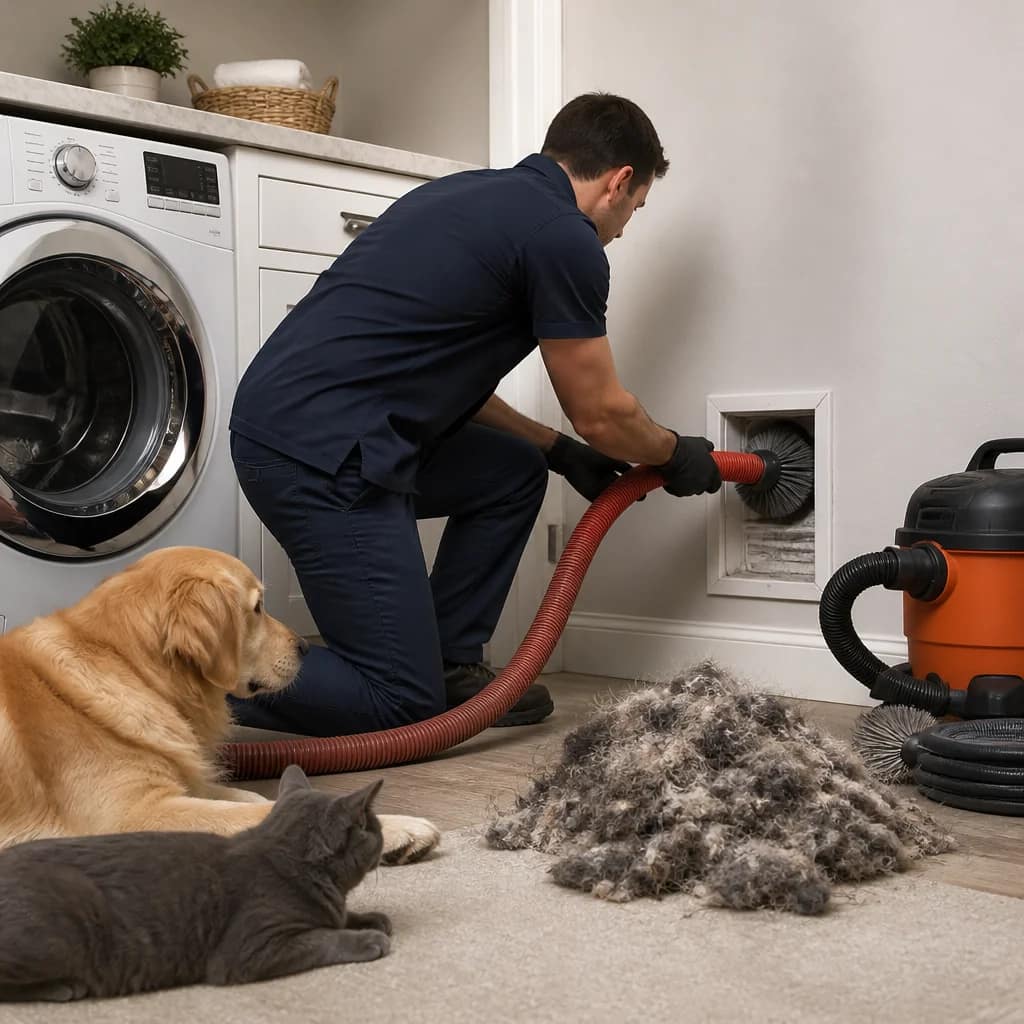
A restricted dryer vent means longer drying times, overheating, and unnecessary energy consumption. More importantly, lint buildup in dryer vents represents a genuine fire risk. The National Fire Protection Association warns that dryer fires often result from lint accumulation, and pet hair accelerates this danger.
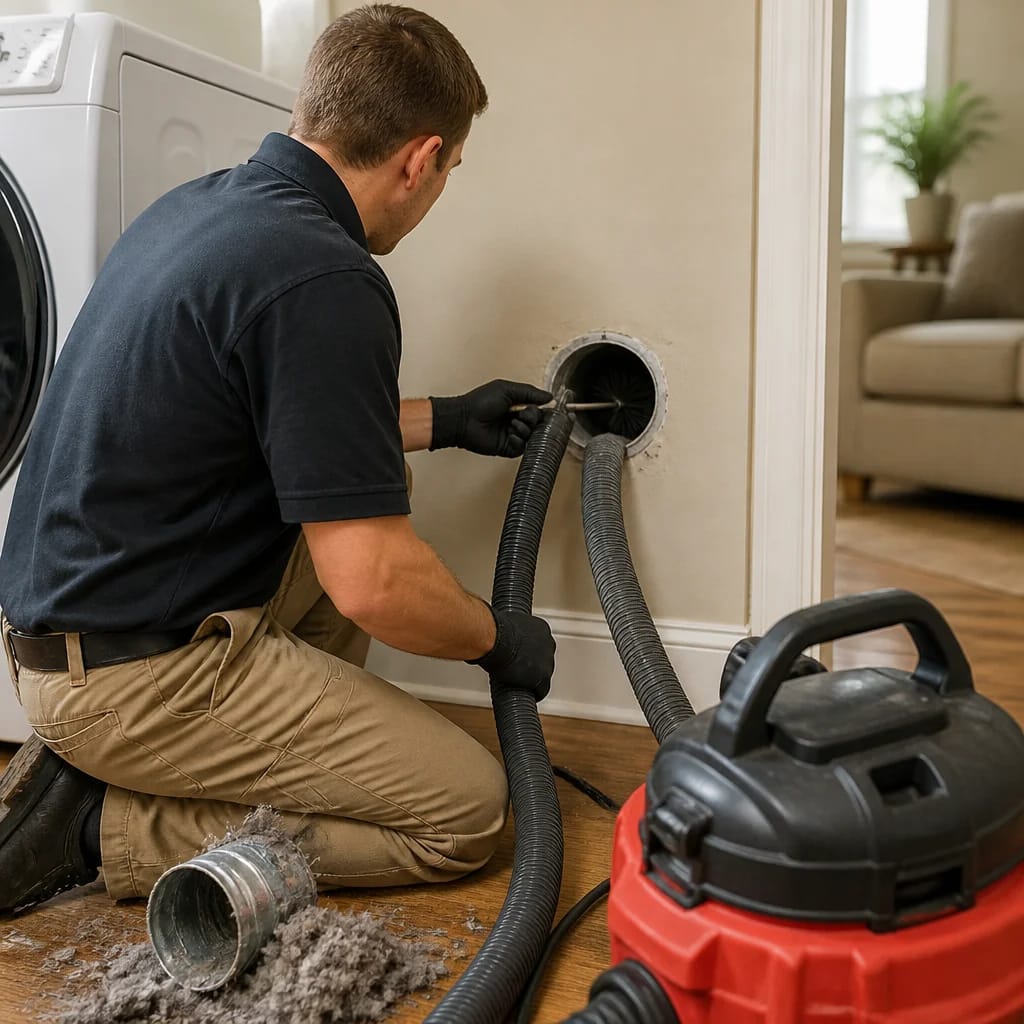
Our professional dryer vent cleaning service removes lint, pet hair, and debris from your vent line, all the way to the exterior termination. We inspect for blockages, proper airflow, and secure connections. Once cleaned, your dryer operates more efficiently, dries clothes faster, and runs cooler.
For pet owners, we recommend dryer vent cleaning annually, compared to the standard recommendation of once every two years for non-pet households. Heavy shedders might benefit from even more frequent service.
Take action: Run a quick test by checking if your exterior dryer vent flapper opens fully when your dryer runs. If it barely moves or doesn’t open, blockage is likely.
Preventative Maintenance Strategies for Pet Households
The best way to protect your HVAC system in a pet-heavy home is consistent preventative maintenance. Start with filter replacement on a monthly schedule during shedding seasons and every two months during low-shedding periods. This single step dramatically reduces the amount of pet debris reaching your ductwork.
Vacuuming around your air returns removes loose fur before it gets pulled into the system. Many pet owners position furniture to improve return air circulation, ensuring air flows freely into the system rather than being blocked.
Keeping pets out of attics and crawl spaces prevents them from shedding directly into unconditioned spaces that connect to your ductwork. If your return air is located in a basement or garage, ensure those areas stay clean and pet fur-free when possible.
Consider scheduling professional duct cleaning every 18 to 24 months if you have multiple pets, compared to the three to five-year interval for non-pet homes. This prevents excessive accumulation while managing costs effectively.
Recommended action: Mark your calendar for monthly filter checks. Take a photo of a clean filter so you know what “clean” looks like, making it easier to spot when replacement is needed.
Seasonal HVAC Care Tips for Dallas Pet Owners
Dallas’s climate creates specific seasonal challenges for pet owners managing their HVAC systems. During spring and summer, high humidity combined with heavy pet shedding accelerates dust and dander accumulation. Your system works overtime to both cool your home and filter out pet particles, so spring maintenance becomes critical.
Before summer cooling season arrives, have your system serviced by an HVAC professional. This includes checking refrigerant levels, inspecting coils, and ensuring your system operates efficiently before peak demand. With pets in the home, cleaner coils mean better cooling performance.
Fall requires attention to your heating system as you transition from air conditioning. This is an ideal time for duct cleaning, since you’ll be relying on forced-air heating for the upcoming months. Clean ducts mean efficient heating and better indoor air quality as your family spends more time indoors.
Winter in Dallas is mild but still involves extended HVAC operation. Monitor your filter more closely during heating season, especially in homes with multiple pets. Trapped moisture in winter can create conditions where mold grows in ducts if they’re contaminated with pet debris.
To-do item: Schedule your spring and fall HVAC maintenance now, positioning yourself ahead of peak season when technicians get booked quickly.
Sanitization Services: Beyond Standard Duct Cleaning
Standard duct cleaning removes debris, but sanitization goes a step further by addressing bacteria, mold spores, and allergens that remain after physical cleaning. For pet owners concerned about air quality, sanitization offers additional protection.
Our sanitization services use EPA-approved treatments to eliminate microbial growth inside your ductwork. This is particularly valuable in Dallas’s humid climate where conditions favor mold development, especially if pet hair and dander create a surface for growth.
We apply sanitization after thorough cleaning to ensure maximum effectiveness. The treatment targets areas deep in your ductwork where residual contamination lingers. Pet owners often choose this option when family members have allergies, asthma, or compromised immune systems.
Sanitization doesn’t replace ongoing maintenance, but it provides a fresh start and helps manage allergen levels more aggressively than cleaning alone.
Next step: If anyone in your home has respiratory concerns or documented mold sensitivity, discuss sanitization options with us during your cleaning appointment.
How We Help You Breathe Easier at Home
We understand that pet ownership comes with unique responsibilities for maintaining a healthy, efficient home. From regular filter changes to professional cleanings, every step you take protects your HVAC system and your family’s comfort. We’ve helped Dallas pet owners like you manage these challenges for years, and we know what works.
Our team brings professional equipment, trained technicians, and local expertise to every job. We respond quickly to requests, work with your schedule, and communicate clearly about what we find and recommend. Whether you need air duct cleaning, dryer vent service, or sanitization, we handle the work efficiently and thoroughly.
Pet ownership shouldn’t mean accepting poor air quality or high energy costs. Clean, well-maintained ductwork keeps your home comfortable while protecting your investment in your HVAC system.
Ready to improve your home’s air quality? Contact us today for a professional assessment of your ductwork. We’ll evaluate your system’s condition, discuss pet-related challenges specific to your home, and recommend the best path forward. Our team is available 24/7, and we serve Dallas and surrounding Texas areas with the reliability and expertise you deserve.
Frequently Asked Questions (FAQ)
How often should we have our air ducts cleaned if we have pets?
We recommend professional air duct cleaning every 1-2 years for pet-owning households, compared to the typical 3-5 year interval for homes without animals. Pet hair and dander accumulate much faster in your ductwork, reducing airflow efficiency and air quality. If you notice increased dust, allergies, or have multiple pets, we may suggest annual cleaning to keep your system performing optimally.
Can pet hair really cause damage to our HVAC system?
Yes, pet hair and dander create significant buildup in your ducts and HVAC components that goes beyond just comfort issues. When hair accumulates in your system, it restricts airflow, forces your equipment to work harder, and can lead to costly repairs or premature system failure. We’ve seen pet-related debris cause blockages that reduce heating and cooling efficiency by up to 30 percent, which directly impacts your energy bills.
What makes our air duct cleaning process effective for pet homes?
We use professional-grade equipment and sanitization methods specifically designed to remove the stubborn pet hair, dander, and bacteria that standard cleaning misses. Beyond standard duct cleaning, we offer our sanitization services to eliminate pet-related odors and allergens at the source. Our team also inspects your dryer vents, which collect pet hair rapidly and pose a serious fire risk that many pet owners overlook.