

Table of Contents
- Why Chimney Blockages Are More Common Than You Think
- Signs Your Chimney Is Blocked by a Nest or Debris
- How Bird Nests and Debris Create Fire and Smoke Hazards
- Why DIY Chimney Clearing Often Causes More Damage
- How Our Technicians Remove Blockages Safely and Fast
- Our Step-by-Step Chimney Blockage Removal Process
- Preventing Future Blockages with Chimney Caps and Inspections
- Scheduling Fast Chimney Blockage Removal in Dallas
- Frequently Asked Questions (FAQ)
Why Chimney Blockages Are More Common Than You Think
Most homeowners assume a chimney only gets blocked after a major storm or a neglected fireplace for decades. In practice, a chimney can clog in a single season. Birds, squirrels, and raccoons look for sheltered, quiet spaces to nest, and a chimney top is exactly that. Once a nest takes hold, debris like leaves, twigs, and soot can quickly build on top of it.
In the Dallas area, the combination of warm spring weather and frequent storms creates ideal nesting conditions for birds in March through June. Dry leaves and windblown debris can also collect in the flue during fall and winter. Many properties we inspect have a chimney that was clear one year and partially blocked the next.
What to do next: If your home has a fireplace or wood stove, schedule a quick look at the chimney top at least once a year, ideally before the heating season begins.
Signs Your Chimney Is Blocked by a Nest or Debris
Blockages often reveal themselves through a few consistent symptoms. Catching them early keeps the problem small and the repair simple.
- Smoke backing into the room when the fireplace or stove is in use
- Unusual sounds such as scratching, chirping, or flapping in the chimney or fireplace
- A smoky or musty smell that appears even when no fire is burning
- Soot stains on the firebox walls, damper, or ceiling near the fireplace
- A fire that struggles to stay lit or burns weakly and smokily
- Visible debris at the base of the fireplace, such as twigs, feathers, or pieces of nesting material
Bird nests are sometimes noticed only when a bird or animal falls into the firebox, so do not rely on hearing or seeing activity to know it is safe. If the fireplace has been unused for a while and you notice any of these signs, stop using it until the chimney has been checked.
What to do next: Close the damper and stop burning fuel until you can confirm the flue is clear.

How Bird Nests and Debris Create Fire and Smoke Hazards
A blockage does more than make your fireplace inconvenient. It changes how the chimney moves air, and that changes how safely your home handles smoke and heat.
Smoke and combustion gases need a steady upward draft to exit through the flue. When a nest or debris restricts that path, smoke can spill into living spaces, which poses a real risk of carbon monoxide exposure. Restricted airflow also causes creosote and soot to accumulate faster, and that buildup can ignite inside the flue, leading to a dangerous chimney fire.
Nesting materials are particularly concerning because they are dry and combustible. A small spark can travel into a nest that sits just above the firebox or inside the flue, and that is how a manageable situation becomes an emergency. Our technicians regularly see blockages that were discovered only after a fire started.
Practical tip: Keep a carbon monoxide detector on every level of the home, and test it monthly. Treat any smoke entering the room as a reason to stop using the fireplace immediately.
Why DIY Chimney Clearing Often Causes More Damage
It is tempting to poke a broom up the flue or pull out a nest with a long rod. Unfortunately, these methods frequently make the situation worse.
- Damaged flue liners can crack or loosen when tools are forced upward, creating gaps where heat and smoke can escape into the structure.
- Dislodged debris may fall into the firebox or lodge in a narrower section of the flue, causing a new blockage that is harder to reach.
- Loose mortar and crown damage can occur when rods strike the chimney top or cap from the wrong angle.
- Hidden nests are often deeper in the flue than a homeowner can see, so partial removal can leave the most hazardous material in place.
- Personal risk increases significantly when working on a roof, especially on steep or wet surfaces.
Without the right camera inspection, you cannot confirm the flue is clear or undamaged. That is why we recommend a professional assessment rather than trial and error.
What to do next: If you suspect a blockage, avoid DIY removal and contact a qualified technician who can inspect the flue before anything is used.
How Our Technicians Remove Blockages Safely and Fast
Our approach focuses on identifying the full problem before removing anything, so the job is done once and done right.

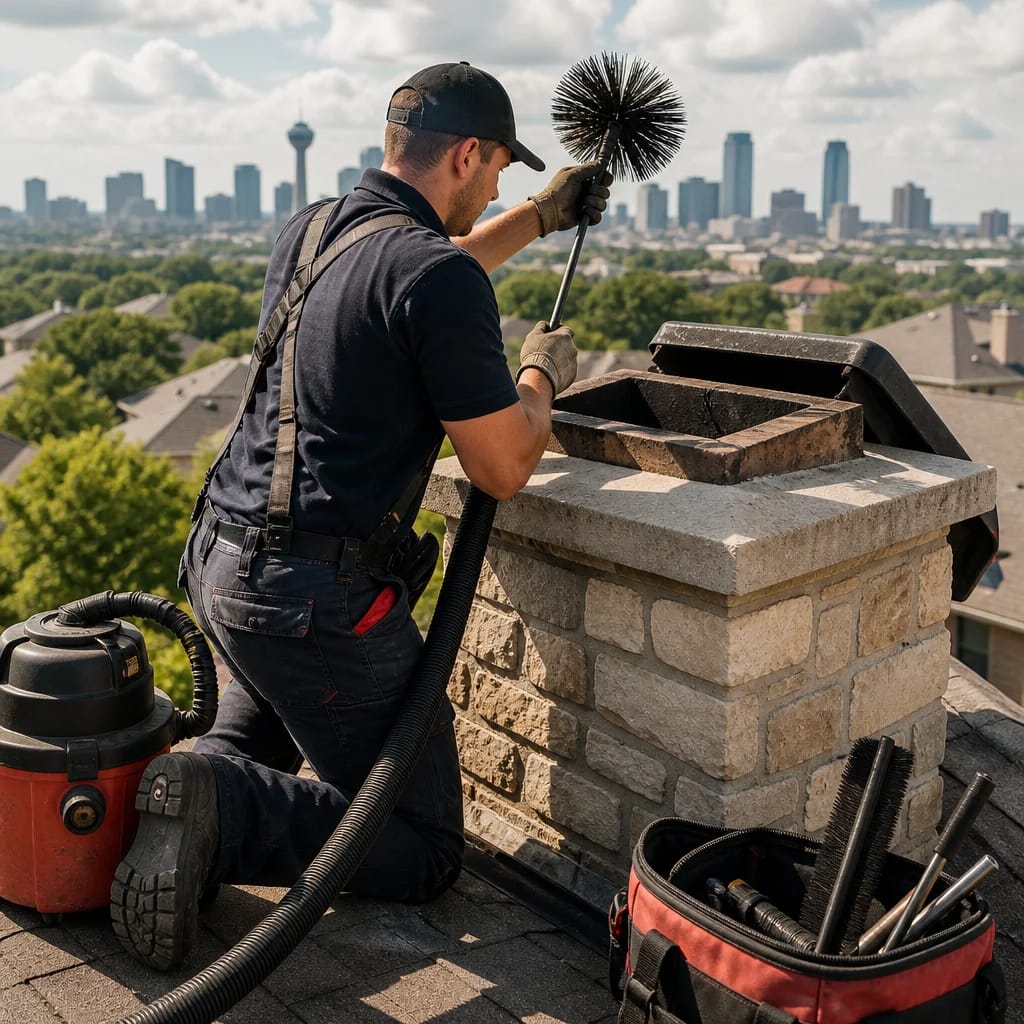
Our technicians begin with a visual inspection from the roof and the firebox, often using a video camera to view the entire flue. This shows us the exact location, size, and type of obstruction, along with any damage to the liner. From there, we select the right tools for the job, which may include specialized rod systems, vacuum equipment, and tools designed for removing nests without scraping the flue.
We protect your home throughout the process. Drop cloths and sealed openings help keep soot and debris out of living areas, and we clean up the work area before leaving. Because we carry equipment for most common blockage types, most standard removals are completed in a single visit, which means you can usually resume normal fireplace use sooner.
We also document what we find and what we remove, and we explain any repair needs in plain language so you can make an informed decision.
What to do next: Ask any provider whether they inspect the flue with a camera before removal and how they protect your home during the work.
Our Step-by-Step Chimney Blockage Removal Process
Here is what to expect when you schedule chimney blockage removal with us:
- Initial call and scheduling. Tell us what you have noticed, such as smoke, sounds, or odors. We will prioritize urgent cases, including any situation involving smoke in the home.
- Safety check. We confirm the fireplace or stove is not in active use and advise you on any immediate precautions.
- Roof and firebox inspection. We look at the chimney top, cap, and crown, then examine the firebox and damper for signs of nesting or soot.
- Camera inspection. A video scan reveals the blockage’s location and the condition of the flue liner.
- Careful removal. We remove nests and debris using tools matched to the obstruction, then clear remaining residue.
- Verification. A final camera pass confirms the flue is open and free of hazards.
- Clean-up and review. We clean the work area and walk you through findings and recommendations.
Most standard blockage removals take one to two hours, though larger nests or heavy creosote can extend that time.
What to do next: Keep the fireplace closed and unused until the job is verified, and ask us for a written summary of the work.
Preventing Future Blockages with Chimney Caps and Inspections
The most effective protection is keeping animals and debris out of the chimney in the first place. A properly fitted chimney cap is the single best step for most homes. A quality cap covers the flue opening, blocks nesting access, and keeps rain, leaves, and wildlife from entering. Caps made from stainless steel or galvanized materials hold up well in Texas weather, and the mesh size should be fine enough to exclude birds and squirrels.
Annual inspections add another layer of protection. A yearly review catches early nesting activity, creosote buildup, cracked liners, and crown damage before they become emergencies. If you want to learn more about what that visit involves, our guide on annual chimney safety inspection explains what we check and why timing matters.

Simple habits also help. Burn only seasoned wood, keep the damper closed when the fireplace is not in use, and avoid tossing yard waste or paper into the firebox.
What to do next: Schedule a cap check and an annual inspection before the next heating season, especially if you have had nesting problems before.
Scheduling Fast Chimney Blockage Removal in Dallas
When smoke is entering your home or you suspect a fire risk, waiting is not a good option. We provide 24/7 availability and fast response times across Dallas, so you can reach a technician when the problem appears, not days later. For nesting issues that need focused attention, our chimney bird nest removal service is designed to clear the obstruction safely and completely.
When you contact us, have the following information ready:
- Your address and access details
- The type of fuel or appliance your chimney serves
- A description of symptoms, such as smoke, sounds, or odors
- When the fireplace was last used
We will give you a clear estimate before any work begins, explain your options, and make sure you understand what has been done. Our goal is to restore safe, reliable operation of your chimney and give you the confidence to use your fireplace again.
What to do next: Call Dr. Air Duct or visit our website to schedule service, and keep your fireplace closed until a technician has cleared the flue.
Frequently Asked Questions (FAQ)
How quickly can you clear a chimney blockage in Dallas?
In most cases, we can inspect and clear a blockage from a bird nest or debris during a single visit. We carry the tools needed to remove obstructions on the spot, so there’s no need to wait for a second appointment. We also offer 24/7 availability for urgent situations like smoke backing into the home.
Is it safe for us to remove a bird nest from the chimney ourselves?
We strongly recommend against it. Chimneys are narrow, often steep, and frequently have damaged flue liners or loose crowns that can give way under a homeowner’s weight. Our technicians use proper rooftop safety equipment and specialized tools that clear the obstruction without cracking tile or dislodging soot that could cause a fire.
Will a chimney cap stop birds and debris from getting back in?
A properly fitted cap with a mesh screen is one of the most effective ways we know to keep nests and leaves out. We recommend pairing it with an annual inspection, since caps can shift or corrode over time. We can install and check a cap during the same visit as your blockage removal.