

Table of Contents
- Why Dryer Exhaust Ducts Need Regular Cleaning
- Signs Your Dryer Vent Is Clogged or Restricted
- The Fire Risk of Lint Buildup in Dryer Ducts
- How Clogged Vents Affect Drying Time and Energy Costs
- Our Professional Dryer Exhaust Duct Cleaning Process
- Dryer Vent Inspection and Repair When Needed
- How Often Dallas Homes and Businesses Should Clean Dryer Vents
- Pricing and Why Our Service Is Good Value
- Why Choose Dr Air Duct for Dryer Vent Cleaning in Dallas
- Schedule Your Dryer Exhaust Duct Cleaning Today
- Frequently Asked Questions (FAQ)
Why Dryer Exhaust Ducts Need Regular Cleaning
Every time your dryer runs, it pulls warm, moist air and lint out through a flexible or metal duct and pushes it outside. Over time, lint collects along the duct walls, especially at bends, seams, and the outside vent cap. What starts as a thin layer can become a dense plug that slows the whole system down.
Regular cleaning keeps that exhaust path open. We see this most often in Dallas homes with longer duct runs, older flexible foil ducts, or laundry rooms tucked into interior closets where the vent is hard to reach. In these setups, lint can build up faster than most homeowners expect.
If you have never had your dryer vent cleaned, a good first step is to check the length of your duct run and the material it’s made from. Longer runs and flexible plastic or foil ducts usually call for more frequent attention.
Signs Your Dryer Vent Is Clogged or Restricted
Most clogs announce themselves well before they become a serious problem. Watch for these common warning signs:
- Clothes take noticeably longer to dry, sometimes requiring two cycles for a normal load
- Clothes feel hot or damp when you remove them, even after a full cycle
- The laundry room or area around the dryer feels unusually warm or humid
- The dryer body or exterior wall near the vent gets hot to the touch
- The outside vent flap barely opens or does not open at all while the dryer runs
- A burning smell or a lint-heavy odor when the dryer is running
- The dryer shuts off mid-cycle because it has overheated
Any one of these is worth investigating. Several together suggest the vent is significantly restricted. If you’re unsure where to begin, our guide on signs of a clogged vent walks through what to look for at each point in the system.
The Fire Risk of Lint Buildup in Dryer Ducts
Lint is highly combustible. When it accumulates inside a dryer duct, it creates fuel that can ignite if the dryer’s heating element or internal components overheat. Restricted airflow makes this worse because heat has nowhere to escape, so the system runs hotter than it was designed to.

Dryer fires are a recognized household hazard, and lint buildup in the exhaust path is one of the leading contributing factors. Regular cleaning can help reduce that risk by keeping the duct clear and airflow steady.
A practical safety habit: clean the lint filter before or after every load, and schedule professional duct cleaning to clear what the filter cannot catch. Lint that bypasses the filter is exactly what builds up inside the duct.
How Clogged Vents Affect Drying Time and Energy Costs
A dryer is essentially a heater and a fan working together. When the exhaust is blocked, the fan has to work against resistance, and moist air stays in the drum longer. The dryer runs longer to reach the same dryness, which uses more electricity or gas.
Consider a family that does five loads a week. If each load takes an extra 20 to 30 minutes because of a restricted vent, the added runtime adds up quickly over a month. Clearing the duct may improve airflow and shorten drying time, though actual savings depend on your dryer, your duct layout, and how heavily you use it.
What to do next: time a typical load now, then compare after cleaning. That simple before-and-after check tells you more about your vent’s condition than any guess.
Our Professional Dryer Exhaust Duct Cleaning Process
Our technicians follow a consistent process designed to clear the entire exhaust path, not just the visible section near the dryer.
- Inspection and setup: We check the dryer, the connection behind it, and the duct material, then protect the work area with drop cloths and floor coverings.
- Disconnection and access: We detach the duct from the dryer and access the full run, including any transitions or crawl-space sections.
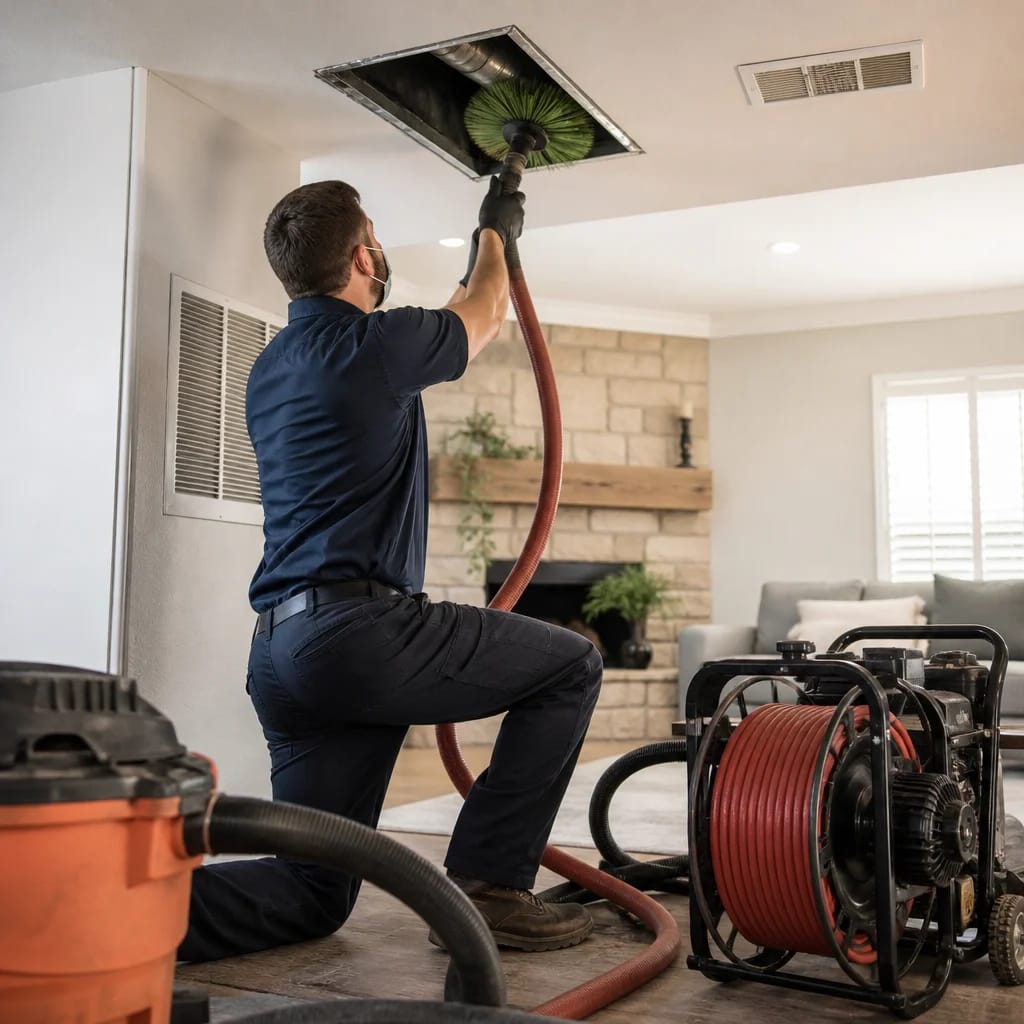
- Full-length cleaning: We use professional rotary brushes and high-powered vacuum equipment to remove lint from the entire duct, from the dryer to the exterior cap.
- Exterior vent clearing: We clean the outdoor hood and flap so air can exit freely, and check for debris or animal nests.
- Airflow testing: We confirm the flap opens fully and airflow is strong at the exit.
- Cleanup and walkthrough: We reconnect the system, clean the work area, and review what we found and any recommendations.
Because every home is laid out differently, the exact steps can vary, but the goal is always the same: a clear, unobstructed path from the dryer to the outside.
Dryer Vent Inspection and Repair When Needed
Cleaning removes lint, but some issues require repair. During an inspection, we look for crushed or kinked ducts, loose connections, failed clamps, damaged vent hoods, and ducts that run through unusual or unsafe spaces. Flexible plastic or foil duct is especially prone to sagging and crushing behind the dryer, and we typically recommend replacing it with rigid metal duct where possible.

Repairs may include replacing damaged sections, resealing joints, installing a proper exterior hood, or correcting a duct run that has too many bends. Whenever we recommend a repair, we explain what we found and why it matters so you can decide with full information.
If you notice any of the warning signs listed earlier and cleaning alone does not resolve them, an inspection is the right next step.
How Often Dallas Homes and Businesses Should Clean Dryer Vents
As a general guideline, many households benefit from professional dryer vent cleaning about once a year. Homes with heavy laundry use, large families, pets that shed, or long duct runs may need it more often. Commercial properties, such as apartment complexes, laundromats, and hotels, typically run dryers for many hours each day and should follow a more frequent schedule.
Dallas summers bring high humidity and heavy laundry loads, which can increase lint production. Scheduling service before the hottest months is a practical habit for many local homeowners.
A simple rule to start: if your dryer takes noticeably longer than it used to, schedule cleaning rather than waiting for the next calendar date.
Pricing and Why Our Service Is Good Value
Dryer vent cleaning cost depends on several factors: the length and layout of the duct, the number of bends, accessibility, the condition of the vent, and whether any repairs are needed. Commercial jobs are priced according to the number of dryers, duct length, and scheduling requirements. We provide clear estimates before starting work so there are no surprises.
Our pricing reflects trained technicians, professional-grade equipment, and a full-length cleaning rather than a quick surface clear. A thorough job that addresses the whole duct and checks airflow at the exit is often a better value than a partial cleaning that leaves lint behind.
To get an accurate number for your property, contact us for a free estimate. We will explain what the price includes and any options available.
Why Choose Dr Air Duct for Dryer Vent Cleaning in Dallas
We are a local provider serving Dallas and surrounding Texas communities, offering dryer vent cleaning alongside air duct services and chimney services. That range means we can look at your home’s full ventilation picture, not just one appliance.

What you can expect from us:
- Trained technicians who use professional equipment for full-length cleaning
- Clear communication, including explanations of findings and recommendations before any additional work
- Upfront estimates so you know what to expect
- Responsive scheduling for homeowners and business managers
- Repairs and inspections handled by the same team that does the cleaning
We believe a good service provider earns trust by being straightforward, and that is how we approach every job.
Schedule Your Dryer Exhaust Duct Cleaning Today
If your laundry is taking longer to dry, your dryer feels hot, or it has been a while since your vent was cleaned, now is a good time to act. Lint in the exhaust path is a fire risk and a drag on your energy use, and clearing it is one of the most practical maintenance steps you can take.
Here is what to do next:
- Check your dryer’s drying times and note any warning signs
- Look at the outside vent flap while the dryer runs to confirm it opens
- Schedule dryer vent cleaning in Dallas with our team for a full-length inspection and cleaning
Contact Dr. Air Duct today for a free estimate, and let us help keep your dryer running safely and efficiently for your home or business.
Frequently Asked Questions (FAQ)
How often should we clean our dryer vent in Dallas?
For most households, we recommend a professional dryer vent cleaning about once a year. Homes with large families, pets that shed heavily, or long vent runs may need service every six months. Commercial properties with heavy laundry use should follow a more frequent schedule based on their volume.
What are the warning signs that our dryer vent is clogged?
Clothes that take more than one cycle to dry, a dryer that feels unusually hot, or a burning lint smell are all common indicators. You may also notice that the exterior vent flap does not open fully when the dryer runs. If you see any of these signs, we suggest scheduling an inspection before the problem worsens.
Does dryer vent cleaning lower our energy bills?
Yes, a clear vent allows air to move freely, so your dryer heats and dries clothes more efficiently. Restricted airflow forces the machine to run longer, which increases both electricity and gas use. Regular cleaning helps us keep drying times shorter and our utility costs more predictable.