

Table of Contents
- Why Air Duct Problems Go Unnoticed in Dallas Homes
- Signs Your Ductwork Needs Inspection or Replacement
- What a Professional Air Duct Inspection Covers
- When Duct Installation Is the Right Solution
- How Our Dallas Duct Installation Process Works
- Choosing Materials and Sizing for Efficient Airflow
- Benefits of Upgraded Ductwork for Indoor Air Quality and Energy Costs
- Residential and Commercial Duct Services We Provide
- Service Areas Across Dallas and North Texas
- Pricing, Maintenance Plans, and Fast Response Scheduling
- Frequently Asked Questions (FAQ)
Why Air Duct Problems Go Unnoticed in Dallas Homes
Most Dallas homeowners don’t think about their ductwork until something feels wrong. Ducts sit in attics, crawl spaces, and walls, so they’re out of sight and easy to ignore. Dust and debris build up slowly over years, and the change in comfort is so gradual that it often goes unnoticed.
Dallas makes this worse in a few ways. Long cooling seasons mean your system runs hard for much of the year, pulling more dust into the ducts. Construction dust from new neighborhoods, pollen from spring blooms, and humidity that encourages moisture in older ductwork all add to the problem.
What to do next: Pay attention to how each room feels over time. If some rooms run hotter or colder than others, or your system seems to run longer than it used to, that’s a good reason to schedule a look at your ducts.
Signs Your Ductwork Needs Inspection or Replacement
Ductwork problems usually show up in a few predictable ways. Watch for these:
- Uneven temperatures between rooms, especially a bedroom or office that never quite cools down
- Dust accumulating quickly on furniture or vents, even after regular cleaning
- Musty or stale odors when the system turns on
- Visible debris blowing from supply registers, or dust around vent covers
- Higher energy bills without a clear reason, such as a change in weather or thermostat settings
- Loud rattling, whistling, or popping from the ducts when the system runs
- Damaged or sagging ducts in the attic or crawl space, including loose joints or torn insulation
Some homes have ductwork that was installed poorly from the start, with undersized runs or gaps at connections. Others are decades old and have deteriorated. If you notice several of these signs together, a professional inspection can tell you whether cleaning and repair will do or whether replacement makes more sense.
What to do next: Note which signs you’ve noticed and when they started. Sharing that history with a technician helps them focus the inspection on the right areas.
What a Professional Air Duct Inspection Covers
A thorough inspection goes well beyond a quick look at the vents. Here’s what a proper evaluation typically includes:
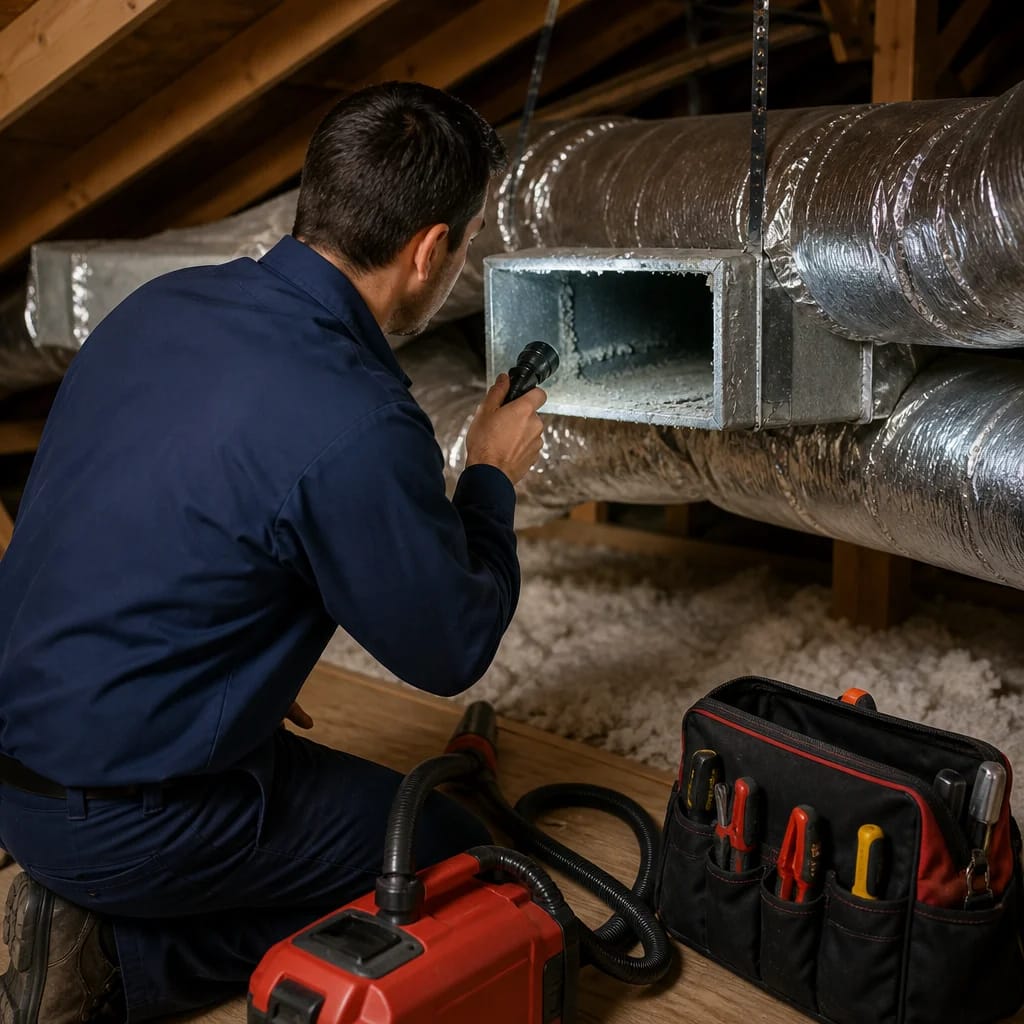
- Visual check of accessible ductwork in the attic, crawl space, or basement for leaks, separated joints, crushed sections, and damaged insulation
- Airflow testing at supply and return registers to identify weak or imbalanced areas
- Inspection for debris, dust, and microbial growth inside the system, using cameras where access allows
- Sizing and layout review to confirm the ducts are appropriate for the home’s square footage and equipment
- Connection and sealing assessment at the air handler, plenums, and registers
- Written findings and options, so you can compare cleaning, repair, sealing, or replacement
Our technicians explain what they find in plain language and show you the problem areas when possible. You should leave the appointment understanding what’s happening in your system and what your options are, without pressure to commit to anything on the spot.

What to do next: Ask for a written report that lists each issue, its severity, and the recommended fix. That gives you a clear basis for comparing estimates.
When Duct Installation Is the Right Solution
Repair and cleaning solve many problems, but sometimes the ductwork itself is the limiting factor. Installation is usually the right call when:
- The existing ducts are undersized or poorly laid out, so air can’t reach certain rooms
- Ducts are severely damaged or deteriorated in ways that can’t be patched reliably
- You’re adding space through a renovation, an addition, or a converted garage or attic
- The system was replaced without updating the ducts, which can leave a new unit working against an old, mismatched network
- Previous repairs have been patched repeatedly and the cost of ongoing fixes is climbing
Installation isn’t always necessary. A good provider should be willing to tell you when a repair will serve you better. We would rather recommend the least invasive fix that solves the problem than sell you a full replacement you don’t need.
What to do next: If an estimate recommends new ductwork, ask why repair won’t work and what specifically is wrong with the existing system.
How Our Dallas Duct Installation Process Works
Our process is designed to keep you informed at every step.
- Assessment. A technician measures the home, inspects existing ductwork, and identifies the layout that will work best.
- Design and estimate. We prepare a written proposal that covers materials, sizing, layout, timeline, and cost.
- Scheduling. We set a installation window that fits your household or business schedule, with clear notice before work begins.
- Removal and installation. Old ductwork is removed where needed, and new ducts are installed, connected, and sealed.
- Testing. We check airflow at each register and confirm the system is balanced before we leave.
- Cleanup and walkthrough. We clean the work area and walk you through the finished system, including any maintenance it needs.
Throughout the job, you’ll have a single point of contact who can answer questions and explain changes if the site conditions differ from the plan.
What to do next: Ask for the expected timeline and what the household will need to plan around, such as access to the attic or temporary changes to room use.
Choosing Materials and Sizing for Efficient Airflow
Materials and sizing have a direct effect on how well your system moves air. The most common options include:
- Sheet metal ducts, which are durable, smooth, and resist mold and pests when properly installed. They’re a common choice for main trunk lines.
- Flexible ducts, which are easier to route through tight spaces but can sag or kink if installed poorly. They work well for branch runs when supported correctly.
- Fiberglass-lined or insulated ducts, which help reduce heat transfer and noise, especially in hot attics.
Sizing matters as much as material. Ducts that are too small restrict airflow and strain the equipment. Ducts that are too large can reduce air velocity and comfort. The right size depends on the room’s airflow needs, the length of each run, and the capacity of your equipment.

Sealing is equally important. Joints should be mechanically fastened and sealed with approved mastic or tape, not just duct tape. Good sealing and proper insulation help keep conditioned air where it belongs.
What to do next: When comparing proposals, check that each one specifies duct material, sizing method, and sealing approach. Vague proposals make it hard to judge quality.
Benefits of Upgraded Ductwork for Indoor Air Quality and Energy Costs
Upgraded ductwork can improve several aspects of your home. Properly sealed, well-sized ducts may improve airflow, which can make rooms more comfortable and reduce the need for the system to run constantly. Sealed connections also help keep dust, attic air, and crawl space air from entering your living space.
For indoor air quality, clean and well-maintained ducts help limit the buildup of dust and debris that circulates through the home. Pairing ductwork improvements with sanitizing or regular cleaning can further reduce the reservoir of particles in the system. That said, duct work alone doesn’t remove every airborne pollutant, and it isn’t a substitute for medical treatment if someone in your home has respiratory concerns.
On energy costs, sealed and insulated ducts may reduce losses from leaks and heat transfer, which can help your system run more efficiently. Actual savings depend on your home, your equipment, and your habits, so we avoid promising specific numbers.
What to do next: If indoor air quality or comfort is your main concern, ask your provider to address both the ductwork and the air handler to get the most complete picture.
Residential and Commercial Duct Services We Provide
We serve both homes and businesses with a range of duct-related services:
Residential services
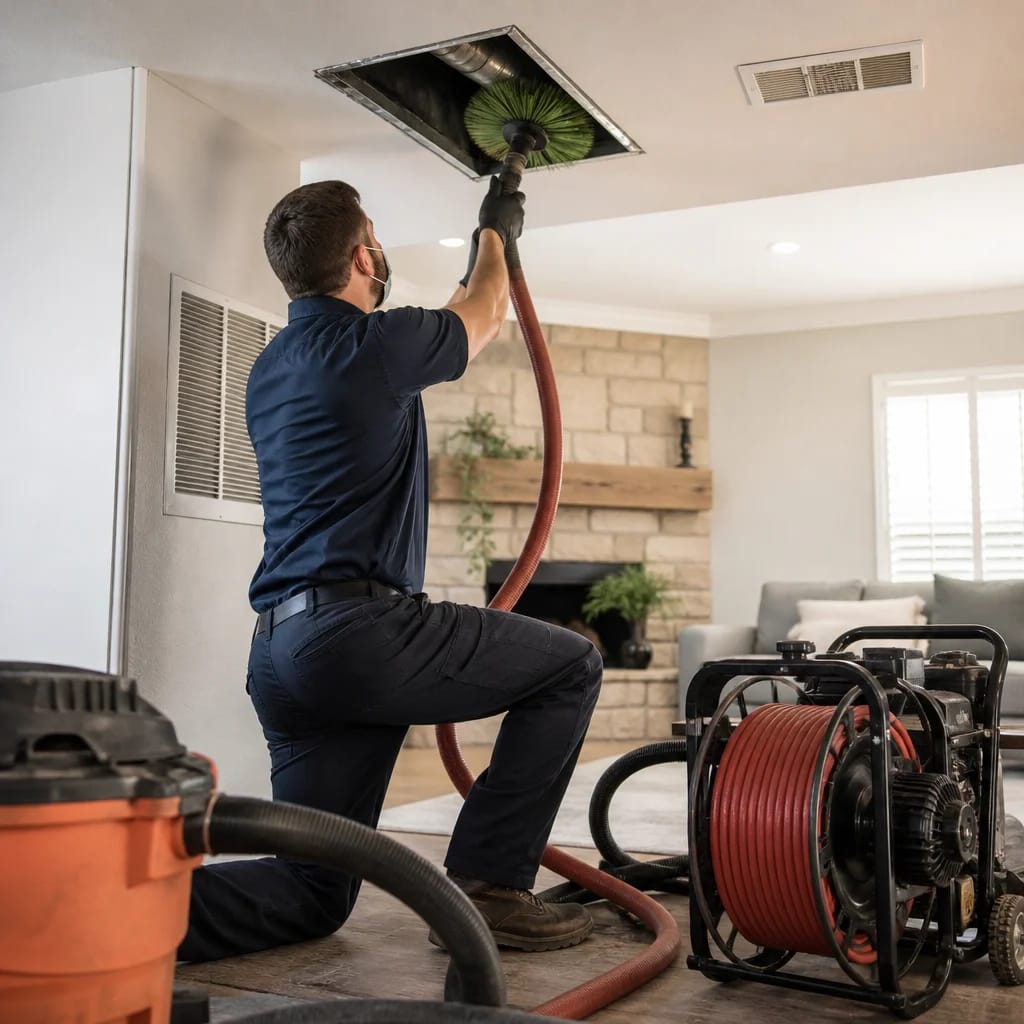
- Air duct cleaning and repair
- Air duct sanitizing for mold and bacteria
- Duct installation and replacement
- Dryer vent cleaning to reduce fire risk and improve drying times
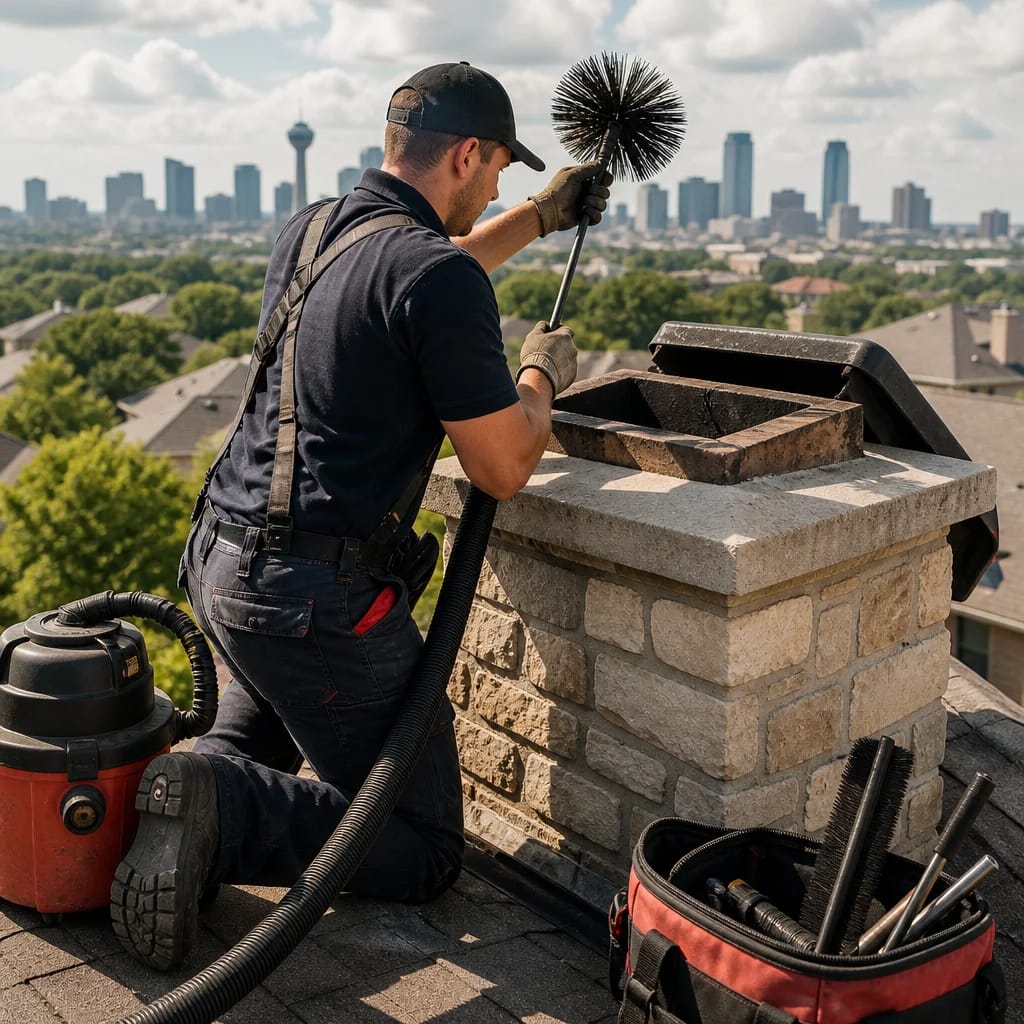
- Chimney sweeping, inspections, and minor repairs
Commercial services
- Large-scale duct cleaning for offices, retail spaces, and multi-unit buildings
- Commercial duct repair and modification
- Scheduled maintenance programs for facilities managers
Cleaning, repair, installation, sanitizing, and inspection are distinct services, and the right one depends on what your system needs. Our technicians will recommend only the work that’s warranted.
What to do next: If you manage a commercial property, ask for a site assessment so the service scope and schedule can be planned around business hours.
Service Areas Across Dallas and North Texas
We provide air duct installation, inspection, and related services throughout Dallas and surrounding North Texas communities. Our team regularly works in neighborhoods across the city, from older homes in established areas to newer developments in the suburbs.

If you’re unsure whether we serve your address, contact us with your location. We’ll confirm coverage and let you know about typical response times for your area.
What to do next: Have your address ready when you call so we can confirm service availability and schedule the right technician for your location.
Pricing, Maintenance Plans, and Fast Response Scheduling
Duct installation and inspection costs vary based on the size of your home or building, the length and complexity of the ductwork, the materials used, and the condition of the existing system. Inspections are typically priced separately from installation, and we provide written estimates so you know what to expect before work begins.
Regular maintenance can help catch small issues before they become expensive repairs. A maintenance plan can include scheduled inspections, cleaning, and priority scheduling. We’re happy to walk you through options that fit your budget and your property’s needs.
We offer 24/7 availability and aim for fast response times, so urgent problems like a failed system or blocked dryer vent can be addressed quickly. For non-urgent work, we’ll schedule at a time that works for you.
Next steps for Dallas property owners:
- Note any warning signs you’ve observed and when they started.
- Schedule a professional inspection to get a clear picture of your ductwork.
- Review the written findings and ask questions about repair versus installation.
- Consider a maintenance plan to keep your system running well over time.
Our team at Dr. Air Duct is ready to help you understand your options and find the right solution for your home or business. Reach out today to request an estimate or book your inspection.
Frequently Asked Questions (FAQ)
How do we determine whether a home needs duct installation or just cleaning?
We start with a full inspection that checks for leaks, crushed or disconnected sections, undersized runs, and areas where the system cannot deliver airflow to every room. If the ductwork is structurally sound but dirty, cleaning and sanitizing usually solve the problem. If the layout is poorly designed or the material is damaged beyond repair, we will explain why replacement is the more cost-effective path and provide a written estimate before any work begins.
What does a duct installation project in Dallas typically cost?
Costs depend on home size, the number of supply and return runs, access to attic or crawl space areas, and the materials chosen. We provide a detailed, itemized quote after an on-site assessment so you know exactly what is included. Our team can also walk you through options at different price points so you can weigh upfront cost against long-term energy savings.
How quickly can we get a duct inspection scheduled?
We offer 24/7 availability and fast response times across Dallas and surrounding North Texas communities. Call or book online, and we will confirm an arrival window that fits your schedule. For urgent concerns such as strong odors, visible mold, or a sudden drop in airflow, we prioritize same-day visits whenever our technicians have availability.