

Table of Contents
- Why Dryer Vent Fire Hazards Matter More Than You Think
- Common Warning Signs Your Dryer Vent Needs Immediate Attention
- How Lint Buildup Creates a Silent Fire Risk
- The Decision Point: When DIY Cleaning Falls Short
- What Our Professional Inspection Process Reveals
- How We Safely Remove Blockages and Restore Airflow
- Why Annual Maintenance Prevents Future Hazards
- Taking Action: Your Next Steps to Protect Your Home
- Frequently Asked Questions (FAQ)
Why Dryer Vent Fire Hazards Matter More Than You Think
Most homeowners think about dryer maintenance only when clothes take longer to dry. But the real risk runs much deeper. The U.S. Fire Administration reports that failure to clean dryer vents is the leading cause of dryer fires in residential properties. That’s not a minor inconvenience, it’s a genuine safety issue that deserves immediate attention.
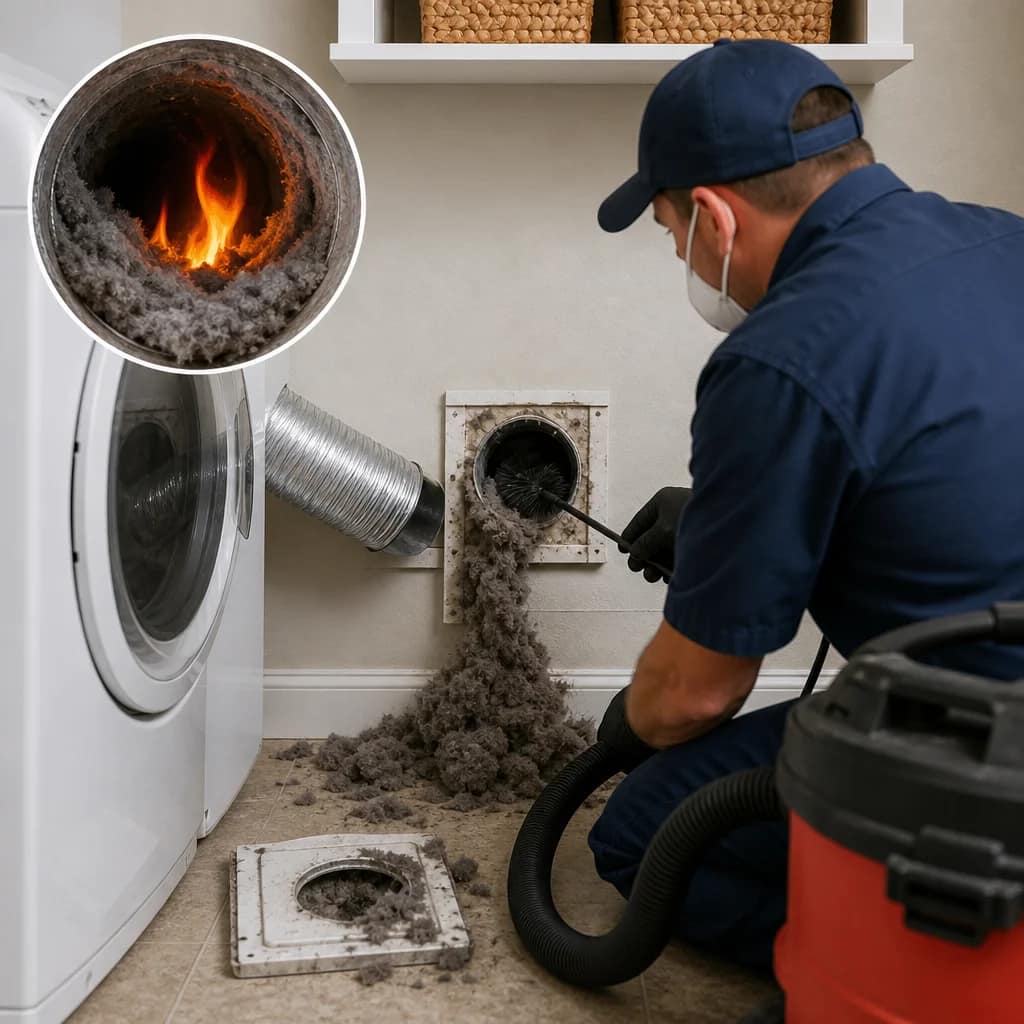
A dryer vent fire spreads quickly because lint is highly flammable. Once ignition occurs, the heat and flames can extend beyond your dryer and into your home’s walls or attic. What starts as a blocked vent can become a catastrophic event in minutes. We see Dallas homeowners every year who had no idea their dryer vent was creating this level of risk until a professional inspection revealed the problem.
Beyond fire safety, a clogged dryer vent affects your wallet and your appliance’s lifespan. Restricted airflow forces your dryer to work harder, running longer cycles and consuming more energy. The excess heat also stresses internal components, shortening your dryer’s useful life by years. A simple professional cleaning or inspection can prevent thousands of dollars in replacement costs and eliminate the fire hazard simultaneously.
Common Warning Signs Your Dryer Vent Needs Immediate Attention
Understanding the early indicators of a blocked vent gives you a chance to act before danger escalates. If you notice any of these signs, contact us for a professional evaluation without delay.
Extended drying times: Clothes that once dried in 30 minutes now take 45 minutes or longer. This is the most common first warning sign and often catches homeowners’ attention because it directly impacts daily routines.
Excess heat around the dryer: The front of your dryer or the laundry room feels unusually hot during operation. This signals that heat is building up inside the vent line instead of escaping outside.
Burning smell during cycles: A slightly burnt or singed odor means lint is overheating as it passes through the vent. This smell indicates temperatures are rising to dangerous levels.
Lint visible around the dryer: Finding lint accumulation on the floor near the dryer or around the vent opening suggests blockages further down the line that prevent lint from being fully expelled.
Humidity and dampness in the laundry room: Proper venting removes moisture from the drying process. When vents are blocked, that moisture backs up into your home instead of venting outside.
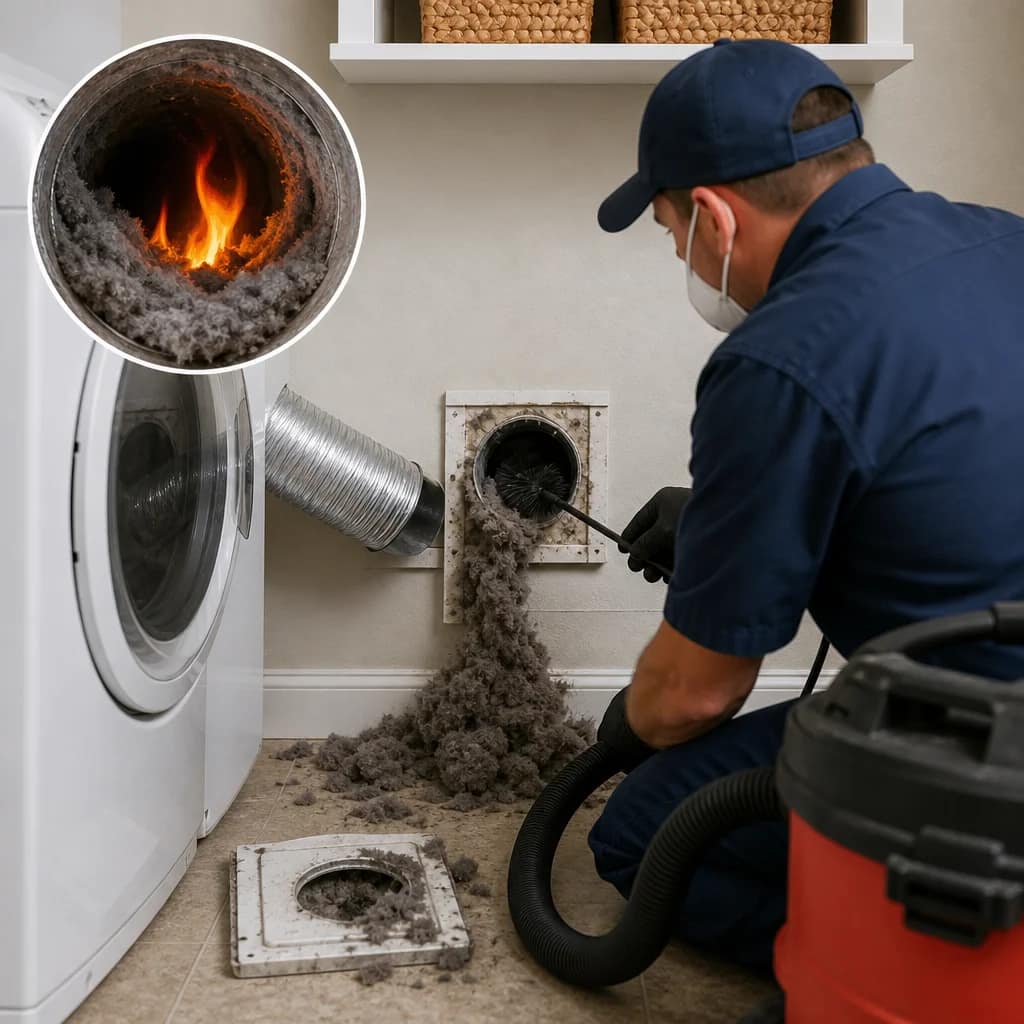
Visible lint buildup in the vent hood: Check the outdoor vent hood on your home’s exterior. If you see lint clustering around the opening or blocking the flapper, the vent needs professional attention.
Any one of these signs warrants a professional inspection. We recommend treating them as urgent, not something to address “eventually.”
How Lint Buildup Creates a Silent Fire Risk
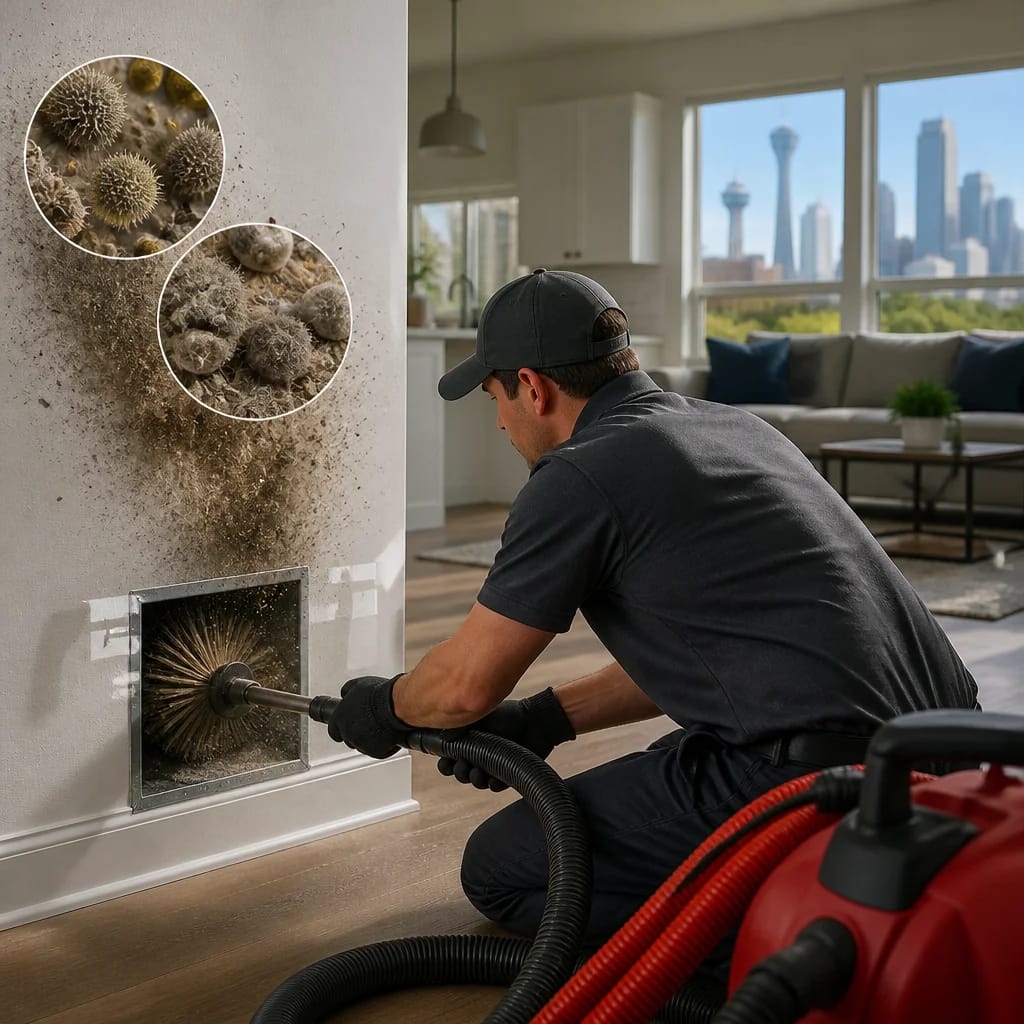
Understanding the mechanics of how lint accumulates helps explain why this problem is so dangerous and so common. Every load of laundry sheds lint, which the dryer’s exhaust system is designed to capture and expel. Your lint trap catches most of it, but fine particles always escape into the vent line. Over time, these particles accumulate on the interior walls of your dryer vent.
This buildup is insidious because it happens gradually and invisibly. You can’t see what’s happening inside your wall cavity or in the ducts behind your dryer. A vent that looks clear on the outside may be substantially blocked on the interior. We’ve removed blockages from Dallas homes that were 80 to 90 percent obstructed, representing months or years of accumulated lint.
The fire risk emerges because lint is an excellent fuel source. When a dryer operates with a restricted vent, internal temperatures rise significantly. If a spark occurs anywhere near the lint accumulation (a possibility that increases with every cycle), ignition is likely. The confined space inside the vent duct means flames spread rapidly with no easy escape route. Homeowners often have no warning at all.
Temperature conditions worsen the hazard. During summer months when homes run coolers longer, dryers work harder and hotter. Winter use of heaters can also drive people to run more laundry cycles. The combination of high heat, restricted airflow, and dense lint creates what is essentially a slow-burning fuse inside your home’s structure.
The Decision Point: When DIY Cleaning Falls Short
Many homeowners attempt to clean their own dryer vents using off-the-shelf lint removal kits or by disconnecting and manually clearing the vent line. These efforts address surface problems but rarely achieve complete clearance, especially in longer vent runs or those with multiple bends.
Standard dryer vent cleaning kits come with limited reach. Most can only access 6 to 8 feet of ductwork from the dryer itself. If your vent line runs 15, 20, or 30 feet to the outside of your home, or if it takes multiple turns through your wall cavities, DIY tools simply can’t reach the problematic areas. The blockages that create fire risk often exist in the hard-to-access middle sections of the vent.
Additionally, improper disconnection or manipulation of the vent line during DIY cleaning can create new problems. Ductwork can become damaged, separated, or misaligned. Loose connections allow lint to escape into wall cavities where it’s even more dangerous and harder to remove. We’ve encountered homes where attempted DIY cleaning actually worsened the fire hazard instead of resolving it.
The reality is this: professional dryer vent cleaning using specialized equipment and trained technicians provides certainty. We use high-powered rotary brush systems and diagnostic video inspection to access and clear blockages that DIY approaches miss entirely. This investment in professional service directly reduces your fire risk and restores proper dryer function.
What Our Professional Inspection Process Reveals
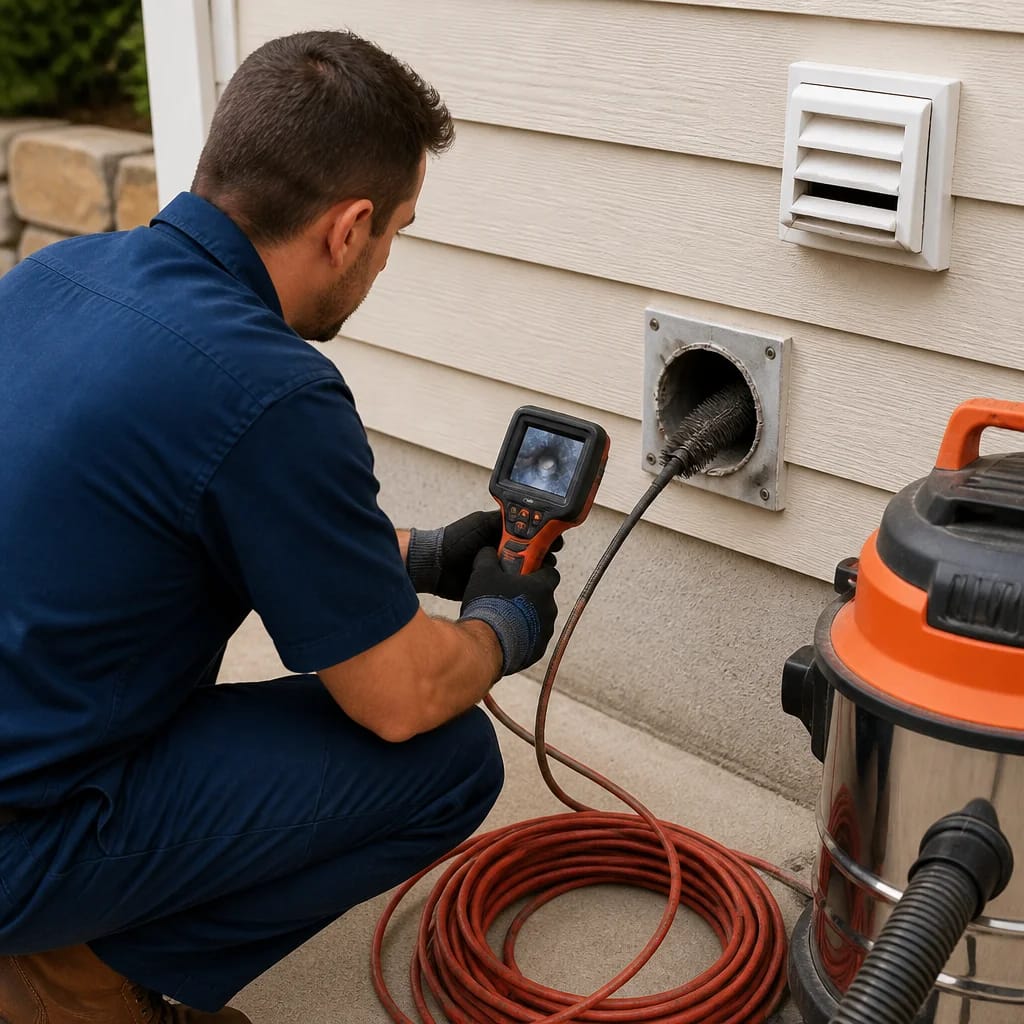
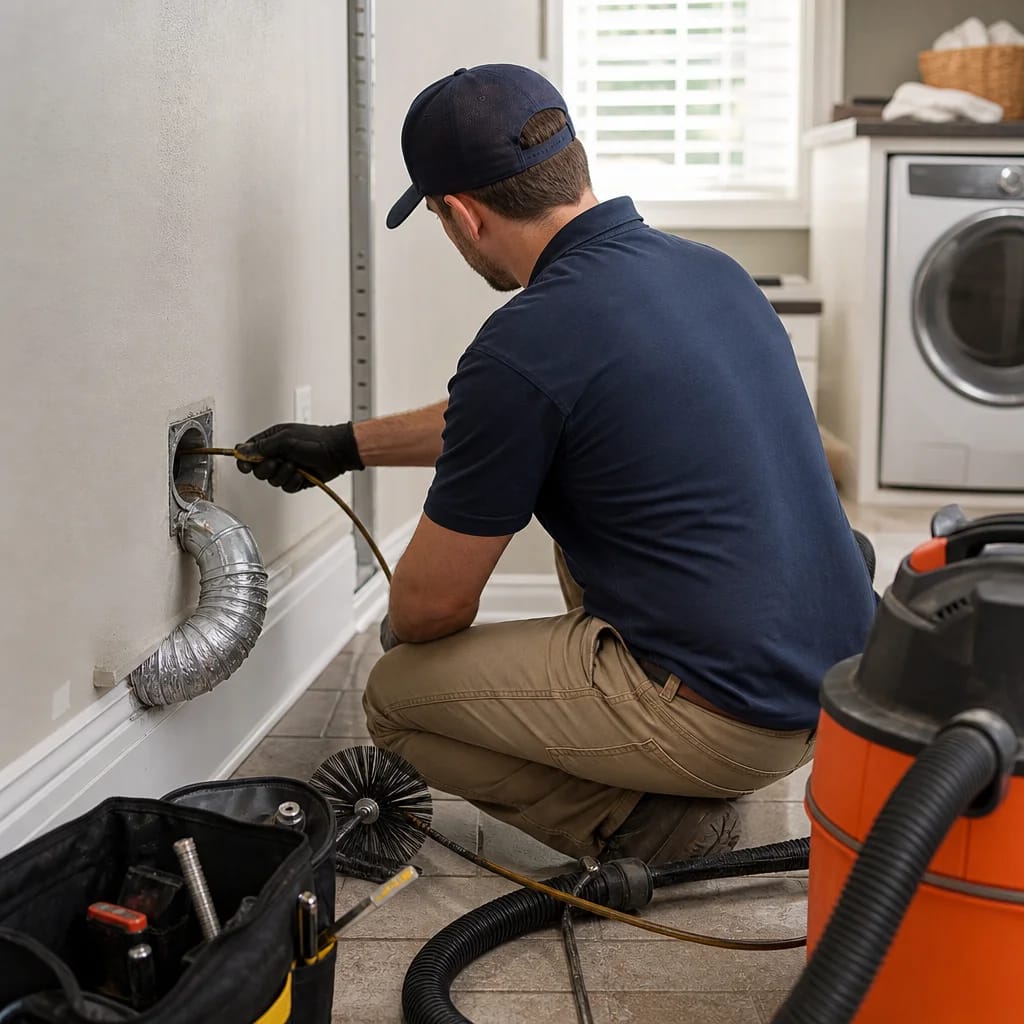
Our approach begins with a thorough exterior assessment. We check the vent hood, flapper operation, and any visible accumulation. Then we use a specialized video camera to inspect the entire interior length of your vent line from the dryer connection all the way to the exit point. This diagnostic step shows us exactly where blockages exist, what caused them, and whether ductwork damage is present.
The video inspection reveals details that no amount of poking from outside can uncover. We can see partial blockages, separated duct sections, crushed or kinked lines, and areas where lint has accumulated against interior surfaces. Many times we discover that flexible transition hoses (common in older installations) have deteriorated or collapsed, restricting airflow. Some Dallas homes have makeshift vent configurations that were never ideal but went unchecked for years.
We document findings with photos and a written summary explaining what we found and what work is necessary. This transparency means you understand the scope of the problem before any cleaning work begins. We’re not estimating based on assumptions, we’re basing recommendations on visual evidence.
If we discover damage beyond simple lint buildup, we discuss repair options with you. Sometimes sections of ductwork need replacement. Occasionally, the entire vent run needs reconfiguration to meet current safety standards. Our inspection might reveal that a previous contractor installed inadequate materials or improper connections. Understanding these details upfront prevents expensive surprises later.
How We Safely Remove Blockages and Restore Airflow
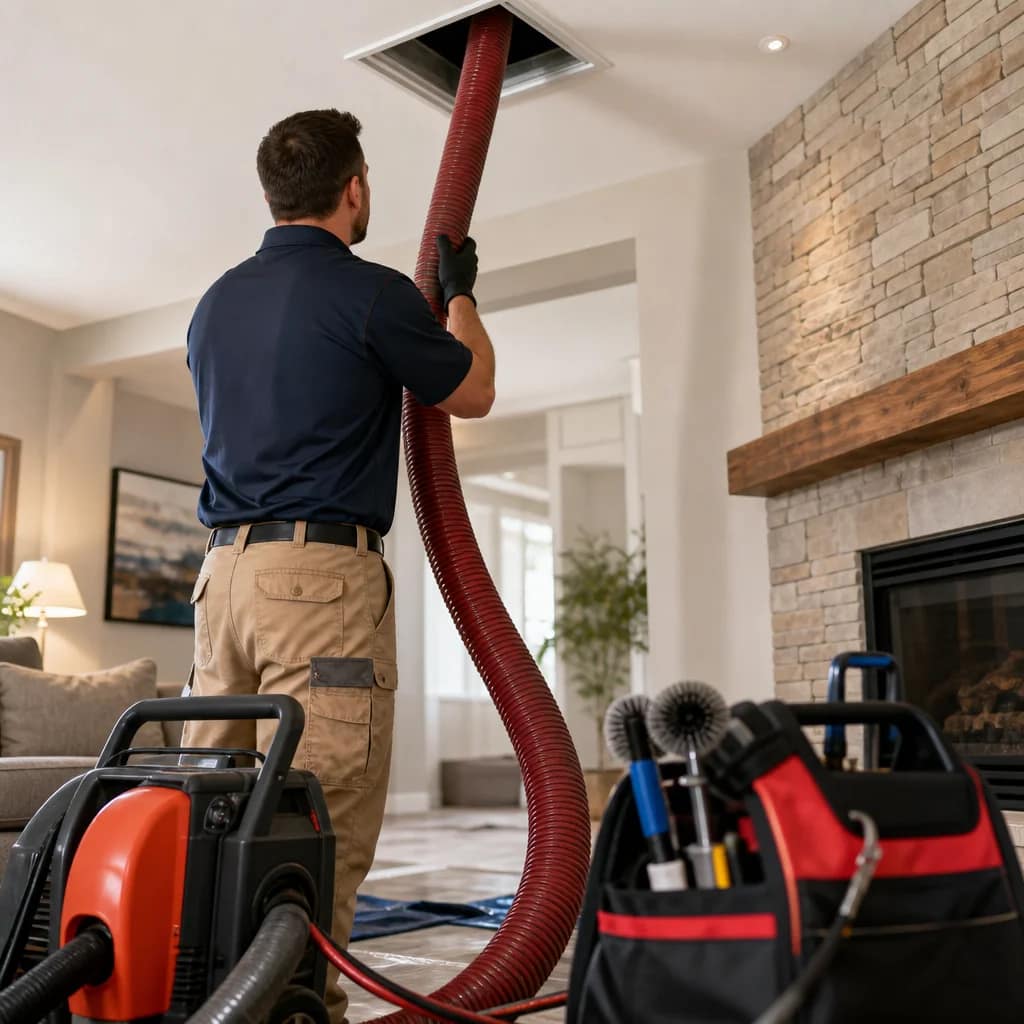
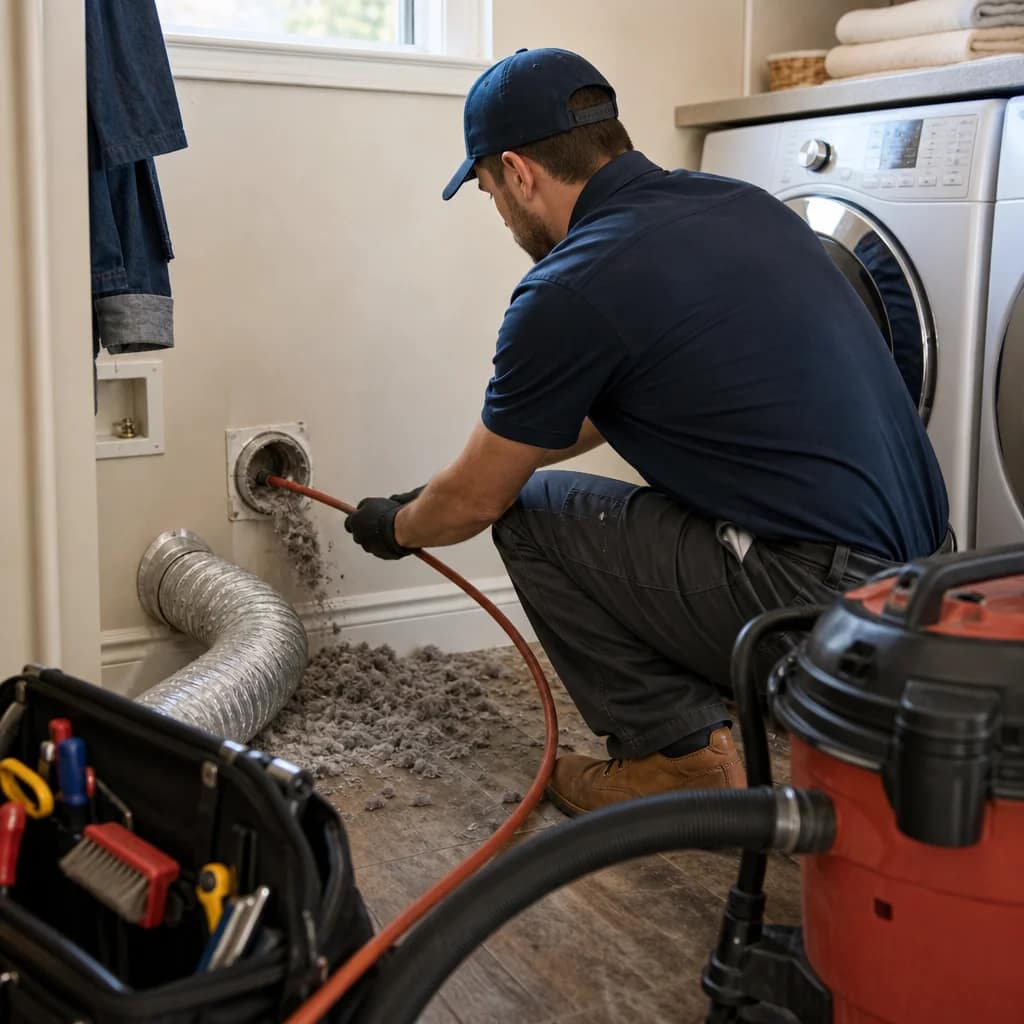
Once we’ve identified blockages, we deploy equipment specifically designed for thorough vent cleaning. Our rotary brush systems reach the full length of your vent line, breaking up accumulated lint and dislodging debris from interior surfaces. Unlike simple vacuums or hand-operated tools, these systems provide the scrubbing action necessary to restore full airflow.
We work systematically from the dryer end through to the exterior vent, capturing dislodged lint as we proceed. The process usually takes 1 to 2 hours depending on vent length, number of bends, and severity of blockage. During this time, we take precautions to prevent lint and dust from escaping into your home. Our technicians work professionally and respectfully in your space.
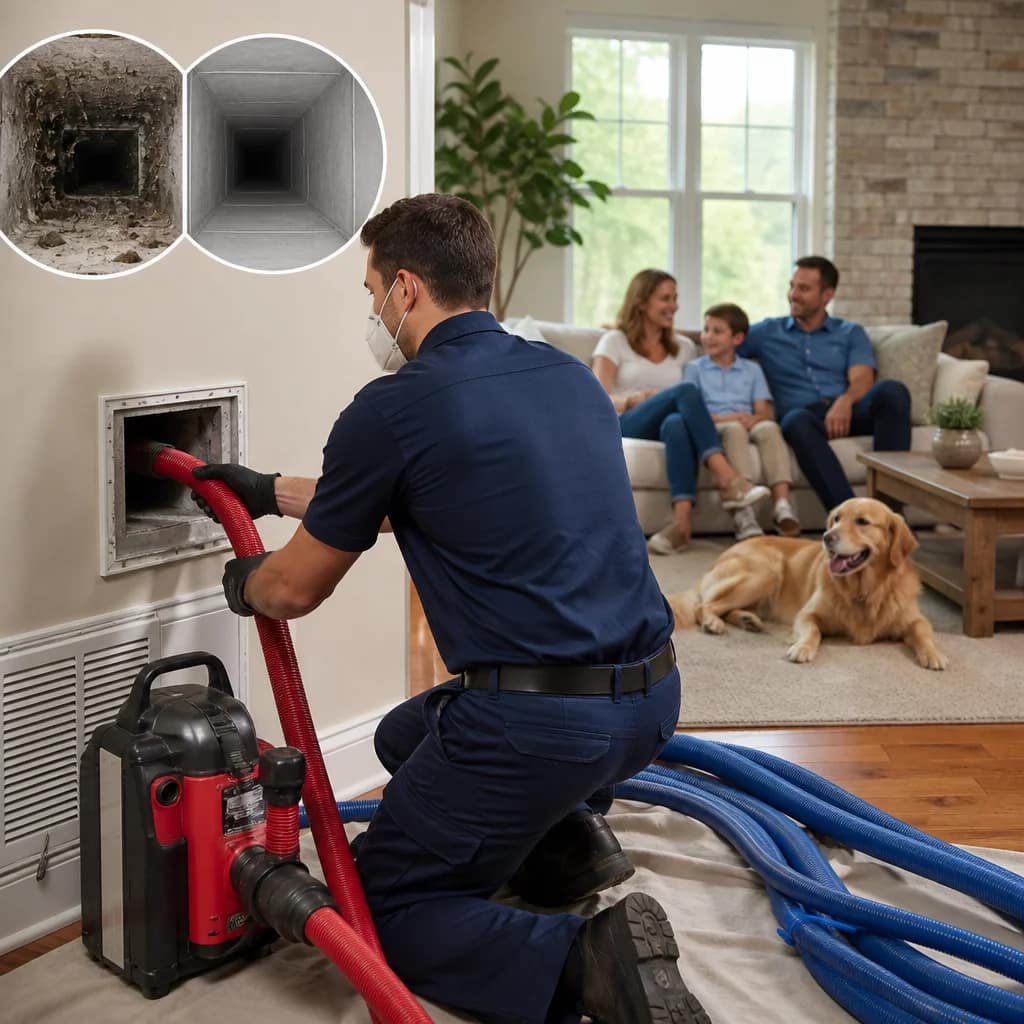
After the main cleaning pass, we use a high-powered air flush to completely clear any remaining particles. A post-cleaning video inspection confirms that blockages are removed and airflow is restored. We’ll show you the before and after comparison so you can see the dramatic difference in vent clarity.
The result is a dryer vent system that functions as designed. Your clothes dry normally, internal dryer temperatures stay within safe ranges, and the fire hazard is substantially reduced. You’ll also notice lower energy costs immediately since your dryer no longer has to labor against restricted airflow.
Why Annual Maintenance Prevents Future Hazards
A professional dryer vent cleaning removes existing blockages, but lint continues accumulating with every load you dry. For most Dallas households, we recommend professional cleaning once annually. If you have a larger household or run your dryer frequently, twice-yearly cleaning provides added safety margins.
Annual maintenance operates like preventive care. Instead of waiting until your vent becomes severely blocked and dangerous, regular cleaning removes lint before it reaches hazardous levels. This approach costs less overall than dealing with emergency blockages or, worse, fire damage. It’s also much simpler on your mind knowing your vent is in good condition.
We’ve worked with many Dallas customers who schedule dryer vent cleaning on an annual basis, often pairing it with air duct cleaning and chimney cleaning services. Bundling these services into an annual home maintenance plan is convenient and cost-effective. It also ensures that your home’s entire ventilation system remains safe and efficient.
Some homeowners ask whether they can reduce the need for professional cleaning by using higher-quality lint traps or by cleaning the trap after every load. While these steps help, they don’t eliminate the need for professional vent cleaning. Lint still escapes into the duct system, and only professional equipment can remove it comprehensively. Think of it this way: your lint trap is like a HVAC filter, and your professional vent cleaning is like the professional ductwork service that maintains the entire system.
Taking Action: Your Next Steps to Protect Your Home
If you’ve recognized any warning signs from this article in your own dryer, contact us for a professional inspection today. We provide free estimates and transparent recommendations based on what we actually find in your vent system. Our Dallas team is available 24/7 for emergency situations, though scheduled inspections during normal business hours work great for most situations.
Start by calling us or requesting an appointment online. We’ll schedule a technician to visit your home and perform a complete video inspection of your dryer vent. You’ll receive a detailed report with photos and clear recommendations. If cleaning is needed, we can often perform that same day or schedule it for your convenience.
Don’t put this off. Dryer vent fire hazards worsen over time and pose genuine risk to your home and family. A professional cleaning removes the threat, restores efficiency, and gives you peace of mind. We’re here to help Dallas homeowners stay safe and keep their homes running smoothly.
For further reading: Blocked dryer vent symptoms.
Frequently Asked Questions (FAQ)
How do I know if my dryer vent needs professional cleaning?
We recommend scheduling an inspection if you notice your dryer taking longer than 45 minutes to dry a load, clothes feeling hotter than normal, or excess lint around the dryer exhaust opening. If your dryer vent hasn’t been professionally cleaned in over a year, we strongly encourage you to contact us for an assessment, since lint buildup happens gradually and isn’t always visible from the outside.
Why can’t I just clean my dryer vent myself?
While basic lint trap cleaning is helpful, we find that DIY attempts often miss deep blockages inside the ductwork that create real fire risks. Our professional equipment and inspection cameras let us identify restrictions and debris that typical household tools simply can’t reach, plus we can safely verify your entire vent system is clear and properly vented outside.
What does your professional inspection process include?
We use specialized cameras to examine your entire vent line from the dryer to the exterior exhaust, checking for lint accumulation, kinks, or damage that reduces airflow. Once we’ve identified any issues, we remove blockages using our professional-grade equipment and confirm proper airflow before we leave, giving you peace of mind about your home’s fire safety.