

Table of Contents
- Why Creosote Buildup Matters for Your Home's Safety
- Understanding What Creosote Is and How It Forms
- Signs Your Chimney Has Mild Creosote Accumulation
- Recognizing Moderate Creosote Buildup and Its Risks
- Severe Creosote Deposits: The Most Dangerous Stage
- How We Assess Creosote Severity at Dr Air Duct
- Professional Chimney Inspection Process and What We Look For
- Why DIY Creosote Removal Falls Short
- Our Comprehensive Chimney Cleaning and Safety Solutions
- Preventing Future Creosote Buildup in Your Chimney
- Schedule Your Professional Chimney Inspection Today
- Frequently Asked Questions (FAQ)
Why Creosote Buildup Matters for Your Home’s Safety
Chimney creosote buildup is one of the most common yet preventable fire hazards in Dallas homes. If you use your fireplace regularly, understanding what creosote is and how to spot dangerous accumulation can mean the difference between a safe heating season and a serious house fire. We’ve seen firsthand how quickly creosote deposits build up when a chimney isn’t properly maintained, and we want to help you protect your property before a problem develops.
This guide walks you through the stages of chimney creosote severity, how to spot warning signs at each level, and what professional inspection and cleaning can do for your home’s safety.
Creosote deposits inside your chimney aren’t just an efficiency issue—they’re a genuine fire risk. When creosote accumulates heavily, it becomes flammable, and a chimney fire can damage the flue liner, crack the chimney structure, and potentially spread to your roof or walls. Even if a full chimney fire doesn’t occur, excessive creosote restricts airflow, which can force harmful gases like carbon monoxide back into your living space.
Beyond fire risk, creosote buildup reduces how efficiently your fireplace draws smoke and gases up and out of your home. This means more backdraft, stronger odors, and a heating appliance that doesn’t perform as intended. Regular inspection and maintenance keep your chimney functioning safely and effectively throughout the winter months.
Understanding What Creosote Is and How It Forms
Creosote is a dark, sticky, tar-like substance that forms when wood smoke cools inside your chimney. It’s created by incomplete combustion of wood and the condensation of smoke particles on the chimney walls. Several factors speed up creosote accumulation:
- Burning wet or unseasoned wood, which produces more smoke
- Using softwoods (pine, fir, spruce) instead of hardwoods
- Running fires with restricted airflow or damper partially closed
- Having insufficient chimney height or poor draft
- Not cleaning your chimney regularly
The longer creosote sits in your flue, the harder it becomes and the more it builds up. A chimney used several times a week during winter will accumulate creosote faster than one used occasionally, which is why annual inspections are essential for active fireplace users.
Signs Your Chimney Has Mild Creosote Accumulation
Mild creosote buildup is the easiest stage to address and shows few dramatic warning signs. At this level, creosote deposits may not be visible from the fireplace opening, but a professional inspection will reveal it.
Look for these early indicators:
- Strong, unpleasant odors coming from the fireplace, especially on humid days or when the fire is burning
- Slightly reduced draft or smoke not rising as quickly up the chimney
- A thin layer of black, flaky residue visible just inside the chimney opening (though this alone doesn’t indicate the full extent of buildup)
At the mild stage, you still have time to prevent progression. A thorough professional cleaning at this point is straightforward and helps you avoid costlier repairs down the road. We recommend annual inspections for anyone who uses their fireplace regularly.
Recognizing Moderate Creosote Buildup and Its Risks
Moderate creosote accumulation becomes noticeably problematic. The deposits thicken and harden on the chimney walls, reducing airflow and increasing fire risk significantly.
Common signs of moderate buildup include:
- Visible black or dark brown, glazed deposits inside the chimney or along the flue
- A strong, persistent smoky smell even when the fireplace isn’t in use
- Smoke backing up into your home or lingering rather than drafting up the chimney
- Occasional crackling or popping sounds from inside the chimney during a fire
At this stage, a chimney fire is a real possibility if a flame reaches the deposits. Even without an active fire, the heating and cooling cycles can cause existing creosote to flake and fall into your fireplace, requiring more frequent cleaning of ash and debris. Professional cleaning becomes urgent rather than preventive.
Severe Creosote Deposits: The Most Dangerous Stage
Severe creosote buildup represents the highest fire hazard and demands immediate professional attention. Deposits become thick, glossy, and extremely flammable. The chimney can no longer function safely.
Severe creosote shows these critical warning signs:
- Heavy black, tarry, or glaze-like buildup visible deep into the chimney
- Barely any draft; smoke pours back into your home or lingers
- Continuous acrid odors, sometimes visible smoke escaping around the fireplace
- Noticeable chunks of creosote falling into the fireplace
- A history of not having the chimney cleaned for years
A chimney in this condition should not be used. A chimney fire in a severely clogged flue can damage the chimney structure irreparably, crack the liner, or allow flames to escape into adjacent walls. If you suspect severe buildup, stop using the fireplace and schedule a professional inspection immediately.
How We Assess Creosote Severity at Dr Air Duct
When you contact us for a chimney inspection, our goal is to give you a clear, honest picture of what’s inside your flue and what action is needed. We don’t rely on guesswork or generic advice.
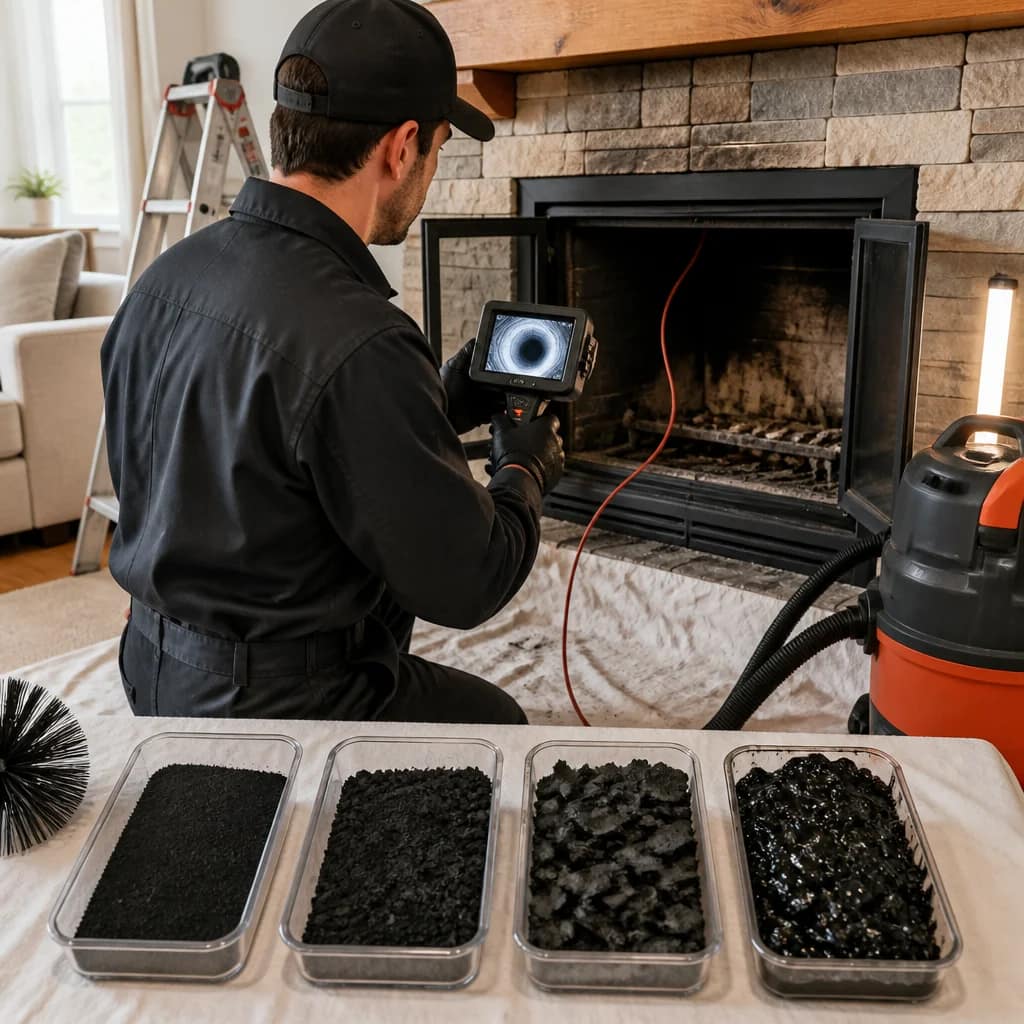
Our technicians use specialized video inspection equipment to see deep into your chimney and accurately measure creosote thickness. This visual documentation lets us identify the exact stage of buildup and recommend the right cleaning method. We also check for cracks, damaged liners, blockages, and other structural issues that may need repair.
At the end of our inspection, we provide you with a detailed report that explains what we found and outlines your options, along with transparent pricing for cleaning and any repairs. We believe homeowners deserve to understand their chimney’s condition before deciding on next steps.
Professional Chimney Inspection Process and What We Look For
Our inspection process covers everything necessary to evaluate your chimney’s safety and performance. We start with a visual exterior check of the chimney structure, roof flashing, cap, and crown. We also examine the fireplace interior and opening, looking for any obvious debris, loose bricks, or visible damage.
Next, we use video technology to inspect the full length of the flue. This lets us detect creosote buildup, soot layers, obstructions (like bird nests or debris), cracks in the liner, and areas where repairs may be needed. We document what we find and explain any issues in terms that make sense to you.
We also verify that your damper opens and closes properly, check for adequate draft, and ensure there are no safety concerns before you use the fireplace again. Our technicians have the training to spot problems that aren’t obvious to homeowners, which is why professional inspection is so valuable.
Why DIY Creosote Removal Falls Short
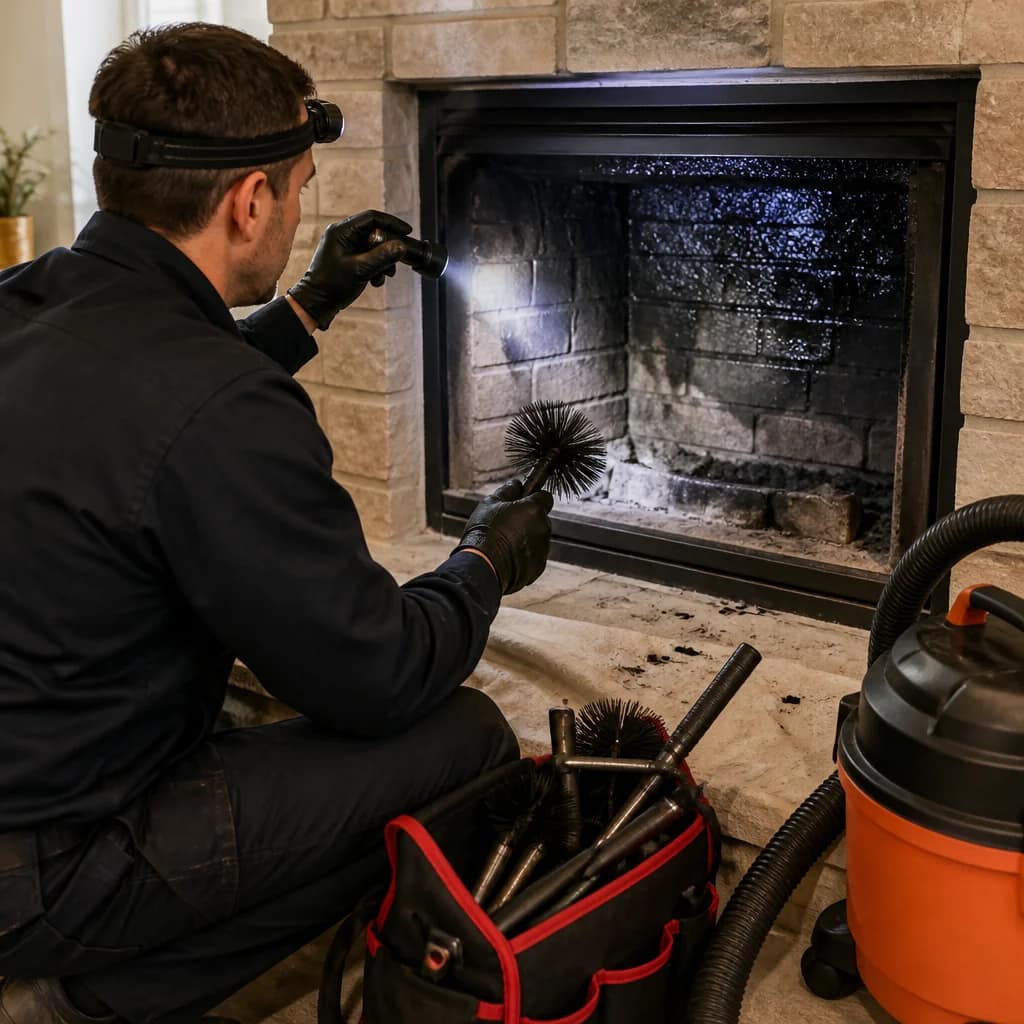
While creosote removal kits and rods sold online might seem like a budget option, they typically don’t work well for moderate or severe buildup. Most DIY methods are designed only for light flaking creosote and can actually leave dangerous deposits behind.
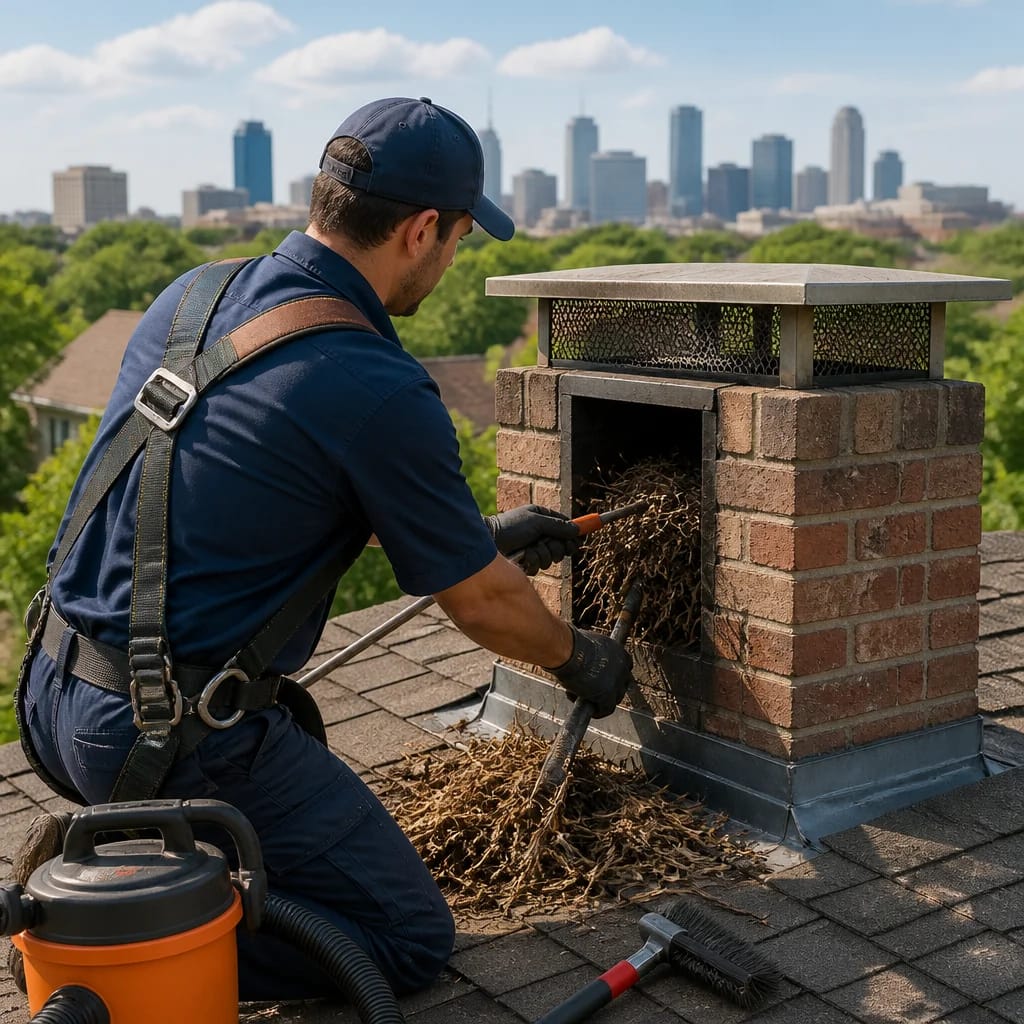
Professional chimney cleaning equipment is industrial-grade and designed to reach the full length and width of your flue. Professionals know how hard to brush without damaging the liner, which direction to work (downward to prevent spreading debris), and how to fully remove creosote in one service. We also have commercial vacuums that contain the mess inside your home, whereas DIY methods often result in black dust and debris throughout the house.
Additionally, professional cleaners can spot structural damage, creosote-related wear, or other problems that require expert repair. A thorough professional service costs more upfront but saves you money and frustration compared to repeating DIY efforts or dealing with damage later.
Our Comprehensive Chimney Cleaning and Safety Solutions
We offer complete chimney cleaning in Dallas that goes beyond creosote removal. Our service includes detailed inspection, thorough brushing and vacuuming of the entire flue, removal of soot and debris, and a final verification that your chimney is safe and functioning properly.
If our inspection finds damage like cracks, loose bricks, or liner issues, we explain what repairs are needed and provide honest estimates. We also offer chimney cap installation, damper repair, and crown maintenance to help prevent future problems. Our goal is to leave your chimney in top condition so you can use your fireplace confidently.
We’re available year-round and can often schedule same-day or next-day inspections. For active fireplace users in the Dallas area, we recommend an annual cleaning and inspection before the heating season begins.
Preventing Future Creosote Buildup in Your Chimney
Reducing creosote accumulation starts with how you use your fireplace. Burn only well-seasoned hardwood (oak, maple, ash) with moisture content below 20 percent. Wet wood produces excessive smoke and creosote.
Other prevention steps include:
- Running fires hot rather than smoldering, which encourages better combustion
- Keeping your damper fully open while the fire is burning to ensure proper draft
- Avoiding artificial logs or treated wood, which can increase creosote and cause chemical buildup
- Having your chimney cleaned annually if you use your fireplace frequently (weekly or more)
- Installing a chimney cap to keep rain, debris, and animals out, which helps maintain proper airflow
Following these practices won’t eliminate creosote entirely, but they’ll slow accumulation and extend the time between professional cleanings.
Schedule Your Professional Chimney Inspection Today
If you haven’t had your chimney inspected this year, now is the time to do it. Whether you have mild concerns or suspect moderate buildup, our team at Dr Air Duct can assess your chimney’s condition and help you move forward with confidence.
Contact us today to schedule your inspection. We’re available across Dallas and surrounding Texas areas, with flexible appointment times and transparent pricing. A quick call or email is all it takes to get your chimney evaluated by professionals who understand what makes a chimney safe and functional for your home.
Frequently Asked Questions (FAQ)
How do we determine if your creosote buildup is dangerous?
We conduct a thorough chimney inspection using specialized tools to assess the thickness and stage of creosote deposits inside your flue. During this process, we measure buildup depth and examine the texture and color to classify severity as mild, moderate, or severe. Our findings help us recommend whether cleaning alone will restore safety or if additional repairs are needed before you use your fireplace again.
What’s the difference between creosote stages, and why does it matter?
Mild creosote appears as a thin, flaky coating that’s relatively easy to remove and poses minimal fire risk. Moderate buildup becomes thicker and stickier, reducing draft efficiency and increasing fire potential significantly. Severe creosote forms a hard, glazed layer that restricts airflow dangerously and can ignite at lower temperatures, which is why stage matters when determining how urgently we need to address the problem.
Why can’t we just remove creosote ourselves?
Creosote removal requires access to the entire interior flue from top to bottom, specialized brushes designed for your chimney’s shape and size, and proper safety equipment to work at height. We have the right tools and experience to dislodge deposits without damaging your chimney structure or spreading particles throughout your home. Professional cleaning also includes inspection for cracks or deterioration that DIY attempts might miss entirely.