

Table of Contents
- Why Smoke Backs Up Into Your Home
- Common Causes of Fireplace Smoke Problems
- How Chimney Blockages Create Draft Issues
- The Dangers of Ignoring Smoke Backup
- Our Professional Chimney Inspection Process
- Advanced Cleaning and Repair Solutions We Provide
- How Our Technicians Restore Proper Chimney Ventilation
- Preventative Maintenance to Stop Future Smoke Backup
- Why Dallas Homeowners Choose Dr. Air Duct for Chimney Services
- Get Your Fireplace Working Safely Again
- Frequently Asked Questions (FAQ)
Why Smoke Backs Up Into Your Home
Fireplace smoke backing up into your living space is more than just an inconvenience. It’s a sign that your chimney system isn’t working as it should, and it needs attention. We’ve helped countless Dallas homeowners restore proper fireplace function and reclaim the comfort of a working fireplace. Understanding what causes smoke backup and how to fix it will help you address the problem safely and efficiently.
Smoke backup happens when the natural draft that pulls combustion gases up and out of your chimney reverses direction. Instead of rising, smoke and gases flow back into your home. This typically occurs because air pressure inside your fireplace is higher than the pressure in the chimney, or because the chimney itself isn’t pulling air through effectively.
Several factors influence draft strength in your chimney system. The height of your chimney, outdoor temperature, wind conditions, and the tightness of your home all play a role. In modern Dallas homes, especially those with newer HVAC systems and improved insulation, indoor air pressure can affect how well your fireplace draws. When your home is well-sealed and depressurized, smoke may back up even if your chimney is structurally sound.
Understanding draft is the first step toward fixing the problem. A qualified inspection will reveal whether you’re dealing with a draft issue, a blockage, or a structural concern.
Common Causes of Fireplace Smoke Problems
The root causes of fireplace smoke backup vary, but several issues appear repeatedly in Dallas homes.
Creosote and soot buildup ranks as the most frequent culprit. Every time you burn wood, creosote deposits accumulate inside your chimney flue. Over time, this sticky, flammable substance narrows the chimney opening and restricts airflow. If creosote isn’t removed regularly, it eventually blocks the chimney enough to prevent proper draft.
Debris accumulation also prevents smoke from rising freely. Leaves, bird nests, branches, and deteriorated chimney cap materials can all partially block the flue. Even a small obstruction can disrupt draft significantly.
Chimney cap issues create another common problem. A missing, damaged, or incorrectly sized cap allows rain, debris, and animals into the chimney. Some poorly designed caps restrict airflow while trying to keep rain out, actually worsening draft problems.
Damper problems affect draft as well. If your fireplace damper doesn’t open fully or seals poorly when closed, it restricts smoke movement. Rust, warping, or mechanical failure can all prevent proper damper operation.
Structural concerns like cracks in the flue liner or gaps in the chimney exterior allow cold outside air to cool the rising smoke, reducing draft. This is a more serious issue that requires professional assessment.
Identifying which cause applies to your situation is essential because different problems require different solutions. That’s why a thorough inspection matters before you attempt any fixes.
How Chimney Blockages Create Draft Issues
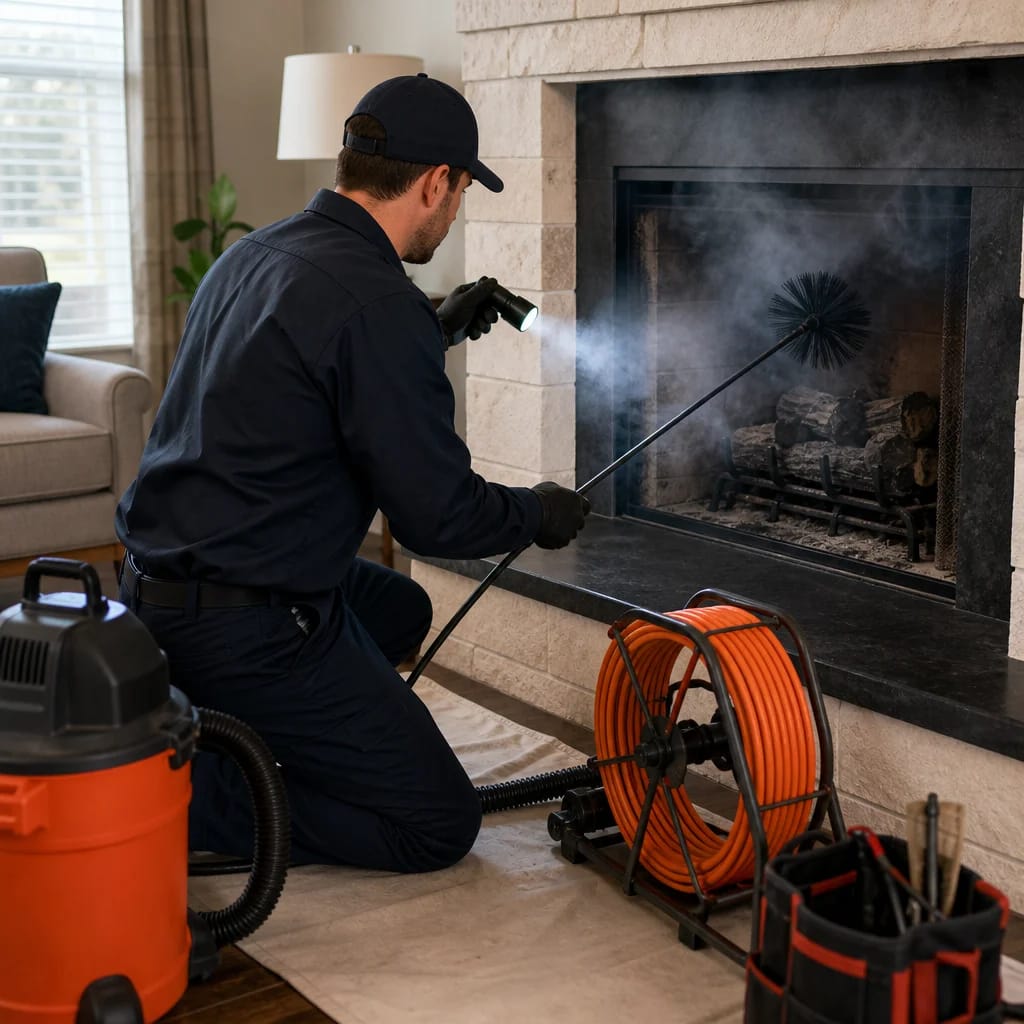
Blockages disrupt the natural convection process that keeps smoke moving upward. When your fireplace burns wood, heat rises naturally. This rising heat and combustion gases create a pressure difference between the firebox and the top of the chimney. Air naturally moves from high pressure to low pressure, so air flows up the chimney and out. A blockage interrupts this flow.
When creosote, debris, or damaged materials partially block the chimney, the rising smoke encounters resistance. Instead of flowing smoothly up and out, smoke backs up or spills into the room. The narrower the opening, the more pronounced the problem becomes.
Partial blockages are especially problematic because they’re easy to overlook. Your fireplace might seem to work most of the time, but smoke backs up under certain conditions: on cold days, when the wind is blowing a particular direction, or when a nearby exhaust fan is running. These intermittent issues frustrate homeowners because the problem isn’t constant and obvious.
Complete blockages are actually easier to diagnose because smoke won’t draw into the chimney at all. In these cases, homeowners typically stop using the fireplace immediately. Partial blockages allow just enough smoke through to seem acceptable, but they compromise safety and efficiency.
The Dangers of Ignoring Smoke Backup
Smoke backing into your home creates both immediate health concerns and long-term safety risks that shouldn’t be ignored.
When smoke enters your living space, you’re exposed to carbon monoxide, nitrogen dioxide, and particulate matter. Even small amounts of these gases can cause headaches, dizziness, and respiratory irritation. People with asthma, heart conditions, or compromised immune systems face heightened risk.
Creosote buildup inside a blocked chimney presents a serious fire hazard. Creosote is highly flammable. If enough accumulates and ignites, a chimney fire can cause extreme temperatures that damage the flue liner, crack the chimney structure, or even spread to surrounding framing. This risk increases significantly when chimneys aren’t cleaned regularly.
A poorly functioning chimney also allows moisture to enter your chimney structure. Water damage can weaken mortar joints, cause rust in the flue, and eventually lead to expensive structural repairs. Over months or years, this deterioration becomes costly to remedy.
Professional inspection and cleaning prevent these dangers from developing. We recommend addressing smoke backup promptly rather than hoping it improves on its own.
Our Professional Chimney Inspection Process
Our inspection starts with a thorough visual examination of your chimney from top to bottom. We check the exterior for cracks, missing mortar, damaged cap, and structural wear. We inspect the damper mechanism to ensure it opens and closes fully. Inside the firebox, we look for obstructions, damper issues, and evidence of previous problems.
We then perform a video camera inspection of the flue itself. This allows us to see exactly what’s happening inside the chimney without guessing. We can identify creosote deposits, blockages, flue liner damage, and other obstructions that wouldn’t be visible otherwise. The camera gives us a complete picture of your chimney’s condition and helps us recommend the right solution.
During the inspection, we also evaluate draft performance and discuss how your home’s air pressure, local wind patterns, and your specific fireplace usage might be contributing to smoke backup. This comprehensive assessment means we understand your chimney fully before recommending solutions.
Advanced Cleaning and Repair Solutions We Provide
Once we understand what’s causing your smoke backup, we can recommend the right approach.
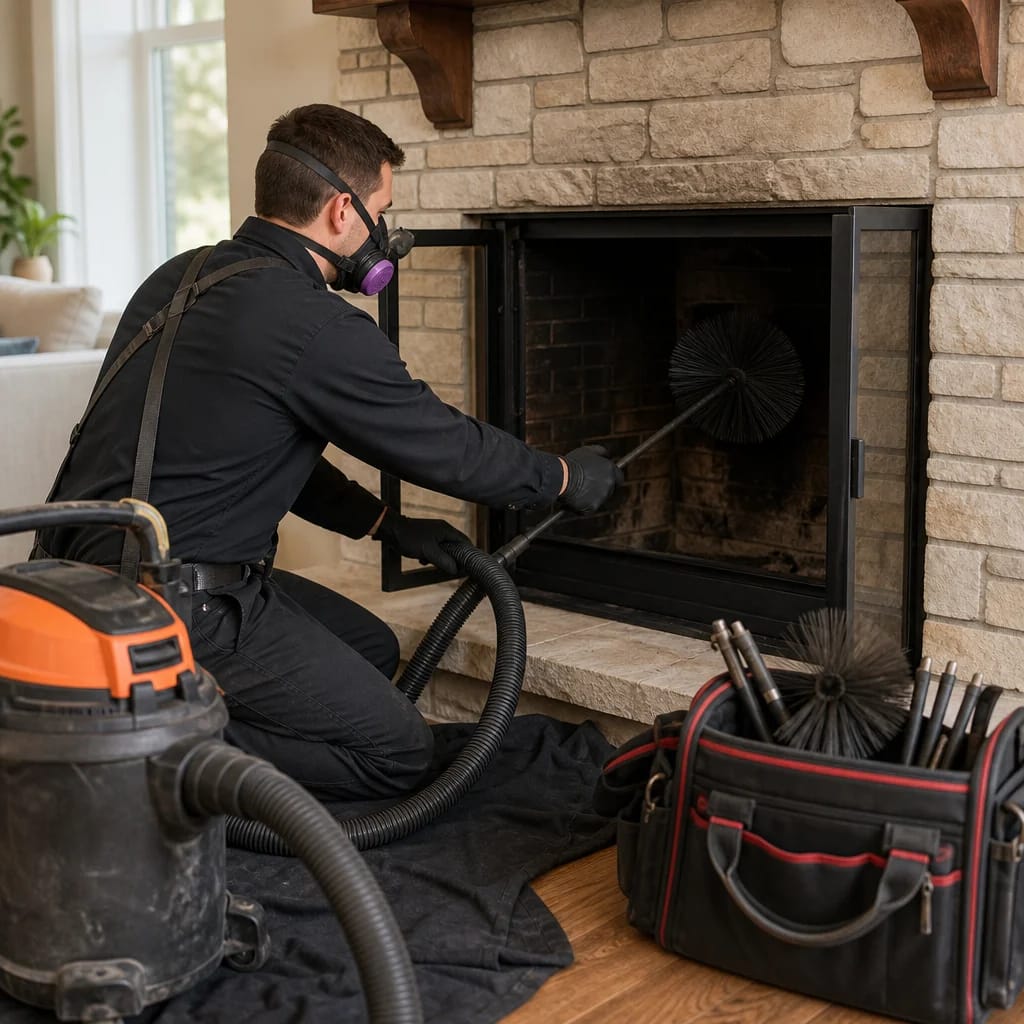
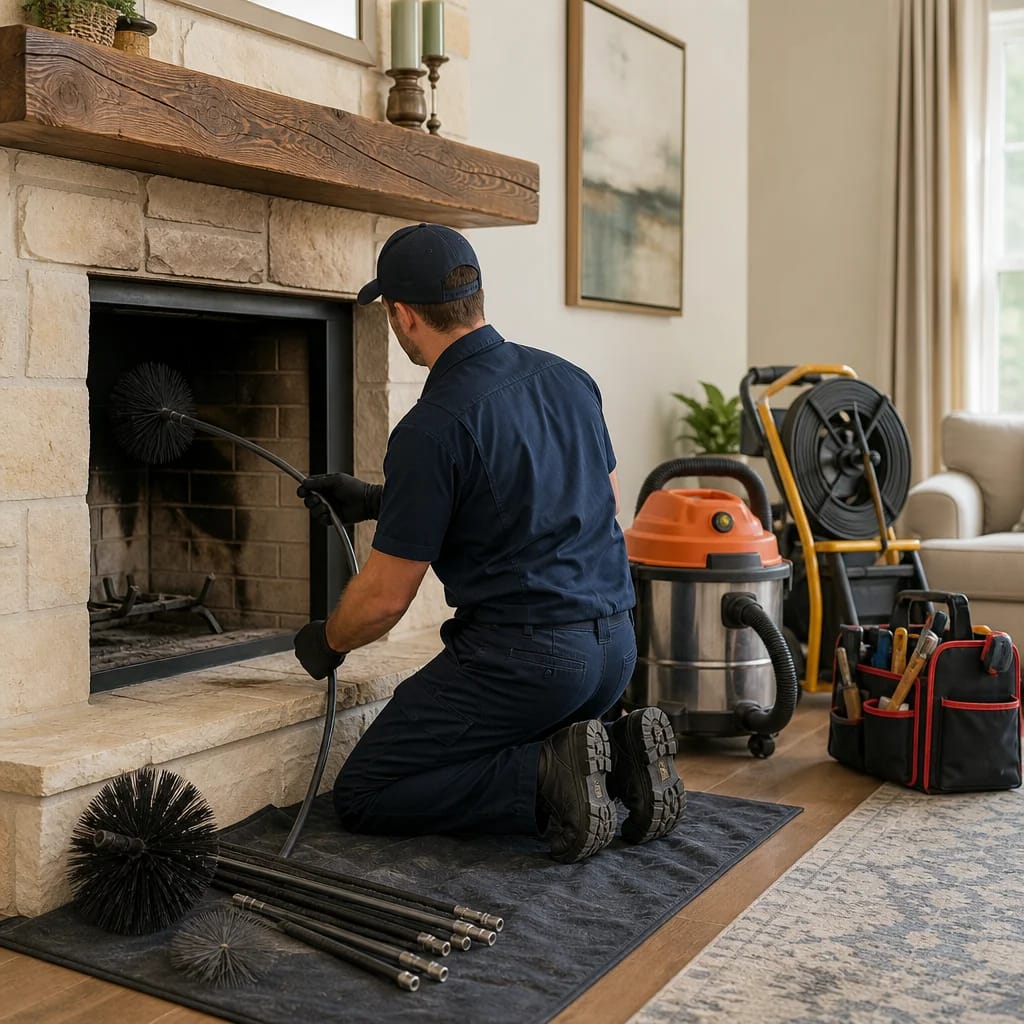
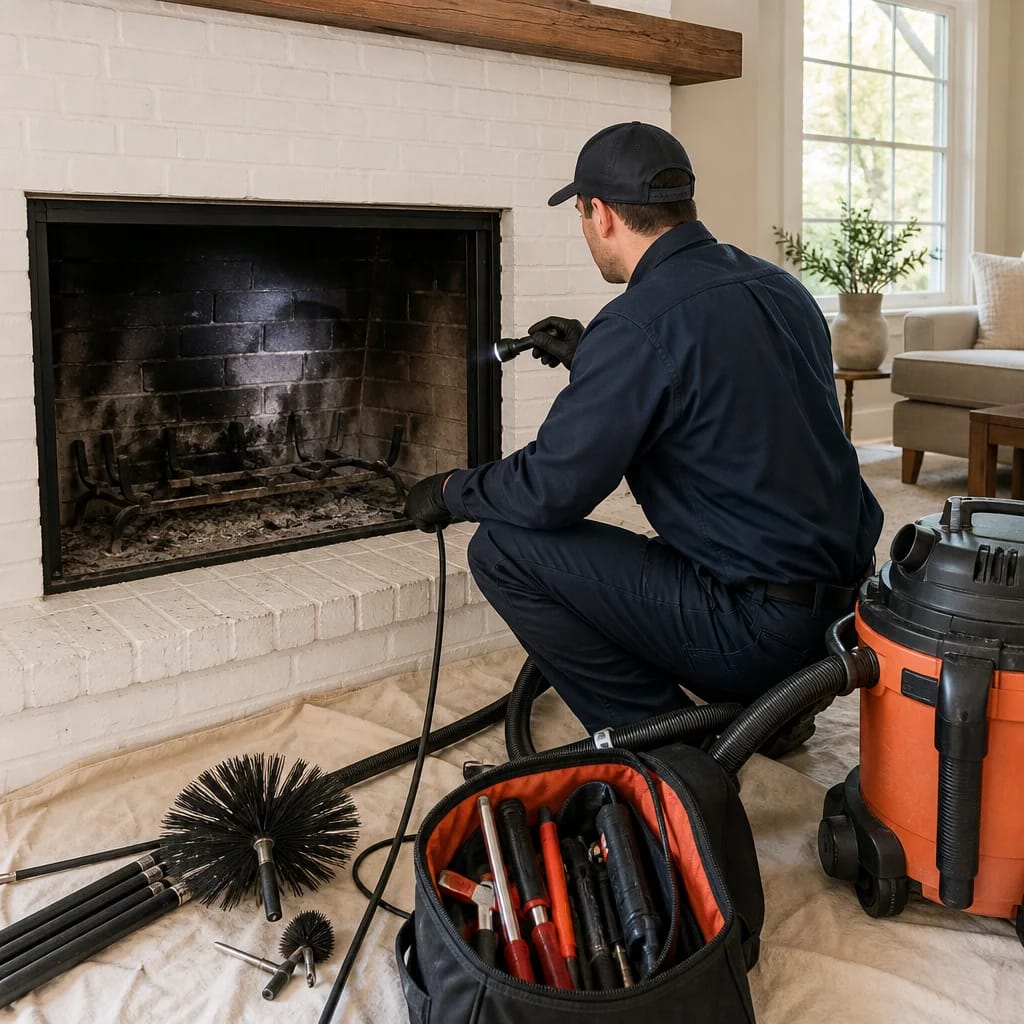
For creosote and soot buildup, professional chimney cleaning in Dallas removes deposits safely and thoroughly. We use specialized brushes and vacuum equipment designed specifically for chimneys. Our process prevents creosote from falling into your firebox and protects your home from contamination.
For debris blockages, we carefully remove obstructions while protecting your home. Bird nests, leaves, and accumulated branches come out, restoring airflow and proper draft.
If your chimney cap is damaged or missing, we install or replace it with a quality cap that protects against rain and animals while allowing proper draft. Correctly sized and designed caps maintain airflow while keeping debris out.
Damper repairs might involve cleaning and lubricating, or in cases of significant wear, damper replacement. A properly functioning damper is essential for draft and efficiency.
For structural issues like cracked flue liners, we repair or reline the chimney with a modern flexible stainless steel liner. This restores proper function and extends your chimney’s life considerably.
How Our Technicians Restore Proper Chimney Ventilation
Restoring proper ventilation involves more than just cleaning. Our technicians address the underlying cause of your smoke backup, not just the symptom.
After cleaning your chimney thoroughly, we test draft performance. We look for any signs of ongoing obstruction or draft problems. If draft is still weak, we investigate further. This might involve checking your damper operation, evaluating your chimney cap design, or assessing whether your home’s air pressure is contributing to the issue.
For homes with persistent draft problems despite a clean chimney, we might recommend additional solutions. A top-mounted damper or a chimney fan can improve draft in difficult situations. We’ll discuss these options and their costs during our consultation.
Our goal is ensuring your fireplace works safely and reliably. This means testing our work thoroughly and following up to confirm the problem is actually resolved.
Preventative Maintenance to Stop Future Smoke Backup
Regular maintenance keeps chimney problems from recurring.
We recommend annual chimney cleaning if you use your fireplace regularly. For homeowners who burn wood frequently, twice-yearly cleaning might be appropriate. Annual inspections catch small issues before they become expensive problems.
Inspect your chimney cap periodically. Make sure it’s secure, not cracked, and properly sized for your chimney. A damaged cap should be replaced promptly.
Keep trees trimmed back from your chimney. Branches can fall on the cap or flue, and proximity to trees increases the risk of bird nests.
Use seasoned firewood only. Wet or green wood produces excessive creosote because it burns at lower temperatures. Quality firewood burns hotter and cleaner.
Have your damper inspected annually to ensure smooth operation. A damper that’s difficult to move or doesn’t seal properly should be serviced.
Why Dallas Homeowners Choose Dr. Air Duct for Chimney Services
We’ve been serving Dallas and surrounding areas with professional air quality and ventilation services for years. Our technicians are trained and experienced in chimney cleaning, inspection, and repair. We use modern video inspection equipment and professional-grade cleaning tools because your safety matters.
We’re available 24/7 because chimney emergencies don’t follow business hours. When you need urgent help, we respond quickly. We provide transparent communication throughout every job, explaining what we find and why we recommend specific solutions.
Our service area covers Dallas and surrounding Texas communities. We understand the climate, building styles, and common chimney problems in our region. This local expertise helps us solve problems more effectively.
Get Your Fireplace Working Safely Again
Fireplace smoke backup is a real problem that deserves professional attention. Ignoring it risks your family’s health and your home’s safety. We’re here to help you get your chimney working properly again.
Start by scheduling a professional inspection with Dr. Air Duct. We’ll identify exactly what’s causing your smoke backup and recommend the right solution. Contact us today to book your appointment or call for immediate assistance. Your fireplace can be working safely and reliably again sooner than you think.
Frequently Asked Questions (FAQ)
What causes fireplace smoke to back up into my home?
We find that smoke backup typically results from restricted airflow in your chimney. Common culprits include creosote buildup, debris accumulation, structural damage, or improper chimney sizing relative to your fireplace. We also see draft problems caused by air pressure imbalances in your home or issues with your chimney cap and damper system.
How quickly can we inspect and fix my chimney if smoke is backing up now?
We offer 24/7 availability and prioritize smoke backup cases since they pose safety risks to your household. Our technicians can typically schedule same-day or next-day inspections depending on your location in the Dallas area, and we’ll provide repair recommendations immediately after we evaluate the problem.
What’s the difference between cleaning and repair when it comes to chimney smoke issues?
We handle both situations based on what our inspection reveals. If creosote or blockages are causing your backup, we perform professional cleaning to restore proper airflow. However, if we identify structural damage, deteriorated mortar, flue obstructions, or draft problems, we recommend targeted repairs to ensure your fireplace operates safely and efficiently long-term.