

Table of Contents
- Why Dryer Vent Routing Matters for Safety and Efficiency
- Common Dryer Vent Routing Mistakes Homeowners Make
- Understanding Dallas Building Codes for Dryer Vents
- Proper Dryer Vent Routing Requirements and Best Practices
- Indoor vs. Outdoor Venting: What the Codes Require
- Duct Material and Length Specifications
- How Our Professional Installation Ensures Code Compliance
- Inspection and Maintenance to Keep Your System Safe
- Signs Your Current Dryer Vent May Violate Code
- Getting Your Dryer Vent Properly Routed and Certified
- Frequently Asked Questions (FAQ)
Why Dryer Vent Routing Matters for Safety and Efficiency
Your dryer vent does more than just expel warm air and moisture outside. Proper routing directly affects your home’s safety, energy efficiency, and your dryer’s lifespan. When venting is installed correctly, lint and moisture exit your home quickly, reducing fire risk and keeping your dryer running efficiently.
Improper routing forces your dryer to work harder, increasing energy use and generating excess heat. Lint can accumulate in poorly designed ductwork, creating blockages that restrict airflow. Over time, this buildup becomes a genuine fire hazard. The U.S. Fire Administration reports that thousands of house fires annually involve dryers with clogged vents.
Beyond fire safety, compliant routing protects your indoor air quality. Moisture and lint that doesn’t exit properly can seep back into your living space, contributing to mold growth and indoor humidity problems. In Dallas’s humid climate, this becomes especially important.
Actionable takeaway: Schedule a professional vent inspection if you’re unsure whether your current setup meets code. We can assess routing, identify inefficiencies, and recommend corrections before they become costly or dangerous.
Common Dryer Vent Routing Mistakes Homeowners Make
We see several recurring routing errors during inspections. Many homeowners don’t realize how much these mistakes compromise both safety and performance.
The first mistake is routing the vent into the attic or crawlspace instead of outside. Some people believe this helps retain heat or find it convenient. However, directing moisture and lint indoors defeats the entire purpose of venting and creates mold, structural damage, and pest problems.
Another common error is using flexible plastic or foil duct for the entire run. While flexible ducting has its place for short, accessible sections, many Dallas homes use it for long runs from laundry rooms to exterior walls. This material crushes easily, accumulates lint, and can tear, causing leaks.
Undersized or excessively long ductwork is also problematic. Homeowners sometimes forget that every elbow and length of duct adds resistance. A vent run longer than manufacturer specifications forces the dryer to strain, reducing efficiency and increasing fire risk.
Improper outdoor termination is another frequent issue. Some vents exhaust near air intakes, under eaves, or into landscaping instead of clear outdoor space. This can cause moisture to re-enter the home or create drafting problems.
Actionable takeaway: If your dryer takes longer than 45 minutes to dry a normal load, or if your laundry room feels unusually humid, these are signs routing may be compromised. Contact a professional to evaluate the system.
Understanding Dallas Building Codes for Dryer Vents
Dallas follows the International Residential Code (IRC) and adopts local amendments through the Dallas Building Standards Commission. These codes exist specifically to protect homes and occupants from dryer-related fires and indoor air quality problems.
Key code requirements include:
- Venting must terminate outside the building, never indoors
- Ductwork must be made of rigid metal (preferred) or flexible metal with proper support
- Vents must have a backdraft damper to prevent air from flowing back into the home
- The termination point must be protected with a hood or cap that opens when the dryer runs
- Duct runs have length limitations based on elbows and materials used
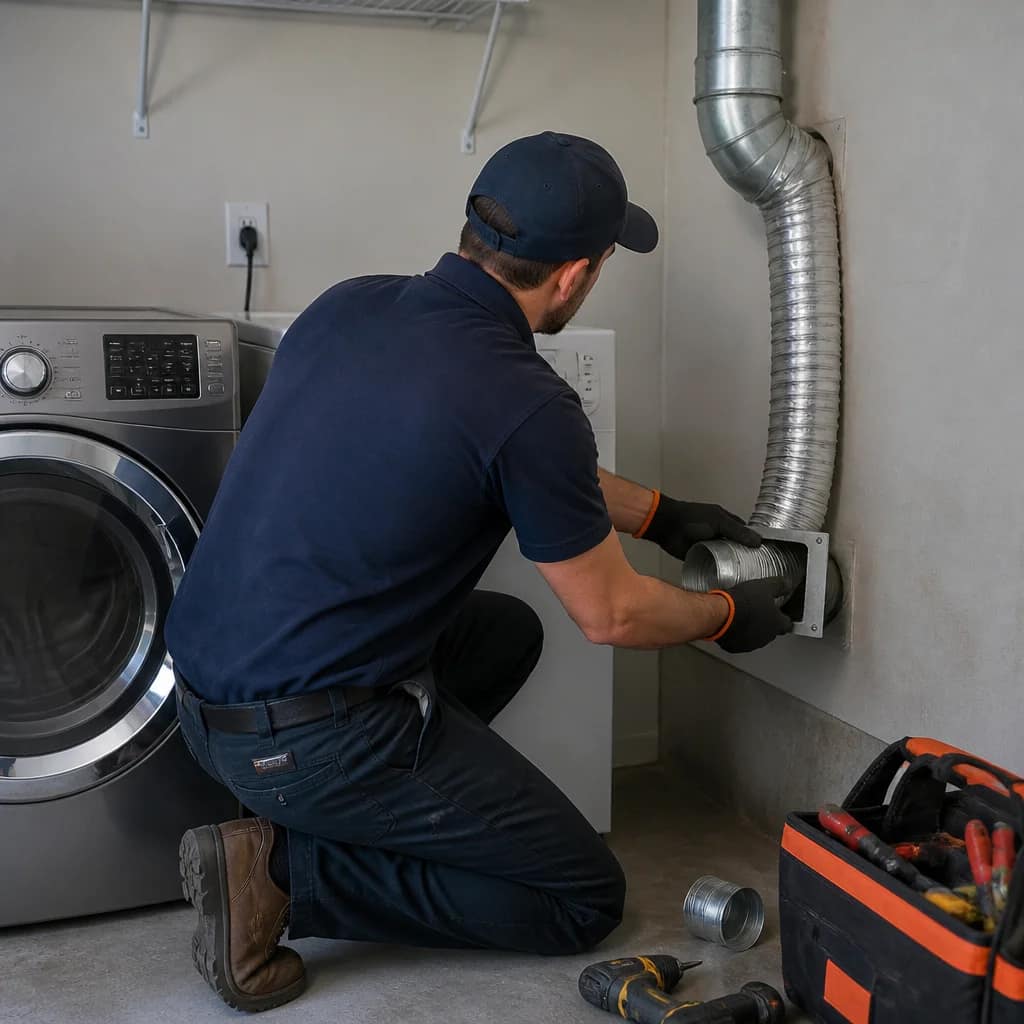
Dallas municipal codes also specify clearance distances from windows, doors, and air intakes. Your vent cannot exhaust within a certain distance of areas where outdoor air enters your home. This prevents moisture and lint from being drawn back inside.
Local amendments may also address commercial properties differently than residential units. If you manage a multi-family building or commercial laundry facility in Dallas, requirements can be stricter.
Actionable takeaway: Before hiring a contractor, confirm they understand Dallas-specific codes. Not all regional contractors stay current with local amendments, so verify their familiarity with our area’s requirements.
Proper Dryer Vent Routing Requirements and Best Practices
A compliant dryer vent system starts with rigid metal ductwork as the primary run from your dryer to the exterior wall or roof. Rigid ducts resist crushing and lint accumulation far better than flexible alternatives.
The route should be as direct as possible, minimizing turns and bends. Every 45-degree or 90-degree elbow adds resistance, so fewer directional changes mean better airflow and faster drying. In Dallas homes, this often means routing through walls, across attic spaces (with proper support), or down crawlspaces rather than taking a winding path.
Ductwork must be properly supported every few feet with straps or hangers to prevent sagging. Sagging sections trap lint and moisture, restricting flow and creating blockage points.
At the dryer connection point, use a short section of flexible metal duct (typically 4 to 8 inches) to accommodate the dryer’s vibration. Beyond that, switch to rigid metal. The connection must be secure with no gaps where lint can escape into walls.
At the exterior termination, the hood or cap must extend beyond the wall surface and open fully when your dryer operates. Dampers should be spring-loaded so they close automatically when the dryer stops, preventing outdoor air and pests from entering.
Actionable takeaway: If you’re planning a dryer installation or renovation, we recommend having the entire route planned and inspected before installation begins. This prevents costly rework later.
Indoor vs. Outdoor Venting: What the Codes Require
Dallas building code is clear: dryer vents must terminate outside the home. Indoor venting is never compliant, regardless of how the system is designed.
Some people attempt “ventless” solutions by venting into the home with a ductless dryer or recirculating system. While these exist, they don’t meet code for whole-home compliance and don’t safely address moisture and lint. Building codes specifically prohibit terminating dryer exhaust indoors.
The only exception is direct-vented gas dryers that exhaust through exterior walls or roofs with proper outdoor termination. Even then, the exhaust must go outside, not recirculate indoors.
For homes without a practical direct-to-outside route, the proper solution is professional rerouting. We’ve helped Dallas homeowners extend vents from interior laundry rooms to exterior walls or even roofs. This involves planning the route, installing rigid ductwork, and ensuring the termination meets code.
Actionable takeaway: If your current vent terminates indoors or you suspect it does, schedule an inspection right away. This is a safety priority and likely violates code.
Duct Material and Length Specifications
Material choice significantly impacts performance and compliance. Here’s what the codes allow:
Rigid metal ductwork is the code-preferred option. Typically aluminum or galvanized steel, it resists crushing, doesn’t accumulate lint as readily, and provides reliable airflow over many years. Most building inspectors expect to see rigid metal for the main run.
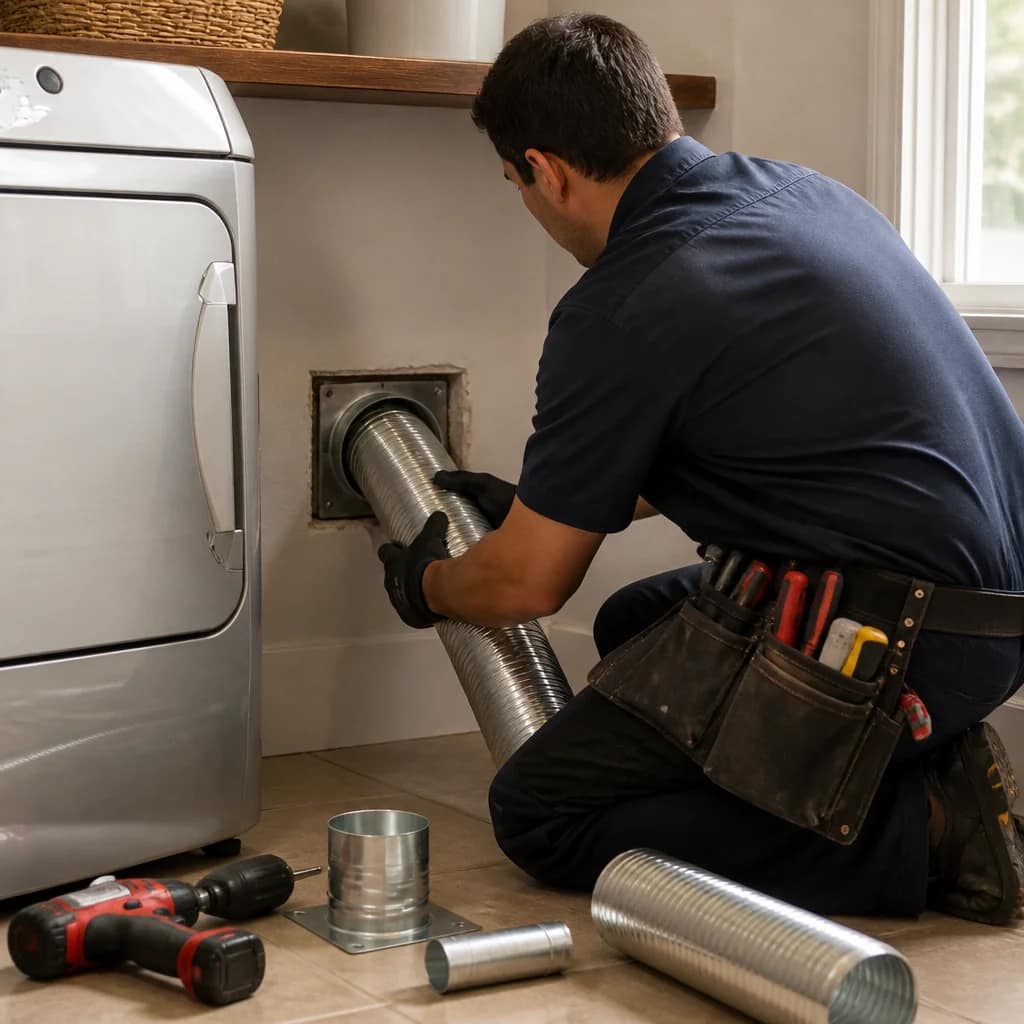
Flexible metal ductwork is acceptable for short segments, usually no more than 6-8 feet and only where vibration isolation is needed (like the connection from the dryer itself). It should not be the primary run because it crushes easily and traps lint.
Never use flexible plastic dryer vents. These are fire hazards and violate code. Plastic can melt, doesn’t withstand dryer heat, and deteriorates quickly.
Length matters too. The IRC specifies that rigid ductwork can safely run a certain distance based on its diameter, typically 25-35 feet without additional conditions. However, each 45-degree elbow counts as 5 feet of additional length, and each 90-degree elbow counts as 10 feet. A vent run with multiple turns effectively becomes much longer and may not meet the limit.
If your planned route exceeds the maximum, you may need larger diameter ductwork (typically 4-inch), a booster fan, or route modifications.
Actionable takeaway: If you’re uncertain whether your current ductwork meets specifications, we can measure the run, count the fittings, and confirm compliance.
How Our Professional Installation Ensures Code Compliance
We approach every dryer vent installation as a code compliance project. Here’s our process:
First, we plan the entire route before any work begins. We assess your home’s layout, identify the best exterior termination point, and calculate the duct run length accounting for elbows and fittings. We confirm the path meets Dallas codes and works with your home’s structure.
During installation, we use rigid metal ductwork for the primary run, properly supported and sealed at all connections. We use flexible metal only where vibration isolation is necessary, keeping that section as short as possible.
At the exterior termination, we install a code-compliant hood with a spring-loaded damper that closes when the dryer stops. The hood is positioned to exhaust clear of windows, doors, air intakes, and landscaping.
We verify that ductwork slopes slightly toward the exterior to promote condensation drainage and prevent moisture backup. We also ensure the connection to your dryer is secure with no gaps.
Before we leave, we test the system to confirm proper airflow and termination. Our technicians understand Dallas municipal code requirements and ensure every installation passes inspection.
Actionable takeaway: If you need a new installation or rerouting, we handle everything from design through inspection certification. This saves you the hassle of coordinating multiple contractors.
Inspection and Maintenance to Keep Your System Safe
Proper maintenance extends your dryer vent’s life and keeps it safe. Even a correctly installed system accumulates lint over time.
We recommend professional dryer vent cleaning in Dallas annually, or more often if you do frequent laundry. During cleaning, we remove lint buildup throughout the entire run, from inside the dryer to the exterior hood. This restores airflow, improves drying efficiency, and reduces fire risk.
Between professional cleanings, homeowners should empty the dryer’s lint trap before every load and check the exterior hood regularly. Make sure the damper opens freely when the dryer runs and closes completely when it stops. Vegetation or debris shouldn’t block the hood opening.
If you notice your dryer taking longer to dry clothes, feel excessive heat around the dryer, or smell lint or burning odors, schedule an inspection immediately. These are signs of restricted airflow that warrant professional evaluation.
Actionable takeaway: Put a reminder on your calendar for annual professional cleaning. This is one of the best fire prevention measures we recommend.
Signs Your Current Dryer Vent May Violate Code
Several red flags suggest your vent doesn’t meet code or needs repair:
- Your dryer takes significantly longer than 45 minutes to dry a normal load
- The laundry room feels humid or hot after running the dryer
- You notice lint accumulating on surfaces outside the laundry room or around the exterior hood
- The exterior hood damper doesn’t open when the dryer runs or remains stuck open afterward
- Your vent terminates indoors, into the attic, crawlspace, or garage
- Ductwork is flexible plastic, vinyl, or foil used for extended runs
- The vent route is excessively long with many tight turns
- The exterior termination is near a window, door, or air intake
Any of these conditions likely violates Dallas code and creates safety or efficiency problems. We’ve seen systems that passed initial installation but developed issues through settling, damage, or improper repairs.
Actionable takeaway: If you recognize any of these signs, don’t wait. A quick professional inspection confirms whether rerouting or repair is needed.
Getting Your Dryer Vent Properly Routed and Certified
If your current system doesn’t meet code or you’re installing a new dryer, here’s what the process looks like:
Contact us for a free assessment. We’ll inspect your current vent (if applicable), review your home’s layout, and recommend the best compliant routing. We’ll explain any costs, timeline, and what the installation involves.
Once you approve the plan, we schedule the work. Installation typically takes a few hours, depending on routing complexity. We handle all materials, installation, testing, and cleanup.
After completion, we provide documentation of the work performed. For new constructions or major renovations, we coordinate with building inspectors to ensure the system passes final inspection.
For existing homes, we offer inspection reports that document code compliance. This is useful if you’re selling your home, refinancing, or simply want peace of mind.
Actionable takeaway: Contact us today at your earliest convenience. We’ll assess your current system, explain your options, and get your dryer vent properly routed and certified for Dallas compliance.
Frequently Asked Questions (FAQ)
What are the main Dallas building code requirements for dryer vent routing?
Dallas requires that dryer vents be routed to the exterior of your home or building with proper termination through a vent cap. We ensure all ductwork follows the code specifications, which typically include a maximum duct run of 25 feet (with deductions for each 90-degree elbow), rigid or semi-rigid metal ducts, and termination that prevents backdrafting. Our team stays current on all local amendments to keep your installation fully compliant and safe.
Why does my dryer vent length and material matter for code compliance?
The duct length and material directly impact airflow efficiency and fire safety, which is why Dallas codes are specific about them. We use rigid or semi-rigid metal ducts rather than flexible plastic because they resist lint buildup better and meet safety standards. Longer duct runs with multiple bends reduce efficiency and increase fire risk, so we route vents along the shortest, most direct path possible while maintaining code compliance.
How do we help you get a dryer vent that passes inspection?
We handle the entire process from assessment through final certification, ensuring your vent meets all Dallas requirements before we leave your property. Our technicians know the local codes inside and out, so we route ducts correctly on the first installation and provide documentation for your records. If your current system has code violations, we can modify or reroute it to bring everything into compliance and eliminate safety hazards.