

Table of Contents
- Why Damaged Sheet Metal Ducts Cost You Money
- Common Signs Your Ducts Are Leaking or Failing
- How Duct Damage Reduces Airflow and Comfort
- What Causes Sheet Metal Ducts to Deteriorate
- Our Professional Inspection and Assessment Process
- Repair vs. Replacement: Which Solution Works Best
- How We Restore Your Duct System for Peak Performance
- Energy Savings You Can Expect After Duct Repair
- Preventative Maintenance to Protect Your Ductwork Long-Term
- Schedule Your Dallas Duct Inspection Today
- Frequently Asked Questions (FAQ)
Why Damaged Sheet Metal Ducts Cost You Money
Damaged sheet metal ducts aren’t just an inconvenience, they’re an ongoing financial drain on your home or business. When your ductwork develops leaks, separations, or corrosion, conditioned air escapes before it reaches the rooms you’re trying to heat or cool. This means your HVAC system works harder and longer to maintain your desired temperature, consuming more energy and driving up utility bills.
The financial impact compounds over time. A single 1-inch gap in your ductwork can waste 10% or more of your system’s output. For many Dallas properties, that translates to hundreds of dollars in wasted energy annually. Beyond energy costs, damaged ducts force your HVAC equipment to cycle more frequently, which accelerates wear and shortens the system’s operational lifespan. What starts as a minor repair issue can evolve into costly equipment replacement if left unaddressed.
We’ve seen property owners express real frustration when they receive higher-than-expected utility bills, only to discover leaking or damaged ductwork was the culprit. The good news: addressing damaged ducts through professional repair often reduces energy consumption and restores comfort throughout your space.
Action step: If your energy bills have crept up over the past year without explanation, ductwork damage could be responsible. Request a professional inspection to identify where air is escaping.
Common Signs Your Ducts Are Leaking or Failing
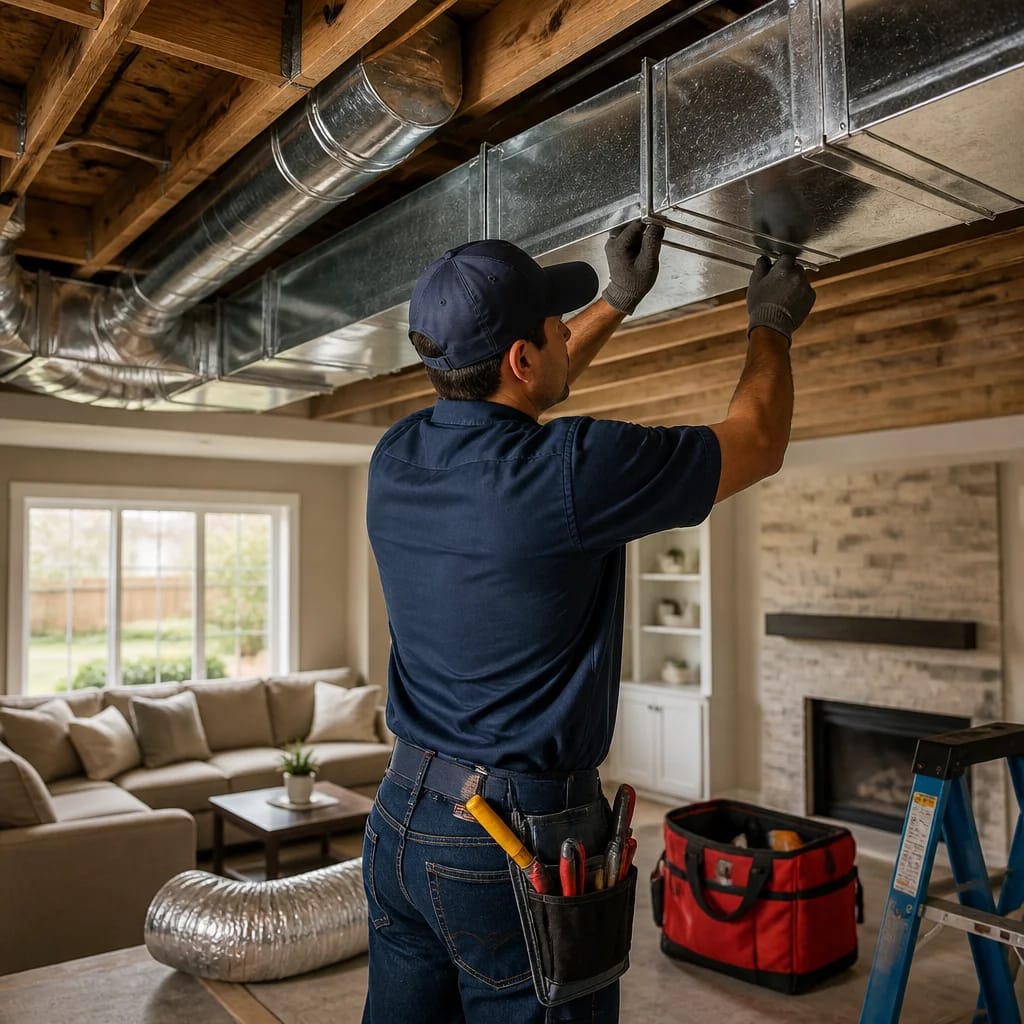
Visible indicators often appear before you feel the comfort problems. Look for obvious damage like visible holes, cracks, or dents in exposed ductwork in basements, attics, or crawl spaces. You might also notice metal separation at duct joints or seams, where sections have pulled apart slightly. Corrosion or rust spots on sheet metal ducts signal deterioration that weakens the material and can create new leak points.
Beyond what you see, pay attention to performance clues. Certain rooms may feel consistently too warm or too cold compared to others, even when your thermostat is set the same. You might notice weak airflow from specific vents or hear unusual rattling, whistling, or hissing sounds when your HVAC system runs. Some property owners discover musty odors near vents, which can indicate duct damage has allowed outdoor air, dust, or contaminants to enter the system.
Higher-than-normal utility bills without obvious causes, frequent HVAC cycling, or the system struggling to reach set temperatures are also red flags. These symptoms often point to significant air loss through damaged ductwork.
Action step: Walk your basement or attic and visually inspect accessible ducts. Take photos of any damage you find and share them with a professional for assessment.
How Duct Damage Reduces Airflow and Comfort
When sheet metal ducts leak, the pressure within the duct system drops, reducing the volume of air delivered to your rooms. This isn’t just about feeling cooler or warmer in certain spots, it’s about your system’s ability to condition your entire space efficiently. Damaged ducts force your heating or cooling equipment to work beyond its design capacity just to compensate for lost airflow.
The comfort impact varies by duct location. Leaks in main trunk lines affect multiple rooms downstream. Damage near room registers or branch ducts may isolate comfort problems to specific areas. In commercial spaces, uneven cooling or heating can affect productivity and create complaints from tenants or employees.
Another consequence: when ducts are damaged, air may leak into unconditioned spaces like attics or crawl spaces. In summer, hot attic air gets drawn into damaged sections, warming the air before it reaches your living areas. In winter, unconditioned air cools down the supply before delivery. Either way, your system’s efficiency drops, and comfort suffers.

Action step: If you’re experiencing temperature inconsistencies between rooms, have those vents inspected. Duct damage isolated to one branch may be repairable without replacing the entire system.
What Causes Sheet Metal Ducts to Deteriorate
Sheet metal ducts deteriorate through a combination of age, environmental factors, and mechanical stress. Rust and corrosion are primary culprits in many Dallas homes. The Texas climate brings humidity fluctuations, and if your ductwork lacks proper insulation or sits in damp basements or crawl spaces, moisture can accelerate corrosion. Over 15-20 years, corrosion can weaken sheet metal considerably, creating small holes and structural failure points.
Mechanical damage also plays a role. Vibration from HVAC equipment operation, impacts from dropped objects, or poor workmanship during original installation can dent or crease ducts. Rodent activity, though less common, can chew through weaker spots. Improper duct installation, such as inadequate support or poor sealing at joints, sets the stage for eventual separation and leaks.
Normal wear from temperature cycling and pressure fluctuations also contributes over time. Ducts expand and contract, stressing seams and connections. Without proper maintenance, these minor stresses accumulate until visible damage appears.
Understanding the cause helps determine the best repair approach. A single rusted hole may warrant a patch, while widespread corrosion might indicate replacement of affected sections is more cost-effective long-term.
Action step: When we inspect your ductwork, we identify not just where damage exists but what caused it. This informs whether repair or replacement is most practical for your situation.
Our Professional Inspection and Assessment Process
Our inspection begins with a comprehensive visual survey of all accessible ductwork. We examine joints, seams, and visible sections for signs of damage, corrosion, leaks, or separation. We check supports and hangers to ensure ducts are properly positioned and not causing strain at connection points.
Next, we perform airflow testing using specialized equipment to locate leaks that aren’t immediately visible. We can identify areas where pressurized air is escaping, even if the holes are small or hidden within wall cavities or attic insulation. This gives us precise data about where air loss occurs and how significantly it affects system performance.
We also assess the overall condition of your system: duct sizing relative to your HVAC unit, insulation condition, and whether the layout supports efficient air delivery. For commercial properties, we evaluate whether your duct system matches current facility needs or if changes have reduced its effectiveness.
Once the inspection is complete, we provide a detailed report showing damage location, severity, and repair or replacement recommendations. We explain findings in straightforward terms, not industry jargon, so you understand exactly what’s happening and why specific repairs matter.
Action step: Schedule a professional inspection if you haven’t had one in 5+ years or if you’re experiencing any comfort or efficiency concerns. Early detection prevents small problems from becoming expensive repairs.
Repair vs. Replacement: Which Solution Works Best
The choice between repairing and replacing damaged ductwork depends on several factors: damage extent, duct age, material condition, and cost-effectiveness.
For isolated damage, repair is typically the right answer. A single leak or small corrosion spot can be sealed or patched. We use professional-grade materials and techniques that withstand pressure and temperature cycling. Spot repairs restore function without the cost and disruption of replacing entire sections.
When damage is widespread, replacement becomes more practical. If multiple areas show significant corrosion or structural weakness, patching each spot individually may address today’s problems but leave you vulnerable to future failures. Replacing affected sections provides better long-term reliability and peace of mind.

Duct age also influences the decision. If your ducts are 20+ years old and showing widespread deterioration, replacement may be prudent even if current damage is limited. Older ducts are more likely to develop additional problems soon. If ducts are relatively new but suffered isolated damage, repair preserves your investment.
We also consider your system’s overall condition. If your HVAC unit is nearing replacement anyway, replacing ducts at the same time can make financial sense. Combining projects sometimes reduces labor costs and ensures everything works together optimally.
Our assessment includes cost comparisons so you understand the financial implications of each option. We never push unnecessary replacements, but we’re honest when repair is just a temporary fix.
Action step: Bring any repair estimates you’ve received to your consultation with us. We’ll evaluate whether the recommended approach aligns with your duct condition and long-term needs.
How We Restore Your Duct System for Peak Performance
Our repair process depends on damage type and location. For minor leaks and holes, we clean the affected area, ensure it’s dry, and apply specialized duct-sealing materials rated for your system’s pressure and temperature ranges. These materials create lasting bonds and remain flexible to accommodate normal duct movement.
For corrosion or rust spots, we may grind affected areas to remove loose material, treat the area to prevent further corrosion, and seal the spot with appropriate patching materials. For separated seams or joints, we re-secure connections using professional-grade fasteners and sealant, ensuring airtight unions that withstand system pressure.
When section replacement is necessary, we remove damaged ductwork carefully, install appropriately sized replacement sections using the same material gauge, and seal all joints according to industry standards. We test connections to confirm they hold pressure before returning the system to normal operation.
For complex installations or commercial systems, we may also incorporate duct insulation or upgrade sealing methods to improve overall system efficiency. Our goal is restoring your ductwork to perform as originally designed, not just patching problems temporarily.
After repairs are complete, we run the system through a full operational cycle and verify airflow at each register to confirm restoration is successful. You’ll receive documentation of work performed and any recommendations for ongoing maintenance.
Action step: Ask your technician about warranty or guarantees on repair work. Understanding what’s covered gives you confidence that repairs will hold.
Energy Savings You Can Expect After Duct Repair
Repairing damaged ducts can meaningfully reduce energy consumption. The extent of savings depends on how much air was leaking before repair and how much of your ductwork was affected. Small, isolated leaks might reduce energy usage 5-10%. More extensive damage that we’ve corrected has translated to 15-20% reductions in heating and cooling costs for some customers.
Dallas’s climate drives both heating and cooling costs, so duct repair benefits apply year-round. In summer, properly sealed ducts mean your air conditioning doesn’t waste cooled air in unconditioned spaces. In winter, your heating system delivers warm air efficiently to rooms without losing it through gaps or corrosion spots.
Several factors influence actual savings. Your utility rates, system age and efficiency, insulation levels, thermostat settings, and how much time you spend conditioning your space all affect the dollar impact. A homeowner with excellent insulation elsewhere but damaged ducts might see 10% energy reduction. A commercial facility with higher HVAC usage might see 20% or more.
We recommend tracking your energy bills for 2-3 months after duct repair to establish your new baseline. Many customers notice the improvement quickly, especially if the damage was significant.
Action step: Keep pre- and post-repair utility bills to document actual savings. This information helps justify the repair investment and informs future maintenance decisions.
Preventative Maintenance to Protect Your Ductwork Long-Term
Once your ducts are repaired, protecting them from future damage extends their lifespan and maintains efficiency gains. Start with visual inspections at least annually, especially if ducts are accessible in your attic or basement. Look for new corrosion, dents, or separation that might be developing.
Maintain proper humidity levels in your home or facility. Excessive moisture accelerates rust and corrosion on sheet metal ducts. Using a dehumidifier in basements or crawl spaces helps, as does ensuring adequate ventilation in those areas. Keep ductwork insulated if it runs through unconditioned spaces, which prevents condensation and protects against temperature-related stress.
Schedule professional HVAC maintenance regularly. During routine servicing, technicians can inspect accessible ductwork and identify emerging issues before they become expensive problems. We also clean ducts periodically to remove dust and debris that can restrict airflow and create pressure problems that stress connections.
Protect ducts from physical damage by securing storage away from them and preventing impacts that can dent or crack metal. Ensure supports and hangers are secure and not creating stress points at joints.
Action step: Add annual ductwork inspection to your HVAC maintenance checklist. Catching small issues early is far less expensive than emergency repairs or replacements.
Schedule Your Dallas Duct Inspection Today
Damaged sheet metal ducts don’t repair themselves. The longer ductwork deteriorates, the more energy you waste and the greater the risk of requiring replacement instead of simple repair. We’re here to help Dallas property owners restore their duct systems and reclaim comfort and efficiency.
Our technicians bring professional expertise to every inspection and repair. We use proper diagnostic equipment to locate damage accurately, recommend honest solutions tailored to your situation, and perform quality work backed by our commitment to your satisfaction. Whether you need a Dallas air duct repair or a comprehensive system assessment, we’re ready to help.
Reach out to Dr. Air Duct today for a professional inspection. We offer 24/7 availability and fast response times because we understand that HVAC concerns need prompt attention. Call us or visit our site to schedule your ductwork evaluation and take the first step toward restored airflow and lower energy bills.
Frequently Asked Questions (FAQ)
How much money can we save you by repairing damaged sheet metal ducts?
Most of our Dallas customers see energy savings between 15-30% after we repair their damaged ductwork, depending on the severity of leaks and your current system’s condition. When your ducts have holes, gaps, or loose connections, we’re essentially heating or cooling your attic or crawlspace instead of your home. Once we seal and restore your system, that conditioned air reaches your rooms where it belongs, and your HVAC unit doesn’t have to work overtime to compensate.
What’s the difference between repairing and replacing our duct system?
We typically recommend repair when damage is localized to specific sections or joints, which is usually less expensive and faster to complete. Replacement becomes the better option when we find extensive deterioration throughout your ductwork, widespread corrosion, or multiple failed seams that would require extensive patching. During our professional inspection, we’ll assess the damage and give you an honest recommendation based on your system’s age, condition, and long-term value.
How quickly can we respond to a duct damage emergency?
We offer 24/7 availability and fast response times because we understand that HVAC issues need prompt attention, especially during Dallas summers and winters. Once you contact us, we’ll schedule an inspection within 24 hours and assess whether your situation needs urgent repair or can be handled during standard business hours.