

Table of Contents
- Why Dryer Vent Codes Matter for Dallas Homes
- Key Dryer Vent Code Requirements Under the IRC and IMC
- Maximum Length, Bends, and Material Rules
- Termination Points and Exterior Vent Placement
- Fire Hazard Prevention and Lint Buildup Standards
- Landlord and Property Manager Compliance Responsibilities
- Common Dryer Vent Code Violations to Avoid
- How Our Dryer Vent Cleaning Keeps Your Home Compliant
- Frequently Asked Questions (FAQ)
Why Dryer Vent Codes Matter for Dallas Homes
Dryer vents look simple, but they are one of the more common causes of residential fires in the United States. Lint is highly flammable, and when it builds up inside a duct, it creates a hazard that most homeowners never see. Building codes exist to make sure dryer exhaust is routed safely, sized correctly, and kept clear.
In Dallas, the hot, humid summers mean dryers often run heavily for much of the year. That steady use means lint accumulates faster than many homeowners expect. We regularly see vents in Dallas homes that have been in service for only a few years and already carry a thick layer of lint.
Codes matter for three practical reasons:
- Fire safety: Proper routing and cleaning reduce the chance that lint ignites near a heat source.
- Drying performance: Restricted vents force the dryer to work harder, which can lengthen drying cycles.
- Insurance and resale: Non-compliant installations can complicate insurance claims and raise concerns during home inspections.
Next step: Check your dryer’s exhaust duct today. If your clothes are taking more than one cycle to dry, that is a good sign it is time for an inspection.
Key Dryer Vent Code Requirements Under the IRC and IMC
Most residential dryer vent rules come from the International Residential Code (IRC) and the International Mechanical Code (IMC). Texas cities, including Dallas, adopt versions of these codes, sometimes with local amendments. Because amendments change over time, it is always wise to confirm current requirements with the City of Dallas building department before a major installation.
The core requirements in both codes generally cover:
- Independent exhaust: Dryers must vent directly to the outside. Venting into an attic, crawl space, wall cavity, or garage is not permitted.
- Rigid or semi-rigid metal ducts: Plastic, vinyl, or foil-type flexible ducts are generally prohibited for dryer exhaust.
- Dedicated ductwork: The dryer duct should not be combined with other exhaust systems.
- Accessible installation: Ducts should be installed so they can be inspected and cleaned.
- Makeup air and clearance: The installation must allow for proper airflow and must maintain required clearances from combustible materials.
Many older homes in Dallas still have flexible foil or plastic ducts left over from previous owners or past renovations. These are among the most common items we flag during inspections.
Next step: Look behind your dryer. If you see flexible plastic or foil duct material, replacing it with rigid or semi-rigid metal is one of the most important upgrades you can make.

Maximum Length, Bends, and Material Rules
Length and bends are where many installations go wrong. Each elbow and bend creates resistance, and the more resistance the duct has, the less air moves through it. Codes and dryer manufacturers both set limits on total duct length to keep airflow adequate.
General guidance commonly used in residential installations includes:
- Total length: Many dryer manufacturers specify a maximum equivalent length, often around 35 feet, with each 90-degree elbow counting as a set number of feet against that limit.
- Elbow deductions: A standard 90-degree elbow typically reduces the allowable length by a few feet. Two or three elbows can use up a large portion of the allowance quickly.
- Smooth-wall preferred: Smooth metal ducts create less friction than corrugated ones. Corrugated metal is generally not recommended for dryer exhaust, especially for longer runs.
- Material: Use rigid metal or semi-rigid aluminum. Avoid plastic and flexible foil.
Here is a simple example: a dryer located 20 feet from the exterior wall with three 90-degree elbows may be pushing the limit once elbow deductions are counted. In that case, a shorter route, a relocated dryer, or a higher-capacity exhaust solution may be needed.
Next step: Measure your current run, count the elbows, and compare the total against your dryer’s manual. If you are near or over the limit, a professional assessment can save you from repeated drying problems.
Termination Points and Exterior Vent Placement
The exterior termination, where the duct exits the house, has its own set of rules. The goal is to keep lint and moisture from blowing back into the home and to keep the vent cover from becoming a fire or pest hazard.
Typical termination requirements include:
- Backdraft damper: A damper should close when the dryer is off to keep outdoor air, pests, and wind from entering.
- Distance from openings: Exhaust outlets are generally required to be a set distance from windows, doors, and air intakes, so exhaust does not re-enter the home or a neighboring building.
- Proper cover type: Covers should be designed for dryer exhaust and should not use screens that trap lint. Screened or louvered covers that catch lint are a frequent source of blockage.
- Height and orientation: The termination should be positioned so it is not blocked by landscaping, snow, or debris.
In Dallas, we often see vent covers clogged with lint and dirt, sometimes to the point of being fully closed. Birds and insects also nest in poorly designed terminations. A flap-style cover that opens under airflow is usually the better choice.
Next step: Go outside and look at your dryer vent cover while the dryer is running. The flap should open clearly. If it does not, or if it is covered in lint, it needs attention.
Fire Hazard Prevention and Lint Buildup Standards
Lint is the core fire risk. It is made of fine fibers that ignite easily, and it collects in ducts, behind the dryer, and in the lint trap housing. When airflow is restricted, the dryer can overheat, and that heat can ignite accumulated lint.
Codes and safety standards focus on preventing this buildup through:

- Clean lint filter use: Clean the lint screen before or after every load.
- Regular duct cleaning: Professional cleaning removes lint that a screen cannot catch.
- Clearance from combustibles: Maintain required distances between the dryer, the duct, and nearby materials.
- Monitoring performance: Long drying times, hot laundry at the end of a cycle, or a burning smell are warning signs.
Common warning signs include:
- Clothes that are still damp after a full cycle
- The laundry room feels unusually hot
- The dryer shuts off early due to overheating
- A musty or burning odor during operation
Many homeowners assume the lint screen is enough. In practice, a significant amount of lint passes through the screen and settles deeper in the duct, where it is much harder to see.
Next step: If you notice any of the warning signs above, stop using the dryer until the vent has been inspected and cleared.
Landlord and Property Manager Compliance Responsibilities
For rental properties, dryer vent compliance is both a safety obligation and a practical business concern. Landlords and property managers are generally responsible for keeping the building’s systems safe, and dryer venting falls into that category in most cases. Tenant lease terms may also address maintenance responsibilities, but they cannot override basic safety requirements.
Practical responsibilities often include:
- Initial installation compliance: Ensure new or replacement dryer ducts meet current code.
- Scheduled cleaning: Many property managers adopt an annual or semi-annual cleaning schedule, especially in units with heavy use.
- Documentation: Keep records of inspections and cleanings. These records help with insurance and liability questions.
- Tenant education: Provide tenants with simple guidance on cleaning lint screens and reporting slow drying or unusual smells.
- Prompt repairs: Address damaged or disconnected ducts quickly.
For multi-unit buildings, a planned maintenance schedule is far more efficient than responding to emergencies. We work with property managers to set up recurring service that fits a building’s size and tenant turnover.
Next step: Review your property’s dryer venting records. If you cannot find documentation of recent cleaning, schedule a professional inspection.
Common Dryer Vent Code Violations to Avoid
Many violations come from shortcuts taken during installation or from years of neglect. The most common issues we encounter include:
- Flexible plastic or foil ducts used for the full run or for long sections
- Exhaust terminating in the attic, crawl space, or garage instead of outdoors
- Excessive length and too many elbows that restrict airflow well below the dryer’s design
- Screened vent covers that trap lint and birds
- Missing or stuck backdraft dampers that allow cold air, pests, or debris to enter
- Ducts connected with duct tape instead of approved clamps or fasteners
- Crushed or kinked sections behind the dryer, often caused when the appliance is pushed back into place
- Venting shared with other exhaust systems
Avoiding these mistakes is usually simpler than correcting them later. A short inspection can identify most of these issues in under an hour.

Next step: Walk through this list with your dryer and its exhaust path. Mark any items that apply and bring them up when you schedule service.
How Our Dryer Vent Cleaning Keeps Your Home Compliant
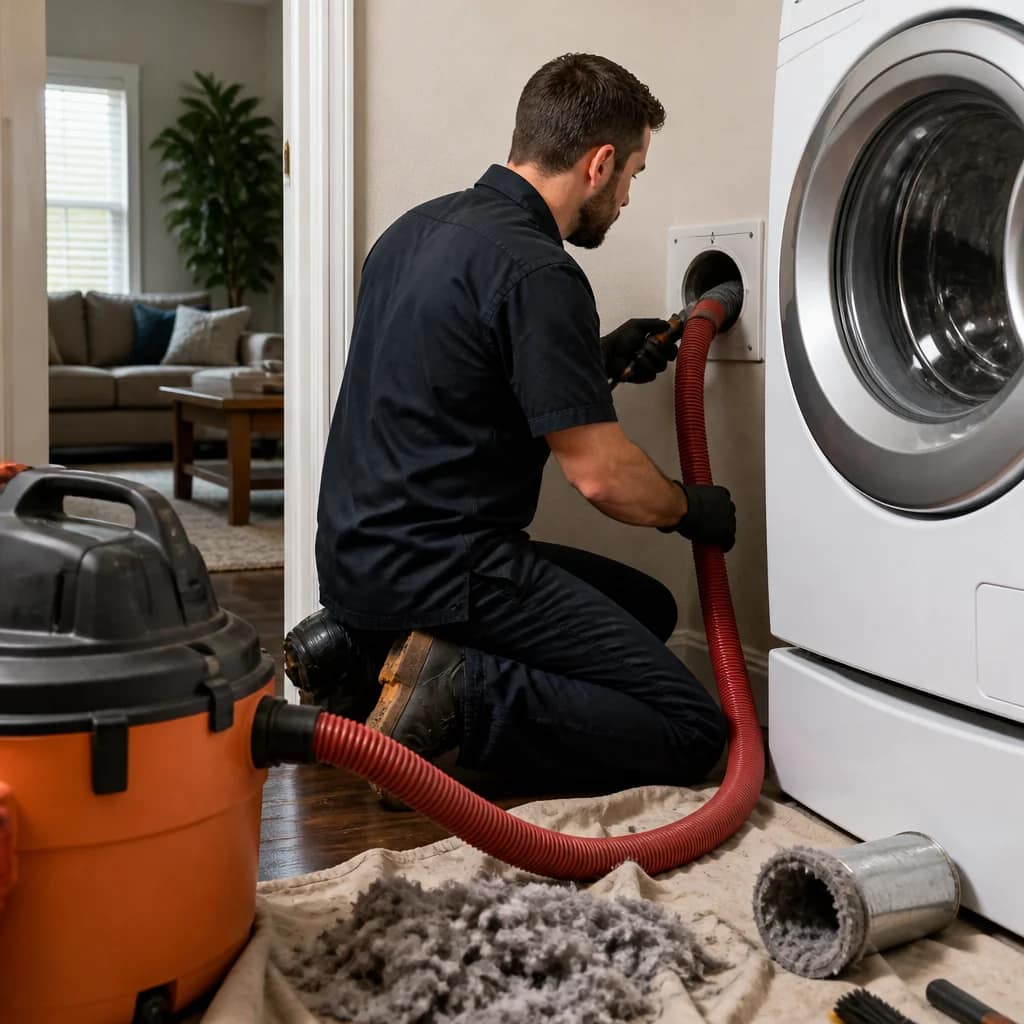
At Dr. Air Duct, we help Dallas homeowners and property managers keep dryer venting safe and aligned with current expectations. Our technicians inspect the full exhaust path, from the back of the dryer to the exterior cover, and we use professional equipment to remove lint that a homeowner cannot reach on their own.
Our dryer vent service typically includes:
- A full inspection of the duct route, connections, and termination
- Removal of lint and debris from the entire run
- Checks on the backdraft damper and exterior cover
- Identification of flexible, damaged, or non-compliant duct sections
- Clear recommendations on repairs or replacement when needed
Where the duct itself needs correction, our team can also handle repair and replacement work. We explain what we find in plain language, provide transparent estimates, and make sure you understand your options before any work begins. Our technicians are trained, we respond promptly, and we aim to give you a clear picture of your home’s venting so you can make informed decisions.
If you are in the Dallas area and want to confirm your dryer vent is safe, you can learn more about our dryer vent cleaning in Dallas service. For a deeper look at local requirements, our Dallas vent code guide covers routing and compliance details specific to the area.
Next step: Schedule an inspection, especially if your home has a long duct run, older flexible ducts, or drying times that have been getting longer. A quick check now can prevent a costly problem later.
Frequently Asked Questions (FAQ)
Are dryer vent codes in Dallas the same as the national model codes?
Dallas follows the International Residential Code (IRC) and International Mechanical Code (IMC) as adopted by the City, so the core dryer vent rules we see in the field apply here. Local amendments can change details, so we recommend confirming current requirements with the City of Dallas Building Inspection office before any new installation or major repair. We keep our technicians up to date on both the adopted codes and the local amendments.
How often should we have a dryer vent cleaned to stay within safe limits?
For most households, we recommend a professional cleaning at least once a year, and every six months for large families or homes that run the dryer daily. Lint buildup restricts airflow, which makes the dryer work harder and raises fire risk, so the vent length and number of bends matter as well. When we inspect a vent, we measure total run length and check for crushed or disconnected sections that could violate code.
What should we do if our dryer vent doesn’t meet code?
Start by having a qualified technician inspect the full vent path, from the dryer connection to the exterior termination. We can usually correct issues such as rigid versus flexible duct mismatches, excessive bends, or improperly sealed joints with a straightforward repair. Once the work is complete, we provide a written summary of what we found and what we changed so you have a clear record for your home or property files.