
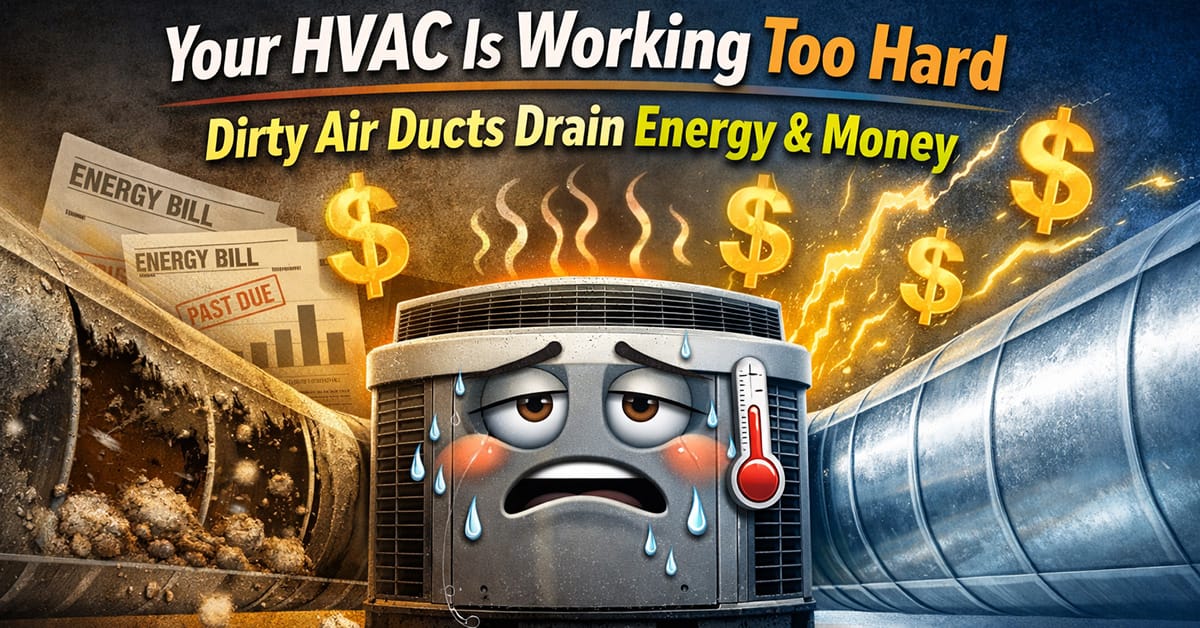

When your heating and cooling system seems to run forever, your energy bills keep climbing, and some rooms still never feel comfortable, the problem may not be your HVAC unit alone. In many homes, the real issue is hidden inside the ductwork.
Dirty or poorly performing air ducts can restrict airflow, force your system to work harder, and make it more expensive to keep your home comfortable. Leaky ducts can also waste a meaningful share of conditioned air before it ever reaches the rooms you paid to cool or heat. In a typical house, about 20% to 30% of the air moving through the duct system can be lost through leaks, holes, and poor connections. ENERGY STAR also notes that leaky ducts can reduce heating and cooling efficiency by as much as 20%, while poorly sealed duct systems can cause efficiency losses up to 30%.
Why Dirty Air Ducts Make Your HVAC System Work Harder
Your HVAC system depends on steady, balanced airflow. When ducts are clogged with dust, debris, or buildup, airflow can become less efficient. That means your system has to run longer to move conditioned air through the house and maintain the thermostat setting.
Over time, that extra strain can lead to:
- Longer run times
- Reduced comfort in certain rooms
- Higher monthly utility bills
- More wear on HVAC components
- More dust circulating through the home
The U.S. Department of Energy explains that efficient duct systems distribute air properly and that insulating, air sealing, and keeping ducts in conditioned space reduces energy losses.
The Money Problem Most Homeowners Don’t See
A lot of homeowners notice the symptoms but not the cause.
They see:
- Higher electric bills
- Weak airflow from vents
- Rooms that feel hotter or colder than the rest of the house
- More dust settling on surfaces
- An HVAC system that seems to run all day
What they often do not realize is that the system may be fighting against dirty ductwork, leaks, poor connections, or contamination that interferes with airflow and performance.
If your HVAC system has to work harder to push air where it needs to go, you are paying more for less comfort.
Dirty Ducts vs. Leaky Ducts
These are related problems, but they are not exactly the same.
| Issue | What Happens | Why It Costs You |
|---|---|---|
| Dirty air ducts | Dust and debris can reduce efficient airflow and contribute to dust recirculation | Your system may run longer to reach the desired temperature |
| Leaky air ducts | Conditioned air escapes into attics, crawl spaces, or wall cavities | You pay to heat or cool air that never reaches your rooms |
| Poor insulation around ducts | Air loses heating or cooling before it arrives | Reduced system efficiency and uneven comfort |
| Duct contamination | Dirt and moisture can create indoor air quality concerns | Can affect comfort, cleanliness, and system performance |
EPA notes that dirt and moisture should not be present in duct systems and that they should be controlled to prevent mold growth.
Signs Your Air Ducts May Be Hurting Efficiency
If you notice one or more of these issues, your duct system may be contributing to wasted energy:
- Your HVAC runs constantly during hot or cold weather
- Your utility bills keep increasing without a clear reason
- Some vents have weak airflow
- Certain rooms are always uncomfortable
- Dust builds up quickly after cleaning
- You notice musty or stale odors when the system runs
- Your home feels humid, stuffy, or unevenly cooled
These signs do not always mean you need duct cleaning alone. Sometimes the bigger issue is leakage, insulation problems, or other HVAC maintenance needs. EPA says duct cleaning is not something it recommends on a routine basis for every home, but it may be worth considering when there is substantial visible mold growth, vermin infestation, or excessive dust and debris actually entering the home from the ducts.

How Air Duct Cleaning Can Help
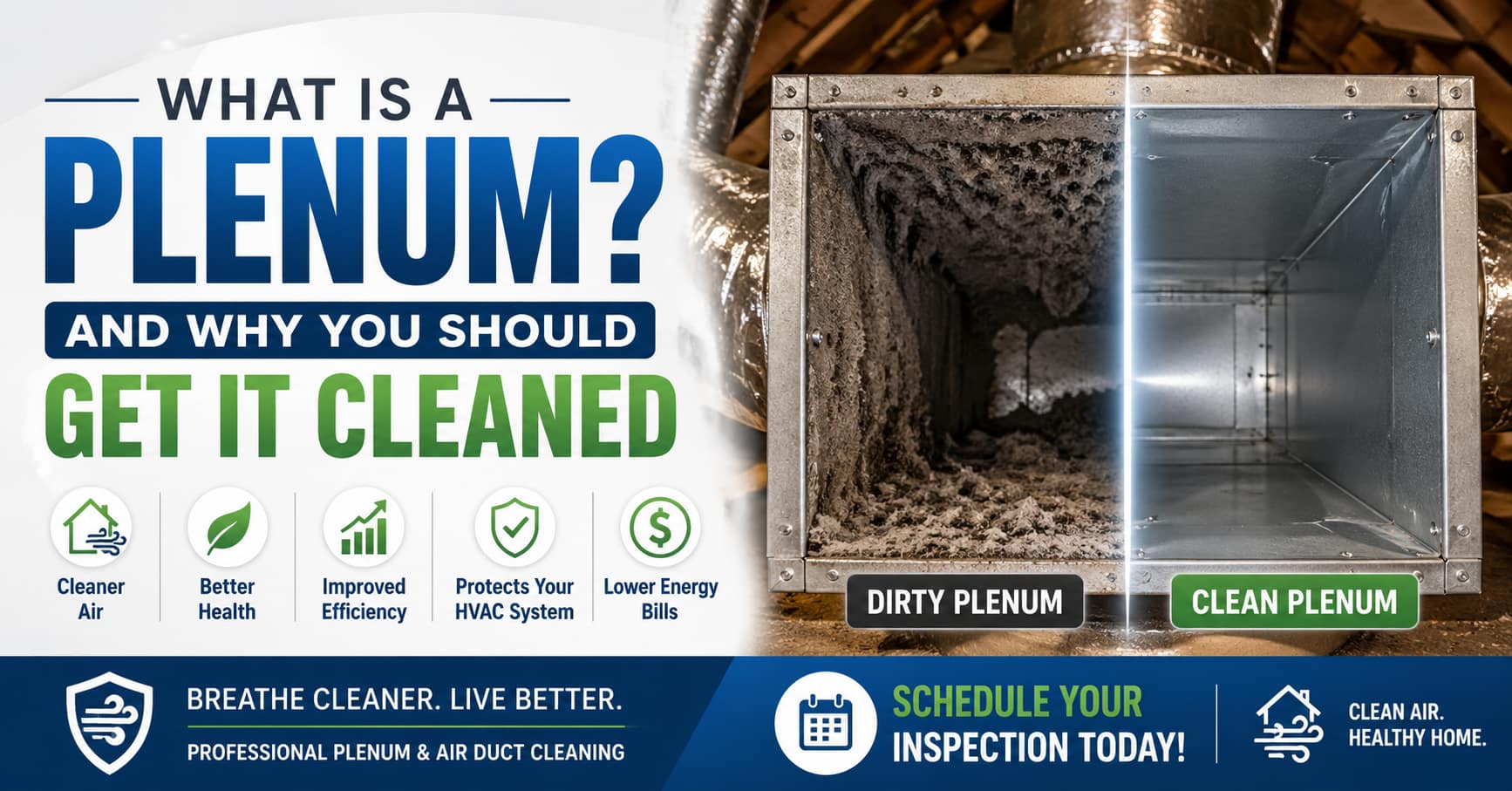
When air ducts contain heavy dust, debris, or contamination, professional cleaning may help restore cleaner airflow and reduce the amount of buildup circulating through the home. In the right situation, it can support better HVAC performance by removing obstructions and helping the system breathe more easily.
That said, the biggest efficiency wins often come from looking at the whole duct system, not just cleaning it. That may include:
- Inspecting supply and return ducts
- Checking for leaks or disconnected sections
- Identifying crushed or poorly routed duct runs
- Evaluating insulation around ducts
- Verifying airflow at vents and returns
- Replacing dirty filters and checking system maintenance
This is why homeowners often benefit most from a full inspection instead of guessing.
Why This Matters Even More in Texas
In Dallas and across North Texas, air conditioners work hard for a large part of the year. When ducts are dirty, leaking, or inefficient, that long cooling season can make the cost of wasted airflow even more noticeable.
A struggling HVAC system in Texas does not just mean higher bills. It can also mean:
- Less consistent comfort during extreme heat
- More strain on your AC during peak season
- More dust and indoor air quality concerns inside the home
When temperatures rise, even small airflow problems tend to show up fast.
What Homeowners Should Do Next
If your HVAC feels like it is always running but your home still is not comfortable, start with the duct system.
A professional inspection can help determine whether the issue is:
- Dirty ductwork
- Air leaks
- Poor duct insulation
- Blocked vents
- Filter issues
- A larger HVAC performance problem
The goal is not just cleaner ducts. The goal is better airflow, better comfort, and less wasted energy.
Ready to Improve Airflow and Lower HVAC Strain?
If your system is working too hard, we can help identify what is slowing it down. A professional air duct inspection can reveal buildup, leakage, and airflow issues that may be costing you comfort and money.
Call Dr Air Duct today to schedule your inspection and find out whether your ductwork is helping your HVAC system — or holding it back.