

Table of Contents
- Why Chimney Flue and Firebox Cleaning Matters in Dallas Homes
- Signs Your Flue or Firebox Needs Professional Cleaning
- Understanding Creosote, Soot, and Blockage Buildup
- How Our Chimney Flue Cleaning Process Works
- Firebox Cleaning and Why It Matters for Fire Safety
- Safety Inspections and Repairs We Provide Alongside Cleaning
- Choosing a Trusted Local Chimney Service in North Texas
- Scheduling Annual Maintenance and Getting Started with Dr Air Duct
- Frequently Asked Questions (FAQ)
Why Chimney Flue and Firebox Cleaning Matters in Dallas Homes
Dallas homeowners don’t use their fireplaces as often as families in colder northern states, but when they do, the chimney works hard. Smoke, heat, and byproducts of burning wood or gas travel up the flue every time you light a fire. Over time, those byproducts settle on the inner walls and build into a layer that affects safety and performance.
Regular chimney flue and firebox cleaning keeps that system clear. A clean flue helps smoke exit efficiently, and a clean firebox gives the fire a stable base to burn well. Neither does much good if the other is neglected.
Dallas weather adds its own considerations. Spring storms can push debris and moisture into an open chimney, and the warm, humid stretches of summer can encourage nesting animals and mildew inside the flue. Scheduling a cleaning before the heating season is a simple way to start with a clear system.
Next step: Look at your fireplace before your first cold snap. If it has been more than a year since the last cleaning, plan a visit before you light it again.
Signs Your Flue or Firebox Needs Professional Cleaning
Some warning signs are easy to spot, while others only show up during an inspection. Watch for these:
- Dark, flaky, or shiny deposits on the inside of the firebox or visible flue sections
- A smoky smell in the room even when the fire is out, which often means residue is building up
- Smoke backing into the room when you open the damper or during startup
- Slow-burning or sluggish fires that struggle to catch and stay lit
- Unusual sounds such as popping, crackling, or rattling, which can signal debris or buildup
- Animal activity, including scratching, chirping, or droppings near the top of the flue
A practical example: a Plano homeowner noticed the living room smelled faintly of smoke every time the furnace ran in winter. Their fireplace had not been used for months, but an inspection found a nest and a heavy layer of residue in the flue, both of which were drawing odors back into the house.
Next step: If you notice any of these signs, stop using the fireplace until a technician has inspected the system. Waiting can turn a routine cleaning into a larger repair.
Understanding Creosote, Soot, and Blockage Buildup

Three types of buildup show up most often in chimneys, and each behaves differently.
Soot is fine black particles left after incomplete combustion. It is usually dry and easy to brush away, but it can coat the firebox and flue and cause a dirty smell.
Creosote is the more serious concern. It forms when wood smoke cools as it rises and condenses on the flue walls. Creosote comes in stages. Early stages look like soot and brush off easily. Later stages become hard, glazed, and tar-like, and they are much harder to remove. Creosote is flammable, which is why it matters for fire safety.
Blockages happen when debris accumulates in the flue. Common culprits include bird nests, leaves, twigs, and fallen mortar. A blockage restricts airflow, which can push smoke into the home and cause the fire to burn poorly.
Creosote and soot are influenced by how you burn. Seasoned, dry wood produces less residue than damp or unseasoned wood, and a fire that burns too slowly tends to leave more deposits behind.
Next step: Burn only dry, seasoned hardwood and keep your fires hot and well-ventilated. Then schedule an inspection to measure how much buildup you actually have.
How Our Chimney Flue Cleaning Process Works
When we clean a chimney flue, we follow a consistent process so you know what to expect.
- Initial inspection. Our technician checks the chimney cap, crown, flue liner, and firebox for damage, obstructions, and the type and stage of buildup.
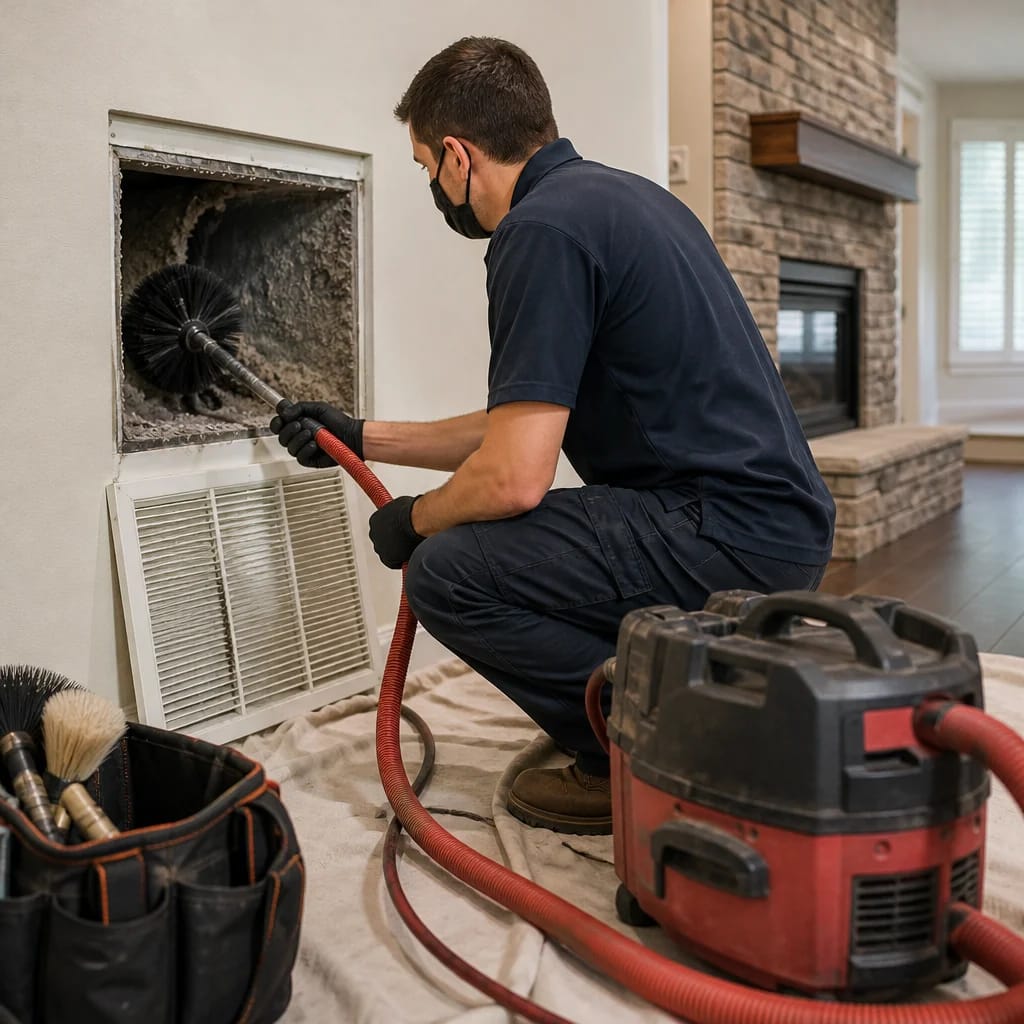
- Protecting your home. We cover the hearth, surrounding floor, and furniture with drop cloths and seal the fireplace opening to keep dust out of the living space.
- Removing buildup. Using the right brushes and rods for your flue type, we scrub the liner to loosen soot and creosote. For tougher deposits, we may use specialized treatments suited to the stage of buildup.
- Clearing blockages. Nests, debris, and other obstructions are removed from the top down and out of the flue.
- Cleaning the firebox and smoke chamber. We remove residue from these areas as part of the same visit.
- Final check. We reinspect the flue, confirm the damper operates correctly, and walk you through what we found.
Most residential cleanings take about one to two hours, though timing depends on the chimney’s height, the amount of buildup, and whether repairs are needed.
Next step: Ask your technician to show you photos or video of the flue before and after cleaning. Clear documentation makes it easier to track your chimney’s condition over time.
Firebox Cleaning and Why It Matters for Fire Safety
The firebox is where the fire actually burns, so residue and ash buildup here affect both performance and safety. Ash that accumulates over several fires can restrict airflow, make the fire harder to start, and hold heat in ways that stress the masonry.
Firebox cleaning involves removing ash and soot from the floor and walls, checking the condition of the refractory panels or firebrick, and clearing debris from the ash dump or cleanout area. Removing ash regularly, once it has cooled completely, is a helpful habit between professional visits.

Fire safety depends on the whole system working together. A clean firebox reduces the amount of combustible material near the fire, and it helps the fire burn cleanly and predictably. Cleaning does not eliminate every fire risk, but it can help reduce the chance of flue fires caused by heavy creosote buildup.
Next step: Let ashes cool for at least 24 hours before removing them. Store them in a metal container with a lid, placed on a noncombustible surface away from the house.
Safety Inspections and Repairs We Provide Alongside Cleaning
Cleaning often reveals problems that need attention. We offer inspections and repairs so you can address issues in one visit rather than scheduling multiple appointments.
Our inspections typically cover:
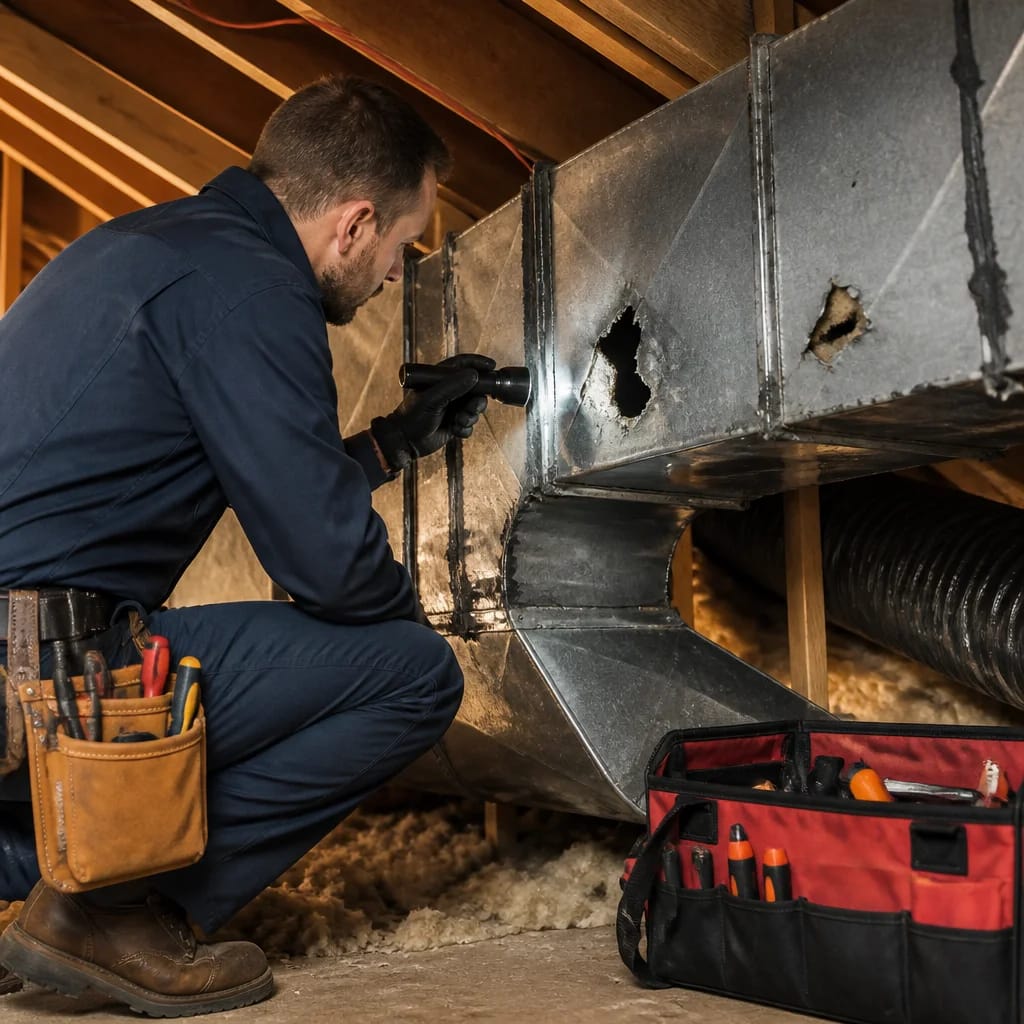
- Flue liner condition, including cracks, gaps, and deterioration
- Chimney crown and cap, which protect the top of the chimney from water and debris
- Masonry and mortar joints, checking for loose bricks or spalling
- Damper function, confirming it opens and closes fully
- Clearances between the chimney and combustible materials
- Gas appliance connections where applicable
Common repairs include replacing a damaged cap, repointing mortar, installing a new liner, and sealing gaps that let moisture in. We explain each recommendation, separate urgent safety items from routine maintenance, and provide clear pricing before any work begins.
It helps to know the difference between services. Cleaning removes buildup. Inspection evaluates condition. Repair fixes damage. Installation adds new components such as a liner or cap. Each one has a different purpose, and we will tell you which applies to your home.
Next step: If an inspection flags a structural concern, get a written estimate and ask what is urgent versus what can wait until your next maintenance visit.
Choosing a Trusted Local Chimney Service in North Texas
Selecting a chimney company is an important decision. Look for providers who can clearly demonstrate their qualifications and communicate openly.
Questions worth asking include:
- Are your technicians trained and certified for chimney work?
- Are you licensed and insured in Texas?
- Will you provide a written estimate and explain findings before starting work?
- Do you provide before-and-after photos or video of the flue?
- What is your availability, and how quickly can you respond if I have an urgent issue?

Local experience matters too. North Texas homes face heat, humidity, storms, and a mix of older and newer construction, and a provider familiar with those conditions can anticipate common problems. Reading recent customer reviews and checking how a company handles follow-up questions can tell you a lot about its reliability.
At Dr Air Duct, we serve Dallas and surrounding communities with trained technicians, proper equipment, and transparent communication. We focus on giving you clear options and fair pricing, so you can make an informed choice that fits your home and budget.
Next step: Request estimates from two or three providers and compare how clearly each one explains the work, the timeline, and the cost.
Scheduling Annual Maintenance and Getting Started with Dr Air Duct
Most chimneys benefit from an annual cleaning and inspection, especially if you use your fireplace regularly. Scheduling in late summer or early fall helps you avoid the rush once the weather turns cold, and it gives you time to address any repairs before you need the fireplace.
Regular maintenance also makes each cleaning simpler. When buildup is light, a cleaning takes less time and costs less than dealing with heavy creosote that has been left to harden.
To get started with Dr Air Duct:
- Contact us through our website at drairducttx.com to request an appointment.
- Tell us about your fireplace, including how often you use it, what fuel you burn, and any problems you have noticed.
- Receive an inspection and estimate, with a clear explanation of findings and options.
- Schedule cleaning or repairs at a time that works for your household.
If you are looking for dependable chimney cleaning in Dallas, we are ready to help. If your inspection shows heavy deposits, our team can also handle creosote removal services to bring your system back to safe working condition.
Next step: Put your chimney on your annual home maintenance calendar today, and reach out to schedule your inspection before the heating season begins.
Frequently Asked Questions (FAQ)
How often should we have our chimney flue and firebox cleaned in Dallas?
For most homeowners who use their fireplace regularly, we recommend an annual cleaning and inspection before the heating season begins. Homes that burn wood frequently, or that burn wet or unseasoned wood, may need more frequent service. Our technicians can review your usage and tell you what schedule makes sense for your home.
What does a flue and firebox cleaning include?
We start with a visual inspection of the chimney flue, firebox, and smoke chamber to assess buildup and any damage. From there, we remove creosote, soot, and debris from the flue and clean the firebox thoroughly. We finish by checking the damper, crown, and visible masonry, and we explain our findings so you know exactly what was done.
Can we use our fireplace right after a cleaning?
Yes, you can use your fireplace once the cleaning is complete and the area has been cleared of debris. We recommend burning seasoned hardwood with low moisture content, since it produces less creosote than green or damp wood. If we notice a safety concern during service, we will tell you before you light a fire.